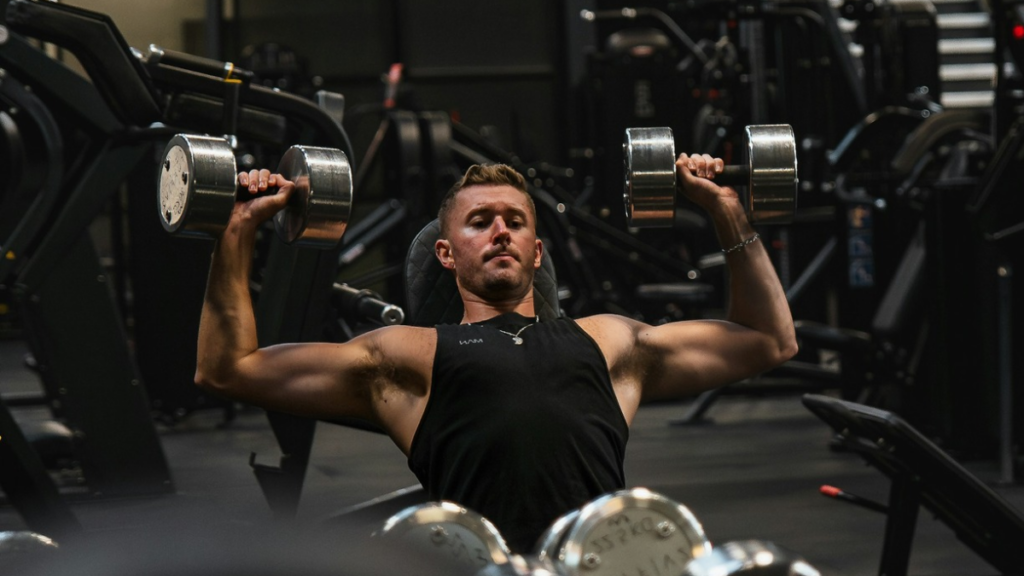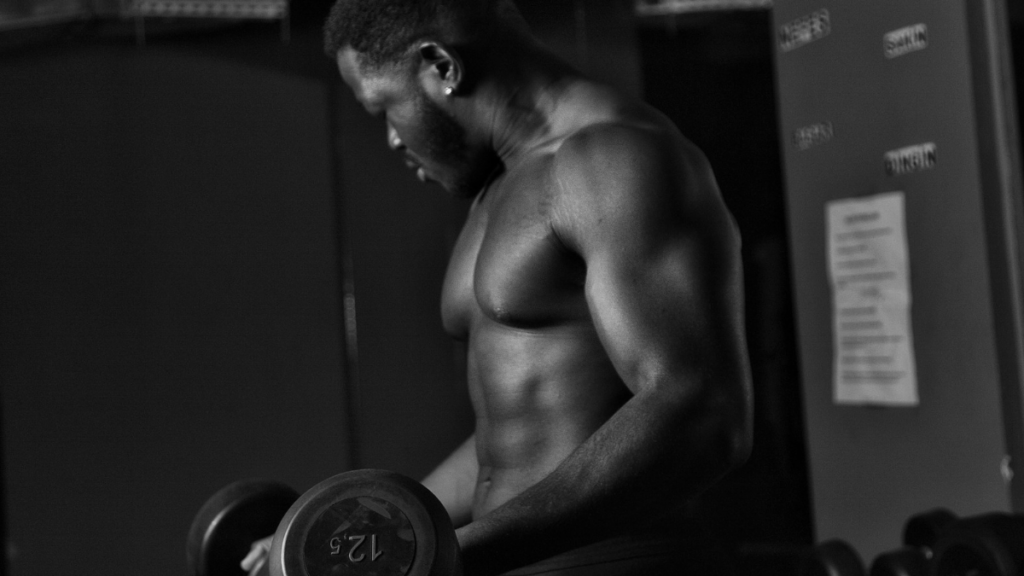


Strong, broad shoulders do much more than improve your physique. Well developed deltoids increase upper body strength, improve posture, enhance athletic performance, and help protect the shoulder joint during everyday activities and training. For beginners, building wider shoulders is less about chasing heavy weights and more about learning the right movement patterns while consistently targeting all three heads of the deltoid muscle.
The shoulder is one of the most mobile joints in the human body. That incredible range of motion comes with a tradeoff. It is also one of the least stable joints, making proper exercise selection and technique especially important for new lifters.



Research consistently shows that resistance training increases muscle size and strength across all age groups when performed progressively and with good technique. Beginners often experience especially rapid improvements because their nervous system quickly becomes more efficient at recruiting muscle fibers while muscle growth also begins to occur.
If your goal is to build wider and more muscular shoulders, these five beginner friendly exercises provide an excellent foundation.
Understanding Shoulder Anatomy
Before choosing exercises, it helps to understand what creates the appearance of broad shoulders. The deltoid consists of three distinct sections. The anterior deltoid sits at the front of the shoulder and assists pressing and lifting movements.
The lateral deltoid sits on the side of the shoulder and is primarily responsible for shoulder abduction, which means raising the arms out to the side. This portion contributes the most to shoulder width. The posterior deltoid sits at the back of the shoulder and helps extend and externally rotate the arm while supporting healthy posture.
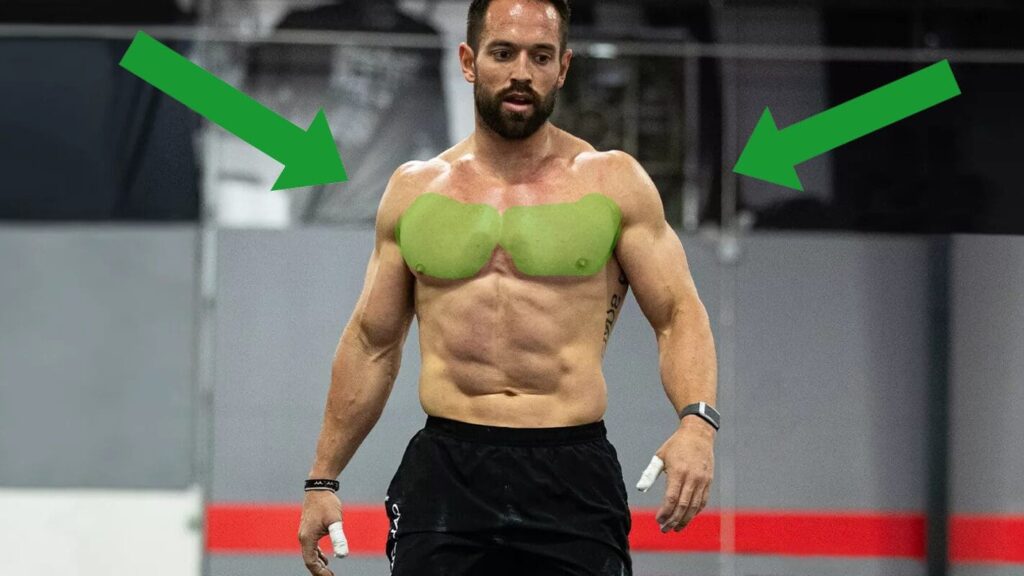
3 Reasons Why Most Men Don’t Build a Strong Bench Press (Are You the Exception?)
Several other muscles also contribute to shoulder function, including the trapezius, rotator cuff, serratus anterior, and upper chest. Effective shoulder training develops all of these muscles while placing particular emphasis on the lateral deltoids if your goal is greater width.
Why Beginners Should Focus on Compound and Isolation Exercises
Many beginners assume they need complicated routines or advanced bodybuilding techniques to build muscle. Scientific evidence suggests otherwise.
Early strength gains come primarily from improved neuromuscular coordination. As beginners become more skilled at lifting, their muscles receive stronger and more efficient activation. Over time, consistent overload stimulates muscle protein synthesis, leading to hypertrophy.
Combining compound exercises with targeted isolation work produces excellent results because compound movements allow heavier loading while isolation exercises increase direct stimulation of specific muscles that may otherwise receive less attention.
The five exercises below accomplish both goals.
1. Standing Dumbbell Overhead Press
The standing dumbbell overhead press is one of the best exercises for developing overall shoulder mass. Unlike a barbell press, dumbbells allow each arm to move independently, encouraging balanced development and reducing strength imbalances.
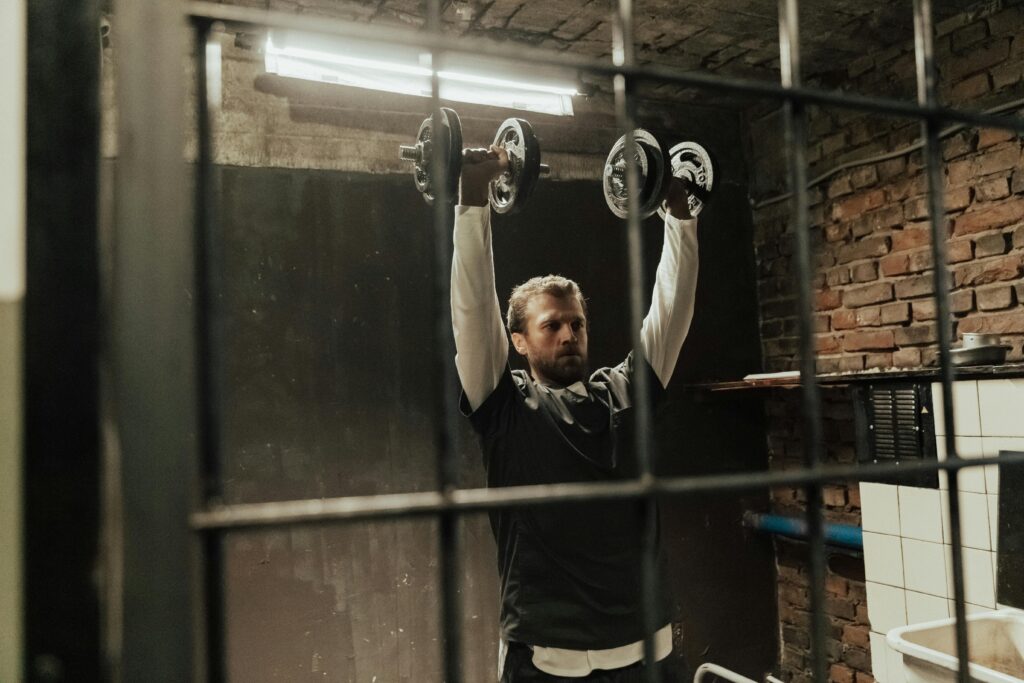
Standing also forces the core, glutes, and stabilizing muscles to work throughout the movement.
Why It Works
The overhead press heavily recruits the anterior deltoid while also stimulating the lateral deltoid, upper trapezius, and triceps. Electromyography research consistently identifies overhead pressing variations among the highest activating exercises for the front deltoids.
How to Perform It
- Stand with feet about shoulder width apart.
- Hold a dumbbell in each hand at shoulder height with palms facing forward.
- Brace your core and keep your ribs down.
- Press both dumbbells overhead until your elbows reach full extension without aggressively arching your back.
- Lower under control to the starting position.
Common Mistakes
Using excessive back extension turns the exercise into more of an incline press and increases stress on the lower back. Avoid bouncing at the bottom or rushing the lowering phase.
2. Dumbbell Lateral Raise
If your primary goal is wider shoulders, the lateral raise deserves a permanent place in your program. The lateral deltoid receives relatively little stimulation from pressing exercises alone. Lateral raises specifically target the muscle responsible for creating shoulder width.

Why It Works
Research comparing shoulder exercises has shown lateral raises produce very high activation of the middle deltoid. Because the movement isolates the target muscle, beginners can learn to create strong muscle tension without excessive loading.
How to Perform It
- Stand tall with a dumbbell in each hand.
- Keep a slight bend in your elbows.
- Raise both arms out to your sides until they reach approximately shoulder height.
- Pause briefly before lowering slowly.
- Think about leading with your elbows rather than your hands.
Common Mistakes
Swinging the weights with momentum dramatically reduces muscular tension. Raising the dumbbells significantly above shoulder height shifts more work toward the upper trapezius. Choosing weights that are too heavy often leads to poor technique.
3. Face Pull
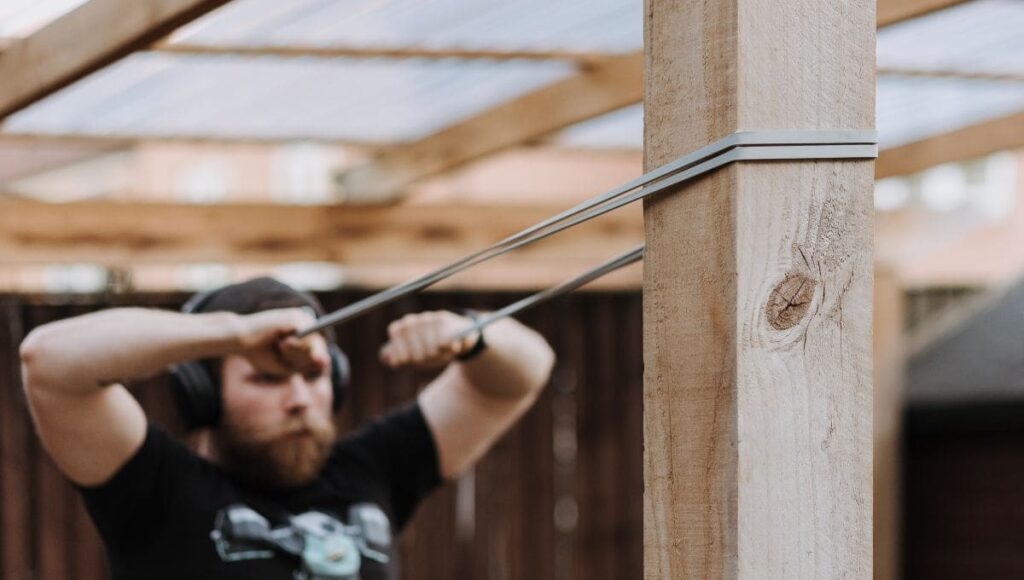
Many beginners overlook rear shoulder training. This creates muscular imbalances because daily life and pressing exercises already emphasize the front of the shoulders. The face pull strengthens the posterior deltoids, rotator cuff, and upper back while improving shoulder health.
Why It Works
Studies examining shoulder rehabilitation and injury prevention consistently support exercises that strengthen the external rotators and posterior shoulder muscles.
Face pulls also encourage better posture by counteracting excessive forward shoulder positioning that often develops from desk work and heavy pressing.
How to Perform It
- Attach a rope to a cable machine at upper chest height.
- Grip each end with your palms facing inward.
- Pull the rope toward your face while separating your hands.
- Focus on squeezing your shoulder blades together.
- Return slowly to the starting position.
Common Mistakes
Do not lean backward to create momentum. Avoid pulling toward the chest instead of the face. Maintain controlled movement throughout every repetition.
4. Arnold Press
Named after Arnold Schwarzenegger, this exercise adds shoulder rotation throughout the press, increasing the range of motion compared with a traditional overhead press.
Although beginners should first master standard pressing mechanics, the Arnold press becomes an excellent progression once basic technique is established.
Why It Works
The rotational component increases activation across multiple portions of the deltoid while requiring greater shoulder stability. The longer range of motion also increases total muscular work performed during each repetition.
How to Perform It
- Hold two dumbbells in front of your shoulders with palms facing your body.
- As you press upward, rotate your palms forward.
- Finish with your arms extended overhead.
- Reverse the movement slowly while rotating back to the starting position.
Common Mistakes
Avoid rushing through the rotation. Maintain smooth movement without allowing your elbows to flare excessively. Use lighter weights than you would for a standard overhead press until you master the movement.
5. Reverse Pec Deck Fly
The reverse pec deck machine offers beginners one of the safest ways to isolate the posterior deltoids. Machines reduce the balance demands found in free weight exercises, allowing new lifters to focus entirely on muscular contraction.
Why It Works
Posterior deltoids often receive insufficient direct training. Research comparing shoulder exercises frequently identifies reverse fly variations among the highest activating exercises for the rear delts. Balanced shoulder development not only improves appearance but also contributes to long term joint health.
How to Perform It
- Sit facing the machine with your chest against the pad.
- Grip the handles with arms extended.
- Pull your arms outward until they align with your shoulders.
- Pause briefly before returning under control.
- Focus on moving through the shoulders rather than shrugging.
Common Mistakes
Avoid using momentum. Do not excessively arch your back. Keep the movement smooth and controlled throughout the entire repetition.
How Often Should Beginners Train Shoulders?
Most beginners benefit from training shoulders twice per week.
Current evidence suggests training each muscle group at least two times weekly generally produces superior muscle growth compared with only once weekly when total training volume is matched. Allow at least 48 hours between sessions to promote recovery. Each workout can include two or three shoulder exercises combined with chest, back, or arm training.
How Many Sets and Repetitions Should You Perform?
Research indicates that muscle hypertrophy occurs across a wide range of repetition schemes provided sets are performed close to muscular fatigue.
For beginners, a practical approach includes performing three to four sets of eight to twelve repetitions on compound lifts and two to four sets of twelve to fifteen repetitions on isolation exercises. Focus on gradually increasing either the weight or repetitions over time while maintaining excellent technique.
Progressive Overload Is the Secret
The best shoulder exercises only work if they continue challenging your muscles. Progressive overload means gradually increasing training demands over time. This does not always require heavier weights.
You can also increase repetitions, improve technique, slow the lowering phase, increase training volume, or reduce rest periods while maintaining proper form. Keeping a training log helps ensure that each workout builds upon the previous one.
Building Bigger Shoulders Takes Patience
Many beginners expect dramatic shoulder growth within a few weeks. In reality, meaningful muscle growth requires months of consistent training. Fortunately, beginners often see noticeable improvements relatively quickly because neurological adaptations occur alongside early hypertrophy.
Stay consistent with these five exercises, prioritize recovery, eat enough protein, and focus on gradual progression rather than rushing heavier weights. Wide, muscular shoulders are built through hundreds of quality workouts rather than one perfect session.
Key Takeaways
| Exercise | Primary Muscles | Main Benefit | Beginner Tip |
|---|---|---|---|
| Standing Dumbbell Overhead Press | Front and side deltoids, triceps | Builds overall shoulder size and strength | Keep your core tight and avoid leaning backward |
| Dumbbell Lateral Raise | Lateral deltoids | Increases shoulder width | Use light weights and strict form |
| Face Pull | Rear deltoids, rotator cuff, upper back | Improves posture and shoulder health | Pull toward your face while separating the rope |
| Arnold Press | Front and side deltoids | Increases range of motion and muscle activation | Master the standard overhead press first |
| Reverse Pec Deck Fly | Rear deltoids | Builds balanced shoulder development | Move slowly without using momentum |
References
- American College of Sports Medicine. (2009). Progression models in resistance training for healthy adults. Medicine & Science in Sports & Exercise, 41(3), 687 to 708.
- Bird, S.P., Tarpenning, K.M. and Marino, F.E. (2005). Designing resistance training programmes to enhance muscular fitness. Sports Medicine, 35(10), 841 to 851.
- Boeckh Behrens, W.U. and Buskies, W. (2000). Fitness Strength Training: The Best Exercises and Methods for Sport and Health. Rowohlt.
- Campos, G.E., Luecke, T.J., Wendeln, H.K., Toma, K., Hagerman, F.C., Murray, T.F., Ragg, K.E., Ratamess, N.A., Kraemer, W.J. and Staron, R.S. (2002). Muscular adaptations in response to three different resistance training regimens. Journal of Applied Physiology, 88(1), 50 to 60.
- Gentil, P., Soares, S. and Bottaro, M. (2015). Single versus multi joint resistance exercises for muscle strength and hypertrophy. Asian Journal of Sports Medicine, 6(2), e24057.
- Grgic, J., Schoenfeld, B.J., Davies, T.B., Lazinica, B., Krieger, J.W. and Pedisic, Z. (2018). Effect of resistance training frequency on gains in muscular strength. Sports Medicine, 48(5), 1207 to 1220.
- Krieger, J.W. (2010). Single versus multiple sets of resistance exercise for muscle hypertrophy. Journal of Strength and Conditioning Research, 24(4), 1150 to 1159.
- Paoli, A., Gentil, P., Moro, T., Marcolin, G. and Bianco, A. (2017). Resistance training with single versus multi joint exercises at equal total load volume. European Journal of Translational Myology, 27(2), 6460.
- Schoenfeld, B.J. (2010). The mechanisms of muscle hypertrophy and their application to resistance training. Journal of Strength and Conditioning Research, 24(10), 2857 to 2872.
- Schoenfeld, B.J., Ogborn, D. and Krieger, J.W. (2016). Effects of resistance training frequency on measures of muscle hypertrophy. Sports Medicine, 46(11), 1689 to 1697.