

Many beginners start training biceps because they want bigger arms, but they often focus on the wrong things. Endless curls, random exercises, and heavy weights with poor form usually lead to slow progress. Building wider looking biceps is not about finding a secret exercise. It is about understanding how the muscles grow and applying a few proven training principles consistently.
The appearance of wider biceps is influenced by overall muscle size, especially the biceps brachii and the brachialis. The brachialis sits underneath the biceps and can push the biceps upward as it grows, creating the appearance of thicker and wider upper arms. Genetics influence muscle shape and insertion points, but training can significantly increase muscle size regardless of your natural structure.



Research on resistance training has consistently shown that beginners respond extremely well to properly designed training programs. In fact, novice lifters often experience faster muscle growth than experienced athletes because their bodies adapt quickly to a new stimulus.
Understand Which Muscles Create Wider Arms
Before choosing exercises, it helps to understand what you are actually trying to develop. The biceps brachii has two heads called the long head and the short head. Both contribute to elbow flexion, while also assisting with forearm supination and shoulder movement. Beneath the biceps lies the brachialis, which is a powerful elbow flexor regardless of hand position.
Although many people chase the perfect peak, arm width is heavily influenced by total muscle mass. A larger brachialis can make the entire upper arm appear thicker by pushing the biceps outward. Likewise, increasing the size of both heads of the biceps contributes to fuller looking arms from every angle.
5 Minute Daily Arm Curls: Sober Fitness Explains the Simple Habit That Finally Grew His Arms
Studies using muscle imaging have demonstrated that different exercises can emphasize portions of the elbow flexor muscles due to changes in shoulder position and grip. This does not mean one exercise isolates a single muscle completely, but exercise variation helps ensure comprehensive development. For beginners, the goal should not be chasing isolation. The goal should be gradually increasing the size of every elbow flexor through consistent training.
Tip One: Master Basic Curl Variations Before Anything Else
The biggest mistake beginners make is constantly changing exercises instead of getting stronger at a few effective movements. A small selection of well executed exercises provides everything needed for impressive biceps development during the first years of training.
Prioritize Proven Exercises
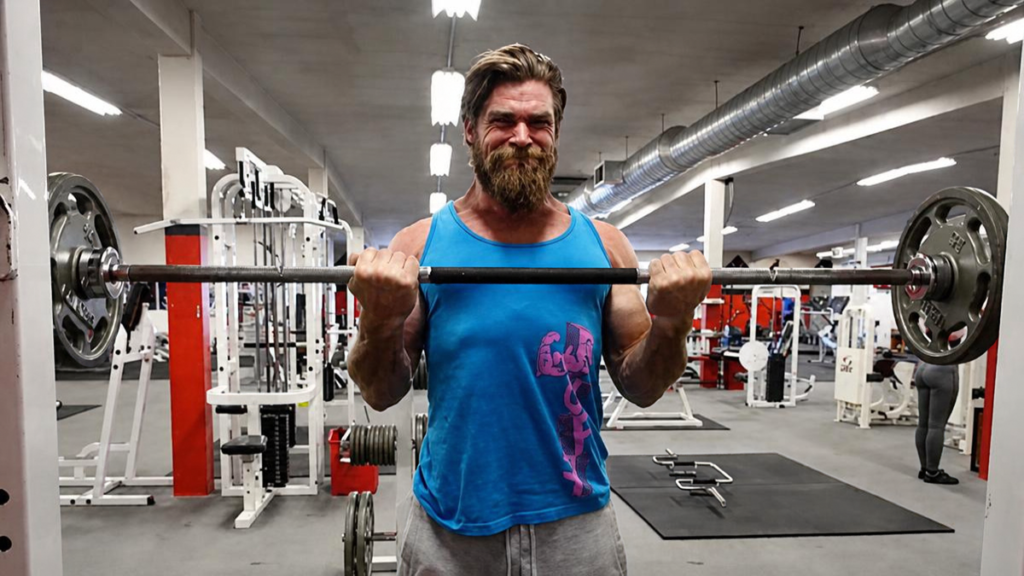
The standing barbell curl remains one of the best choices because it allows relatively heavy loading while training both heads of the biceps through a large range of motion. Alternating dumbbell curls introduce independent arm work while allowing natural wrist rotation, which many people find more comfortable.

Hammer curls deserve a permanent place in beginner programs because the neutral grip increases activation of the brachialis and brachioradialis. Over time, a stronger and larger brachialis contributes to the appearance of wider arms.
Incline dumbbell curls place the shoulder in greater extension, increasing muscle length during the exercise. Research suggests that training muscles at longer lengths may stimulate greater hypertrophy under certain conditions.
You do not need ten different curl variations. Performing three or four quality exercises consistently while improving your technique and strength is far more productive.
Tip Two: Focus on Progressive Overload Instead of Heavy Weights
Muscles only grow when they are challenged beyond what they have previously experienced. Progressive overload simply means gradually increasing the training stimulus over time. This can happen by adding weight, performing more repetitions, improving technique, increasing training volume, or controlling the movement better.
Many beginners believe heavier weights automatically produce bigger muscles. The evidence tells a different story.
Research has shown that muscle growth can occur across a wide range of repetition ranges provided the sets are performed close enough to muscular failure. Whether using six repetitions or twenty repetitions, muscle hypertrophy can be very similar when sufficient effort is applied. For beginners, this means there is no need to sacrifice technique simply to lift heavier.
Keep Repetitions Controlled
Each repetition should include a controlled lifting phase and an equally controlled lowering phase. Swinging the body to complete curls reduces tension on the target muscles and shifts work to momentum instead.
The lowering phase deserves special attention because it places the muscles under high mechanical tension. Research consistently identifies mechanical tension as one of the primary drivers of muscle hypertrophy. Once you can perform all planned repetitions with excellent form, increase the load slightly during the next session.
Small improvements performed consistently over months create dramatic changes in muscle size.
Tip Three: Train Your Biceps Often Enough
Training frequency is another area where beginners frequently become confused. Some people train arms every day. Others only perform curls once every two weeks after back workouts. Neither approach is ideal.
Current evidence suggests that total weekly training volume is one of the strongest predictors of muscle growth. Frequency becomes valuable because it allows that volume to be distributed across multiple sessions, often leading to higher quality training.
Aim for Ten to Twenty Weekly Sets
Most beginners make excellent progress with approximately ten to fourteen challenging sets for the biceps each week. For example, you might perform six sets on Monday and another six sets on Thursday. This schedule allows sufficient recovery while exposing the muscles to frequent growth stimulating sessions.
Since the biceps also receive significant work during pulling exercises such as rows, pull ups, and lat pulldowns, these compound movements contribute to overall training volume. Recovery matters just as much as training. Muscles grow after the workout when adequate nutrition and sleep support the repair process. Constantly training sore muscles may reduce performance and limit long term progress.
Tip Four: Use a Full Range of Motion Every Rep
Half repetitions often allow heavier weights, but they reduce the amount of work performed by the target muscles. Research comparing different ranges of motion generally supports using a full range whenever it can be performed safely and with proper technique.
A complete curl begins with the elbow nearly straight while maintaining tension. The weight is then lifted under control until maximum elbow flexion is reached without excessive shoulder movement.
Stretch the Muscle Under Control
One reason full range repetitions appear effective is that muscles experience high tension while lengthened. Recent research has highlighted the potential importance of training muscles in these stretched positions for maximizing hypertrophy. This does not mean forcing uncomfortable positions or hyperextending the elbows. It simply means avoiding shortened repetitions that eliminate valuable portions of the movement.
Similarly, lowering the weight completely before beginning the next repetition increases overall work and may stimulate greater muscle growth over time.
Quality repetitions almost always outperform sloppy heavy repetitions.
Tip Five: Support Your Training with Enough Protein and Recovery
Even the best training program cannot overcome poor recovery habits. Resistance training creates the stimulus for muscle growth, but nutrition and sleep provide the environment where that growth actually occurs.
Eat Enough Protein
Protein supplies the amino acids needed to repair and build muscle tissue. Current sports nutrition research recommends that people aiming to maximize muscle growth consume approximately 1.6 to 2.2 grams of protein per kilogram of body weight each day.
Protein should ideally be distributed across several meals throughout the day because repeated elevations in muscle protein synthesis appear beneficial for maximizing adaptation.

High quality protein sources include lean meat, fish, eggs, dairy products, soy foods, and quality protein supplements when necessary.
Sleep Matters More Than Most Beginners Realize
Sleep is often overlooked because it is less exciting than a new workout program. However, inadequate sleep reduces recovery, negatively affects training performance, and may impair muscle building.
Studies have shown that sleep restriction decreases muscle protein synthesis while increasing fatigue and reducing physical performance. Most adults training for muscle growth should aim for seven to nine hours of quality sleep each night. When training, nutrition, and recovery work together, muscle growth becomes much more predictable.
Common Beginner Mistakes That Limit Biceps Growth
Many beginners unknowingly slow their progress despite working hard. One common mistake is changing exercises every week. Muscles need consistent progressive overload, not endless novelty. Another mistake is performing every set to complete failure. While training close to failure is effective for muscle growth, taking every set to absolute exhaustion can increase fatigue without providing additional benefits.

Poor technique also limits results. Excessive swinging, leaning backward, or using the shoulders to lift the weight reduces tension on the elbow flexors.
Finally, many beginners neglect compound pulling exercises. Chin ups, rows, and lat pulldowns already provide a strong stimulus for the biceps while developing the entire upper body. Combining these movements with targeted curls creates a balanced approach that supports long term arm growth.
How Long Does It Take to Build Noticeably Wider Biceps?
One of the advantages beginners have is their rapid response to resistance training. Research consistently demonstrates meaningful increases in muscle size within eight to twelve weeks of structured resistance training, particularly among previously untrained individuals.
Visible changes depend on consistency, training quality, nutrition, body fat levels, and genetics. Someone who trains twice each week, progressively increases training volume, eats enough protein, and sleeps well is likely to notice measurable improvements within the first few months. Building impressive arms is not about perfection. It is about repeating effective habits for months and years rather than days and weeks.
Final Thoughts
Wider biceps are built through simple principles performed consistently, not complicated training tricks.
Master a handful of proven exercises, progressively challenge your muscles, train with sufficient weekly volume, use a full range of motion, and support your workouts with proper nutrition and recovery. These strategies are backed by decades of resistance training research and provide beginners with everything needed to build larger, fuller arms.
While genetics determine your ultimate muscle shape, they do not determine whether you can build significantly bigger biceps. Consistency, patience, and evidence based training remain the most powerful tools for long term success.
Key Takeaways
| Tip | Why It Works | Practical Application |
|---|---|---|
| Master basic curl variations | Trains all major elbow flexors effectively | Focus on barbell curls, dumbbell curls, hammer curls, and incline curls |
| Apply progressive overload | Increasing training demands stimulates muscle growth | Add weight, repetitions, or improve technique over time |
| Train biceps twice per week | Allows sufficient weekly volume with good recovery | Aim for about ten to fourteen quality sets weekly as a beginner |
| Use a full range of motion | Increases muscle tension and overall training stimulus | Lower the weight under control and avoid partial repetitions |
| Prioritize protein and recovery | Supports muscle repair and adaptation | Consume adequate daily protein and sleep seven to nine hours each night |
References
- American College of Sports Medicine, 2009. Progression models in resistance training for healthy adults. Medicine & Science in Sports & Exercise, 41(3), pp.687 to 708.
- Grgic, J., Schoenfeld, B.J., Orazem, J. and Sabol, F., 2022. Effects of resistance training performed to repetition failure or non failure on muscular strength and hypertrophy. Scandinavian Journal of Medicine & Science in Sports, 32(11), pp.1421 to 1432.
- Maeo, S., Jessee, M.B., Counts, B.R., Buckner, S.L., Dankel, S.J., Mattocks, K.T., Abe, T. and Loenneke, J.P., 2021. Neuromuscular adaptations following elbow flexor resistance training performed at short and long muscle lengths. European Journal of Sport Science, 21(7), pp.1015 to 1024.
- Morton, R.W., Murphy, K.T., McKellar, S.R., Schoenfeld, B.J., Henselmans, M., Helms, E., Aragon, A.A., Devries, M.C., Banfield, L., Krieger, J.W. and Phillips, S.M., 2018. A systematic review, meta analysis and meta regression of protein supplementation on resistance training induced gains in muscle mass and strength in healthy adults. British Journal of Sports Medicine, 52(6), pp.376 to 384.
- Schoenfeld, B.J., 2010. The mechanisms of muscle hypertrophy and their application to resistance training. Journal of Strength and Conditioning Research, 24(10), pp.2857 to 2872.
- Schoenfeld, B.J., Ogborn, D. and Krieger, J.W., 2016. Effects of resistance training frequency on measures of muscle hypertrophy. Sports Medicine, 46(11), pp.1689 to 1697.