

Strong forearms do far more than make your arms look more complete. They help you hold dumbbells, pull from a bar, carry heavy objects, control pressing exercises, and maintain a secure grip when training gets demanding. If your grip fails before the larger muscles of your back or legs, forearm strength can become the limiting factor.
For beginners, forearm training does not need to be complicated. The forearms contain many muscles that control the wrist, fingers, thumb, and rotation of the forearm. A simple program that trains wrist flexion, wrist extension, and sustained grip will cover the major functions needed for strength and size.



The three best beginner exercises are dumbbell wrist curls, dumbbell reverse wrist curls, and farmer’s carries. Each movement targets the forearms differently. Wrist curls train the muscles on the palm side of the forearm. Reverse wrist curls train the muscles on the top side. Farmer’s carries train your ability to hold weight for time while also challenging the trunk and posture.
Research supports resistance training as an effective way to improve muscular strength and size when the training is performed consistently and progressed over time. You do not need to use extremely heavy weights or perform endless repetitions. You need to use a load you can control, train close enough to fatigue to challenge the muscles, and give your body time to recover.
Why Forearm Training Matters
The forearms contain muscles that flex and extend the wrist and fingers, rotate the forearm, and stabilize the hand during gripping tasks. These muscles are active in almost every strength exercise. They work when you hold a barbell during deadlifts, grip dumbbells during rows, hang from a pull up bar, or carry groceries.
Grip strength is often treated as a simple hand skill, but it depends on the coordinated work of the fingers, wrist, and forearm muscles. Improving grip strength can help you handle more weight in other exercises because the hands are less likely to become the weak link.
Forearm development also matters visually. The forearms are visible when you wear short sleeves, and stronger forearms can make the upper arms look more muscular by creating a better transition from the wrist to the elbow. However, direct forearm work should support your main training instead of replacing major movements such as rows, presses, squats, and hinges.
A beginner should aim for two or three short forearm sessions each week. The exercises can be placed at the end of a workout so that fatigue in the hands does not interfere with heavier pulling exercises. Start with a small amount of training volume and increase only when your wrists, elbows, and hands feel recovered.
Exercise One: Dumbbell Wrist Curl
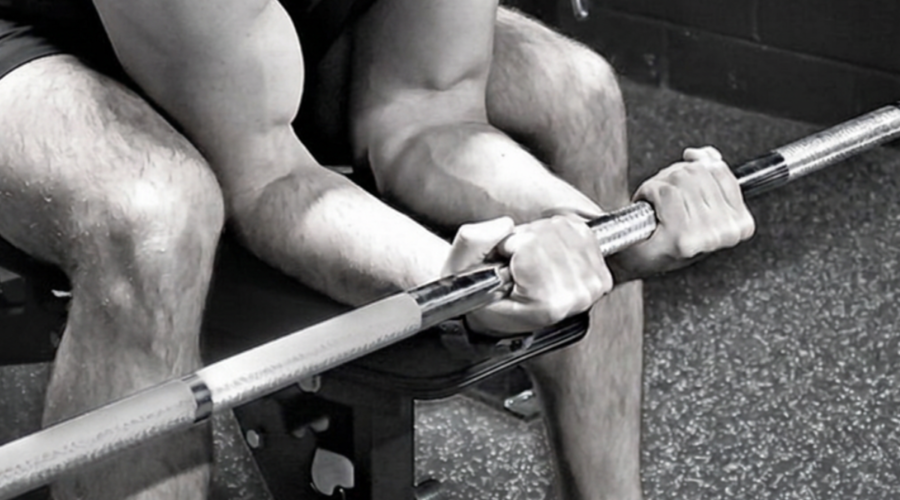
The dumbbell wrist curl is a direct exercise for the muscles on the palm side of the forearm. These muscles flex the wrist and help close the hand around an object. They contribute to grip endurance and support many pulling and carrying tasks.
Wrist flexion exercises create a focused challenge because the forearm remains supported while the wrist moves through its range of motion. This reduces the amount of work required from larger muscles and allows beginners to train the forearm flexors directly.
The goal is not to use a large dumbbell. The forearm muscles are smaller than the chest, back, or legs, and wrist curls become difficult quickly when performed through a full range of motion. A modest weight with controlled repetitions is more productive than swinging a heavy dumbbell.
How to Perform the Dumbbell Wrist Curl
Sit on a bench with a dumbbell in one hand. Rest your forearm across your thigh with your palm facing upward. Allow your wrist and hand to extend slightly beyond your knee so the dumbbell can move freely.
5 Signs You’re Aging Better Than Most People
Start with the dumbbell hanging toward your fingers. Close your hand around the handle, then curl the dumbbell upward by bending only at the wrist. Keep your forearm pressed against your thigh throughout the movement.
Pause briefly at the top of the curl, then lower the dumbbell slowly until your wrist returns to the stretched position. Do not lift your forearm from your thigh or use your elbow to create momentum. Complete all repetitions on one side before switching hands.
A full range of motion matters. Lower the dumbbell under control, but do not force your wrist into a painful stretch. If you feel sharp wrist discomfort, reduce the range of motion or use a lighter weight.
How to Program the Dumbbell Wrist Curl
Start with two or three sets of 10 to 15 repetitions per side. Rest for about 60 to 90 seconds between sets. The weight should feel challenging near the end of the set, but you should still be able to move the wrist smoothly.
Once you can complete 15 repetitions on every set with controlled form, increase the dumbbell weight slightly. Small increases are enough because the forearms respond to gradual progression.
You can perform wrist curls after rows, pull ups, or deadlifts. Avoid doing them before heavy pulling if your grip is already a limiting factor. Fatiguing the forearm flexors first can reduce your performance on bigger compound exercises.
Exercise Two: Dumbbell Reverse Wrist Curl
The reverse wrist curl trains the muscles on the top side of the forearm. These are the wrist extensors, which lift the back of the hand toward the forearm. Training them is important because a balanced forearm program should not focus only on gripping and flexion.
Wrist extensors contribute to wrist stability during pressing, pulling, and carrying. They also help control the wrist position when you hold a barbell or dumbbell. Neglecting these muscles while doing a large amount of gripping work can create an imbalance between the palm side and top side of the forearm.
Research examining wrist movement patterns has shown that different wrist actions create different demands across the forearm musculature. This is why wrist curls and reverse wrist curls complement each other. One trains wrist flexion, while the other trains wrist extension.
How to Perform the Dumbbell Reverse Wrist Curl
Sit on a bench and hold a light dumbbell in one hand. Rest your forearm across your thigh with your palm facing downward. Let your wrist extend beyond your knee so the dumbbell can move through a comfortable range.
Lower the back of your hand toward the floor under control. Then raise the back of your hand toward your forearm by extending the wrist. Keep your forearm still against your thigh and avoid using your elbow or shoulder.
The movement will be smaller than a standard wrist curl. That is normal. The wrist extensors are smaller muscles, so a light weight is usually enough. Focus on slow, controlled repetitions rather than trying to force a large range of motion.
Complete the planned repetitions on one side, then repeat with the other hand. If your wrist bends sideways during the exercise, reduce the weight and keep the movement more controlled.
How to Program the Dumbbell Reverse Wrist Curl
Perform two or three sets of 12 to 20 repetitions per side. Use a lighter dumbbell than you use for wrist curls. The reverse wrist curl is often difficult with even a small amount of resistance, especially for beginners.
You can alternate wrist curls and reverse wrist curls with little rest between them. This keeps the session efficient while training both sides of the forearm. Rest after completing both movements before starting the next round.
Do not train through pain around the outside of the elbow or wrist. Muscle fatigue is expected, but sharp pain, tingling, or pain that persists after training is a reason to stop and seek advice from an appropriately qualified health professional.
Exercise Three: Farmer’s Carry
The farmer’s carry is one of the best exercises for building real world grip strength. Hold a heavy dumbbell in each hand, stand tall, and walk with control. The movement looks simple, but it challenges the fingers, forearms, shoulders, upper back, trunk, and legs at the same time.
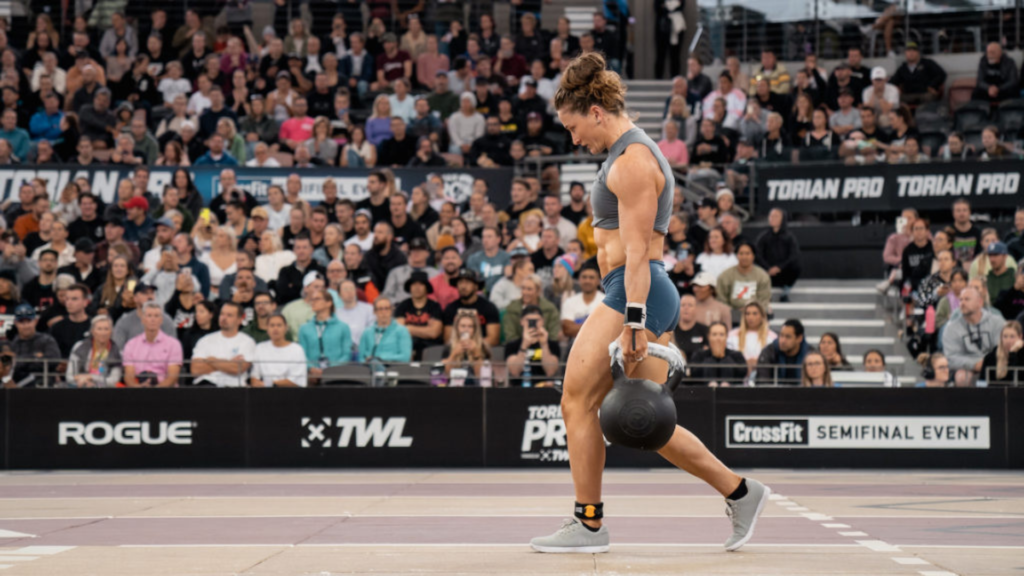
Unlike wrist curls, farmer’s carries train the forearms isometrically. This means the muscles create force to hold the wrist and fingers stable without repeatedly shortening and lengthening. Isometric work is important because many daily tasks and heavy lifts require you to hold an object securely for time.
Research on loaded carries has shown that these movements activate trunk muscles while you walk under load. This makes the farmer’s carry more than a grip exercise. It can also help build the ability to maintain posture and trunk control while carrying weight.
How to Perform the Farmer’s Carry
Place two dumbbells on the floor beside your feet. Squat or hinge down with a neutral spine, grip the dumbbells firmly, and stand tall. Let the dumbbells hang at your sides with your arms straight.
Walk forward with short, controlled steps. Keep your shoulders down and back without excessively shrugging. Maintain a tall posture and keep your ribs stacked over your pelvis.
Squeeze the handles hard enough to prevent the dumbbells from shifting, but do not bend your wrists backward or forward. Keep the wrists neutral and let the forearms work to stabilize the load.
Walk for the planned distance or time, then set the dumbbells down under control. Do not drop them. If your posture breaks down, your grip slips, or you need to lean excessively to one side, choose a lighter load or shorten the carry.
How to Program the Farmer’s Carry
Start with three carries lasting 20 to 30 seconds. Rest for at least one minute between carries. Choose dumbbells that make your grip work hard by the end of the carry but still allow you to maintain a tall posture.
As you improve, add five seconds to each carry or increase the dumbbell weight slightly. You can also use a longer walking distance if your training space allows it. Track either time, distance, or load so you have a clear way to measure progress.
Farmer’s carries are best placed near the end of a workout. They can heavily fatigue the hands and forearms, which may reduce your ability to perform rows, pull ups, or deadlifts if you do them first.
How to Build a Beginner Forearm Routine
A simple forearm routine can be completed in 10 to 15 minutes after two or three weekly strength workouts. Begin with two sets of wrist curls, two sets of reverse wrist curls, and three farmer’s carries.
Use slow, controlled repetitions for the wrist exercises. A two second lowering phase is a practical way to prevent momentum and improve control. For the carries, choose a load that challenges your grip without turning your walk into a struggle to maintain posture.
As your muscles adapt, add one set to each wrist exercise or increase the carry duration. Do not increase every variable at once. Add repetitions first, then add a small amount of weight when you reach the top of your planned range.
Forearm muscles receive work from many compound movements. Rows, pull ups, deadlifts, and curls all involve gripping. If you already perform a lot of pulling volume, you may only need a small amount of direct forearm work. More is not automatically better because the wrists and elbows can become irritated when training volume rises too fast.
Common Beginner Mistakes
The first mistake is using weights that are too heavy. Wrist curls and reverse wrist curls should be controlled movements. If you need to swing your arm or move your elbow to lift the dumbbell, the load is too heavy for the exercise.
The second mistake is training only the gripping muscles. Wrist flexors get plenty of work from gripping, curls, rows, and carries. Reverse wrist curls help train the opposing muscles, making your forearm training more balanced.
The third mistake is adding too much volume too quickly. Forearm muscles can burn intensely during training, but a strong burning sensation does not mean you need to add more sets. Start with a manageable amount of work and make gradual increases.
The Bottom Line
Dumbbell wrist curls, dumbbell reverse wrist curls, and farmer’s carries are three beginner friendly exercises for stronger and more muscular forearms. They train wrist flexion, wrist extension, and sustained grip, which covers the most important functions of the forearms.
Perform them two or three times per week after your main lifts. Use controlled repetitions, build your carry time gradually, and avoid rushing the load increases. With consistent training, stronger grip and visibly more developed forearms will follow.
References
- Ellestad, S.H., Holcomb, T.P., Swiergol, A.M., Holmstrup, M.E. and Dicus, J.R. (2024) ‘The quantification of muscle activation during the loaded carry movement pattern’, International Journal of Exercise Science, 17(1), pp. 480–490.
- Morton, R.W., Murphy, K.T., McKellar, S.R., Schoenfeld, B.J., Henselmans, M., Helms, E., Aragon, A.A., Devries, M.C., Banfield, L., Krieger, J.W. and Phillips, S.M. (2018) ‘A systematic review, meta analysis and meta regression of the effect of protein supplementation on resistance training induced gains in muscle mass and strength in healthy adults’, British Journal of Sports Medicine, 52(6), pp. 376–384.
- Wolf, M., Hecksteden, A., Morsch, A., Hessel, M., Shuster, I., Hasenfuss, G., Graf, C. and Meyer, T. (2023) ‘Resistance training prescription for muscle strength and hypertrophy in healthy adults: A systematic review and Bayesian network meta analysis’, British Journal of Sports Medicine, 57(18), pp. 1211–1220.
- Zhang, L., Sun, X., Su, P., Li, J., Chang, Y., Gao, Y. and Zhang, L. (2025) ‘Physiological characteristics of forearm muscles during different movement patterns of wrist’, Chinese Journal of Mechanical Engineering, 38, article 141.
Key Takeaways
| Key point | Practical meaning |
|---|---|
| Train both sides of the forearm | Use wrist curls for flexors and reverse wrist curls for extensors |
| Build useful grip strength | Use farmer’s carries to train sustained hand and forearm strength |
| Start with modest loads | Control matters more than using heavy dumbbells in wrist exercises |
| Train after major lifts | Keep forearm work at the end so grip fatigue does not limit rows or deadlifts |
| Progress gradually | Add repetitions, carry time, or small load increases over several weeks |
| Recover between sessions | Train direct forearm work two or three times weekly and adjust if the wrists or elbows become painful |