

When it comes to bulking up your arms, most people immediately focus on the biceps. While undoubtedly important, the triceps also make up a huge portion of the overall muscle mass. So if you want jacked and strong arms, you need to train both.
Here’s what you need to do.
The Anatomy and Science of Triceps Growth
The triceps brachii gets its name from its three distinct heads: the lateral head, the medial head, and the long head. Each head originates at a slightly different location, but they all converge into a single tendon that attaches to the olecranon process of your ulna, which is the bony point of your elbow. The primary job of the triceps is extending the elbow joint, meaning it straightens your arm against resistance.
| Triceps Head | Origin Location | Key Function | Optimal Arm Position for Activation |
| Lateral Head | Posterior humerus | Powerful elbow extension | Arm at side or neutral positions |
| Medial Head | Posterior lower humerus | Low-force elbow extension and stability | Active in almost all extension angles |
| Long Head | Scapula | Elbow extension and shoulder extension | Arms elevated overhead or extended back |
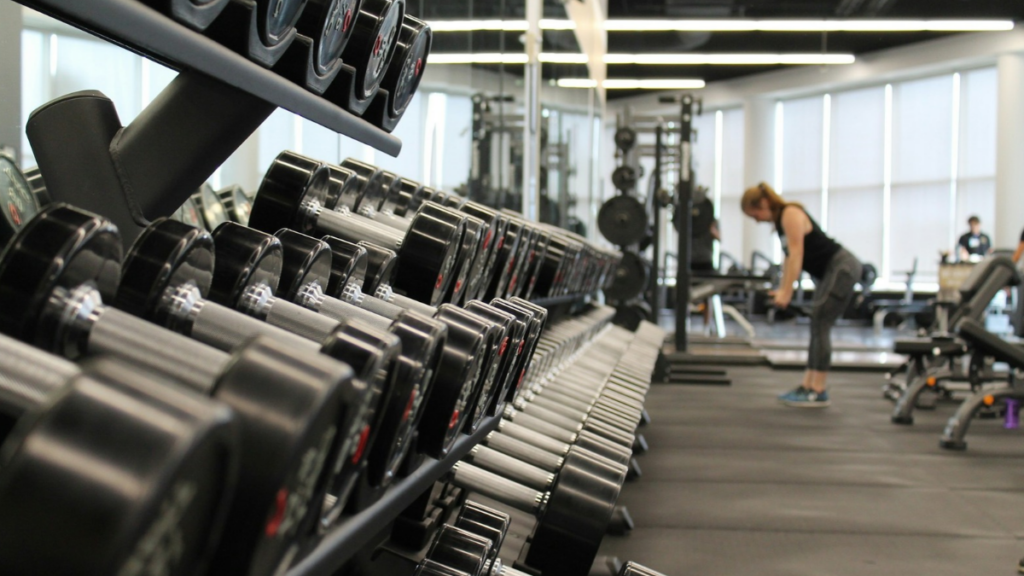
Using dumbbells rather than barbells or specialized machines provides unique training advantages for beginners. Dumbbells allow your hands and wrists to rotate naturally, which significantly reduces joint stress on the elbows and wrists. They also force both arms to work independently. This eliminates strength imbalances that frequently develop when a dominant arm takes over during barbell movements. Additionally, dumbbells require greater stabilizing effort from smaller accessory muscles, building joint integrity alongside raw strength.
Now that the anatomical blueprint is clear, let’s explore the three absolute best dumbbell exercises to build powerful, defined triceps.
Exercise 1: The Incline Neutral-Grip Dumbbell Skull Crusher
While traditional skull crushers are usually performed lying flat on a bench with a barbell, switching to an incline bench and using dumbbells completely transforms the mechanics of the exercise. Setting the bench to an incline between thirty and forty-five degrees changes the angle of pull, maintaining constant tension on the triceps throughout the entire range of motion.

When you execute a skull crusher on a flat bench, tension drops off significantly at the top of the movement when your arms are fully extended perpendicular to gravity. By introducing an incline, your arms remain at an angle relative to gravity even at full lockout. This continuous mechanical tension is one of the primary drivers of muscle hypertrophy. Furthermore, using a neutral grip where your palms face each other reduces torsional stress on the elbow joint, making it far more beginner friendly than rigid barbell variations.
To perform this exercise correctly, sit on an incline bench set to roughly thirty degrees with a dumbbell in each hand. Kick the weights up to shoulder height, then press them directly ceiling-ward. Keep your elbows tucked in so they point forward rather than flaring out to the sides. Lower the dumbbells slowly by bending only at the elbow joint, bringing the ends of the dumbbells toward the sides of your head or just behind your ears. Pause briefly in the fully stretched position, then contract your triceps to extend your elbows and return to the starting point.
Focus on keeping your upper arms locked in place throughout every single rep. Moving your elbows forward and backward converts the exercise into a shoulder pullover, taking the tension right off your triceps. Aim for controlled repetitions with a smooth two-second lowering phase to maximize muscle fiber recruitment.
Exercise 2: The Two-Handed Overhead Dumbbell Extension
If you want to maximize the growth of the long head of your triceps, an overhead extension is non-negotiable. As discussed in anatomical research, the long head can only be fully lengthened when the upper arm is raised above the head. Performing this movement with a single heavy dumbbell held in both hands provides a stable, comfortable setup that allows beginners to safely load the triceps in a deep stretch.
Training a muscle in its lengthened state creates high levels of mechanical tension while recruiting a wide range of motor units. Science consistently demonstrates that stretch-mediated hypertrophy leads to greater structural adaptations within the muscle tissue. The overhead dumbbell extension excels at creating this precise training stimulus.
You can perform this exercise either seated or standing, though sitting upright on a bench with back support is generally recommended for beginners. Seated positioning prevents excessive swinging and stops you from arching your lower back to cheat the weight up. Hold a single dumbbell vertically with both hands by forming a heart or diamond shape with your thumbs and index fingers under the inner plate of the dumbbell. Carefully raise the dumbbell directly overhead until your arms are extended.
Keeping your core tight and your chest up, lower the weight behind your head by bending your elbows. Focus on letting the dumbbell drop as deep as comfortable to feel a complete stretch throughout the back of your arms. Without letting your elbows flare outward excessively, press the weight back up to the starting position by contracting your triceps. Avoid snapping your elbows into lockout at the top; instead, focus on maintaining smooth, continuous tension.
Exercise Movement Comparison
| Exercise Variation | Primary Target Head | Primary Mechanical Benefit | Joint Stress Level |
| Incline Dumbbell Skull Crusher | Lateral and Medial Heads | Constant tension throughout range of motion | Low to Moderate |
| Overhead Dumbbell Extension | Long Head | Maximum stretch-mediated hypertrophy | Low |
| Dumbbell Floor Press | Medial and Lateral Heads | Heavy loading capacity with built-in joint protection | Very Low |
Exercise 3: The Neutral-Grip Dumbbell Floor Press
While isolation exercises like skull crushers and overhead extensions excel at targeting individual heads, beginners also need a compound pressing movement that allows them to move heavier loads safely. The neutral-grip dumbbell floor press is arguably the ultimate compound option for building triceps mass without beating up your joints.
When you press weights while lying flat on the floor, your upper arms contact the ground at the bottom of each repetition. This floor touch serves as a natural stopping point that prevents your shoulders from dipping into extreme extension, which is a common cause of shoulder irritation in beginner lifters. Because your range of motion at the shoulder is restricted by the floor, the primary burden of pushing the weight up falls almost entirely on your triceps and chest.
To execute the floor press, sit on the floor with a pair of dumbbells resting upright on your thighs. Roll backward onto your back while bringing the dumbbells to the sides of your torso. Plant your feet flat on the ground with your knees bent. Turn your hands so your palms face each other in a neutral grip, and tuck your elbows in close to your body at roughly a forty-five degree angle.
Press the dumbbells straight up toward the ceiling until your arms are extended. Lower the weights under control until your triceps and elbows make light contact with the floor. Pause on the floor for a fraction of a second to eliminate momentum, then press explosively back to the top position. Using a neutral grip during pressing movements places the shoulder in a centered, mechanically advantageous position while shifting the heavy work straight into the medial and lateral heads of the triceps.
Designing Your Beginner Triceps Protocol
Knowing which exercises to choose is only half the battle. To get the best possible results, you must structure these exercises into a balanced, progressive routine that allows for adequate recovery. The triceps muscle responds exceptionally well to a mix of rep ranges, but beginners should prioritize movement quality and mechanical tension over maximal effort loads.
3 Best Muscle Building Barbell Exercises for Beginners in The Gym
Because the triceps is heavily involved in all pushing exercises, including push-ups, shoulder presses, and bench presses, you do not need hours of dedicated arm training to trigger noticeable growth. Training your triceps twice per week with high effort and proper technique will yield far better results than exhausting the arms once a week with endless sets.
A highly effective beginner approach involves combining your overhead stretch movement, your constant-tension isolation movement, and your heavy compound press across your weekly workout routine.
Weekly Training Protocol
| Exercise | Recommended Sets | Target Rep Range | Rest Interval | Focus Area |
| Neutral-Grip Dumbbell Floor Press | 3 to 4 | 6 to 8 reps | 90 to 120 seconds | Heavy strength and compound overload |
| Incline Dumbbell Skull Crusher | 3 | 10 to 12 reps | 60 to 90 seconds | Continuous tension and hypertrophy |
| Seated Overhead Dumbbell Extension | 3 | 12 to 15 reps | 60 to 90 seconds | Long-head stretch-mediated growth |
When implementing this protocol, focus on progressive overload. Progressive overload simply means doing slightly more work over time. You can achieve this by adding a small amount of weight, performing an extra repetition with good form, or controlling the lowering phase more effectively. Keep track of your workouts in a notebook or on your phone so you know exactly what numbers you need to beat during your next session.
Nutrition and recovery also play vital roles in your structural progress. Ensure you are eating sufficient protein to support muscle repair, and prioritize sleeping seven to nine hours per night. Muscles do not grow while you are working out in the gym; they grow when you rest and supply your body with the nutrients required to rebuild stronger muscle fibers.
Key Takeaways
| Concept | Key Takeaway | Practical Action |
| Arm Muscle Distribution | Triceps make up roughly 60 percent of total upper arm mass. | Prioritize triceps training over biceps if larger arms are your goal. |
| Long-Head Activation | The long head crosses both shoulder and elbow joints. | Include overhead movements to train the long head in a lengthened state. |
| Joint Protection | Dumbbells allow natural wrist rotation and independent movement. | Use neutral grips to protect elbows and correct left-to-right strength imbalances. |
| Progressive Overload | Systematic increase in tension drives muscle hypertrophy. | Track sets and reps weekly to ensure steady improvement. |
References
Ahtiainen, J.P., Pakarinen, A., Alen, M., Kraemer, W.J. and Hakkinen, K., 2005. Short vs. long rest periods between the sets in hypertrophic resistance training in men. Journal of Strength and Conditioning Research, 19(3), pp.572-582.
Kubo, K., Ikebukuro, T. and Yata, H., 2019. Effects of squat training with different depths on lower limb muscle volumes. European Journal of Applied Physiology, 119(9), pp.1933-1942.
Maeo, S., Wu, Y., Huang, M., Sakurai, H., Kusagawa, K., Sugisaki, N., Kanehisa, H. and Isaka, T., 2023. Triceps brachii hypertrophy is greater after overhead versus neutral arm extension training. European Journal of Sport Science, 23(7), pp.1243-1254.
Schoenfeld, B.J., 2010. The mechanisms of muscle hypertrophy and their application to resistance training. Journal of Strength and Conditioning Research, 24(10), pp.2857-2872.
Schoenfeld, B.J., Ogborn, D. and Krieger, J.W., 2016. Effects of resistance training frequency on measures of muscle hypertrophy: a systematic review and meta-analysis. Sports Medicine, 46(11), pp.1689-1699.
Wackerhage, H., Schoenfeld, B.J., Hamilton, D.L., Lehti, M. and Hulmi, J.J., 2019. Stimuli and sensors that initiate skeletal muscle hypertrophy following resistance exercise. Journal of Applied Physiology, 126(1), pp.30-43.