

If your goal is a wider back, both pull ups and lat pulldowns can work extremely well. Neither exercise has a special muscle building advantage that makes the other obsolete. The better choice depends on your current strength, bodyweight, technique, access to equipment, and ability to apply progressive overload.
For most people, lat pulldowns are the more practical starting exercise because the load can be adjusted precisely. Pull ups become highly valuable once you can perform them with control, especially because they develop strength while moving your full bodyweight. The best long term answer is usually not pull ups or lat pulldowns. It is using the version that lets you train the lats hard and consistently, then including both when your training level allows it.



A wider back comes mainly from developing the latissimus dorsi. The lats are large muscles that run from the lower back and pelvis toward the upper arm. They help pull the arm down toward the body, extend the arm behind the torso, and contribute to the taper that makes the waist appear smaller.
The Short Answer
Lat pulldowns are better for beginners and anyone who cannot yet perform several strict pull ups. They allow you to select a load that matches your current ability, use a controlled range of motion, and accumulate enough quality repetitions for muscle growth.
Pull ups are better for developing the specific ability to lift your bodyweight. They are also a highly effective back exercise once you are strong enough to perform them through a controlled range of motion without swinging, kicking, or shortening the movement.
Both exercises train the lats, biceps, upper back, and muscles that control the shoulder blades. Research using electromyography shows that pull up and chin up variations strongly recruit the latissimus dorsi and elbow flexors. Studies of pulldown variations also show substantial activation of the lats and other upper back muscles.

Muscle activation research can help explain what an exercise demands, but it does not prove that one exercise will always create more muscle over months of training. Muscle growth depends on progressive resistance, sufficient challenging sets, effort, recovery, nutrition, and consistency.
What Creates a Wider Back?
The lats are the main muscles responsible for back width, but a wide looking back also depends on the teres major, rear deltoids, lower trapezius, middle trapezius, rhomboids, and overall body composition. Building the upper back adds thickness and structure around the shoulders, while developing the lats creates the outward sweep that contributes to a strong V shape.
Vertical pulling is an important movement pattern for the lats. In both pull ups and pulldowns, you move the upper arm from an elevated position toward your torso. This action trains the lats alongside the biceps and several muscles around the shoulder blade.
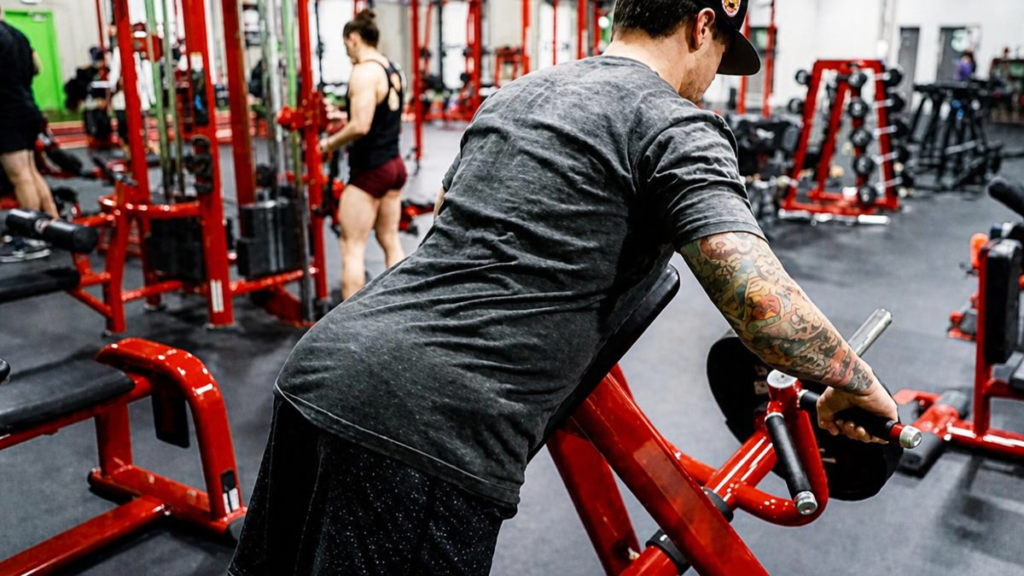
Rows should also remain part of your training. Pull ups and pulldowns emphasize a vertical pulling path, while rows train the back through a horizontal pull. A complete back program usually includes both patterns because the upper back muscles have several functions and directions of force.
How Heavy Should Beginners Deadlift in the Gym?
The most important factor is not finding one perfect exercise. It is accumulating enough high quality sets over time. Research on resistance training volume indicates that multiple challenging weekly sets for a muscle generally support greater muscle growth than very low volume training, although each person has a point where additional work becomes difficult to recover from.
Pull Ups: Strengths and Limitations
A pull up is a bodyweight vertical pulling exercise. You hang from a bar, pull your body upward, then lower under control. An overhand grip is usually called a pull up, while an underhand grip is usually called a chin up.
The major advantage of pull ups is that they train relative strength. You must move your entire bodyweight, which requires the lats, upper back, biceps, forearms, and trunk to work together. This makes pull ups a useful measure of upper body pulling ability.
Pull ups also require more coordination than a machine pulldown. Your trunk and lower body need to remain controlled while the arms pull. This is valuable for overall strength, but it can also make the exercise harder to learn and progress.
Why Pull Ups Can Build a Wide Back
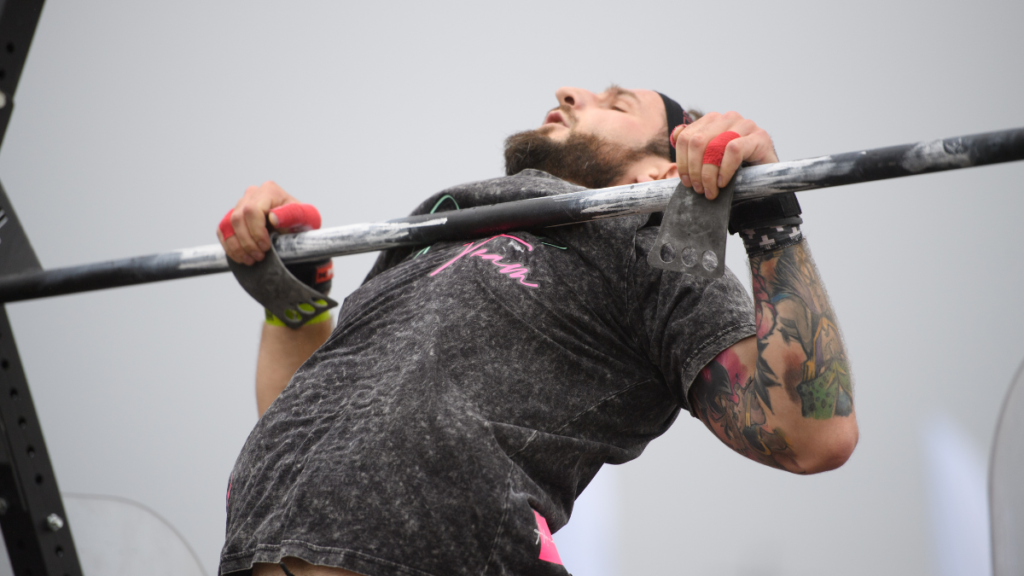
Strict pull ups place the lats under tension through a large range of motion. Starting from a controlled hang, you pull your elbows down toward your ribs and bring your upper body toward the bar. The lats contribute strongly to this action.
If you can perform six to 12 strict repetitions, pull ups can be an excellent hypertrophy exercise. Once you can perform more than 12 controlled repetitions, you can add a small amount of external weight to keep the exercise challenging.

The exercise becomes less useful for muscle growth when every set is limited to one or two difficult repetitions. Very low repetition practice can improve the skill of performing pull ups, but it may not provide enough productive volume for the lats. Assisted pull ups, slower negatives, and lat pulldowns can help you build the strength needed to perform more quality repetitions.
Common Pull Up Mistakes
The most common mistake is using momentum. Swinging the body, kicking the legs, or aggressively arching the lower back can help you reach the bar, but it changes the movement and makes it harder to control the lats through the full range of motion.
Another common mistake is cutting the bottom of the repetition short. You do not need to force a painful passive hang, but you should lower until your elbows are straight and your shoulders are controlled. Repeating the same bottom position makes your sets more consistent and allows the lats to work through a useful range.
The final mistake is treating the exercise as an ego test. If your form breaks down after three repetitions, use assistance or switch to pulldowns for your additional back work. There is no advantage in repeatedly performing poor quality repetitions when a scalable alternative is available.
Lat Pulldowns: Strengths and Limitations
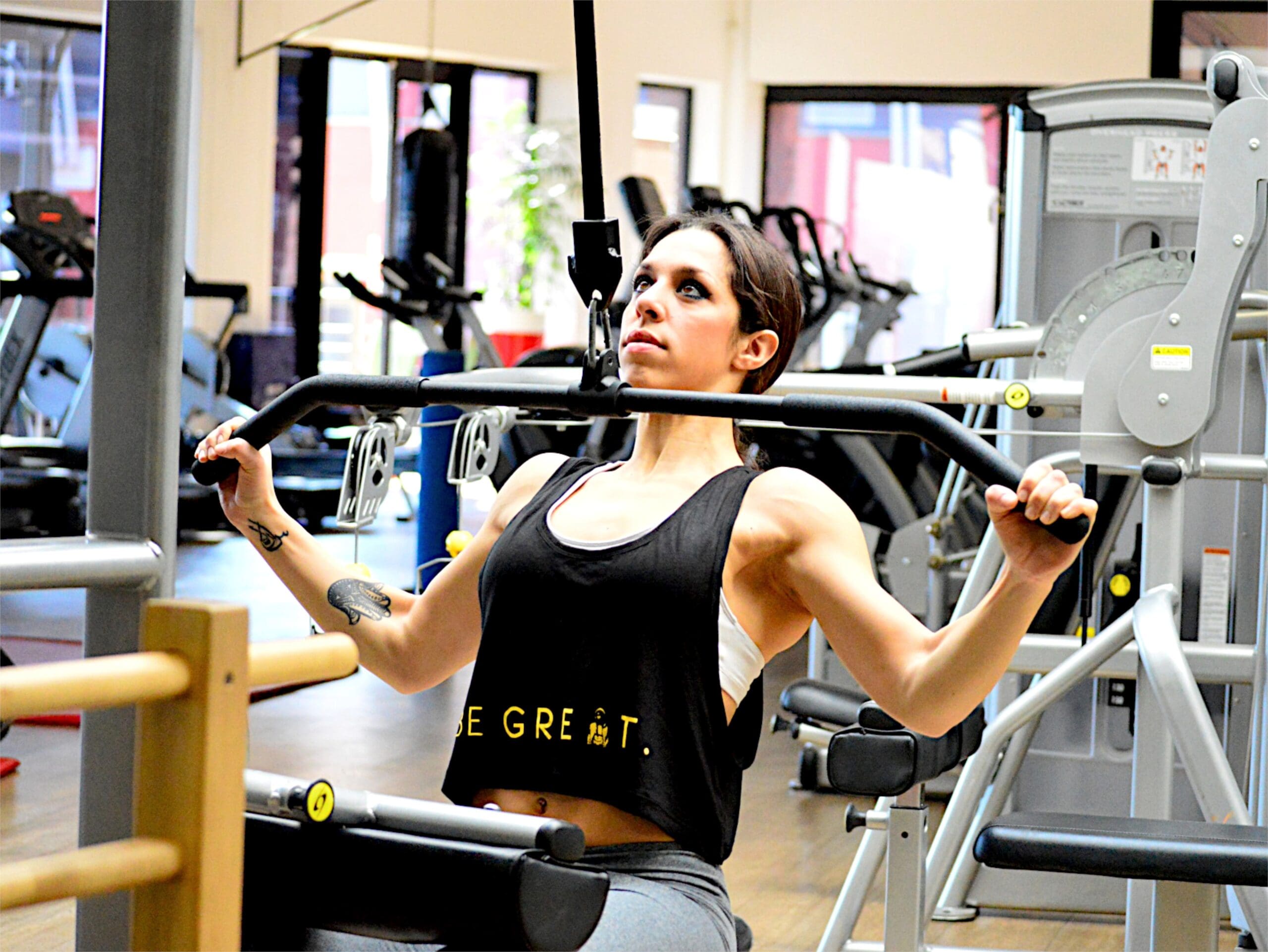
The lat pulldown uses a cable machine to train the same general vertical pulling pattern. You sit under a pad, hold a bar or handle, and pull it down toward the upper chest. The machine makes it possible to choose a load that matches your current strength.
The biggest advantage is progression. A beginner can start with a load that allows eight to 15 controlled repetitions, then add weight in small increments as strength improves. This makes the lat pulldown particularly useful for building enough volume to stimulate hypertrophy.
The pulldown also allows you to continue training the lats if bodyweight pull ups are not yet possible. Many lifters view this as a lesser option, but a pulldown performed with controlled technique and progressive loading can be a highly effective back builder.
Why Lat Pulldowns Can Build a Wide Back
Pulldowns let you load the lats without requiring you to lift your entire bodyweight. That is important because the best muscle building load is not always the heaviest one. It is the load that you can control through a useful range of motion and perform for enough challenging sets.
You can train pulldowns in a moderate repetition range, such as eight to 15 repetitions. This creates a practical balance between load, technique, and volume. Research shows that muscle growth can occur across a wide range of loads when sets are performed with sufficient effort.
The ability to change the weight also makes pulldowns useful when your bodyweight changes. During a fat loss phase, pull ups may feel easier as body mass decreases. During a muscle gain phase, they may feel harder. The pulldown load can be adjusted immediately so your training remains consistent.
Common Lat Pulldown Mistakes
The most common mistake is pulling the bar behind the neck. This position may place the shoulder in an uncomfortable combination of movement and does not appear necessary for lat development. Pulling the bar toward the upper chest is generally a more practical and controllable option.
Another mistake is leaning far backward and turning the exercise into a row. A slight torso lean is normal, but excessive movement changes the line of pull and reduces consistency. Keep your torso stable, pull your elbows down, and control the bar as it returns upward.
Using a very wide grip is another popular mistake. A wide grip may feel like it targets the lats more, but research has not shown that extremely wide grips create a special advantage. A grip around shoulder width or slightly wider is usually more comfortable and allows a strong range of motion.
Which Exercise Is Better for Beginners?
Lat pulldowns are usually better for beginners because they are easier to scale. You can choose a manageable load, practice the pattern, and perform enough repetitions to learn control.

A beginner who cannot perform a pull up should not avoid the movement forever. Assisted pull ups are a useful bridge because they let you practice the bodyweight pattern with less load. Resistance bands, assisted pull up machines, and foot supported pull up variations can all work.
Use pulldowns as your main progressive exercise while practicing assisted pull ups separately. This gives you enough volume to grow the lats while also developing the skill and strength needed for future pull ups.
Which Exercise Is Better for Advanced Lifters?
Advanced lifters can gain from both exercises. Weighted pull ups are a powerful way to overload the lats and upper body pulling muscles. They allow you to progress beyond bodyweight and build significant strength.
Lat pulldowns still have value for advanced lifters because they can add muscle building volume with less coordination demand. After heavy weighted pull ups, a pulldown can let you perform higher repetition sets without needing to manage as much bodyweight or grip fatigue.
If you only choose one exercise, choose the one you can progress with for your current goal. If you want better pull up performance, do pull ups. If you want to add controlled back volume after heavy compounds, pulldowns may be the more practical option.
How to Program Pull Ups and Lat Pulldowns
For a beginner, perform lat pulldowns twice each week. Use three sets of eight to 15 repetitions. Choose a load that leaves you with one or two controlled repetitions in reserve. Add weight when you can reach the top of the repetition range with good technique.
Practice assisted pull ups once or twice each week after your pulldowns or in a separate short session. Perform two or three sets of three to eight repetitions. Gradually reduce the assistance as your strength improves.
For an intermediate lifter, perform pull ups or weighted pull ups first in the session for three or four sets of five to 10 repetitions. Then add two or three sets of pulldowns in the eight to 15 repetition range. This combination provides both high effort bodyweight strength work and additional lat training volume.
For advanced lifters, weighted pull ups can be trained in lower repetition ranges for strength, followed by pulldowns performed with controlled higher repetition work. The exact number of sets depends on your total pulling volume, recovery, and other training demands.
The Verdict
Pull ups and lat pulldowns can both build a wider back. Pull ups are a great bodyweight strength exercise and become even more useful when you can perform enough strict repetitions or add weight. Lat pulldowns are easier to scale and are usually the better choice for beginners and for adding high quality back volume.
The strongest approach is to use pulldowns to build your base, practice assisted pull ups to learn the skill, and eventually include strict or weighted pull ups when you are ready. Train your lats through controlled vertical pulling, include rows for complete back development, and progress your training over time.
References
- Lusk, S.J., Hale, B.D. and Russell, D.M. (2010) ‘Grip width and forearm orientation effects on muscle activity during the lat pull down’, Journal of Strength and Conditioning Research, 24(7), pp. 1895–1900.
- Schoenfeld, B.J., Ogborn, D. and Krieger, J.W. (2017) ‘Dose response relationship between weekly resistance training volume and increases in muscle mass: A systematic review and meta analysis’, Journal of Sports Sciences, 35(11), pp. 1073–1082.
- Schoenfeld, B.J., Grgic, J., Ogborn, D. and Krieger, J.W. (2017) ‘Strength and hypertrophy adaptations between low versus high load resistance training: A systematic review and meta analysis’, Journal of Strength and Conditioning Research, 31(12), pp. 3508–3523.
- Youdas, J.W., Amundson, C.L., Helmus, T.J., Stevans, K.G., Haeflinger, K.M. and Aandahl, C.M. (2010) ‘Surface electromyographic activation patterns and elbow joint motion during a pull up, chin up, or Perfect Pullup rotational exercise’, Journal of Strength and Conditioning Research, 24(12), pp. 3404–3414.
Key Takeaways
| Question | Answer |
|---|---|
| Which exercise builds a wider back? | Both can build the lats when trained with progressive overload and sufficient effort |
| Which is better for beginners? | Lat pulldowns because the resistance can be adjusted precisely |
| Which is better for pull up strength? | Pull ups because they are specific to lifting your bodyweight |
| What should you do if you cannot perform a pull up? | Use pulldowns for training volume and assisted pull ups for skill practice |
| Can advanced lifters use both? | Yes, use weighted pull ups for strength and pulldowns for additional volume |
| What else builds the back? | Include rows to train the upper back through a horizontal pulling pattern |