

Chin ups and pull ups are both excellent bodyweight exercises for building upper body strength. They train the lats, upper back, forearms, and elbow flexors while demanding grip strength and control through the shoulders and torso.
The difference comes down to grip position. A chin up uses a supinated grip, meaning the palms face toward you. A pull up uses a pronated grip, meaning the palms face away from you. That simple change affects how the elbow flexors and upper back contribute to the movement.


If your main goal is bigger arms, chin ups have a slight advantage. Research comparing the exercises has found greater biceps brachii activation during chin ups than during pull ups. If your goal is a wider back, both exercises can be effective because both train the latissimus dorsi strongly. Pull ups may offer a small advantage for lower trapezius activity, but neither movement should be treated as the only exercise you need.
The best choice depends on what you want to emphasize, how your joints feel, and whether you can perform enough high quality repetitions to create a muscle building stimulus.
What Determines Wider and Bigger Arms?
Before choosing between chin ups and pull ups, it helps to be clear about what creates arm size. The biceps brachii contributes to the front of the upper arm and is important for elbow flexion and forearm supination. The brachialis, which sits underneath the biceps, also contributes substantially to elbow flexion and can add thickness to the upper arm.
However, the triceps brachii is the larger muscle group of the upper arm. If you want arms that look bigger from the side and back, direct triceps training is essential. Chin ups and pull ups provide very little direct triceps resistance because the triceps primarily extends the elbow, while these exercises require elbow flexion.
For arm width when viewed from the front, shoulder development also matters. The lateral deltoids create the outer contour of the upper arm and can make the arms look broader even when biceps size is unchanged. This means that no pulling exercise alone can maximize arm width.
Chin ups and pull ups can contribute meaningfully to biceps and forearm development, but they work best as part of a complete arm training plan that includes direct elbow flexion and elbow extension exercises.
Why Chin Ups Usually Build More Biceps
The supinated grip used in chin ups places the forearm in a position that favors the biceps brachii. The biceps performs two major actions at the elbow and forearm: bending the elbow and rotating the forearm so the palm faces upward. A chin up uses both of these functions.
A study comparing chin ups and pull ups found that the biceps brachii showed significantly greater muscle activity during chin ups. The pectoralis major was also more active during the chin up, while the lower trapezius was more active during the pull up. The latissimus dorsi was highly active in both exercises.
This makes chin ups a useful compound movement for people who want to train their back and add productive biceps volume at the same time. They do not replace curls completely, but they can make a meaningful contribution to arm development.
Technique That Keeps the Biceps Involved
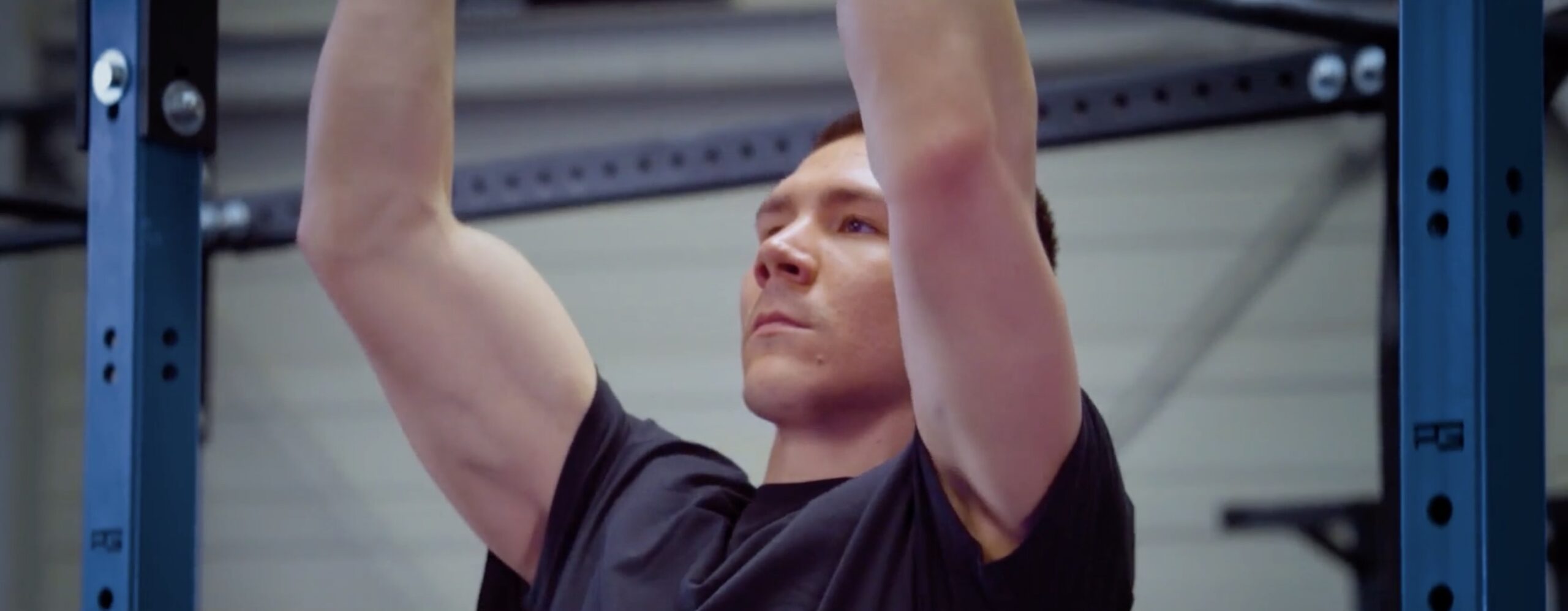
Start from a controlled hang with the palms facing you and the hands around shoulder width apart. Keep the rib cage steady, then pull by driving the elbows down and back. Aim to bring the upper chest toward the bar rather than thrusting the chin forward.
A full range of motion is important. Begin with the elbows extended if your shoulders tolerate that position, then pull until the chin clears the bar or the upper chest approaches it. Lower under control until the arms are again extended. The lowering phase gives the biceps and lats a loaded lengthening action, which is an important part of resistance training.
3 Best Beginner Exercises for Wider and More Attractive Shoulders
Avoid using a large swing from the hips. A strict repetition places more consistent demand on the upper body. Kipping can be useful in specific sports settings, but research has shown that it reduces biceps activation compared with a strict pull up. For muscle growth, strict repetitions are the more direct option.
How to Progress Chin Ups for Arm Growth
If you cannot yet perform full chin ups, use an assisted chin up machine, a resistance band, or slow negatives. Assisted variations allow you to accumulate enough controlled repetitions to practice the pattern and build strength. Negative repetitions involve stepping or jumping to the top, then lowering slowly under control.
Once you can perform several full repetitions, add total volume before adding weight. You might perform three to five sets of four to eight repetitions, resting long enough to maintain good form. When you can complete the top of your chosen repetition range for all sets, add a small external load with a belt or vest.
Weighted chin ups are particularly effective because they provide a clear way to increase resistance. More load is not automatically better, but progressive overload is necessary for continued strength and muscle development. The exercise should become gradually more demanding while your technique stays consistent.
Why Pull Ups Still Matter for a Wider Back
Pull ups use a pronated grip and usually feel more difficult than chin ups for many people. The grip position may reduce the direct contribution of the biceps brachii, making the upper back and forearms feel more limiting.
Both chin ups and pull ups recruit the latissimus dorsi strongly. The lats are the major muscles responsible for the broad shape of the back. As they grow, they create more visual width from the upper torso to the waist.
Research comparing pull up variations has shown high latissimus dorsi activity across different grip styles. In the chin up versus pull up comparison, lat activity was substantial in both movements, while lower trapezius activity was higher in the pull up. The lower trapezius helps control the shoulder blade and contributes to upper back function, although it does not create most of the visible back width associated with developed lats.
For the goal of a wider back, either exercise can work. The more important factors are whether you perform a full, controlled range of motion, train with enough volume, and progress the movement over time.
Technique That Prioritizes the Back
Use a grip that feels stable and comfortable. A moderate grip is often easier to control than an extremely wide grip. Very wide grips may shorten the range of motion and do not have clear evidence of producing superior lat development.
Begin each repetition from a controlled hang. Initiate the movement by bringing the shoulder blades down and toward a stable position, then pull the elbows toward the sides of the torso. Keep the body mostly still and avoid swinging the legs forward and backward.
At the top, do not force the shoulders upward in an attempt to gain a few extra inches. Instead, finish where you can maintain control and then lower smoothly. The lower portion of the movement matters because it gives the lats and elbow flexors a meaningful stretch under bodyweight.
If grip fatigue limits your pull up training before the back is challenged, lifting straps can be useful for some sets. They should not replace all grip training, but they can help when the goal is to provide enough back volume rather than test grip endurance every session.
Chin Ups vs Pull Ups for Bigger Arms
For direct biceps stimulation, chin ups are the better choice. The supinated grip increases the biceps contribution, and the exercise allows you to use a large amount of resistance because you are moving your bodyweight.
However, chin ups should not be your only biceps exercise if arm size is a major goal. The biceps is challenged during chin ups, but fatigue in the lats, grip, or upper back can end the set before the biceps receives enough direct work. Adding a curl variation after your compound pulling work allows you to train the elbow flexors closer to their limit.
Cable curls, dumbbell curls, and preacher curls can all provide useful direct biceps work. Different curl variations place the resistance at different points in the range of motion, but the main priority is a comfortable full range of motion and gradual progression.
For bigger overall arms, add direct triceps work as well. Triceps extensions, cable pressdowns, close grip presses, and overhead extensions train the largest muscle group of the upper arm. Overhead triceps extensions are particularly useful because the long head of the triceps crosses the shoulder joint and is trained in a lengthened position when the arms are overhead.
You do not need excessive exercise variety. Two or three well performed exercises that you can progressively overload are usually more valuable than a long list of movements with no clear plan.
How Much Training Do You Need?
Resistance training volume is an important driver of muscle hypertrophy. Research syntheses show that muscle growth generally improves as weekly hard sets increase, although the benefit becomes smaller as volume gets higher. The best amount varies between people based on training experience, sleep, nutrition, exercise selection, and recovery.
A reasonable starting point is six to 10 direct weekly sets for the biceps and a similar amount for the triceps. Chin ups can count as some biceps work, especially when they are difficult and performed through a full range. Pull ups can also count, although their direct biceps contribution is likely lower.
For the back, six to 12 hard weekly pulling sets is a practical starting range for many lifters. These can come from chin ups, pull ups, pulldowns, and rows. Rows are important because they train the upper back through a different pulling direction and can help create a fuller look from the side and rear.
Train each movement with enough effort that the final repetitions are challenging. You do not need to reach absolute failure every set. Stopping with one or two repetitions still possible can provide a strong stimulus while helping you preserve form and manage fatigue.
Which One Should You Choose?
Choose chin ups if bigger biceps are a major priority. The supinated grip gives the biceps a stronger role, and the movement remains excellent for the lats and upper back. It is often the most efficient choice when you want one bodyweight pull that supports both back and arm development.
Choose pull ups if you prefer the pronated grip, want more lower trapezius involvement, or find that your shoulders and elbows feel better in that position. They can build a wide back effectively when progressed with added load, repetitions, or training volume.
Use both if you enjoy both and recover well. You might perform chin ups on one training day and pull ups on another, then add direct curls and triceps work after your primary pulling exercises. This approach allows you to build back strength while giving the arms the dedicated training they need to grow.
The real winner is not determined by grip position alone. Chin ups have the better case for biceps growth, while both movements can support lat development and a wider back. For genuinely bigger arms, pair either exercise with direct biceps, triceps, and shoulder training.
Key Takeaways
| Factor | Chin ups | Pull ups |
|---|---|---|
| Grip position | Palms face toward you. | Palms face away from you. |
| Biceps contribution | Greater biceps brachii activity has been measured during chin ups. | The biceps contributes, but usually less than during chin ups. |
| Lat training | Strong latissimus dorsi involvement supports back development. | Strong latissimus dorsi involvement supports back development. |
| Upper back emphasis | Trains the upper back and lats effectively. | May provide greater lower trapezius activity. |
| Best main use | A strong choice for combining back training with biceps development. | A strong choice for back training and a comfortable pronated grip pattern. |
| Arm size limitation | Does not provide enough direct triceps training for maximum arm growth. | Does not provide enough direct biceps or triceps training for maximum arm growth. |
References
- Dickie, C.L., DeLuca, C.J. and Challis, J.H. (2017) ‘Electromyographic analysis of muscle activation during pull up variations’, Journal of Electromyography and Kinesiology, 32, pp. 30–36.
- Doma, K., Deakin, G.B. and Bentley, D.J. (2013) ‘Kinematic and electromyographic comparisons between chin ups and lat pull down exercises’, Sports Biomechanics, 12(4), pp. 302–313.
- Lusk, S.J., Hale, B.D. and Russell, D.M. (2010) ‘Grip width and forearm orientation effects on muscle activity during the lat pull down’, Journal of Strength and Conditioning Research, 24(7), pp. 1895–1900.
- Pelland, J.C., Remmert, J.F., Robinson, Z.P., Hinson, S.R. and Zourdos, M.C. (2026) ‘The resistance training dose response: Meta regressions exploring the effects of weekly volume and frequency on muscle hypertrophy and strength gains’, Sports Medicine, 56(2), pp. 481–505.
- Schoenfeld, B.J., Ogborn, D. and Krieger, J.W. (2017) ‘Dose response relationship between weekly resistance training volume and increases in muscle mass: A systematic review and meta analysis’, Journal of Sports Sciences, 35(11), pp. 1073–1082.
- Sweeney, E.A., McHugh, M.P., Dailey, G.P., Frost, M.J. and Comyns, T.M. (2016) ‘Surface electromyographic activation patterns and elbow joint motion during a pull up, chin up, or rotational pull up exercise’, Journal of Strength and Conditioning Research, 30(5), pp. 1313–1320.
- Vigotsky, A.D.B., Contreras, B., Beardsley, C., Steele, J. and Ogborn, D. (2015) ‘Effects of pre exhausting the biceps brachii muscle on the performance of the front lat pull down exercise using different handgrip positions’, Journal of Human Kinetics, 49, pp. 149–155.