

Shoulder growth can stall even when you train hard. The usual problem is not a lack of effort. It is using several exercises that ask the same muscles to do nearly the same job, while leaving other parts of the deltoid undertrained.
Your deltoid has three main regions. The front deltoid helps raise the arm forward and press weight overhead. The middle deltoid helps move the arm out to the side and contributes heavily to shoulder width. The rear deltoid helps move the arm backward and control the shoulder during pulling movements. A program built only around pressing will usually give the front deltoid plenty of work, but that does not guarantee enough direct stimulus for the middle and rear regions.


Research comparing shoulder exercises shows that different movements change activation across the deltoid. That does not mean an activation reading alone proves muscle growth. It does, however, help explain why distinct movement patterns can be useful when the goal is complete shoulder development. The most reliable route to hypertrophy remains progressive resistance training with enough challenging work over time.
These three exercises complement each other because they train the shoulders through different actions. Use them with controlled technique, add reps or load gradually, and give the muscles time to recover.
Why Your Current Shoulder Training May Not Be Working
A bigger exercise list is not automatically a better program. If your workout includes bench pressing, incline pressing, push ups, and overhead pressing, your front deltoids may already receive substantial work. Adding more front raises can make the session longer without addressing the area that is actually holding back your shoulder shape.
The middle and rear deltoids often need more deliberate attention. They can be trained with compound movements, but direct work may help you perform enough high quality repetitions without triceps, chest, or grip fatigue ending the set first. This is particularly relevant when a compound press is limited by the triceps before the target shoulder muscles are fully challenged.
3 Best Beginner Exercises for a Wider V-Shaped Back
Weekly training volume matters for hypertrophy. A large review found a dose response relationship between the number of weekly resistance training sets and gains in muscle mass, although more work is not always better if it reduces training quality or recovery. The practical lesson is simple. Give the muscles you want to grow enough hard sets, then monitor whether performance is moving forward.
The Goal Is Productive Tension, Not a Perfect Exercise
No exercise is mandatory for every lifter. Equipment, mobility, injury history, and preference all matter. Still, a good shoulder program should include a vertical pressing pattern, an exercise that challenges shoulder abduction, and an exercise that directly targets horizontal shoulder extension or rear shoulder movement.
The three exercises below cover those jobs. Each has a different strength, so trying to make one replace the other two usually leaves something missing.
Exercise One: Dumbbell Overhead Press
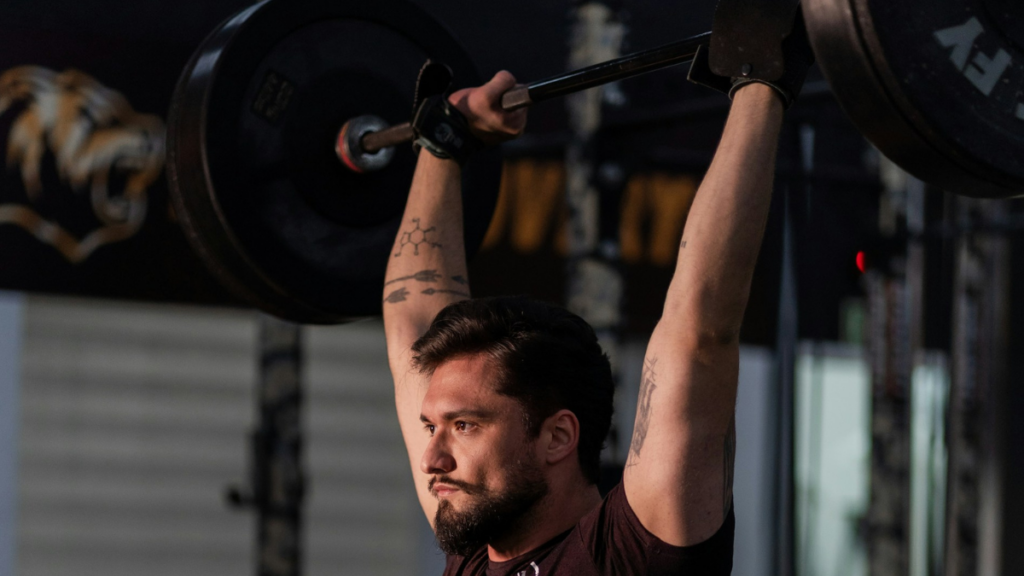
The dumbbell overhead press is the heavy, multi joint option. It trains the front deltoid strongly while also involving the triceps and muscles that stabilize the shoulder blade. Compared with an isolation exercise, the press allows more external load and gives you a clear way to measure strength progress.
Hold a dumbbell in each hand around shoulder height, with your wrists stacked over your elbows. Press upward in a smooth arc until the weights are overhead, then lower them under control. Use a seated version if standing balance turns the exercise into a whole body movement instead of a shoulder exercise.
Research on resistance training shows that heavier loads are especially effective for improving one repetition maximum strength. Muscle growth, however, can occur across a broad range of loads when sets are performed with sufficient effort. That means the overhead press can be performed in moderate rep ranges for shoulder size while still serving as a useful strength movement.
How to Make the Press Work for Growth
Choose a load that allows controlled repetitions without leaning back excessively. A small amount of natural torso movement is normal, but a large backward lean shifts the exercise toward an incline chest press and may irritate the lower back.
Aim to lower the dumbbells as far as your comfortable shoulder motion allows, then press through a full controlled range. A review of range of motion research suggests that training muscles at longer lengths, often achieved through a fuller range, can support hypertrophy in several muscle groups. The evidence does not prove that every lifter must use identical depth, but it supports avoiding unnecessarily shortened repetitions.
For many lifters, two to four hard sets of about six to twelve repetitions work well. Keep one or two repetitions in reserve on most sets, then take some sets closer to the point where another clean repetition would not be possible. Training every set to absolute failure is not required for hypertrophy and can create more fatigue than benefit.
Exercise Two: Cable Lateral Raise
The cable lateral raise has a different job. It focuses on shoulder abduction, the action of lifting the arm out to the side. This makes it a valuable choice for the middle deltoid, the region that contributes most directly to the visual width of the shoulders.
Stand side on to a low cable pulley and hold the handle with the outside hand. Begin with the hand slightly in front of the hip. Raise the arm out and slightly forward until your upper arm is close to shoulder height, then return slowly. Keep a soft bend in the elbow and avoid throwing the weight upward with your torso.
A cable can be useful because it provides resistance throughout more of the movement than a dumbbell does. With a dumbbell, the resistance is relatively low near the bottom because the weight hangs close to the body. The cable creates tension earlier in the lift, which can make the bottom section more challenging without needing a heavy weight.
Do Not Turn It Into a Trap Exercise
The most common error is shrugging the shoulder toward the ear as the arm rises. Some upper trapezius involvement is normal because the shoulder blade needs to move as the arm lifts. However, excessive shrugging can shift the sensation away from the middle deltoid and make the lift harder to control.
Use a light to moderate load and a slow lowering phase. You do not need to hold the arm perfectly in line with the body. A slight forward angle is often more comfortable for the shoulder joint. Stop the range when you can no longer lift smoothly without swinging or losing position.
Research comparing shoulder exercises in resistance trained individuals found that exercise selection changed activation across the anterior, middle, and posterior deltoid. That supports using an abduction focused movement rather than assuming pressing alone will provide the same stimulus. For most people, two to four sets of ten to twenty repetitions after pressing provide enough focused work without turning the workout into a test of joint tolerance.
Exercise Three: Chest Supported Rear Delt Fly
The chest supported rear delt fly is the exercise that helps complete the picture. Your rear deltoids work during rows and pull downs, but the amount of direct stimulus can vary according to your rowing style, elbow path, and the contribution of the lats and upper back. A rear delt fly makes the rear shoulder the limiting factor more often.
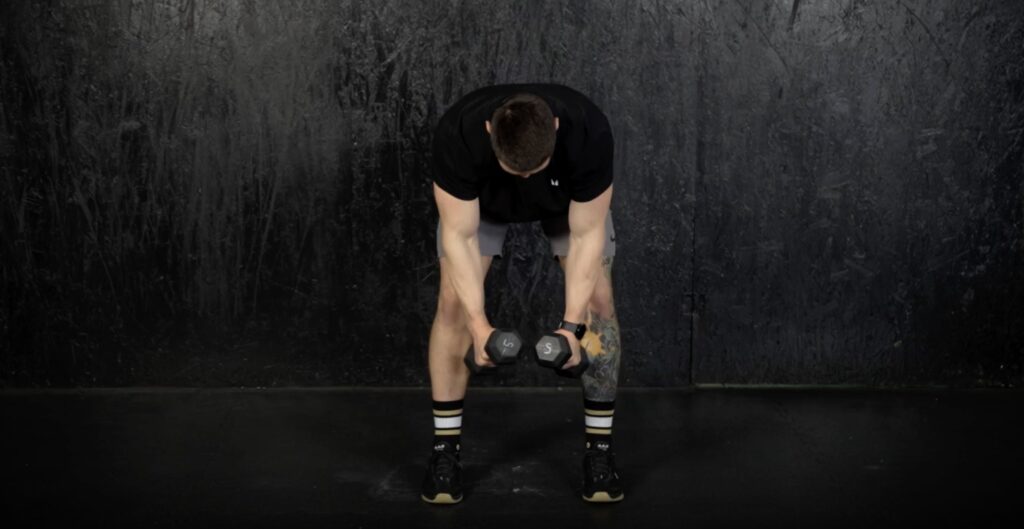
Set an adjustable bench to a low incline and lie face down with your chest supported. Hold light dumbbells with your arms hanging beneath you. Raise your arms out and slightly back, keeping your elbows softly bent, then lower with control. Think about moving your upper arms rather than trying to squeeze the shoulder blades together as hard as possible.
The bench support is useful because it limits body swing. It also reduces the temptation to turn the movement into a standing row. Rear deltoid work usually responds better to precise repetitions than to chasing a large number on the dumbbell rack.
Use the Right Range and Tempo
Start with your arms underneath your shoulders and raise them only as far as you can maintain control. At the top, your upper arms should generally be near the line of your torso. Forcing an extreme range can pull the shoulder blades into a position that shifts the work away from the rear deltoids.
Use a slow lowering phase and avoid snapping the weights upward. A moderate to high repetition range is practical here because the rear deltoids are relatively small and the exercise does not need very heavy loading to become challenging. Sets of about twelve to twenty repetitions are a sensible starting point.
This exercise is not a substitute for rows, just as lateral raises are not a substitute for pressing. It fills a different role by giving the rear deltoids direct, repeatable work. That variety can be especially valuable for lifters whose training is dominated by presses and chest exercises.
How to Put the Three Exercises Together
Start with the dumbbell overhead press while you are fresh. It requires the most coordination and is the easiest movement to load progressively. Follow it with cable lateral raises, then finish with chest supported rear delt flies. This order lets you train the heavy movement first while using the isolation exercises to add targeted volume.
A simple session could include three sets of six to twelve repetitions on the overhead press, followed by three sets of ten to twenty repetitions on the cable lateral raise and three sets of twelve to twenty repetitions on the rear delt fly. The exact number of sets should fit your total training week. If you already do a lot of pressing and rowing, begin conservatively and add work only when you can recover and keep progressing.
Train close enough to failure that the final repetitions require real effort, while protecting form. Evidence indicates that hypertrophy can be achieved with both lower and higher loads when effort is sufficiently high. That gives you flexibility. Use heavier loading where it is safe and productive, then use lighter loads for isolation work that is easier on the joints.
What Progress Should Look Like
Do not judge shoulder growth only by whether you feel a burn. Track repetitions, load, technique, and recovery. If you can add a repetition with the same clean form, improve control at the same load, or gradually add weight without losing range, the training stimulus is moving in the right direction.
Visible changes take time. Take photos under similar lighting every few weeks, and measure your performance across several sessions instead of reacting to one workout. If your shoulders are not progressing after several weeks, review total weekly sets, exercise execution, sleep, calorie intake, and protein intake before assuming you need a more complicated program.
The Bottom Line
The dumbbell overhead press, cable lateral raise, and chest supported rear delt fly work because they emphasize different shoulder actions. The press gives you a loadable strength and size movement for the front deltoids. The lateral raise gives the middle deltoids focused work for shoulder width. The rear delt fly provides direct training for the back of the shoulder, which is often overlooked.
Build your program around controlled repetitions and gradual progress. You do not need dozens of exercises. You need enough high quality work from movements that do not all train the exact same part of the shoulder.
Key Takeaways
| Exercise | Main training role | Practical programming focus |
|---|---|---|
| Dumbbell overhead press | Heavy vertical pressing with strong front deltoid and triceps involvement | Use controlled sets of six to twelve repetitions and progress gradually |
| Cable lateral raise | Direct shoulder abduction with a focus on the middle deltoid | Use lighter loads, strict form, and ten to twenty repetitions |
| Chest supported rear delt fly | Direct rear deltoid training with less body swing | Use controlled sets of twelve to twenty repetitions and avoid momentum |
| Weekly volume | Creates enough repeated training stimulus for growth | Start with recoverable hard sets and add work only when performance and recovery remain good |
| Effort and range | Help make each set productive | Use a comfortable controlled range and finish sets close to technical failure |
References
- Campos, Y.A.C., Vianna, J.M., Guimarães, M.P., Oliveira, J.L., Hernández Mosqueira, C. and da Silva, S.F. (2020) ‘Different shoulder exercises affect the activation of deltoid portions in resistance trained individuals’, Journal of Human Kinetics, 75, pp. 5–14.
- Grgic, J., Schoenfeld, B.J., Orazem, J. and Sabol, F. (2022) ‘Effects of resistance training performed to repetition failure or non failure on muscular strength and hypertrophy: A systematic review and meta analysis’, Journal of Sport and Health Science, 11(2), pp. 202–211.
- Kassiano, W., Costa, B., Nunes, J.P., Ribeiro, A.S., Schoenfeld, B.J. and Cyrino, E.S. (2023) ‘Which ROMs lead to Rome? A systematic review of the effects of range of motion on muscle hypertrophy’, Journal of Strength and Conditioning Research, 37(5), pp. 1135–1144.
- Schoenfeld, B.J., Grgic, J., Ogborn, D. and Krieger, J.W. (2017) ‘Strength and hypertrophy adaptations between low versus high load resistance training: A systematic review and meta analysis’, Journal of Strength and Conditioning Research, 31(12), pp. 3508–3523.
- Schoenfeld, B.J., Ogborn, D. and Krieger, J.W. (2017) ‘Dose response relationship between weekly resistance training volume and increases in muscle mass: A systematic review and meta analysis’, Journal of Sports Sciences, 35(11), pp. 1073–1082.