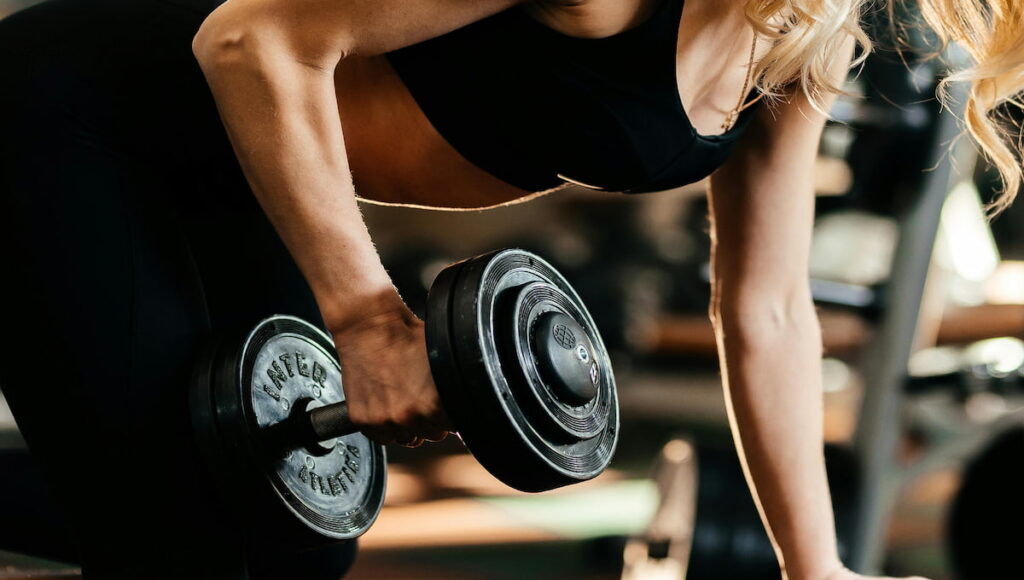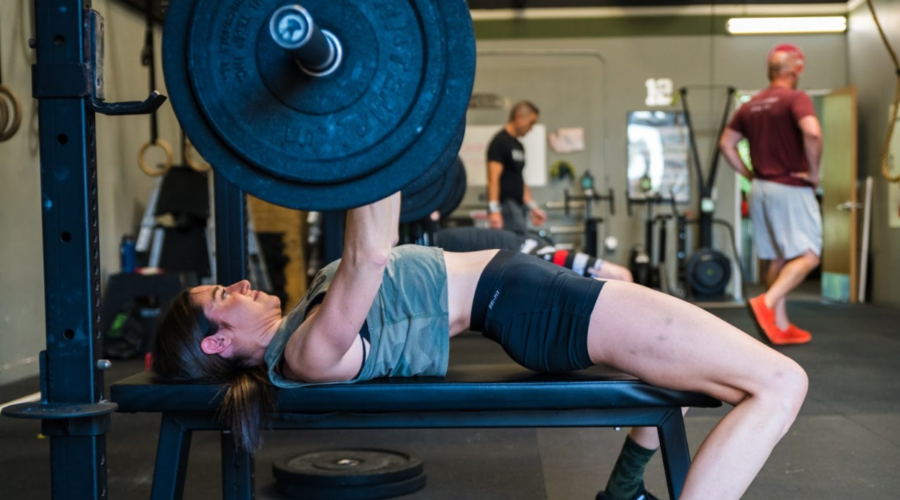


The barbell and dumbbell bench presses are both effective exercises for building chest strength and size. The barbell lets you lift more weight, while dumbbells allow each arm to move independently and can feel more comfortable for some lifters. But does one build your chest faster?
There is no strong long-term evidence showing that the barbell or dumbbell bench press consistently produces faster chest growth when training is otherwise similar. Studies have compared how muscles work during these exercises, but muscle activity during a workout does not prove which exercise leads to more growth over time. Your results are more likely to depend on whether you can train consistently, use a challenging load, perform enough hard sets, and gradually improve your performance.


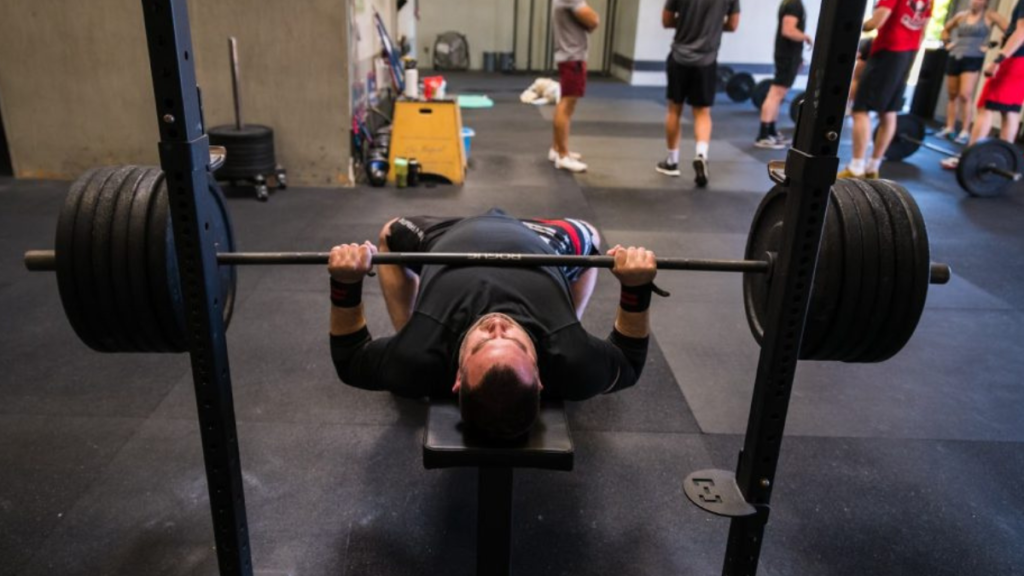
For many people, the most useful answer is to include both exercises when possible. If you need to choose one, pick the variation that lets you train your chest hard with good control and without discomfort.
What Makes the Bench Press Build Chest Muscle?
The pectoralis major is the main chest muscle involved in pressing. During a bench press, it helps bring your upper arm across your body as you push the weight away from your chest. Your triceps help straighten your elbows, while the front of your shoulders also contributes to the lift.
Muscle growth comes from repeated resistance training that challenges the muscles and gives them a reason to adapt. Both barbell and dumbbell bench presses can provide that challenge. The weight does not need to be identical between variations. What matters is that the load is demanding for you, your repetitions are controlled, and you can repeat and gradually progress the work over time.
Research on resistance training shows that different combinations of loads, sets, and weekly training frequency can build muscle. Multiple sets are generally a useful way to provide enough training stimulus. Heavier loads are especially useful for improving strength, while a range of loads can support muscle growth when the effort is sufficient. That means you do not need to chase the heaviest possible weight on every set to grow your chest.
The evidence does not support treating a single exercise as a shortcut to faster growth. A barbell bench press performed with poor control or inconsistent effort is unlikely to outperform dumbbell presses that you can perform well and progress steadily. The reverse is also true.
Barbell Bench Press: Strength and Progression
The barbell bench press allows both hands to grip the same bar, which creates a stable path for the weight. Most lifters can use more total weight with a barbell than with a pair of dumbbells. This can make it easier to measure progress in small increments and to practice lifting heavier loads.
A barbell can be a good choice if your main goal is to improve your bench press strength. Since you can add small amounts of weight as you get stronger, it offers a straightforward way to track performance. It can also be practical for lifters who have a rack, a spotter, or safety arms set at an appropriate height.
The barbell does limit how far your hands can travel at the bottom of the movement. The bar touches your chest, so your range of motion depends partly on your torso, arm length, grip width, and lifting technique. That does not make the barbell ineffective for chest training. It simply means that a dumbbell press may allow some lifters to lower their hands farther, if their shoulder mobility and comfort allow it.
Because a heavy barbell can be difficult to move safely without assistance, use a spotter or safety equipment when lifting challenging weights. The need for safe setup is practical rather than a reason to avoid the exercise. Good technique and an appropriate load matter more than testing your maximum on every workout.
Dumbbell Bench Press: Independent Movement and Control
Dumbbells let each arm move separately. This can make it easier to adjust your hand position during a repetition and may provide a wider range of motion than a barbell for some lifters. You can lower the weights until you feel a strong stretch in your chest, provided you can maintain control and the position is comfortable.
The independent movement also means each arm has to control its own dumbbell. Research comparing chest press variations has found differences in the amount of weight people can lift and in the activity of muscles involved in stabilization. However, these acute measurements do not show that dumbbells automatically produce more chest growth. More muscle activity in one measurement is not a guarantee of better long-term hypertrophy.
Dumbbells can be useful if a barbell grip or fixed hand position feels uncomfortable. They can also reveal strength differences between sides because each arm works on its own. That does not mean you should force a larger range of motion or continue through shoulder pain. Lower the dumbbells only as far as you can maintain a stable shoulder position and controlled movement.
One practical drawback is getting the weights into position, especially when they are heavy. If you cannot safely bring the dumbbells to your shoulders or return them to the floor, reduce the load or ask for assistance. The best training choice is one you can set up safely and perform consistently.
What the Research Says About Which Builds More Muscle
Studies comparing barbell and dumbbell bench presses have examined muscle activity and strength, but that is different from comparing chest growth after months of training. Electromyography, often shortened to EMG, records electrical activity in a muscle during a task. It can help researchers understand how muscles respond during an exercise, but an EMG result alone cannot tell you which exercise will produce more muscle growth over a full training program.
In one comparison of the barbell bench press and dumbbell bench press, pectoral muscle activity was not significantly different during the measured portions of the lifts. Other research has found that people generally lift less total weight with dumbbells than with a barbell, while the activity of the chest and some other muscles can be similar or vary by exercise and testing conditions. These findings are useful for describing how the exercises differ, but they do not prove that either variation grows the chest faster.

That distinction matters because muscle growth is measured over time, not from a single set or laboratory session. A direct long-term comparison would need to assign people to barbell or dumbbell training, keep other important variables controlled, and measure changes in chest muscle size. The available research does not establish a clear winner for that question.
A larger barbell load should not be confused with a larger chest stimulus by itself. Dumbbell loads are lower partly because each arm must control a separate weight. Both variations can still challenge the chest, and both can be progressed through more repetitions, additional weight, or additional training work.
Which One Should You Choose?
Choose the barbell if you enjoy it, want to develop your barbell bench press, or find it easier to increase the load in small steps. It can be a dependable main lift for a chest workout, especially if your setup allows you to train safely.
3 Best Dumbbell Exercises for Bigger Bicep Peaks
Choose dumbbells if you prefer the independent movement, want to adjust your hand position, or find the barbell uncomfortable. They can also be a good option when you have access to dumbbells but not a barbell rack. Use a load that allows you to control both weights throughout the set.
If neither variation feels good, there is no need to force them. A chest press machine or another pressing exercise may be more comfortable and still provide resistance for the pectoral muscles. Consistency with a tolerable exercise is more useful than sticking with a variation that repeatedly causes discomfort.
For muscle growth, choose the version you can perform with a stable setup and a challenging but manageable load. Keep the range of motion consistent, lower the weight under control, and avoid bouncing it off your chest or dropping the dumbbells too low for your shoulders to stay comfortable. Increase the weight or repetitions gradually when you can complete your planned sets with good form.
How to Use Both in Your Chest Training
You can use both variations in the same training program without making the workout complicated. For example, make the barbell bench press your main lift in one session and use dumbbells in another. This lets you practice barbell strength while also training with the independent movement of dumbbells.
You can also use one variation as your primary press and the other as a secondary exercise. The secondary exercise does not need to be taken to an extreme. Choose a moderate load, perform controlled repetitions, and stop when your technique begins to break down. If you are already doing several challenging pressing exercises, adding more work may not improve your results.

Track your training so you can see whether you are progressing. Record the variation, weight, repetitions, and sets. If your repetitions or load gradually improve while your technique stays consistent, you have a practical sign that your training is moving forward. If progress stalls, first check whether you are recovering well and whether your training volume is manageable before changing every exercise at once.
So, Which Builds Chest Muscle Faster?
Neither the barbell nor the dumbbell bench press has been proven to build chest muscle faster when training is matched. The barbell makes it easier to lift and track heavier loads, which can suit strength goals. Dumbbells allow more independent movement and can offer a different range of motion, which some lifters prefer.
For most people, the fastest route to a stronger, more muscular chest is the exercise they can perform safely, train hard, and progress over time. Use one or both based on your comfort, equipment, and goals. The details of your training matter more than the name of the weight in your hands.
Key Takeaways
| Topic | Key takeaway |
|---|---|
| Chest growth | Both barbell and dumbbell bench presses can effectively train the chest. |
| Direct comparison | Current evidence does not establish that one builds chest muscle faster. |
| Barbell advantage | It is often easier to lift heavier loads and track small weight increases. |
| Dumbbell advantage | Each arm moves independently, and some lifters prefer the hand position and range of motion. |
| Best choice | Use the variation you can perform safely, comfortably, and consistently progress. |
References
- Currier, B.S., McLeod, J.C., Banfield, L., Beyene, J., Welton, N.J., D’Souza, A.C., Keogh, J.A.J., Lin, L., Coletta, G., Yang, A., Colenso-Semple, L., Lau, K.J. and Phillips, S.M. (2023) ‘Resistance training prescription for muscle strength and hypertrophy in healthy adults: a systematic review and Bayesian network meta-analysis’, British Journal of Sports Medicine, 57(18), pp. 1211–1220.
- Saeterbakken, A.H. and Fimland, M.S. (2011) ‘A comparison of muscle activity and 1-RM strength of three chest-press exercises with different stability requirements’, Journal of Sports Sciences, 29(5), pp. 533–538.
- Saeterbakken, A.H., van den Tillaar, R. and Fimland, M.S. (2017) ‘A comparison of muscle activation and 1-RM strength of three chest-press exercises with different stability requirements’, Journal of Sports Sciences, 35(20), pp. 2043–2049.
- Schoenfeld, B.J., Grgic, J., Ogborn, D. and Krieger, J.W. (2017) ‘Strength and hypertrophy adaptations between low- versus high-load resistance training: a systematic review and meta-analysis’, Journal of Strength and Conditioning Research, 31(12), pp. 3508–3523.
- Welsch, E.A., Bird, M. and Mayhew, J.L. (2005) ‘Electromyographic activity of the pectoralis major and anterior deltoid muscles during three upper-body lifts’, Journal of Strength and Conditioning Research, 19(2), pp. 449–452.