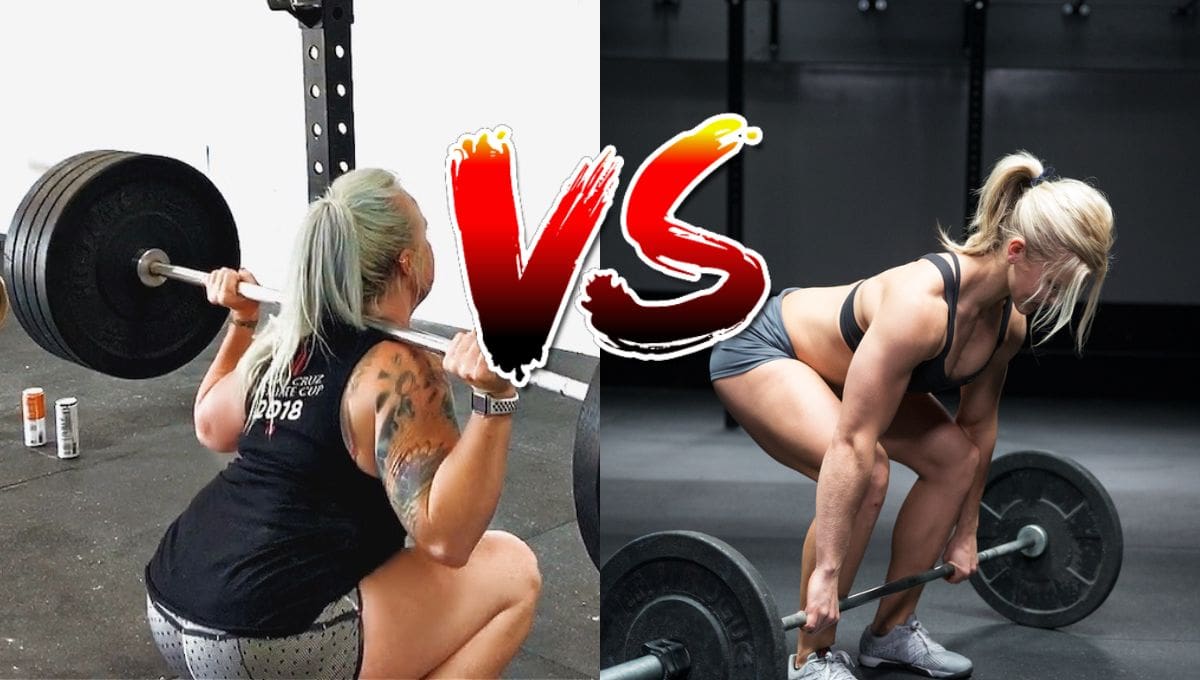


For beginners who want to add full body muscle mass, deadlifts and squats are two of the most valuable exercises in the gym. Both train a large amount of muscle, allow progressive loading, and can form the foundation of an effective strength training plan. The better choice is not as simple as picking one lift forever, however. Each exercise emphasizes different muscles, movement patterns, and training demands.
The squat is usually the stronger option for building the thighs and for accumulating enough quality training volume to promote muscle growth. The deadlift is exceptional for developing the glutes, hamstrings, back, grip, and total body strength, but it can be more fatiguing and is often harder to perform for repeated high volume sets.


For most beginners, squats should be the primary lower body muscle building lift, while deadlifts should still be included in a sensible program. Learning how they differ will help you choose the right exercise, use better technique, and build muscle without making your training unnecessarily complicated.
Why Compound Exercises Matter for Beginners
A compound exercise involves movement at multiple joints and trains several muscle groups at once. Squats and deadlifts both fit this definition. They challenge the hips, knees, trunk, and upper body in different ways, which makes them very time efficient for beginners.
Research consistently shows that resistance training can increase muscle size and strength when exercises are performed regularly and progressed over time. Muscle growth is supported by training hard enough to create meaningful tension in the working muscles, completing sufficient weekly training volume, eating enough protein and energy, and recovering well between sessions.
For a beginner, compound lifts offer an efficient route to progress because they create a large training stimulus in a relatively small number of exercises. They also teach useful movement skills, including bracing the torso, controlling the hips, and producing force through the legs.
That said, neither exercise is magic. Squats and deadlifts work best when they are performed with good technique, appropriate loading, and enough recovery. The most effective lift is the one that you can perform safely, consistently, and progressively.
What Muscles Do Squats Build?
The squat is primarily a knee and hip dominant exercise. During a well performed squat, the knees bend deeply while the hips move down and back. This creates substantial work for the quadriceps, glutes, adductors, and trunk muscles.
Quadriceps
The quadriceps are the muscles on the front of the thigh. They straighten the knee during the ascent from the bottom of the squat. Because the knees move through a large range of motion, squats provide a strong stimulus for the quads, particularly when you squat to a comfortable depth with control.
Research comparing lower body exercises suggests that squat training can significantly increase quadriceps muscle size and strength. This makes the squat particularly useful for beginners who want bigger, stronger legs and a more muscular overall physique.
Glutes and Adductors
The gluteus maximus extends the hip as you stand up from the bottom position. The adductors on the inner thigh also contribute strongly, especially when the hips and knees are deeply flexed. This means a properly performed squat can build more than just the front of the thighs.
A deeper squat is not automatically better for every person, but using a range of motion you can control can increase the amount of work performed by the lower body muscles. Mobility, limb length, previous injuries, and comfort all influence the best depth for an individual.
Core and Upper Back
Squats also challenge the muscles that stabilize the torso. Your abdominals, spinal erectors, and upper back work to maintain posture while the load moves over your base of support. A barbell back squat does not replace direct core work, but it gives the trunk an important stabilizing role.
What Muscles Do Deadlifts Build?
The conventional deadlift begins with the weight on the floor. You push through the floor, extend the knees and hips, and stand tall while keeping the bar close to the body. It is a powerful full body movement that places major demands on the posterior chain.
Glutes and Hamstrings
The deadlift strongly trains the glutes and hamstrings because both muscle groups help extend the hips. The hamstrings also work to control the position of the knee and hip as you pull the load from the floor.
Compared with the squat, the conventional deadlift generally places more emphasis on the muscles on the back of the body. This makes it a useful complement to squatting, particularly for beginners who need to build stronger hips and hamstrings.
However, the deadlift is not the only effective exercise for hamstring development. Romanian deadlifts, leg curls, and hip hinge variations can often be easier to use for higher repetition hypertrophy work. The conventional deadlift remains valuable, but it does not need to be pushed to exhaustion every session to be productive.
Back, Grip, and Traps
During a deadlift, the spinal erectors work hard to resist spinal flexion and keep the torso stable. The latissimus dorsi helps keep the bar close to the body, while the upper back and trapezius muscles stabilize the shoulder girdle. Your forearms and hands also work intensely to hold the bar.
This broad muscular involvement is why many lifters feel that deadlifts train the entire body. Yet much of the back work is isometric, meaning the muscles are producing force while holding a position rather than moving through a large range of motion. This is valuable for strength and stability, but it may not be the most direct route to maximum muscle growth in every back muscle.
Quadriceps
Deadlifts use the quadriceps, especially as the bar breaks from the floor. However, the knee range of motion is usually smaller than in a squat. For this reason, deadlifts are generally less effective than squats when your main goal is to maximize quadriceps growth.
Which Exercise Builds More Muscle Overall?
For most beginners, the squat is the better single choice for building full body muscle mass because it is easier to perform for multiple challenging sets, tends to provide more direct work for the quadriceps, and still trains the glutes and trunk effectively.
Muscle growth is strongly related to the amount of quality hard work a muscle performs over time. Squats are often more practical for this purpose because you can use moderate loads and repetitions while maintaining good form. A beginner may be able to perform several sets of six to twelve squats with productive effort and recover well enough to train again later in the week.
Deadlifts can build plenty of muscle, especially in the glutes, hamstrings, spinal erectors, traps, and forearms. The limitation is fatigue. Heavy deadlifts can be demanding on the grip, lower back, and nervous system, which can reduce the amount of total training a beginner can comfortably perform.
This does not mean deadlifts are bad for muscle growth. It means that they are often better used as a powerful strength exercise alongside additional posterior chain work, rather than as the only exercise used to build the lower body.
Squats Vs Deadlifts for Different Muscle Groups
For Bigger Quads
Squats are the clear winner for quadriceps development. The knee flexion and extension involved in the movement places the quads under substantial tension. A beginner who wants more muscular thighs should make squats, leg presses, split squats, or similar knee dominant exercises a regular part of training.
For Bigger Glutes
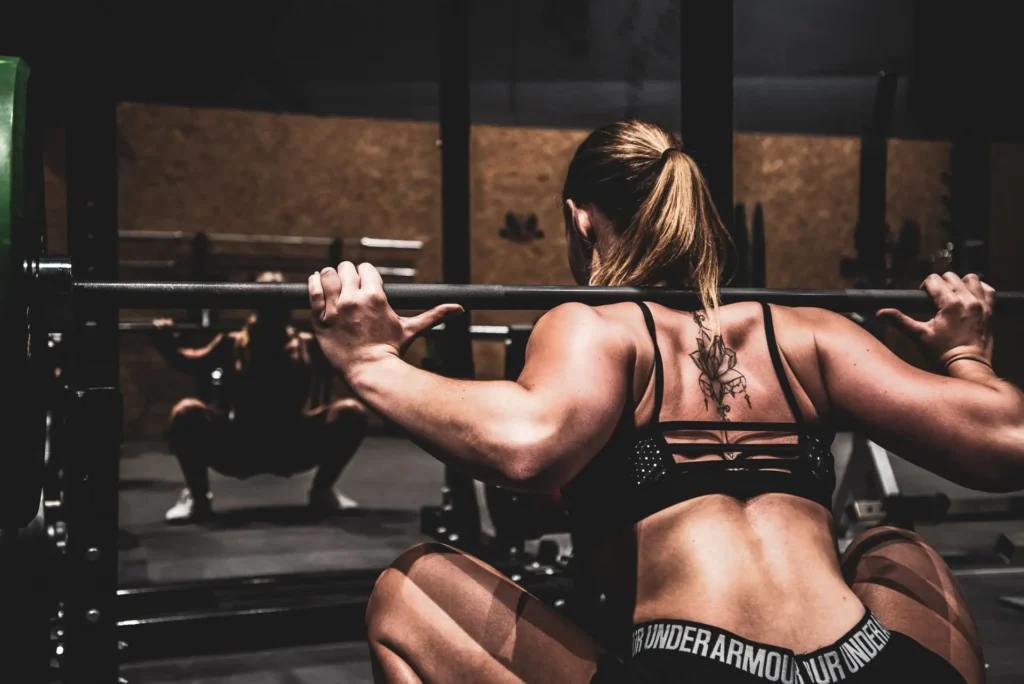
Both lifts can build the glutes. Squats train the glutes effectively, particularly through a deeper controlled range of motion. Deadlifts train them through powerful hip extension and may feel more natural for some lifters.
The best answer is usually to include both patterns across the week. Squat for a knee dominant lower body movement, then deadlift or use another hip hinge movement to give the posterior chain additional work.
For Hamstrings
Deadlifts are generally better than squats for training the hamstrings, especially when using a Romanian deadlift variation. However, the hamstrings also perform knee flexion, which is why leg curls can be a useful addition to a beginner program.
For Back and Grip
Deadlifts offer more direct challenge for the spinal erectors, traps, lats, and grip. They can help build a stronger and more resilient back, but rows, pull ups, pulldowns, and loaded carries are still important if you want complete upper body development.
How Beginners Should Use Both Exercises
A beginner does not need to choose a side. A practical approach is to prioritize squats for muscle building volume and include deadlifts with controlled volume to build strength and posterior chain muscle.
You could squat twice per week, using three or four sets of six to ten repetitions. Deadlift once per week, using two or three sets of three to six repetitions with excellent form. On another day, add Romanian deadlifts for two or three sets of eight to twelve repetitions if recovery allows.
Start with weights that allow you to maintain control. Add small amounts of weight or repetitions gradually as your technique improves. Avoid treating every workout as a test of maximum strength. Consistent progress over months matters far more than one dramatic personal best.
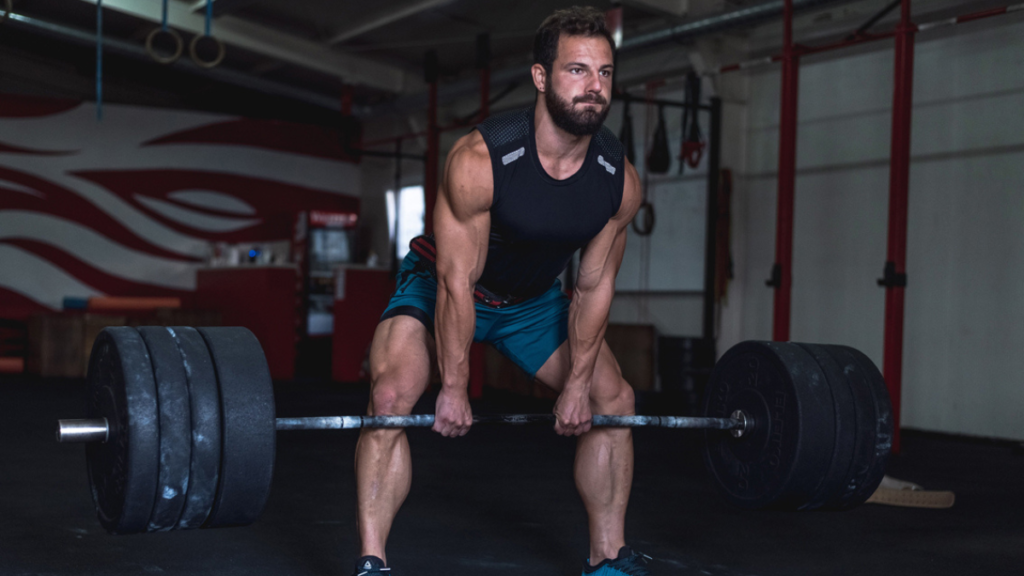
Beginners should also learn to brace before each repetition. Take a controlled breath, tighten the trunk, and keep the spine stable. If technique breaks down sharply, end the set. Productive training requires effort, but it does not require reckless repetitions.
The Verdict
If you can only choose one exercise for beginner muscle mass, choose the squat. It provides more direct quadriceps training, stimulates the glutes and trunk, and is usually easier to program with enough volume for hypertrophy.
If your goal is balanced full body development, include both. Squats build the legs and help create the training volume that drives muscle growth. Deadlifts build the posterior chain, back, grip, and total body strength. Together, they create a more complete foundation than either lift alone.
The best beginner program is not built around declaring one exercise superior forever. It is built around mastering both movement patterns, progressing patiently, and using enough high quality training to grow.
References
- Ahtiainen, J.P., Pakarinen, A., Alen, M., Kraemer, W.J. and Häkkinen, K. (2003) ‘Muscle hypertrophy, hormonal adaptations and strength development during strength training in strength trained and untrained men’, European Journal of Applied Physiology, 89, pp. 555 to 563.
- American College of Sports Medicine (2009) ‘American College of Sports Medicine position stand: Progression models in resistance training for healthy adults’, Medicine and Science in Sports and Exercise, 41, pp. 687 to 708.
- Schoenfeld, B.J., Ogborn, D. and Krieger, J.W. (2017) ‘Dose response relationship between weekly resistance training volume and increases in muscle mass: A systematic review and meta analysis’, Journal of Sports Sciences, 35, pp. 1073 to 1082.
- Schoenfeld, B.J., Grgic, J., Ogborn, D. and Krieger, J.W. (2017) ‘Strength and hypertrophy adaptations between low versus high load resistance training: A systematic review and meta analysis’, Journal of Strength and Conditioning Research, 31, pp. 3508 to 3523.
- Vigotsky, A.D., Halperin, I., Lehman, G.J., Trajano, G.S. and Vieira, T.M. (2018) ‘Interpreting signal amplitudes in surface electromyography studies in sport and rehabilitation sciences’, Frontiers in Physiology, 8, article 985.
- Wirth, K., Keiner, M., Hartmann, H., Sander, A. and Mickel, C. (2016) ‘Effect of 8 weeks of free weight resistance training on strength and power performance’, Journal of Strength and Conditioning Research, 30, pp. 1905 to 1915.
- Zaras, N., Stasinaki, A.N., Spiliopoulou, P., Arnaoutis, G., Hadjicharalambous, M., Terzis, G. and Karampatsos, G. (2014) ‘Effect of inter repetition rest versus traditional strength training on lower body strength and muscle mass’, Journal of Sports Science and Medicine, 13, pp. 669 to 676.
Key takeaways
| Question | Best answer for beginners |
|---|---|
| Which lift is better for overall muscle mass? | Squats are usually the better primary lift because they allow more practical muscle building volume and strongly train the quads and glutes. |
| Which lift is better for quadriceps? | Squats are the stronger choice because they involve greater knee movement and direct quadriceps loading. |
| Which lift is better for hamstrings, grip, and back? | Deadlifts are generally more useful because they emphasize hip extension, spinal stability, upper back tension, and grip. |
| Should beginners do both? | Yes. Squats and deadlifts complement each other and can build a more balanced physique when programmed sensibly. |
| How should beginners progress? | Start with controlled technique, use manageable loads, and gradually add repetitions or weight over time. |