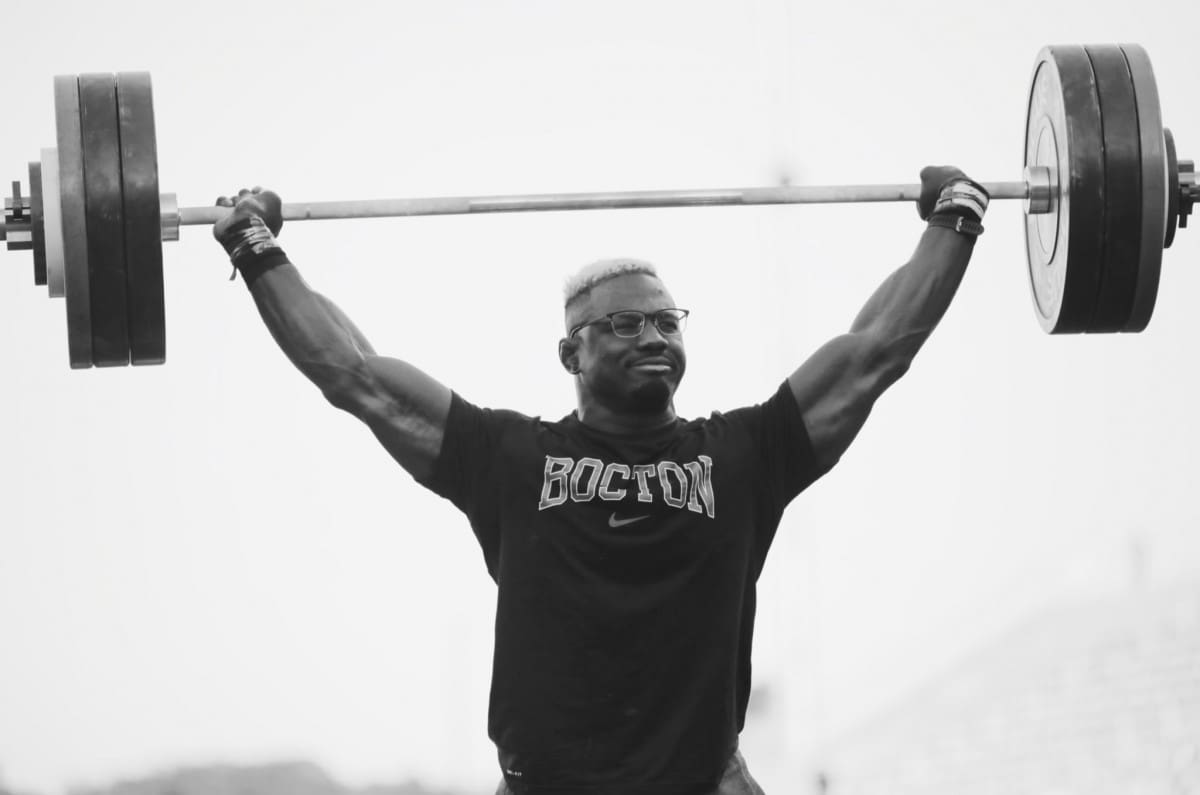


Wide, muscular shoulders can make the upper body look stronger and more athletic, even before the chest, arms, or back have changed dramatically. The muscle most responsible for creating that wider silhouette is the lateral deltoid, often called the side delt. It sits on the outer portion of the shoulder and helps lift the arm away from the body.
Many beginners rely almost entirely on pressing exercises, such as the bench press and overhead press, to build their shoulders. These movements are valuable for general strength and muscle growth, but they tend to place greater demands on the front delts and triceps. If your goal is to build visibly broader shoulders, direct work for the lateral deltoids is a smart addition to your training.


The good news is that you do not need advanced techniques, heavy weights, or complicated programming. You need a few movements that allow you to train the right motion with control, a load you can manage, and enough consistency to improve over time. Research supports resistance training as an effective way to increase muscle size, while higher weekly training volumes generally produce greater hypertrophy when recovery is managed properly.
These three beginner exercises are simple, effective, and easy to progress. Use them patiently, focus on quality repetitions, and let your side delts do the work.
Why Side Delt Training Matters
The deltoid is made up of three major sections: the anterior deltoid at the front of the shoulder, the lateral deltoid on the outer shoulder, and the posterior deltoid at the rear. Each section contributes to different arm movements. The lateral deltoid is particularly active when you raise your arm out to the side.
This is why lateral raise variations are so useful. They directly train shoulder abduction, which is the movement the side delt performs. Research examining muscle activity during shoulder exercises has found that lateral raise variations can strongly recruit the medial portion of the deltoid. This does not mean muscle activity measurements can perfectly predict long term growth, but they help explain why lateral raises are a logical choice when side delt development is the goal.
Beginners often make the mistake of treating shoulder training like a strength contest. The side delts are relatively small muscles, and they respond well when you control the movement rather than swinging heavy weights. A lighter load with smooth repetitions will usually provide a better training stimulus than a heavier load that turns the exercise into a full body heave.
Direct side delt work can also balance a program that contains plenty of pushing. Bench presses, push ups, and overhead presses are excellent exercises, but they can leave the front of the shoulder receiving more direct work than the outer portion. Adding lateral raises can help create more complete shoulder development.
Exercise One: Seated Dumbbell Lateral Raise
The seated dumbbell lateral raise is an excellent starting point because sitting down makes it harder to use momentum. It teaches you to raise the arms with the shoulders rather than driving the weights upward with the hips and lower back.
A recent training study found that dumbbell lateral raises increased lateral deltoid muscle thickness in resistance trained participants over eight weeks. The study also found that dumbbells were similarly effective to cable lateral raises for developing the lateral deltoid when the training conditions were matched. This is encouraging for beginners because dumbbells are available in almost every gym and require very little setup.
How to Perform It
Sit upright on a bench with a dumbbell in each hand. Let your arms hang naturally beside your body, with a small bend in the elbows. Keep your chest tall and your feet firmly on the floor.
Raise the dumbbells out and slightly forward until your upper arms are around shoulder height. Your hands do not need to rise higher than your elbows. Pause briefly when you reach the top, then lower the weights slowly and under control.
Think about moving your elbows away from your body. This cue often helps beginners feel the side delts working more clearly than focusing on their hands. Keep your wrists neutral and avoid bending them backward.
Common Mistakes to Avoid
The most common error is choosing weights that are too heavy. When this happens, people lean backward, shrug their shoulders aggressively, or swing the dumbbells through the bottom of each repetition. These habits reduce control and shift more of the work toward other muscles.
Another common mistake is raising the dumbbells directly out to the sides with the hands leading far above the elbows. Instead, keep the elbows slightly higher than the hands and use a comfortable arm path that is slightly in front of the body. This position is often easier to control and can feel more natural for the shoulder joint.
Start with two or three sets of ten to fifteen repetitions. You should finish each set feeling that you could perform roughly one to three more clean repetitions. This gives you a challenging stimulus while leaving room to maintain good technique.
Exercise Two: Single Arm Cable Lateral Raise
The cable lateral raise is one of the best ways to make the side delts work consistently through the movement. With a dumbbell, the resistance is relatively low at the bottom because the weight hangs vertically beneath your hand. A cable can provide meaningful resistance from the beginning of the repetition, which many lifters find easier to feel in the target muscle.
Research comparing cable and dumbbell lateral raises found that both exercises produced similar lateral deltoid growth over an eight week training period. This is an important practical lesson. Cables are not magically superior, but they are an excellent alternative that can make the movement feel smoother and allow you to train each arm individually.
Training one arm at a time also makes it easier to identify side to side differences. If one shoulder is less coordinated or noticeably weaker, you can give that side the same careful attention rather than allowing the stronger arm to take over.
How to Perform It
Set a cable pulley to its lowest position and attach a single handle. Stand sideways to the stack, holding the handle with the outside hand. The cable should cross slightly in front of your body.
Take a small step away from the machine until there is light tension on the cable at the bottom. Stand tall, keep a soft bend in the elbow, and raise your arm outward and slightly forward. Stop around shoulder height, then lower the handle slowly until your arm returns to your side.
Keep your torso still throughout the set. A small amount of natural movement is fine, but avoid leaning dramatically away from the machine to turn the exercise into a swinging motion. The goal is to create tension in the shoulder, not to move the heaviest possible stack.
Why It Works for Beginners
The cable provides feedback immediately. If you lose control, you will feel the cable pull you toward the machine. This encourages a slower, more deliberate repetition and helps you learn the correct path of the movement.
It is also easy to make small progressions. You can add a small amount of weight, perform an additional repetition, or improve the quality of your lowering phase. These are all legitimate forms of progressive overload. Consistently challenging the muscle over time is more important than making large jumps in load.
Use two or three sets of twelve to twenty repetitions per arm. The higher repetition range works well because the side delts can be trained effectively with lighter loads, and cable stacks allow small increases in resistance.
Exercise Three: Machine Lateral Raise
The machine lateral raise is possibly the simplest direct side delt exercise for a true beginner. It provides external stability, gives you a fixed movement path, and removes much of the balance requirement that can make free weight raises feel awkward.
Machines do not build muscle simply because they are machines. The benefit is practical. They let you focus on applying effort to the target muscle without worrying as much about holding your balance, coordinating both arms, or managing a cable. For someone learning how to train hard with good control, that simplicity is extremely useful.
Resistance training research consistently shows that muscle growth can occur across a range of equipment choices when the exercise is performed with sufficient effort and volume. The best option is often the one you can perform comfortably, progressively, and consistently.
How to Perform It
Adjust the seat so the machine pads rest against the outside of your upper arms, just above the elbows. Your shoulders should line up comfortably with the machine pivot point. Grip the handles if the machine has them, brace your torso against the pad, and keep your feet planted.
Raise your upper arms until they are approximately level with your shoulders. Do not force the range higher if your shoulders feel pinched or uncomfortable. Lower the pads slowly until you return to the starting position, then begin the next repetition without bouncing the weight stack.
Keep your neck relaxed. Beginners often tense the upper traps and lift the shoulders toward the ears as they raise the arms. Think about keeping the shoulders down while the elbows move outward.
How to Progress Safely
Begin with a weight that allows at least ten controlled repetitions. Once you can perform fifteen repetitions with the same load and excellent form, increase the weight by the smallest available amount. Your repetition count may drop again, which is completely normal.
You do not need to train to absolute failure on every set. Evidence suggests that training near failure can support hypertrophy, but technique often breaks down before a beginner reaches true muscular failure on lateral raises. Finishing a set when you know you only have a few clean repetitions left is an effective and sensible approach.
Perform two to four sets of ten to fifteen repetitions. Rest for roughly one to two minutes between sets so your shoulders have enough time to recover and you can continue to use controlled form.
How to Build Your Beginner Side Delt Workout
You do not need to perform all three exercises in the same session. In fact, beginners will often make better progress by choosing one or two movements and practicing them consistently.
Chin-Ups vs Pull-Ups – Which Is Better for Wider and Bigger Arms?
A simple approach is to train side delts twice per week. On one day, perform seated dumbbell lateral raises for three sets of ten to fifteen repetitions. On another day, perform cable or machine lateral raises for three sets of twelve to twenty repetitions. This gives you six direct sets per week, which is a manageable starting point.
As your technique improves and your shoulders recover well between sessions, you can gradually increase to eight or ten weekly sets. Higher training volumes can support greater muscle growth, but only when the work is performed with enough quality and recovery. More sets are not automatically better if they become rushed, sloppy, or painful.
Keep a simple record of your workouts. Note the exercise, weight, and repetitions completed. Your goal is to slowly improve one of those variables over several weeks. You may add one repetition to a set, use a slightly heavier dumbbell, or perform the same weight with stricter form. These small improvements add up.
Technique, Recovery, and Expectations
Building muscular side delts takes time. The shoulder joint is highly mobile, and the lateral deltoids are small compared with the legs, chest, and back. Trying to rush progress by using excessive weight is more likely to create poor technique than better results.
A controlled lowering phase is especially valuable. Lowering the weight slowly helps you stay in the range your side delts can control and makes each repetition more consistent. You do not need to count out a long tempo, but avoid dropping the weight and immediately bouncing into the next rep.
Train through normal muscular effort, not sharp pain. A burning sensation in the side delt during a set is common. Pinching, catching, numbness, or joint pain is different. Stop the movement if you experience those symptoms and seek assessment from an appropriately qualified health professional if the issue persists.
Support your training with adequate food, sleep, and protein. Resistance training is the signal for muscle growth, but recovery allows the body to adapt. A large meta analysis found that protein supplementation can provide a small additional benefit for gains in muscle mass and strength during resistance training, particularly when total daily protein intake is otherwise low.
The best beginner side delt routine is not the most complicated one. It is the routine you can repeat with good form, gradual progression, and enough patience to let the results show.
References
- Coratella, G., Tornatore, G., Longo, S., Esposito, F. and Cè, E. (2020) ‘An electromyographic analysis of lateral raise variations and frontal raise in competitive bodybuilders’, International Journal of Environmental Research and Public Health, 17(17), 6015.
- Grgic, J., Schoenfeld, B.J., Davies, T.B., Lazinica, B., Krieger, J.W. and Pedisic, Z. (2022) ‘Resistance training variables for optimization of muscle hypertrophy: An umbrella review’, Sports Medicine, 52, pp. 141 to 164.
- Larsen, S., Wolf, M., Schoenfeld, B.J., Sandberg, N.Ø., Fredriksen, A.B., Kristiansen, B.S., van den Tillaar, R., Swinton, P.A. and Falch, H.N. (2025) ‘Dumbbell versus cable lateral raises for lateral deltoid hypertrophy: An experimental study’, Frontiers in Physiology, 16, 1611468.
- Morton, R.W., Murphy, K.T., McKellar, S.R., Schoenfeld, B.J., Henselmans, M., Helms, E., Aragon, A.A., Devries, M.C., Banfield, L., Krieger, J.W. and Phillips, S.M. (2018) ‘A systematic review, meta analysis and meta regression of the effect of protein supplementation on resistance training induced gains in muscle mass and strength in healthy adults’, British Journal of Sports Medicine, 52(6), pp. 376 to 384.
- Schoenfeld, B.J., Ogborn, D. and Krieger, J.W. (2017) ‘Dose response relationship between weekly resistance training volume and increases in muscle mass: A systematic review and meta analysis’, Journal of Sports Sciences, 35(11), pp. 1073 to 1082.
Key Takeaways
| Focus | What to do | Why it matters |
|---|---|---|
| Best starting exercise | Use seated dumbbell lateral raises | Sitting limits momentum and helps you learn controlled shoulder abduction |
| Best cable option | Use single arm cable lateral raises | The cable provides continuous resistance and makes side to side training simple |
| Simplest gym option | Use the machine lateral raise | External stability lets beginners focus on effort and technique |
| Weekly training | Start with about six direct side delt sets across two sessions | This is a manageable amount of targeted work for a beginner |
| Repetition range | Use roughly ten to twenty controlled repetitions | Moderate to higher repetitions allow challenging side delt work without relying on excessive weight |
| Progression | Add repetitions, load, or better control over time | Consistent progressive overload is the foundation of muscle growth |