

A bench press personal record can be satisfying, but the number on the bar does not tell the full story. Your age matters, although it is only one part of the comparison. Body weight, sex, training history, technique, shoulder health, exercise selection, and how consistently you train all influence what you can bench press.
That means a 40 year old who has trained seriously for five years may bench far more than a 25 year old beginner. Equally, a 60 year old lifter with good technique and a long history of resistance training can be exceptionally strong compared with other people their age. The most useful question is not simply, “Is my bench press good?” It is, “How does my lift compare with people of a similar age, body size, sex, and training experience?”


Research shows that maximal strength is influenced by age, body mass, height, and sex. This is why comparing your absolute PR with someone much heavier, much lighter, far more experienced, or in a different age group can be misleading. A better benchmark considers your bench press relative to body weight, then puts it in the context of your age and lifting background.
Start With Your Bench Press to Body Weight Ratio
To calculate your relative bench press strength, divide your one rep max by your body weight. For example, if you weigh 180 pounds and bench press 180 pounds, your ratio is 1.0. If you weigh 160 pounds and bench press 240 pounds, your ratio is 1.5.
This is not a perfect measure. A heavier person will often have a lower strength to body weight ratio while still lifting a very large amount of weight. Lifters with longer arms may also have a greater range of motion during the lift, which can make a comparable barbell load more demanding. Still, the ratio provides a much more useful starting point than looking at the plate number alone.
A bench press equal to your body weight is a meaningful milestone for many recreational male lifters, especially if it is performed with a controlled descent, full range of motion, and stable technique. For many female lifters, bench pressing half of body weight is a strong early target, while a body weight bench press represents a high level of upper body strength.
These are not medical standards and they are not a measure of your value as an athlete. They are practical training benchmarks. Your goal should be to improve from your own starting point while making comparisons that are fair.
Why Age Changes the Comparison
Strength commonly rises from adolescence into early adulthood, particularly when a person trains consistently. It can remain high through the thirties when lifting, nutrition, recovery, and training quality are maintained. Strength often declines later in life, but the pace of that decline is not fixed.
The most important point is that getting older does not automatically mean becoming weak. Much of the reduction in strength seen with age is related to lower activity levels, reductions in muscle mass, illness, injury, and less exposure to demanding physical training. Resistance training can improve maximal strength in younger, middle aged, and older adults.
This makes age based comparisons useful, but only when they are interpreted properly. A 55 year old who has trained for years should not compare themselves with an inactive 55 year old. They should compare themselves with trained people of similar body size and experience. Likewise, a 25 year old who has been lifting for three months should not feel disappointed when comparing their PR with a competitive powerlifter of the same age.
Bench Press Standards for Men
For male lifters, a bench press below body weight is common during the early stages of training. Many beginners need time to develop pressing technique, muscle mass, shoulder stability, and confidence under the bar.
A body weight bench press is a solid recreational strength marker for a man who trains regularly. A 1.25 times body weight bench press usually indicates a well developed level of pressing strength, particularly when the lift is performed with consistent technique. A 1.5 times body weight bench press is an advanced achievement for most gym lifters. A double body weight bench press is rare outside dedicated strength sports and requires a combination of favorable structure, substantial training experience, and focused programming.
For men in their late teens and twenties, these targets can be realistic long term goals if training is consistent. In the thirties, the same standards remain possible, and many lifters reach their best performances in this decade because they have accumulated more years of productive training.
For men in their forties, fifties, and beyond, maintaining a body weight bench press can be an excellent result. Building toward 1.25 times body weight can still be realistic for experienced lifters who remain healthy and train intelligently. The aim should be long term progress, not trying to force a PR at the expense of shoulder health or recovery.
Bench Press Standards for Women
Women can build substantial bench press strength, but absolute loads are usually lower because upper body muscle mass and absolute upper body strength differ on average between sexes. This is exactly why comparisons should be made within an appropriate group rather than against a general population.
For a female beginner, bench pressing around 0.25 to 0.4 times body weight can represent a strong start. A bench press of half body weight is a meaningful recreational strength milestone. A lift of 0.75 times body weight shows very good upper body strength, particularly for someone who is not specializing in powerlifting.
A body weight bench press is an advanced accomplishment for most female lifters. It requires sustained technical practice, progressive overload, and enough muscle mass to produce force through the chest, shoulders, and triceps. It is a performance goal that deserves respect at any adult age.
Women in their forties, fifties, and sixties can continue to improve their bench press when training is progressive and well managed. The focus may shift toward maintaining strength, building muscle, and protecting joint function, but there is no reason to assume that meaningful progress is over.
Your Training Age Matters More Than Your Birthday
A 30 year old who has never benched before should use beginner standards. A 55 year old who has trained consistently for 15 years should use experienced lifter standards. Training age is the amount of purposeful, structured strength training you have completed, not the number of years you have owned a gym membership.
Curls vs Chin Ups: Which Builds Bigger Biceps?
In the first year of consistent resistance training, bench press progress can be rapid because the nervous system becomes more efficient at coordinating the movement. You also learn how to create tension, stay tight on the bench, control the bar path, and use your legs effectively.
As you become more experienced, progress slows. This is normal. Adding five pounds to a bench press may feel routine for a beginner, while adding the same amount can be a major achievement for an advanced lifter. The closer you get to your current potential, the more patience and precision your training requires.
A slower PR progression does not mean your program has failed. It may mean you have reached a point where small improvements are the realistic outcome of high quality training.
Make Sure Your PR Is Comparable
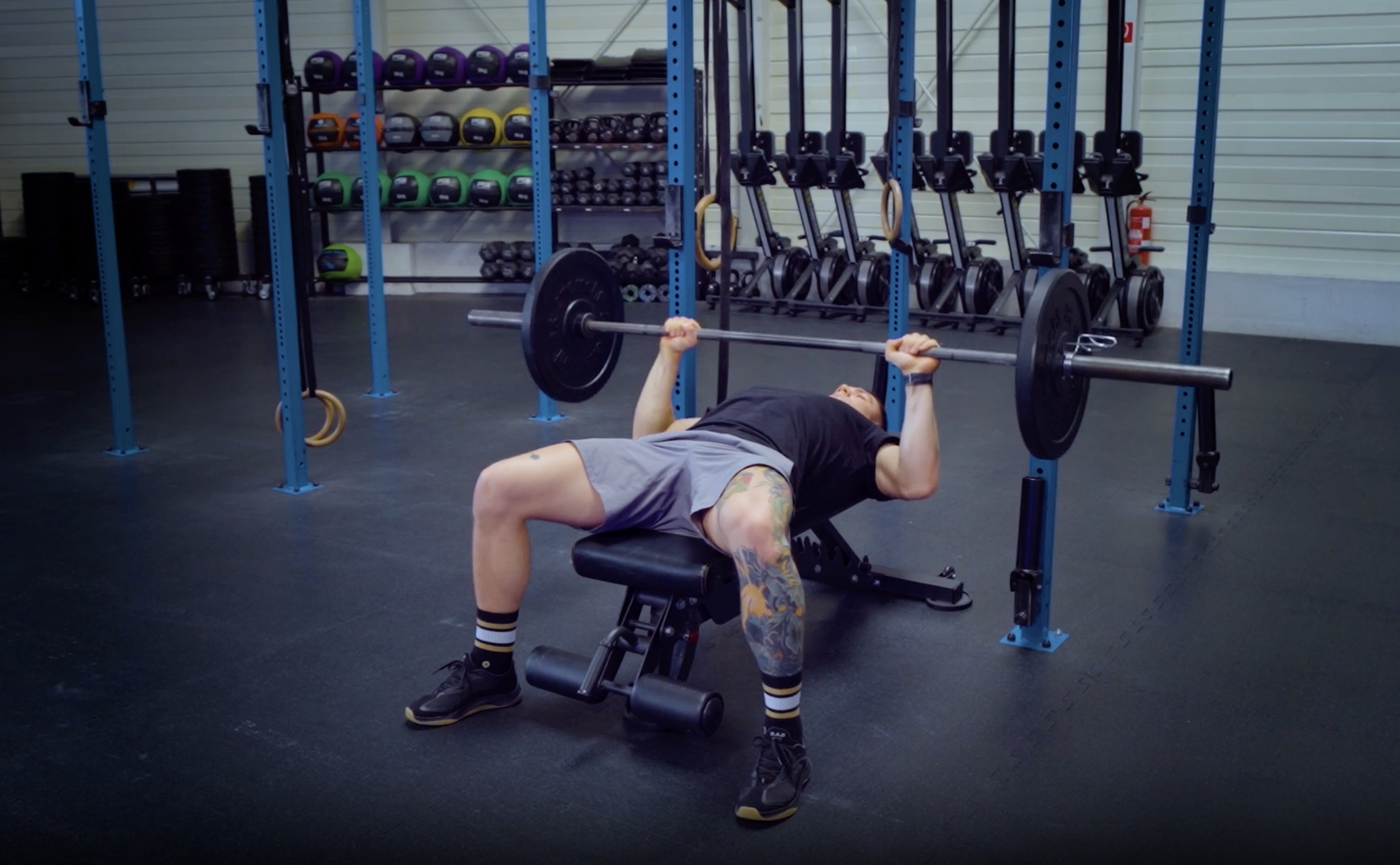
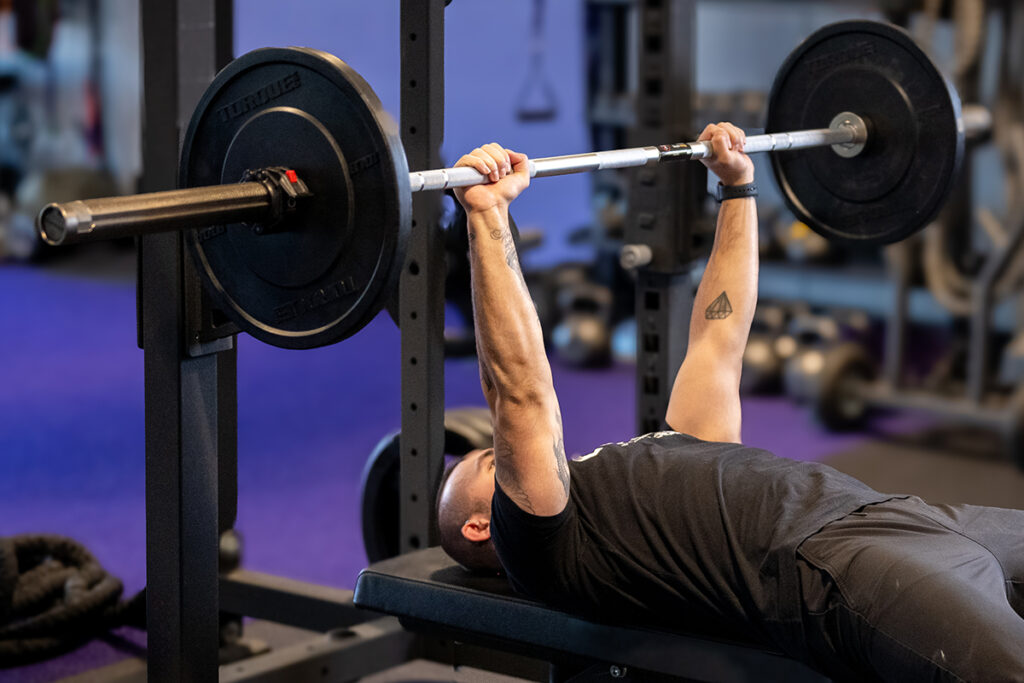
A meaningful bench press PR should be performed with a consistent standard. Lower the bar under control to the chest, use a stable grip, keep your upper back set against the bench, and press the bar to a locked out position. A spotter can help with safety, but they should not touch the bar during a successful repetition.
Small changes in range of motion or technique can significantly affect the number you lift. A high touch point, excessive bouncing, shortened range of motion, or a spotter assisting at the hardest point can make a PR look better without representing greater strength.

There is nothing wrong with training variations such as close grip bench presses, paused reps, dumbbell presses, incline presses, or machine presses. Each can build useful muscle and strength. However, compare barbell bench press PRs with barbell bench press PRs. A machine chest press and a barbell bench press are not interchangeable measurements.
How to Improve Your Bench Press at Any Age
The strongest way to improve your PR is to train the bench press consistently. Most people benefit from practicing it at least once or twice per week, using a mix of heavier sets for skill and strength plus moderate rep work for muscle growth.
A practical approach is to include one day with heavier sets of three to six repetitions, then another session with sets of six to 12 repetitions. The heavier work develops familiarity with high force production, while the moderate rep work adds valuable training volume for the chest, shoulders, and triceps.
Supporting exercises matter because the bench press depends on more than your chest. Rows, pull downs, rear delt work, triceps extensions, overhead pressing, and rotator cuff training can all contribute to stronger and more stable pressing. A strong upper back helps create a secure base from which to press.
Protein intake, sufficient calories, sleep, and recovery also affect progress. You do not need a perfect lifestyle to get stronger, but regular poor sleep, inconsistent eating, and repeated missed sessions will make progress harder. The best program is one you can follow for months and years.
The Most Useful Way to Judge Your PR
Your bench press PR is worth celebrating if it represents improvement, good technique, and consistent work. Age should shape the comparison, but it should not become an excuse to lower your expectations unnecessarily.
If you are younger, focus on building clean technique and a strong base rather than chasing a number too early. If you are in your thirties or forties, recognize that many people reach excellent levels of strength during these years. If you are over 50, maintaining and improving upper body strength is a valuable investment in performance, independence, and long term function.
Compare your lift with people who share your body size, sex, training age, and age range. Then use that comparison as information, not judgment. Your next goal might be five more pounds, a cleaner rep, a stronger pause at the chest, or simply another year of consistent training.
References
- American College of Sports Medicine (2009) ‘American College of Sports Medicine position stand: Progression models in resistance training for healthy adults’, Medicine and Science in Sports and Exercise, 41(3), pp. 687-708.
- Grgic, J., Schoenfeld, B.J., Davies, T.B., Lazinica, B., Krieger, J.W. and Pedisic, Z. (2018) ‘Effect of resistance training frequency on gains in muscular strength: A systematic review and meta-analysis’, Sports Medicine, 48(5), pp. 1207-1220.
- Isenmann, E., Geisler, S., Havers, T., Gavanda, S., Diel, P., Held, S. and Flenker, U. (2026) ‘Normalization of muscle strength measures in barbell exercises by sex, age, and anthropometry: Notes on allometry’, Scientific Reports, 16(1), 20797.
- Morton, R.W., Murphy, K.T., McKellar, S.R., Schoenfeld, B.J., Henselmans, M., Helms, E., Aragon, A.A., Devries, M.C., Banfield, L., Krieger, J.W. and Phillips, S.M. (2018) ‘A systematic review, meta-analysis and meta-regression of the effect of protein supplementation on resistance training induced gains in muscle mass and strength in healthy adults’, British Journal of Sports Medicine, 52(6), pp. 376-384.
- Peterson, M.D., Rhea, M.R., Sen, A. and Gordon, P.M. (2010) ‘Resistance exercise for muscular strength in older adults: A meta-analysis’, Ageing Research Reviews, 9(3), pp. 226-237.
- Ralston, G.W., Kilgore, L., Wyatt, F.B. and Baker, J.S. (2017) ‘The effect of weekly set volume on strength gain: A meta-analysis’, Sports Medicine, 47(12), pp. 2585-2601.
- Schoenfeld, B.J., Ogborn, D. and Krieger, J.W. (2017) ‘Dose-response relationship between weekly resistance training volume and increases in muscle mass: A systematic review and meta-analysis’, Journal of Sports Sciences, 35(11), pp. 1073-1082.
Key Takeaways
| Factor | What it means for your bench press PR |
|---|---|
| Absolute weight | It shows the total load you can lift, but does not account for body size or training history. |
| Body weight ratio | Dividing your PR by body weight gives a more useful starting point for comparison. |
| Age | Strength can change across adulthood, but regular resistance training can preserve and improve performance at every age. |
| Training age | Your years of structured lifting often matter more than your birthday when judging a bench press PR. |
| Technique | A controlled, full range repetition is more meaningful than a heavier lift completed with inconsistent form. |
| Long term goal | Aim to improve your own strength gradually while comparing yourself with people of similar size, sex, age, and experience. |