

A hard 1 km row is one of the clearest ways to test your fitness. It challenges your legs, back, arms, heart, lungs, pacing, and ability to tolerate discomfort. It is short enough to feel approachable, but long enough to punish poor technique and an overly aggressive start.
Your finishing time can be a useful performance marker, especially when you repeat the test on the same rowing machine under similar conditions. However, there is no single 1 km time that defines fitness for every person of a certain age. Sex, body size, rowing experience, training history, machine settings, and technique all affect the result.


The better question is whether your time is appropriate for your current training status and whether it improves over time. Age matters, but it is only one part of the picture.
What Does a 1km Row Test Measure?
A 1 km rowing test is a high intensity effort that usually lasts between around three and six minutes for most recreational gym users. That duration means it relies heavily on aerobic energy production, while also placing a substantial demand on anaerobic energy systems that supply energy quickly during hard exercise.
Rowing uses a large amount of muscle mass. The legs produce the first and largest part of each drive, while the trunk transfers force and the upper body finishes the stroke. Research on rowing physiology shows that rowing performance is strongly associated with aerobic capacity, power output, body size, strength, and technical efficiency.

The 1 km distance is not purely a strength test and it is not purely a cardio test. Someone with strong legs who sprints too hard in the first 250 meters can lose substantial speed later in the effort. Someone with excellent endurance but limited peak power may be able to hold a steady pace yet struggle to produce a fast overall time.
This makes the test useful for functional fitness athletes. It rewards strong pacing, repeatable power, and good movement quality under fatigue.
Why Age Affects Rowing Performance
Physical performance generally rises through childhood and early adulthood, then gradually declines with age. The exact rate varies greatly between people. Regular training can preserve a high level of cardiovascular fitness, strength, and muscle function well into later life.
Aerobic capacity, often measured as maximal oxygen uptake, tends to decline with age in adults. This decline is influenced by changes in heart function, blood volume, muscle mass, activity levels, and training status. People who remain physically active usually experience a slower decline than people who become sedentary.
Muscle strength and power also tend to decrease with age, particularly when resistance training and higher intensity exercise are absent. Power matters on the rowing machine because each stroke requires you to accelerate the handle and produce force through the footplates. A reduction in leg strength, muscular power, or stroke efficiency can make it harder to hold a fast split time.
That does not mean a person in their fifties, sixties, or beyond cannot row quickly. Masters athletes regularly produce remarkable performances. Long term training, healthy body composition, technical skill, and intelligent recovery can make a far bigger difference than age alone.
Is There a Normal 1km Row Time for Your Age?
There is no universal clinical reference table for a 1 km rowing test. Rowing machines are used in different settings, and the people performing the test vary from complete beginners to experienced competitive rowers. It would be misleading to tell every 40 year old or 60 year old that they should achieve one exact time.
The ranges below are practical gym benchmarks for a full effort on a standard air resistance rowing machine. They are intended for healthy adults who can use the machine safely. They are not medical standards, and they should not be used to compare a smaller novice athlete with a large, trained rower.
Men’s 1km Row Benchmarks
| Training status | Ages 18 to 39 | Ages 40 to 49 | Ages 50 to 59 | Ages 60+ |
|---|---|---|---|---|
| Excellent recreational performance | Under 3:20 | Under 3:25 | Under 3:35 | Under 3:50 |
| Strong recreational performance | 3:20 to 3:45 | 3:25 to 3:50 | 3:35 to 4:00 | 3:50 to 4:20 |
| Developing fitness | 3:45 to 4:20 | 3:50 to 4:25 | 4:00 to 4:40 | 4:20 to 5:00 |
| Beginner range | Over 4:20 | Over 4:25 | Over 4:40 | Over 5:00 |
Women’s 1km Row Benchmarks
| Training status | Ages 18 to 39 | Ages 40 to 49 | Ages 50 to 59 | Ages 60+ |
|---|---|---|---|---|
| Excellent recreational performance | Under 3:55 | Under 4:00 | Under 4:15 | Under 4:35 |
| Strong recreational performance | 3:55 to 4:25 | 4:00 to 4:35 | 4:15 to 4:50 | 4:35 to 5:15 |
| Developing fitness | 4:25 to 5:05 | 4:35 to 5:15 | 4:50 to 5:35 | 5:15 to 6:00 |
| Beginner range | Over 5:05 | Over 5:15 | Over 5:35 | Over 6:00 |
These ranges are most useful when treated as a starting point. If you are new to rowing, a time in the beginner range is not a failure. It simply tells you that there is plenty of room to improve through technique, consistent training, and better pacing.
A trained rower with a larger body mass may produce a considerably faster time because greater muscle mass can support higher absolute power output. Conversely, a lighter athlete may be highly fit and still record a slower 1 km time than a heavier athlete. This is one reason why direct comparisons between individuals can be less useful than comparing your present time with your own previous results.
How to Test Your 1km Row Time Properly
Consistency matters if you want your result to mean something. Use the same machine where possible, because rowing machines can differ slightly in feel and displayed output. Set the monitor to a 1,000 meter workout and record your finishing time, average 500 meter split, stroke rate, and any notes about how the effort felt.
Warm up properly before testing. Begin with several minutes of easy rowing, then add a few short bursts at a faster pace. This prepares the cardiovascular system and the muscles for hard work. Starting cold can make the first part of the test feel unusually difficult and may affect performance.
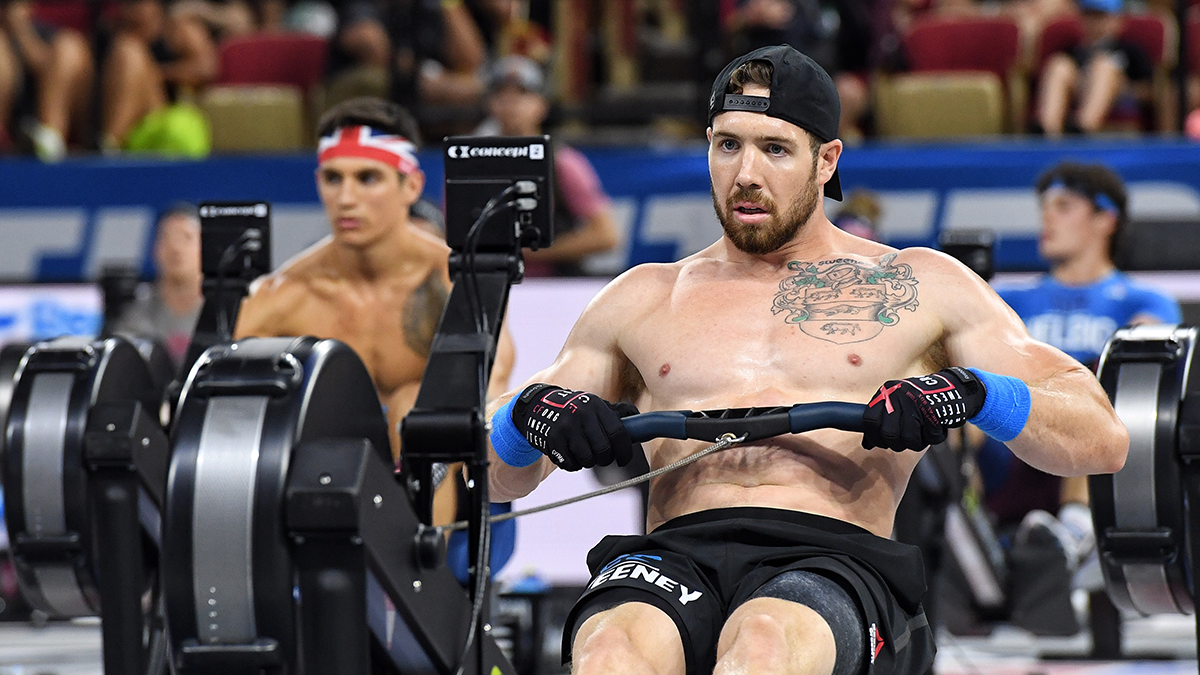
Technique should remain your priority. A good stroke starts with the legs, then the trunk, then the arms. On the return, reverse the sequence by extending the arms, leaning the trunk forward, and then bending the knees. Rushing the recovery usually wastes energy and makes it harder to maintain rhythm.
The damper setting is not a fitness setting. A high damper can make the machine feel heavier, but it does not automatically make your workout better. Many people row more effectively with a moderate setting that allows a powerful but controlled stroke. Focus on the pace displayed on the monitor rather than assuming that a heavier feeling machine produces a faster result.
How Should You Pace a 1km Row?
The most common mistake is attacking the first 200 meters too hard. The monitor may show an exciting split, but the effort can create fatigue that forces a large slowdown before the final quarter. A better performance usually comes from controlled aggression.
Start with several powerful strokes to get the flywheel moving, then settle into a pace that you believe you can hold for most of the distance. Your first 500 meter split should be firm but not reckless. If you can increase your effort over the final 250 meters, you have probably paced the test well.

For example, if your target is a four minute 1 km row, you need to average a two minute 500 meter split. You might begin a little faster than target pace, settle close to target pace through the middle of the test, and then use the final minute to increase your stroke rate and power.
Stroke rate matters, but more strokes are not always better. A sustainable rate with strong, efficient drives is usually more productive than frantic short strokes. Many recreational athletes perform well at a rate that feels controlled through the middle section, then rises only when they make their final push.
How to Improve Your 1km Time
Improving a 1 km row requires both specific rowing practice and general fitness. Rowing intervals are particularly useful because they let you practice holding a demanding pace without completing a maximal test every session.
One effective session is four to six intervals of 250 meters with generous recovery. These repeats teach you how to generate power quickly and maintain good mechanics when breathing is hard. Another option is three or four intervals of 500 meters at a pace close to your 1 km target. This develops the ability to tolerate the sustained discomfort of the full test.
Longer easy rowing also has value. Lower intensity rowing can improve aerobic fitness and movement efficiency while adding less fatigue than repeated maximal sessions. The aerobic system contributes substantially to events lasting several minutes, so easy work can support your ability to recover between hard strokes and maintain pace late in the test.
Strength training can help as well. Squats, deadlifts, split squats, hip hinges, rows, and trunk training can develop the lower body and upper body strength needed to apply force to the machine. The goal is not to turn every strength session into a conditioning workout. It is to build a stronger foundation that improves the force available in each stroke.
Do not test your maximum 1 km time too often. A true maximal effort produces significant fatigue. Testing every four to eight weeks is usually enough to show whether your training is working, especially if you are also tracking interval pace and technique during regular sessions.
When Should You Be Cautious?
A 1 km row is demanding. If you have chest pain, unexplained shortness of breath, dizziness, a known heart condition, or a recent injury that affects your ability to row safely, seek advice from a qualified health professional before performing a maximal test.
People returning to training after a long break should begin with easier rowing sessions rather than immediately chasing a benchmark. Building confidence with technique and progressively increasing intensity is safer and more likely to create lasting improvement.
Your best score is not the only marker that matters. Better technique, less discomfort at the same pace, improved recovery after intervals, and the ability to train consistently are all meaningful signs that your fitness is moving in the right direction.
The Bottom Line
A good 1 km row time depends on your age, sex, body size, experience, and training background. Younger adults will often have an advantage in maximal power and aerobic capacity, but regular training can help people retain impressive performance throughout adulthood.
Use age based benchmarks as a rough guide, not a verdict. The most valuable comparison is with your own previous performance under similar conditions. If your technique is improving, your splits are becoming more consistent, and your finishing time is gradually falling, your training is doing exactly what it should.
References
- Akça, F. (2014) ‘Prediction of rowing ergometer performance from functional anaerobic power, strength and anthropometric components’, Journal of Human Kinetics, 41, pp. 133–142.
- Alibegović, A., Hojbjerre, L., Sonne, M.P., van Hall, G., Stallknecht, B. and Dela, F. (2010) ‘Impact of 9 days of bed rest on hepatic and peripheral insulin action, insulin secretion, and whole body lipid oxidation in healthy young male offspring of patients with type 2 diabetes’, Diabetes, 59(11), pp. 2749–2756.
- Ingham, S.A., Whyte, G.P., Jones, K. and Nevill, A.M. (2002) ‘Determinants of 2,000 m rowing ergometer performance in elite rowers’, European Journal of Applied Physiology, 88(3), pp. 243–246.
- Janssen, I., Heymsfield, S.B., Wang, Z.M. and Ross, R. (2000) ‘Skeletal muscle mass and distribution in 468 men and women aged 18–88 years’, Journal of Applied Physiology, 89(1), pp. 81–88.
- Secher, N.H. (1993) ‘Physiological and biomechanical aspects of rowing: Implications for training’, Sports Medicine, 15(1), pp. 24–42.
- Tanaka, H. and Seals, D.R. (2008) ‘Endurance exercise performance in masters athletes: Age associated changes and underlying physiological mechanisms’, The Journal of Physiology, 586(1), pp. 55–63.
- van Soest, A.J. and Hofmijster, M.J. (2009) ‘Strouhal number and rowing: A mechanical model of rowing efficiency’, Journal of Biomechanics, 42(7), pp. 1015–1021.
- Wilmore, J.H., Stanforth, P.R., Gagnon, J., Rice, T., Mandel, S., Leon, A.S., Rao, D.C., Skinner, J.S. and Bouchard, C. (2001) ‘Cardiorespiratory fitness levels among subjects of the HERITAGE Family Study: Age, gender, and race differences’, Medicine & Science in Sports & Exercise, 33(1), pp. 96–102.
Key Takeaways
| Key takeaway | What it means for you |
|---|---|
| The 1 km row is a whole body test | Your result reflects aerobic fitness, power, muscular endurance, pacing, and technique. |
| Age affects performance but does not determine it | Consistent training can preserve strong rowing performance well into later adulthood. |
| A single benchmark cannot judge everyone fairly | Compare your time with people of similar sex, age, size, and rowing experience. |
| Pacing has a major effect on your result | Start hard enough to establish speed, then hold a controlled pace before pushing at the finish. |
| Technique can lower your time | Drive with the legs first, then the trunk and arms, while keeping the recovery controlled. |
| Your own progress is the most useful measure | Repeat the test in similar conditions every four to eight weeks and track improvement. |