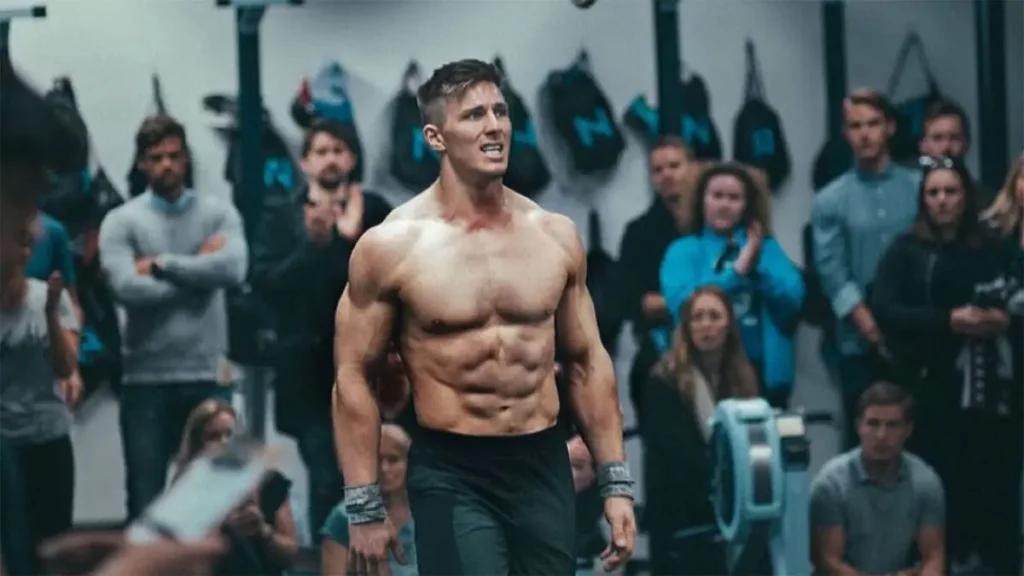


An attractive upper body is not necessarily the biggest upper body in the room. For most people, the goal is to look athletic, capable, and proportionate in everyday clothes while also feeling strong enough to train, carry, lift, and move with confidence.
That outcome comes from building a moderate amount of muscle in the right places, keeping body fat at a level that allows your shape to show, and avoiding the training and eating habits that push size gain faster than you want. You do not need extreme workouts, endless calories, or a bodybuilding lifestyle to make meaningful changes.


The good news is that becoming visibly more muscular requires consistency over a long period. You are very unlikely to wake up one day with more size than you wanted. Building substantial muscle takes progressive resistance training, enough food, adequate protein, recovery, and patience. By controlling those variables, you can improve your physique without chasing maximum mass.
What Makes an Upper Body Look Athletic?
Physical attractiveness is subjective, but research on body shape and visual perception suggests that proportions matter. In men, a broader looking upper torso combined with a relatively narrower waist is commonly associated with an athletic appearance. Shoulder width, upper back development, chest muscle, and a waist that does not obscure those features all contribute to this visual effect.
This does not mean everyone needs the same physique. Your skeletal structure, muscle insertions, height, and natural body fat distribution all influence how you look. However, you can improve the proportions you have by placing most of your training attention on the shoulders, upper back, chest, and arms while continuing to train your legs and core.
Biceps vs Triceps: Which Makes Your Arms Look Bigger?
The aim is not to make every muscle as large as possible. Instead, it is to create enough development that your body looks balanced. A person with strong shoulders, a well developed back, and some chest and arm muscle can look noticeably fitter even without carrying a large amount of total muscle mass.
You Will Not Accidentally Get Huge
Many beginners worry that lifting weights will immediately make them bulky. This fear often prevents people from training hard enough to get the health and appearance benefits of resistance exercise. In reality, muscle growth is a gradual biological process.
Resistance training stimulates muscle protein synthesis and, over time, can increase muscle size. The scale of that increase depends on training volume, effort, nutrition, genetics, training experience, and recovery. Beginners can make visible changes relatively quickly because they are starting from a lower training baseline, but significant muscle gain still takes months and years of disciplined work.
Training volume has a dose response relationship with hypertrophy. More hard sets can produce more muscle growth, but this does not mean more is always better for your goal. You can use moderate weekly training volume to build strength and shape while avoiding an excessive focus on growing every muscle group as much as possible.
You also control your food intake. Consistently eating far more calories than you burn increases the likelihood of gaining body mass, including body fat. A controlled calorie intake makes it easier to support training performance without pursuing rapid weight gain.
Prioritize the Muscles That Improve Your Shape Most
Build Your Side Delts
The side deltoids are particularly useful for creating the appearance of broader shoulders. They sit on the outer part of the upper arm and can make the shoulder line look wider when developed.
Overhead presses train the shoulders, but pressing movements also involve the front deltoids and triceps. To give the side deltoids more direct work, include a lateral raise variation. Dumbbell lateral raises, cable lateral raises, and machine lateral raises can all be effective options.
Use a weight you can control without swinging your torso. Raise the arms smoothly, stop when your technique starts to deteriorate, and gradually increase repetitions or load over time. You do not need to perform huge amounts of shoulder work. A few quality sets twice per week can provide a meaningful training stimulus.
Train Your Upper Back and Lats
A stronger upper back improves posture, supports shoulder function, and gives the torso more visual width. The latissimus dorsi, often called the lats, run from the upper arm toward the lower back and contribute to a wider looking silhouette when viewed from the front or back.
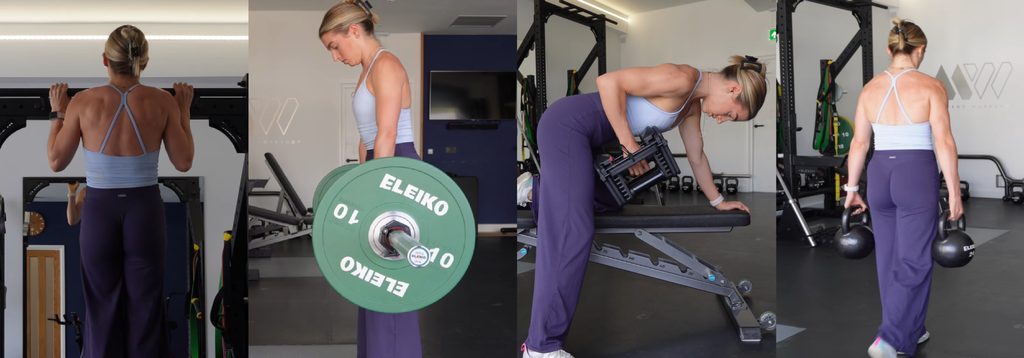
Pull ups, assisted pull ups, pulldowns, chest supported rows, and one arm dumbbell rows are all useful choices. Vertical pulling movements are particularly helpful for training the lats, while horizontal rows train the muscles across the upper and middle back.
Rows also involve the rear deltoids, rhomboids, and trapezius. These muscles help create a more complete upper back instead of a physique that looks developed only from the front. You do not need to use maximal weights. Controlled repetitions through a comfortable range of motion are more useful than turning every set into a test of momentum.
Develop Your Chest With Control
A well developed chest can improve upper body balance, especially when paired with strong shoulders and back muscles. Push ups, dumbbell presses, machine chest presses, and cable flyes can all train the pectoral muscles effectively.

Push ups are an excellent starting point because they allow you to build pressing strength using your body weight. As your strength improves, you can add repetitions, slow the lowering phase, elevate your feet, use a weighted vest, or progress to free weight and machine presses.
For many people, dumbbell pressing is a practical option because each arm works independently. This can make it easier to find a comfortable pressing path and can expose side to side strength differences. A chest press machine can also be valuable because it provides stability, allowing you to focus on effort and technique.
Add Enough Arm Work to Look Complete
Compound pushing and pulling exercises already train the triceps and biceps. However, direct arm work can help create a more finished upper body appearance, especially if your arms are a weaker point.
The triceps make up a large proportion of upper arm mass, so exercises such as cable pressdowns, overhead extensions, and close grip push ups can add useful development. For biceps, dumbbell curls, hammer curls, and cable curls are simple choices.
The goal is not to spend an entire workout chasing an arm pump. Add a modest amount of direct work after your bigger exercises. This approach provides enough stimulus for arm development while leaving time and recovery capacity for the shoulders, chest, and back.
Use Moderate Training Volume
You do not need marathon gym sessions to build an attractive upper body. A practical starting point is two upper body sessions each week, or two full body sessions that include upper body exercises.
A moderate approach could involve two or three exercises for the upper body per session, followed by one or two smaller accessory exercises. This gives you enough practice to improve while making recovery manageable.
For example, one session could include a vertical pull, a horizontal press, a row, lateral raises, and a curl. A second session could include a different pulling movement, a different chest exercise, a shoulder press, a triceps exercise, and some rear delt work.
You can perform roughly two to four challenging sets per exercise. Start conservatively, especially if you are new to lifting. Increase your workload only when you are recovering well, your technique remains solid, and you still enjoy training.
There is no single repetition range that magically produces a lean rather than bulky physique. Research shows that low, moderate, and higher load resistance training can all build muscle when sets are performed with sufficient effort. Moderate and higher repetitions are often practical for people who want to train safely, improve technique, and avoid constantly lifting very heavy loads.
For most exercises, aim for a weight that allows roughly eight to fifteen controlled repetitions. Lateral raises, curls, pressdowns, and cable exercises often work well with slightly higher repetitions. Leave one to three repetitions in reserve on most sets. This means you finish knowing you could probably perform a small number of additional good repetitions.
Progress Slowly Instead of Chasing Constant More
Progressive overload is essential, but it does not mean adding weight every workout forever. It means gradually asking your body to do slightly more over time.
You might add one repetition to a set, use a slightly heavier dumbbell, improve your range of motion, or perform the same work with better technique. These small improvements build strength and muscle without forcing you into an aggressive mass gaining phase.
Keep a simple record of your exercises, weights, and repetitions. If you can complete the top of your chosen repetition range with clean form, increase the load slightly at the next session. If the new weight feels too heavy, stay with it until you can perform quality repetitions.
This slower approach has another advantage. It makes it easier to notice whether you are moving toward your desired look. You can adjust your training volume, food intake, or exercise selection before you gain more size than you want in any one area.
Keep Nutrition Supportive, Not Excessive
Nutrition matters because muscle cannot be built from training alone. Resistance training creates the signal, while sufficient energy and protein help the body recover and adapt.
Protein supports muscle protein synthesis and helps preserve lean mass during periods of reduced calorie intake. For active people who resistance train, a daily protein intake around 1.4 to 2.0 grams per kilogram of body weight is commonly recommended. You do not need to obsess over perfection, but regularly including protein rich foods across the day is useful.
If your main aim is a leaner and more defined upper body, avoid a large calorie surplus. A surplus can support faster weight gain, but it also increases the likelihood that you will gain more fat than you want. Eating around maintenance calories, or using a small calorie deficit if fat loss is a priority, can help you change your body composition more gradually.
A calorie deficit can make muscle gain slower, particularly for experienced lifters, but beginners and people returning after a break may improve strength and muscle while also losing fat. The key is avoiding an overly aggressive deficit that harms training performance, recovery, and adherence.
Choose mostly minimally processed foods that make it easier to hit your protein target, consume enough fiber, and manage hunger. Fruit, vegetables, whole grains, legumes, dairy, fish, eggs, lean meat, tofu, and other protein rich foods can all fit into an effective plan.
Do Not Neglect Cardio, Core, and Posture
Cardiovascular exercise will not erase your strength gains when it is programmed sensibly. Combining aerobic training and resistance training can improve cardiovascular fitness while still allowing meaningful strength development. Regular cardio can also help you manage energy balance and support overall health.
Choose activities you can sustain, such as brisk walking, cycling, rowing, swimming, jogging, or interval work. Two or three weekly sessions is a realistic target for many people. Keep the intensity appropriate for your current fitness and do not turn every cardio session into an exhausting competition.
Core training also has a role. Strong abdominal and trunk muscles help transfer force during lifting and improve your ability to control posture. Planks, dead bugs, loaded carries, cable rotations, and hanging knee raises are all useful choices.
Posture is not about forcing your shoulders backward all day. It is about having the strength and movement options to stand and move comfortably. Training the upper back, rear deltoids, chest, and core through a balanced program can support this goal.
A Simple Weekly Approach
A sustainable routine is more effective than an ideal routine you cannot maintain. Train your upper body twice each week, keep sessions focused, and allow enough recovery between hard workouts.
On your first session, use a pulldown or pull up variation, a dumbbell or machine chest press, a row, lateral raises, and an arm exercise. On your second session, use a different row or pulldown variation, push ups or an incline press, a shoulder press, rear delt work, and an arm exercise for the muscle you did not train directly in the first session.
Train your lower body as well. Squats, split squats, hip hinges, and leg exercises help create a capable, balanced physique and deliver health benefits that should not be ignored simply because the goal is an attractive upper body.
Take progress photos under similar lighting every four to six weeks if physique change is your priority. The scale alone cannot tell you whether your shoulders, chest, arms, and back are becoming more defined. Fit of clothing, strength progress, energy levels, and photos provide a better overall picture.
The Bottom Line
Building an attractive upper body without getting huge is about controlled improvement, not fear of training hard. Prioritize the shoulders, upper back, chest, and arms. Use moderate training volume, improve gradually, eat enough protein, and avoid large calorie surpluses.
The physique you want will come from months of consistent work, not a few extreme sessions. Focus on becoming stronger, moving better, and adding muscle at a pace that fits your preferences. That is how you build a body that looks athletic without making size your only goal.
Key Takeaways
| Focus | What to do | Why it matters |
|---|---|---|
| Shoulder width | Train lateral raises and pressing movements twice weekly | Developed side delts can make the upper body look broader |
| Upper back | Include rows and vertical pulls | Back development supports a wider, more balanced torso |
| Chest | Use push ups, presses, or machine presses | Chest muscle helps balance the shoulders and arms |
| Arms | Add modest direct biceps and triceps work | Direct work can improve upper arm development without dominating training |
| Training volume | Use moderate sets and two upper body sessions per week | Consistent, manageable work supports steady progress |
| Nutrition | Eat sufficient protein and avoid a large calorie surplus | This supports recovery while helping limit unwanted mass gain |
| Cardio | Include regular aerobic exercise | Cardiovascular fitness and energy balance support health and physique goals |
| Progress | Add repetitions, load, or control gradually | Slow progression builds strength and muscle without extreme approaches |
References
- Bar, M., Neta, M. and Linz, H. (2006) ‘Very first impressions’, Emotion, 6(2), pp. 269–278.
- Grgic, J., Schoenfeld, B.J., Skrepnik, M. and Davies, T.B. (2018) ‘Effects of rest interval duration in resistance training on measures of muscular strength: A systematic review’, Sports Medicine, 48(1), pp. 137–151.
- Helms, E.R., Aragon, A.A. and Fitschen, P.J. (2014) ‘Evidence based recommendations for natural bodybuilding contest preparation: Nutrition and supplementation’, Journal of the International Society of Sports Nutrition, 11, 20.
- Lopez, P., Radaelli, R., Taaffe, D.R., Newton, R.U., Galvão, D.A., Trajano, G.S., Teodoro, J.L., Kraemer, W.J., Häkkinen, K. and Pinto, R.S. (2021) ‘Resistance training load effects on muscle hypertrophy and strength gain: Systematic review and network meta analysis’, Medicine & Science in Sports & Exercise, 53(6), pp. 1206–1216.
- Morton, R.W., Murphy, K.T., McKellar, S.R., Schoch, R.D., Henselmans, M., Helms, E., Aragon, A.A., Devries, M.C., Banfield, L., Krieger, J.W. and Phillips, S.M. (2018) ‘A systematic review, meta analysis and meta regression of the effect of protein supplementation on resistance training induced gains in muscle mass and strength in healthy adults’, British Journal of Sports Medicine, 52(6), pp. 376–384.