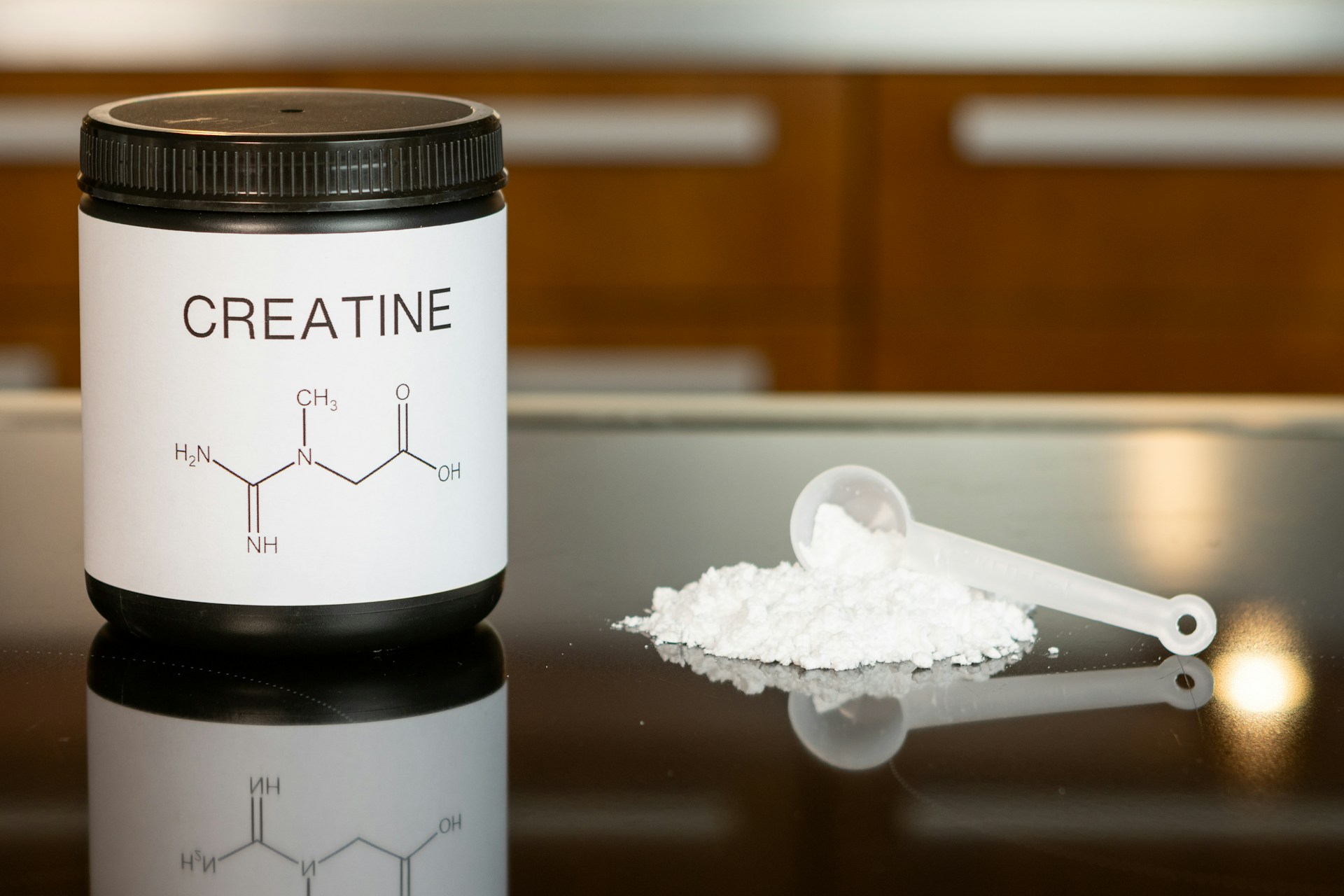


That’s the question getting harder to ignore as peptides and SARMs become increasingly prominent in the muscle-building market. New research published in September 2026 has further strengthened creatine’s credentials, with a 12-week study in adults aged 45 to 65 reporting gains in lean mass and strength. But if you’re willing to look beyond conventional supplements, the equation may change.
Are more powerful compounds actually worth the trade-off?


Creatine Has More Going for It Than Speed
Creatine may not offer the dramatic changes promised by some newer muscle-building products, but if the question is what makes it such a safe bet, its track record is hard to beat. It is one of the most researched sports supplements available, with decades of study showing its effectiveness in improving strength, power, training volume, and lean mass.
By boosting phosphocreatine stores, it helps muscles regenerate ATP during high-intensity efforts, potentially giving you an extra rep or two or helping you maintain intensity for a little longer. Those small advantages can eventually add up to more productive training sessions and greater muscle growth.
It is also important to remember that the initial weight gain caused by creatine does not necessarily mean new muscle mass. The supplement increases water content inside muscle cells, making the muscles look fuller, while its longer-term value comes from supporting training performance and adaptations.
This combination of effectiveness and usefulness is what makes creatine such a staple for lifters, as explained by BOXROX in our past look at five reasons every gym goer should take the supplement.
Peptides: A Faster Route?
While creatine has been studied for many years now, peptides are a more diverse class of compounds, each having a varied mechanism and purpose.
We consulted with the Biaxol brand, which offers peptides of various types, to learn more about how these products are positioned in the fitness space. For example, the company’s BPC-157 product is targeted at tissue recovery, KPV at inflammation and gut support, and SLU-PP-332 at energy and metabolic pathways. This diversity can be an advantage, as different peptides can target specific goals such as recovery, energy metabolism and body composition.

Research results also vary depending on the compound, so the right peptide may depend on the specific outcome you’re looking for.
Where Do SARMs Fit?
Finally, SARMs belong to a completely different class of substances. Unlike creatine, they are intended to target androgen receptors directly, producing more direct anabolic effects on muscle. According to a 2026 review published in the Journal of Clinical Endocrinology & Metabolism, some SARMs have been found to increase lean body mass during clinical trials, although their effects on muscle strength have been less consistent.
This is what makes them attractive to weightlifters looking for more noticeable results. However, greater potential may also come with greater risks. SARMs are not ordinary sports supplements, and their long-term safety, including potential liver and cardiovascular effects, remains unresolved.
So, Which Actually Builds Muscle Faster?
If the aim is to achieve visible muscle changes as quickly as possible, there is a case for SARMs. However, the three options have very different pros and cons:
- Creatine: improves the ability to train harder and accumulate adaptations over time.
- Peptides: difficult to rank as a category, as different compounds are designed to target different goals.
- SARMs: have the most direct anabolic effect and may therefore produce faster results in terms of visible muscle changes.
Faster Isn’t Always Better
Ultimately, what one learns from even a surface-level look at these products is that they do not simply represent three speeds of the same process.
While creatine helps you get more from your existing training, peptides can target processes like recovery and metabolism, whereas SARMs act more directly on anabolic pathways. That means the closer you get to a direct muscle-building effect, the less useful a simple “faster is better” comparison becomes.
The better question might not be which product builds muscle fastest, but what specific aspect of muscle-building needs improving.