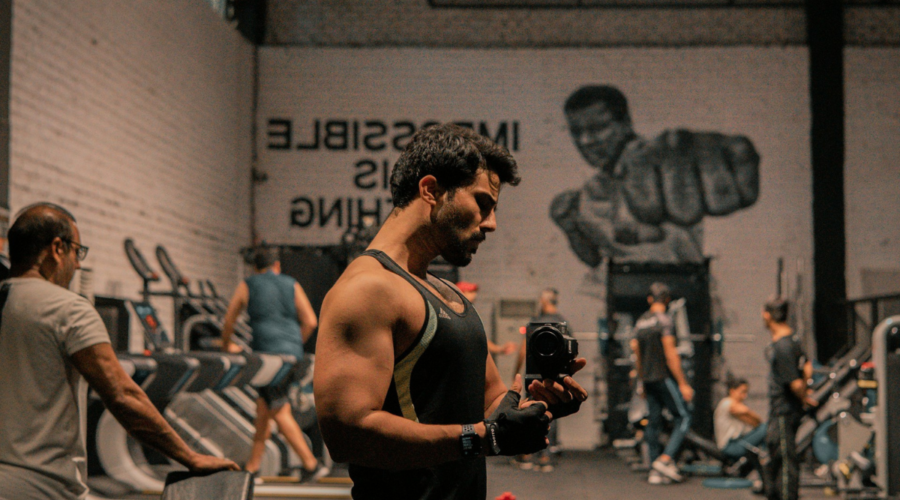


Big biceps are not only about building a higher peak. From the front, arm width matters just as much. A wider looking upper arm can make your sleeves feel tighter, improve the shape of your physique, and give your arms a more complete appearance even when they are relaxed.
The important point is that the biceps are not the only muscles responsible for this look. The brachialis sits underneath the biceps brachii and can push it outward as it grows. The brachioradialis runs along the upper part of the forearm and adds thickness near the elbow, which helps the whole arm look more substantial. Your biceps brachii also contributes to the visual width of the upper arm, especially when it is trained through a controlled full range of motion.



You cannot completely change the natural structure of your arms. Bone width, muscle insertions, and genetics influence how your biceps look. However, you can build more muscle across the elbow flexors and use exercise selection to give the brachialis, brachioradialis, and biceps brachii enough productive work. That is the practical route to wider looking arms.
What Makes Biceps Look Wider?
The biceps brachii has two heads, known as the long head and short head. Both cross the elbow and help flex it, while the biceps also plays an important role in turning the palm upward, which is called supination. The brachialis lies beneath the biceps brachii and is a powerful elbow flexor regardless of hand position. The brachioradialis is most visible near the outer upper forearm and contributes strongly during elbow flexion, particularly when the forearm is neutral or pronated.
For visual width, the brachialis is especially valuable because it adds mass below and beside the biceps. As it grows, it can make the upper arm look fuller from the front. The brachioradialis also matters because a narrow forearm can make even a reasonably muscular upper arm look less impressive. Building this muscle improves the transition from upper arm to forearm and creates a thicker overall silhouette.
This does not mean that standard curls are ineffective. A well performed supinated curl trains the biceps brachii very effectively. However, a complete arm program should not rely on only one wrist position. Research comparing curl variations shows that hand position changes the contribution of the elbow flexors, particularly the brachioradialis. Using more than one curl style is a sensible way to train the whole group rather than chasing a mythical isolation exercise.
The 3 Best Exercises for Wider Looking Biceps
1. Dumbbell Hammer Curl
The hammer curl is the most useful starting point for anyone who wants wider looking arms. Hold the dumbbells with your palms facing each other, keep the upper arm close to your side, and curl the weights upward without swinging your torso. This neutral grip places the biceps brachii in a less favorable position for supination while allowing the brachialis and brachioradialis to contribute strongly to elbow flexion.
The brachialis cannot be seen as clearly as the biceps, but it is a major part of the arm width equation. It sits underneath the biceps and creates a dense layer of muscle that can make the biceps appear to sit higher and farther outward. Hammer curls also train the brachioradialis, which makes them a strong choice for people whose arms look narrow around the elbow and upper forearm.
Use a load that allows you to avoid rotating your shoulders forward or leaning back. Start each repetition from a controlled stretch with your elbow close to full extension. Curl until the dumbbell reaches the top of the movement without letting the elbow drift far in front of the body. Then lower slowly and maintain tension rather than dropping the weight.
A practical target is three to four sets of eight to 15 repetitions. Moderate and lighter loads can both build muscle when sets are performed with enough effort, so do not assume that very heavy dumbbells are required. Finish most sets with roughly one to three repetitions left in reserve. This gives you hard, productive work while keeping technique consistent.
2. Reverse EZ Bar Curl
The reverse curl is one of the best direct exercises for adding thickness to the outer arm. Use an EZ bar with palms facing down, grip the angled sections comfortably, and curl the bar upward while keeping your wrists straight. The pronated hand position reduces the mechanical advantage of the biceps brachii and increases the relative contribution of the brachioradialis.
This is useful because the brachioradialis sits on the thumb side of the forearm and is highly visible when your arm is viewed from the front or side. Growing it will not turn your forearm into your upper arm, but it can make the arm look wider and more athletic by reducing the visual gap between the biceps and forearm. The reverse curl also provides work for the brachialis, which remains active during elbow flexion regardless of whether your palm faces up or down.
Keep this movement strict. The most common mistake is using too much weight and turning the exercise into a swinging motion from the hips and shoulders. Choose a lighter load than you would use for a regular barbell curl. Raise the bar smoothly, pause briefly when your elbows are bent, and lower it under control. If your wrists bend backward, reduce the weight and keep the knuckles pointing toward the ceiling.
Perform two to four sets of 10 to 20 repetitions. Reverse curls can be challenging on the forearms and elbows, so begin conservatively if they are new to your training. They work very well after hammer curls or conventional curls, when the biceps brachii has already received direct work and you want to target the muscles that create more outer arm thickness.
3. Supinating Dumbbell Curl
The supinating dumbbell curl is the foundational movement for building the biceps brachii itself. Start with your arms at your sides and palms facing inward. As you curl the dumbbells upward, gradually turn your palms toward the ceiling. By the top of the repetition, your palms should be facing you or slightly upward, depending on what feels comfortable at your wrists.
This movement is valuable because the biceps brachii is both an elbow flexor and a strong supinator of the forearm. The deliberate rotation gives the biceps a job that hammer curls and reverse curls do not emphasize to the same degree. More biceps brachii muscle still contributes to a wider arm, especially through the middle of the upper arm where the muscle belly is most visible.
Avoid rushing the rotation. Begin turning the wrist as the dumbbell rises rather than waiting until the top. Keep your elbow close to your torso and do not use the shoulder to throw the weight upward. At the bottom, fully straighten the elbow under control, provided this is comfortable for your joints. Training through a large and controlled range of motion is generally a sound practice for hypertrophy and strength development.
Perform three to four sets of six to 12 repetitions. You can use both arms together or alternate sides. Alternating repetitions often helps beginners focus on a controlled wrist rotation and prevents the stronger side from taking over. If you have trouble feeling the biceps work, lower the weight, slow the lowering phase, and stop each set only when you are close to technical failure.
How to Program These Exercises for Growth
You do not need an enormous arm day to build wider biceps. What matters more is accumulating challenging weekly sets, progressing gradually, and giving the elbow flexors enough recovery. Research on resistance training volume shows a general dose response relationship, meaning that more hard weekly sets tend to produce more hypertrophy until recovery becomes the limiting factor.
For most people, begin with eight to 12 direct sets per week across these three exercises. This could mean training biceps twice per week, with four to six sets per session. For example, one session could include hammer curls and supinating dumbbell curls, while another could include reverse curls and supinating dumbbell curls. Rows, pullups, and pulldowns also train the elbow flexors, so count that work when deciding whether your arms need more volume.
Progression should be simple. Pick a repetition range and aim to add repetitions with the same weight over several sessions. Once you reach the top of the range with clean form for every set, increase the load slightly and build up again. This approach makes progress measurable and avoids the common mistake of changing exercises every week before you have given any movement enough time to work.
Your final repetitions should feel difficult, but pain is not a sign of productive training. Elbow discomfort often develops when lifters add too much reverse curl volume too quickly, grip the bar too tightly, or rely on sloppy swinging. Keep the wrists stable, lower the weight smoothly, and leave a couple of repetitions in reserve if joint irritation appears.
Nutrition and Recovery Still Matter
No curl variation can build wider looking arms if your nutrition and recovery do not support muscle growth. Resistance training provides the stimulus, but dietary protein helps support the gain of lean mass during a structured training program. A large review found that protein supplementation can provide a small additional benefit for gains in fat free mass and strength when combined with resistance training, particularly when total protein intake would otherwise be low.

You do not need a supplement specifically. Regular meals that provide enough protein can work just as well. Focus on consistency, adequate total calories for your goal, and enough sleep to recover from training. If you are trying to gain arm size while losing body weight aggressively, progress may be slower because building new tissue requires energy and recovery resources.
3 Best Exercises for Building the Shoulders that Beginners Often Ignore
Be patient with visual changes. The muscles that make the arm look wider need months of progressive training, not a few intense sessions. Take consistent photographs or arm measurements every four to six weeks in the same lighting and position. This will show changes more reliably than checking your arms in the mirror after every workout.
The Bottom Line
If you want biceps that look wider, train more than the biceps brachii alone. Hammer curls build the brachialis and brachioradialis, reverse curls add valuable outer forearm and elbow thickness, and supinating dumbbell curls provide direct work for the biceps brachii. Together, they develop the muscles that make your arms look fuller from the front, side, and in a T shirt.
Use controlled reps, train close to failure with good form, and add reps or load gradually. Combine these exercises with enough food, protein, and recovery, and you will give your arms the best chance to become visibly wider over time.
Key Takeaways
| Focus | Best Exercise | Why It Helps | Practical Starting Point |
|---|---|---|---|
| Upper arm width beneath the biceps | Dumbbell hammer curl | Trains the brachialis and brachioradialis with a neutral grip | Three to four sets of eight to 15 repetitions |
| Outer arm and upper forearm thickness | Reverse EZ bar curl | Emphasizes the brachioradialis in a pronated grip position | Two to four sets of 10 to 20 repetitions |
| Overall biceps size and shape | Supinating dumbbell curl | Directly trains elbow flexion and forearm supination | Three to four sets of six to 12 repetitions |
| Sustainable growth | All three movements | Builds the full elbow flexor group over time | Aim for eight to 12 direct weekly sets to start |
References
- Gentil, P., Soares, S., Bottaro, M., de Oliveira, E., da Silva, R. and Noll, M. (2018) ‘Differences in electromyographic activity of biceps brachii and brachioradialis while performing three variants of curl’, PeerJ, 6, e5165.
- Grgic, J., Schoenfeld, B.J., Davies, T.B., Lazinica, B., Krieger, J.W. and Pedisic, Z. (2021) ‘Effect of resistance training frequency on gains in muscular strength: A systematic review and meta analysis’, Sports Medicine, 48(5), pp. 1207 to 1220.
- Hamilton, D.L., et al. (2023) ‘Influence of resistance training proximity to failure on skeletal muscle hypertrophy: A systematic review with meta analysis’, Sports Medicine, 53(3), pp. 649 to 665.
- Kassiano, W., Costa, B.D.V., Nunes, J.P., Ribeiro, A.S., Schoenfeld, B.J. and Cyrino, E.S. (2021) ‘Effects of range of motion on resistance training adaptations: A systematic review and meta analysis’, Scandinavian Journal of Medicine and Science in Sports, 31(10), pp. 1866 to 1879.
- Morton, R.W., Murphy, K.T., McKellar, S.R., Schoenfeld, B.J., Henselmans, M., Helms, E., Aragon, A.A., Devries, M.C., Banfield, L., Krieger, J.W. and Phillips, S.M. (2018) ‘A systematic review, meta analysis and meta regression of the effect of protein supplementation on resistance training induced gains in muscle mass and strength in healthy adults’, British Journal of Sports Medicine, 52(6), pp. 376 to 384.
- Schoenfeld, B.J., Ogborn, D. and Krieger, J.W. (2017) ‘Dose response relationship between weekly resistance training volume and increases in muscle mass: A systematic review and meta analysis’, Journal of Sports Sciences, 35(11), pp. 1073 to 1082.
- Staudenmann, D., Kingma, I., Stegeman, D.F. and van Dieën, J.H. (2015) ‘Muscular coordination of biceps brachii and brachioradialis in elbow flexion with respect to hand position’, Frontiers in Physiology, 6, 215.