

Push-ups are a practical way for beginners to train their chest, shoulders, and triceps with little or no equipment. Changing your hand position can change how the movement feels and how hard different muscles work. That raises a common question: should you use a wide grip or bring your hands closer together if your goal is a bigger chest?
The short answer is that neither grip has been proven to build more chest muscle over time. Studies have measured muscle activity during individual push-ups, but those results do not tell us which variation produces more chest growth after weeks or months of training. The available findings suggest that close hand positions can make the triceps work harder and may increase activity in some chest measurements, while very wide positions do not consistently activate the chest more.


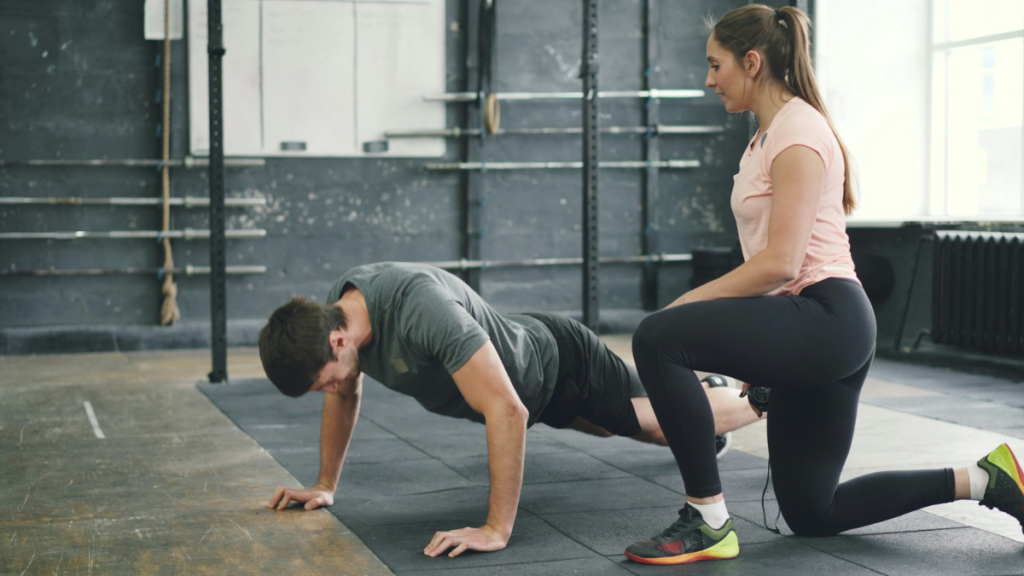
For a beginner, the most useful grip is the one that lets you perform controlled repetitions through a comfortable range of motion and gradually make the exercise more challenging. A shoulder width hand position is a sensible starting point. You can then use slightly wider or closer positions if they feel comfortable and fit your training goals.
What the research says about hand position
Muscle activity is not the same as muscle growth
Researchers often use electromyography, or EMG, to measure electrical activity in a muscle during an exercise. Push-up studies using EMG have found differences in chest and triceps activity between hand positions. Some have reported greater activity in both muscles with a narrow position compared with a wide position. Another study found greater pectoralis major activity with narrow and shoulder width positions than with a very wide position.
These findings can help explain how a variation feels, but they do not prove that it builds more muscle. An EMG test usually captures activity during a short exercise session. Muscle growth develops over repeated training sessions, and it is affected by more than the activity recorded in one set. The exact relationship between acute EMG readings and long term muscle growth is not simple enough to use one as a direct prediction of the other.
That distinction matters when comparing wide grip and close grip push-ups. There is no strong long term trial showing that one hand position produces more chest growth than the other in beginners. So it would be misleading to call either variation the proven winner for building a bigger chest.
What “wide” and “close” mean
A wide grip generally places the hands farther apart than shoulder width. A close grip places them closer together, often around shoulder width or slightly inside it. These descriptions are not perfectly standardized across studies, which makes direct comparisons harder. One study may define a wide position as a set percentage of shoulder width, while another may use a particular distance between the hands.
The name “close grip” can also refer to a very narrow or diamond style push-up, where the hands are close enough to form a shape beneath the chest. That is a more demanding variation for many people than a modestly close hand position. Beginners do not need to place their hands together to train the chest effectively.
How the variations may feel
Wide grip push-ups
A wide grip places the hands farther from the body’s midline. Some people find that this makes the chest feel more involved, but a wider hand position does not automatically mean more chest growth. Research comparing hand widths has not shown a consistent activation advantage for very wide push-ups. In one study, pectoralis major activity was higher with narrow and shoulder width hand positions than with the widest position tested.
A wide grip may also change the movement at the shoulder and elbow. If the position feels uncomfortable, causes pinching, or makes it difficult to control the descent, bring your hands closer together. A wider grip is an option, not a requirement for building a chest.
Close grip push-ups
A closer hand position often increases the challenge for the triceps, the muscles at the back of the upper arm that help straighten the elbow. Some EMG research has also recorded greater pectoralis major activity with narrow positions than with wide positions. That makes close grip push-ups a useful variation, but it does not establish them as a better chest builder over time.
Very close push-ups can be difficult for beginners because the triceps may tire before the chest. If that happens, you may not be able to complete enough controlled repetitions to challenge your chest effectively. Start with your hands around shoulder width rather than forcing a diamond position. You can gradually bring them closer if the movement stays comfortable and controlled.
Shoulder width as a practical starting point
A shoulder width setup is a useful middle ground. It gives you room to bend your elbows and lower your chest without forcing an extreme hand position. Place your hands roughly below your shoulders, then adjust slightly until the position feels natural.
During each repetition, keep your body in a straight line from head to heels, brace your midsection, and lower your chest under control. Stop the descent at a depth you can manage without pain or loss of body position. Press back up without letting your hips sag or your shoulders shrug toward your ears. Using a consistent, comfortable range of motion makes it easier to track your progress over time.
Which push-up grip should a beginner choose?
If your main goal is chest growth, choose the grip that allows you to train the chest hard while keeping good technique. For many beginners, that will be a standard or slightly wider than shoulder width hand position. If a close position feels better and lets you control the movement, it is also a valid choice.
You can try both positions for a few sessions and pay attention to whether you can lower your chest comfortably, keep your elbows under control, and finish the set with the chest and arms working without joint discomfort. Use a position that you can repeat consistently. You do not need to change hand placement every workout to keep making progress.
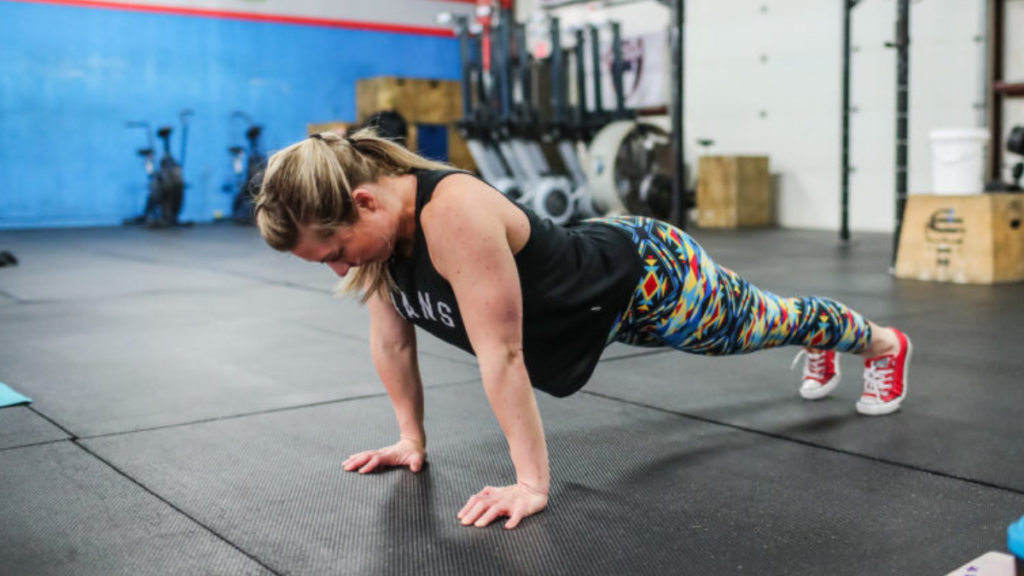
If floor push-ups are currently too difficult, elevate your hands on a stable bench, table, or wall. This makes the exercise easier to scale while you practice the same body position and controlled movement. When you can complete your chosen number of repetitions with steady form, use a lower hand support or move to floor push-ups. The progression should make the exercise challenging without forcing you to shorten the movement or lose control.
How to make push-ups support chest growth
Make the sets challenging
A set should become difficult toward the end while you can still maintain good form. You do not have to reach the point where you cannot complete another repetition on every set. A systematic review and meta-analysis found no clear evidence that training to momentary failure is superior to stopping short of failure for muscle growth. For beginners, ending a set when only a small number of good repetitions remain can be a practical way to train hard while preserving technique.
If you can perform many push-ups without much effort, the variation may be too easy to provide a strong challenge. Lower your hand support if you are using an incline, slow down the lowering phase, or progress to a more difficult variation. If you cannot complete controlled floor push-ups, elevate your hands to reduce the challenge while still practicing the movement.
Use a controlled range of motion
Lower yourself as far as you can while keeping your body aligned and your shoulders comfortable, then press back to the starting position. Avoid bouncing or dropping quickly toward the floor. A systematic review of resistance training research found that range of motion can influence muscle development, although results vary by exercise and muscle group. A consistent, pain free range gives you a clear way to compare sessions and improve your performance.
You do not need to chase an extreme depth if it causes discomfort or makes you lose control. Start with a range you can manage, then build strength and confidence. If you have persistent shoulder, wrist, or elbow pain, stop the painful variation and seek appropriate advice before continuing.
Progress gradually
Keep a simple record of your push-up variation, repetitions, and sets. When you can complete all your planned repetitions with steady technique, make one adjustment, such as lowering an incline or using a slightly harder hand position. Gradual progression helps ensure the exercise continues to challenge you as your strength improves.
3 Best Dumbbell Exercises for Bigger Bicep Peaks
For a beginner, two or three weekly sessions that include a few challenging sets of push-ups can be a manageable starting point. Allow enough recovery to perform the next workout with good effort. The exact number of sets that works best will depend on your current ability, the rest of your training, and how well you recover. Consistency and gradual increases in difficulty matter more than finding a perfect grip.
The verdict
Neither wide grip nor close grip push-ups have been shown to build a bigger chest in beginners over the long term. Acute EMG studies offer some clues about muscle activity, and they do not support the idea that going very wide necessarily activates the chest more. Close positions can increase the demand on the triceps and may increase measured chest activity in some study conditions, but that is not proof of superior chest growth.
Start with a shoulder width position, or a slight variation that feels natural. Focus on controlled repetitions, a comfortable range of motion, and sets that become challenging while your technique stays sound. Once you have built a base, try modestly wider or closer positions and keep the one that lets you train consistently. Your ability to progress the exercise over time is a better guide than the label on your hand placement.
Key takeaways
| Training question | Key takeaway |
|---|---|
| Which grip is proven to build more chest muscle? | Neither grip has been shown to produce greater long term chest growth in beginners. |
| What grip should beginners start with? | Start around shoulder width and adjust slightly for comfort and control. |
| Does wide grip always work the chest more? | No. EMG studies do not show a consistent chest activity advantage for very wide positions. |
| What changes with a closer grip? | Close positions can make the triceps work harder and may increase measured chest activity in some studies. |
| What matters most for progress? | Use controlled repetitions, a comfortable range of motion, and gradually increase the challenge. |
References
- Cogley, R.M., Archambault, T.A., Fibeger, J.F., Koverman, M.M., Youdas, J.W. and Hollman, J.H. (2005) ‘Comparison of muscle activation using various hand positions during the push-up exercise’, Journal of Strength and Conditioning Research, 19(3), pp. 628–633.
- Grgic, J., Schoenfeld, B.J., Orazem, J. and Sabol, F. (2022) ‘Effects of resistance training performed to repetition failure or non-failure on muscular strength and hypertrophy: A systematic review and meta-analysis’, Journal of Sport and Health Science, 11(2), pp. 202–211.
- Kim, Y.S., Kim, D.Y. and Ha, M.S. (2016) ‘Effect of the push-up exercise at different palmar width on muscle activities’, Journal of Physical Therapy Science, 28(2), pp. 446–449.
- Schoenfeld, B.J. and Grgic, J. (2020) ‘Effects of range of motion on muscle development during resistance training interventions: A systematic review’, SAGE Open Medicine, 8, article 2050312120901559.