

Dips and push-ups are two of the best known bodyweight exercises for building the chest. Both train the pectoralis major, the large muscle that makes up most of the chest, and both also involve the triceps and front of the shoulders. But they feel different, challenge the body in different ways, and suit different training levels.
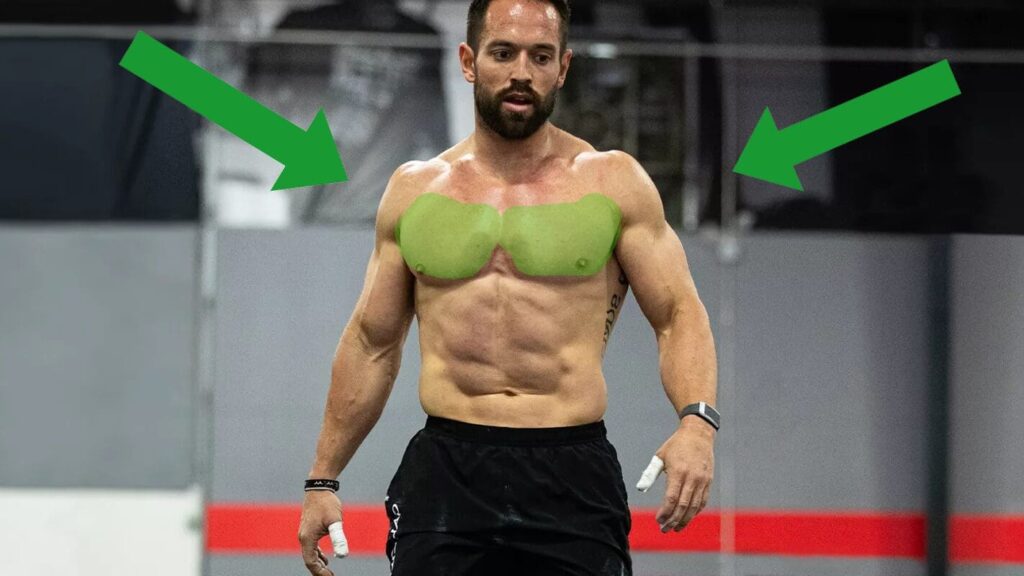
There is no strong long-term study directly comparing dips with push-ups for chest growth. That means we cannot say that one exercise is scientifically proven to build bigger pecs than the other. Research on push-ups and other resistance exercises, along with studies measuring muscle activity during dips, can still help explain how each exercise may fit into a chest training plan.


For many beginners, push-ups are the better place to start because they are easy to scale and require little equipment. Dips can also be effective, but they ask for more strength and shoulder control. The best choice is the exercise you can perform with good technique, challenge consistently, and progress over time.
What the Research Says About Chest Growth
Muscles grow when training gives them a challenging stimulus and that stimulus is repeated over time. The bodyweight label does not determine whether an exercise can build muscle. How demanding each set is, how much work you do, and whether you can make the exercise harder as you get stronger all matter.
A small eight week training study found that push-ups performed at a load similar to a light bench press produced chest muscle growth and strength gains in young men. This supports the idea that push-ups can build the pecs when the variation provides a suitable challenge. It does not show that push-ups are equal to dips, since dips were not tested.
Studies that compare push-ups with bench presses also suggest that push-ups can create substantial chest muscle activity when the resistance is matched appropriately. However, muscle activity measured during one session is not the same thing as muscle growth over months. A movement that feels difficult or produces a strong chest contraction is not automatically better for building muscle.
Dips have been examined in smaller studies that measured muscle activity rather than long term growth. These studies show that the pectoralis major works during parallel bar dips, alongside the triceps and other muscles that help move and stabilize the body. That confirms dips can train the chest, but it does not establish that they build more pec muscle than push-ups.
How Push-Ups Train the Pecs
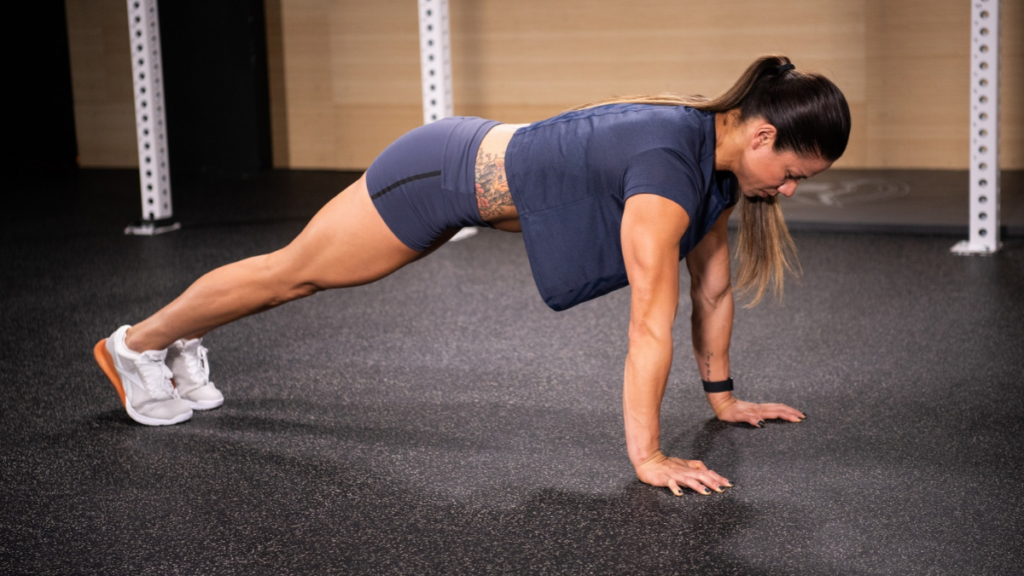
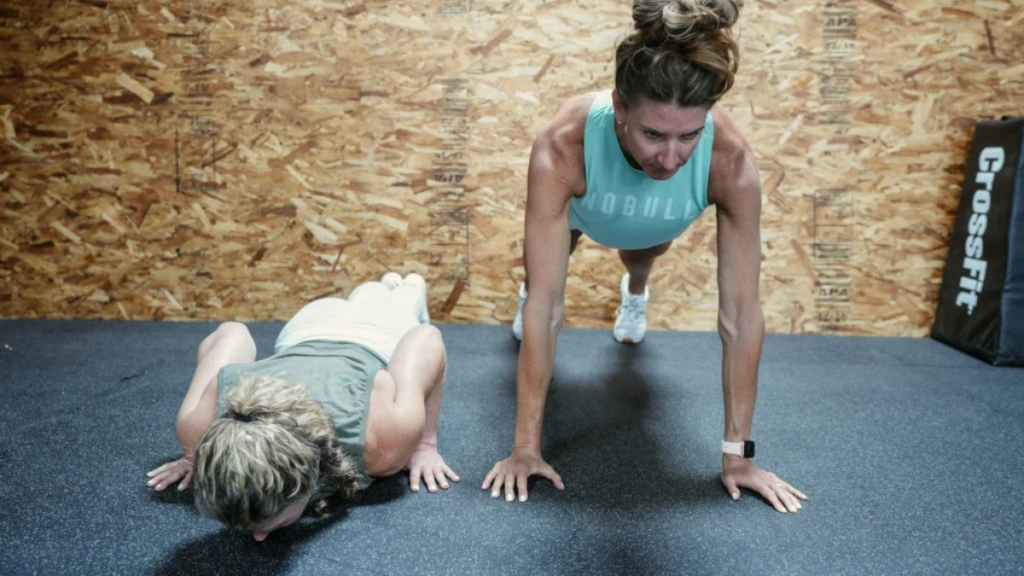
In a push-up, you lower your chest toward the floor and press your body away from it. Your pecs help bring your upper arms toward your torso as you press. Your triceps straighten your elbows, while your shoulders and trunk help control the movement.
The main advantage of push-ups is that you can adjust the difficulty without much equipment. If a floor push-up is too difficult, placing your hands on a sturdy bench or other raised surface reduces the challenge. As you get stronger, you can lower the hand support, use the floor, or add resistance with a secure weighted vest or band.
That range of options makes it easier for beginners to find a version they can perform through a controlled range of motion. A good set should feel challenging near the end while still allowing you to keep your body in a steady line and lower under control. If you can perform many more repetitions after a set ends, the exercise may not be difficult enough to keep providing a strong growth stimulus.
Push-ups also make it straightforward to practice regularly because they do not require a gym or specialized equipment. Their main limitation is that it can become harder to add small, precise amounts of resistance as you advance. You can use harder variations or external load, but the available progression may be less convenient than adding weight to a gym exercise.
How Dips Train the Pecs
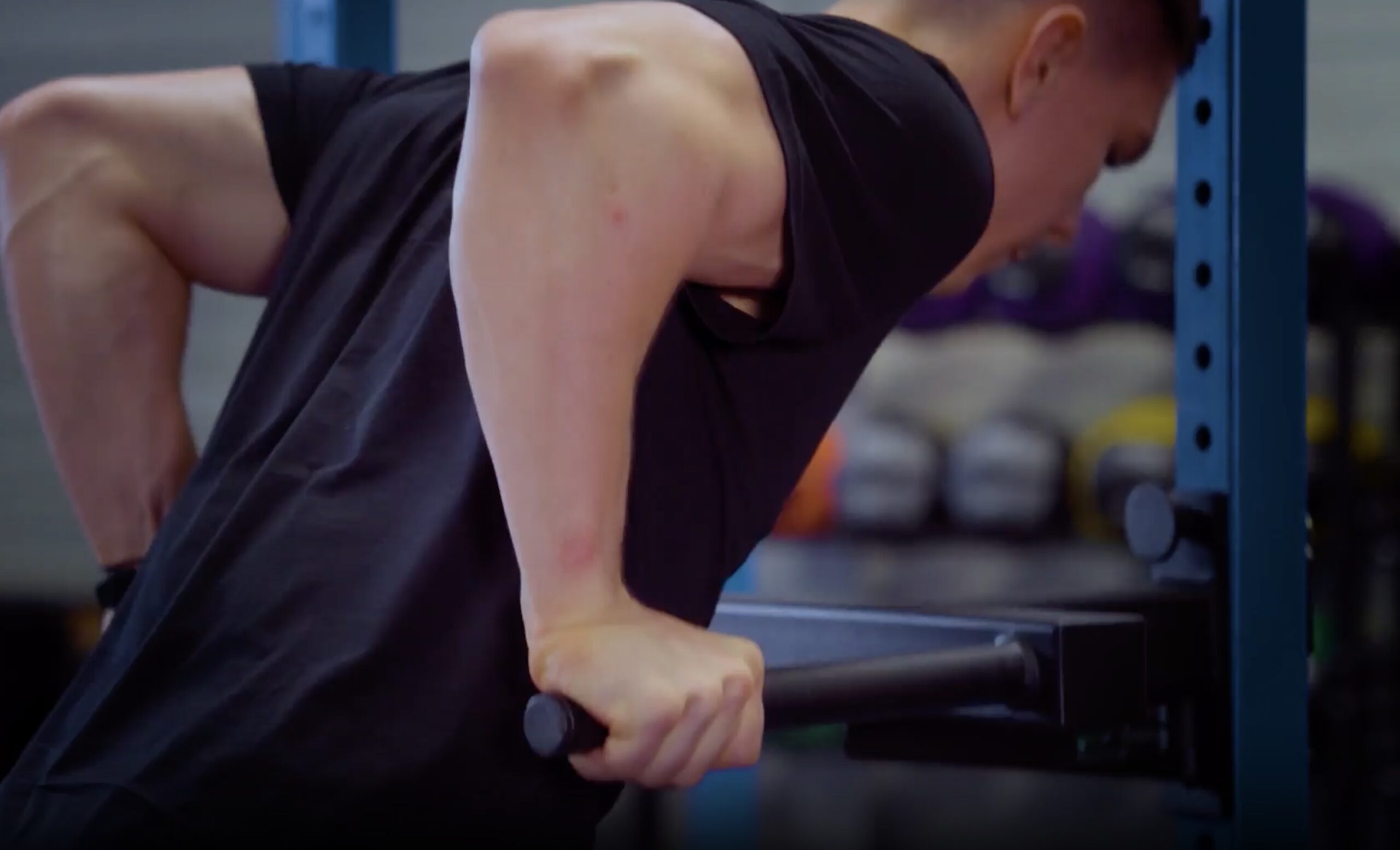
A standard parallel bar dip begins with your hands on the bars and your arms supporting your body. You bend your elbows to lower yourself between the bars, then press back up. Your chest and triceps both contribute to the upward push, and your shoulders help control the descent.
Dips can be challenging because you are lifting most of your body weight with your arms. For someone who is already strong enough to perform them, that can make them a demanding addition to a chest workout. Once bodyweight dips become manageable, a weight belt or other secure loading method can make the exercise harder.
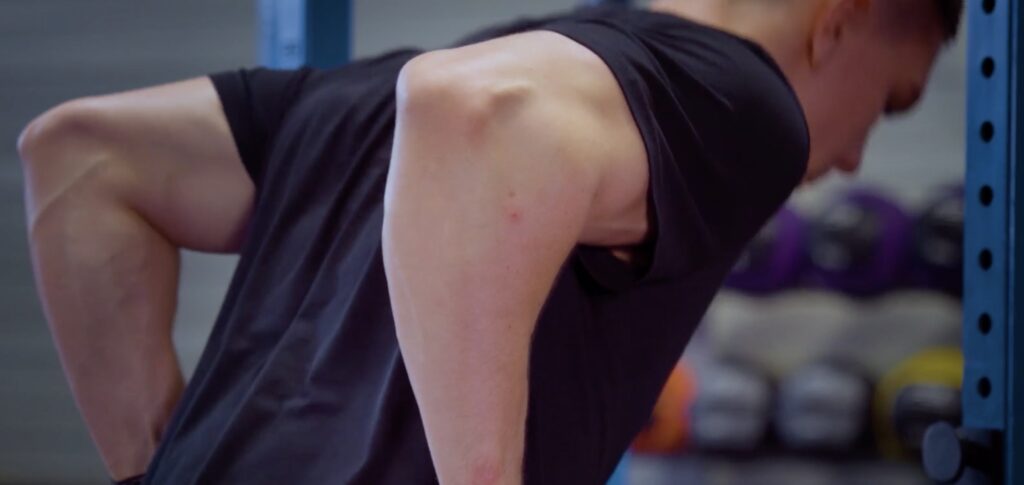
The position at the bottom is important. Lowering farther is not automatically better if you cannot control the movement or if the position causes shoulder discomfort. Use a depth that allows you to stay steady and pain free, then build range gradually if it feels comfortable. If you cannot lower and rise under control, an assisted dip machine or resistance band can help you practice a less demanding version.
Dips are not always a practical first exercise for a beginner. Some people lack the strength to support their body, while others may find it difficult to control their shoulders through the full movement. In those cases, starting with an easier push-up variation is a more accessible way to train pressing strength.
Dips vs Push-Ups for Bigger Pecs
For a beginner, push-ups are often the better first choice. They are easier to scale, require little equipment, and have research showing that a suitably challenging push-up program can increase chest muscle thickness. You can choose a variation that matches your current strength and make it harder as your capacity improves.
Dips may be a better choice for a person who can already perform them smoothly and wants a more demanding bodyweight press. They load the chest and triceps together and can be made harder with added weight. But there is not enough direct research to claim that dips produce more chest growth than push-ups.
The practical question is whether the exercise gives you a repeatable challenge without forcing you to shorten your range, rush repetitions, or lose control. If push-ups are too easy, progress them. If dips are painful or unstable, use an alternative. An exercise is useful for building muscle when it lets you train hard and progress safely over time.
Which Exercise Builds More Strength?
Strength is specific to the movement you practice. Push-ups are likely to improve your ability to perform push-ups, while dips are likely to improve your ability to perform dips. Both can improve general upper body pressing strength, but neither guarantees equal progress in the other movement.
Dips may provide a larger challenge for someone who can perform strict repetitions because they require the arms to support and move the body through a relatively deep pressing motion. Push-ups may be easier to use for gradual strength practice because the hand position can be raised to reduce the load. Someone who is not yet strong enough for a full push-up can start with an incline version and gradually work toward the floor.
If your main goal is to become stronger in a specific exercise, practice that exercise consistently. If your main goal is general chest and arm strength, choose the version that you can perform with sound technique and gradually make more demanding.
How to Progress Both Exercises
Choose a version that allows controlled repetitions and leaves you with only a few good repetitions in reserve at the end of most sets. You do not need to reach complete failure every time. Research reviews suggest that training to momentary failure is not required for muscle growth, although sets should be challenging enough to provide a meaningful stimulus.
For push-ups, you can progress from a wall or high incline to a lower incline, then to floor repetitions. Once standard push-ups are comfortable, you can add a weighted vest, use a resistance band, or select a more difficult variation. Change one part of the exercise at a time so that you can tell whether the added challenge is manageable.

For dips, use assistance if needed, then gradually reduce the assistance as you gain strength. When you can perform controlled bodyweight repetitions, you can add repetitions or external weight. Avoid adding load if you are relying on momentum or struggling to control the lowering phase.
Keep a simple record of your variation, sets, repetitions, and added resistance. When you can complete the top end of your chosen repetition range with steady form, increase the challenge slightly. Multiple sets are generally a useful part of a muscle building program, but the right amount depends on your training experience, recovery, and the rest of your weekly chest work.
Should You Do Both?
You can include both exercises if they feel comfortable and fit your training plan. For example, you might use push-ups for higher repetition work and dips for a more challenging bodyweight press. You do not have to do both, though. If one exercise helps you train consistently and progress, it can be enough as part of a broader program that also trains the rest of your upper body.
3 Best Compound Exercises for a More Muscular Chest
A beginner might start with two or three sets of an incline or floor push-up variation, performed with controlled repetitions. After building pressing strength and learning how to brace the body, the trainee can test assisted dips if they have access to suitable equipment. There is no need to rush into dips simply because they are often described as a chest builder.
The best chest routine is not based on picking the exercise with the most impressive reputation. It is based on selecting movements that you can perform well, recover from, and make progressively more challenging. For most beginners, push-ups are the easiest starting point. Dips can become a valuable option later, once the strength and control are there.
Key Takeaways
| Exercise | Main advantage | Best fit |
|---|---|---|
| Push-ups | Easy to scale and perform with little equipment | Beginners and people building pressing strength |
| Dips | Can provide a challenging bodyweight press and can be loaded | Trainees who can perform controlled, pain free repetitions |
| Muscle growth | Both can train the pecs when sets are sufficiently challenging | Choose the movement you can progress consistently |
| Direct comparison | Research has not established that one builds more pec muscle than the other | Avoid assuming dips are automatically superior |
| Training plan | Consistent, challenging work matters more than the exercise label | Track sets and repetitions, then progress gradually |
References
- Currier, B.S., McLeod, J.C., Banfield, L., Beyene, J., Welton, N.J., D’Souza, A.C., Keogh, J.A.J., Lin, L., Coletta, G., Yang, A., Colenso-Semple, L., Lau, K.J., Verboom, A. and Phillips, S.M. (2023) ‘Resistance training prescription for muscle strength and hypertrophy in healthy adults: a systematic review and Bayesian network meta-analysis’, British Journal of Sports Medicine, 57(18), pp. 1211–1220.
- Kafkas, M.E., Çinarlı, F.S., Yılmaz, N. and Soylu, R. (2021) ‘The effect of elbow angle on triceps brachii and pectoralis major muscle activity during parallel bar dips movement’, Kinesiologia Slovenica, 27(3), pp. 57–69.
- Kikuchi, N. and Nakazato, K. (2017) ‘低負荷ベンチプレスと腕立て伏せは同様の筋肥大と筋力向上をもたらす’ [Low-load bench press and push-up induce similar muscle hypertrophy and strength gain], Journal of Exercise Science & Fitness, 15(1), pp. 37–42.
- McKenzie, A., Crowley-McHattan, Z., Meir, R., Whitting, J. and Volschenk, W. (2022) ‘Fatigue increases muscle activations but does not change maximal joint angles during the bar dip’, International Journal of Environmental Research and Public Health, 19(21), article 14390.
- Refalo, M.C., Helms, E.R., Hamilton, D.L. and Fyfe, J.J. (2023) ‘Influence of resistance training proximity-to-failure on skeletal muscle hypertrophy: a systematic review with meta-analysis’, Sports Medicine, 53(3), pp. 649–665.
- van den Tillaar, R. and Saeterbakken, A.H. (2019) ‘Comparison of kinematics and muscle activation between push-up and bench press’, Journal of Human Kinetics, 72, pp. 59–69.