

Running a mile is one of the simplest ways to assess your cardiovascular fitness, running economy, leg strength, and ability to sustain a hard effort. You do not need expensive equipment, a race entry, or a complicated test protocol. You need a measured route, a watch, a sensible warm up, and a willingness to work hard for several minutes.
Your mile time will naturally change with age, training history, body size, injury status, and experience. A 25 year old who has run consistently for years should not compare their result directly with a 55 year old returning to exercise after a long break. The more useful question is whether your time is appropriate for your current age, training background, and goals.


The benchmarks below are designed for healthy recreational runners who can already run continuously. They are not elite standards, and they are not a pass or fail test. Use them as a practical guide, then focus on improving your own result gradually.
Why Mile Time Matters
A mile is short enough to run hard, but long enough to demand a meaningful contribution from your aerobic system. For most recreational runners, it takes roughly six to 14 minutes, which means aerobic energy production provides most of the energy needed for the effort. Your ability to produce energy aerobically, tolerate rising levels of fatigue, and maintain good mechanics all influence the result.
Research consistently shows that higher cardiorespiratory fitness is linked with lower risk of cardiovascular disease, some chronic illnesses, and premature mortality. Running performance is not the only measure of fitness, but a faster mile time can indicate improvements in aerobic capacity when body mass, route, weather, and testing conditions are reasonably consistent.
Mile performance is also useful because it gives you a clear training target. You might want to run under 10 minutes, break nine minutes for the first time, or return to the speed you had several years ago. A specific target can make regular easy runs, interval sessions, and strength training feel more purposeful.
How Age Changes Mile Performance
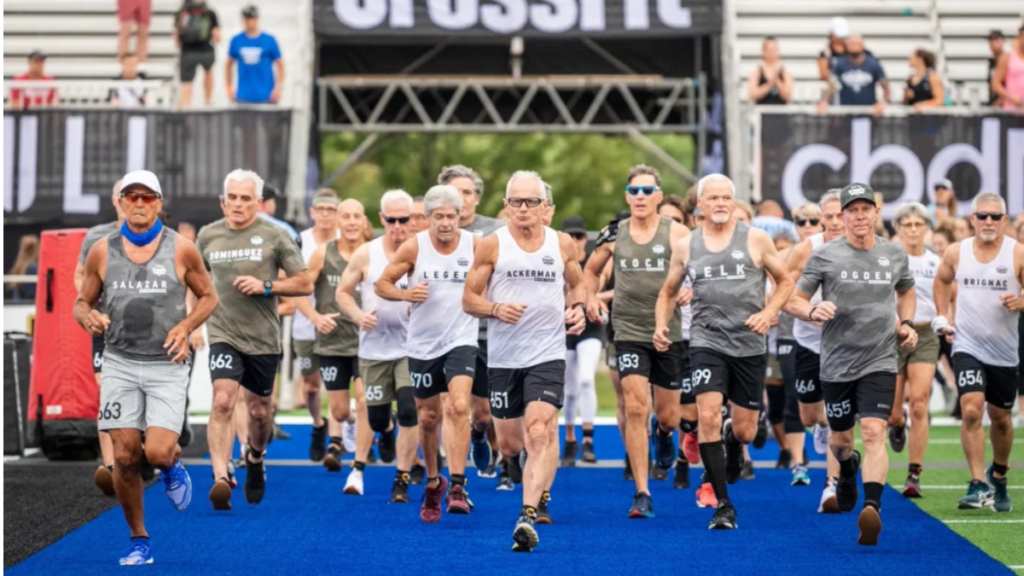
Running speed commonly reaches its highest level in early adulthood, although experienced endurance athletes can remain highly competitive well beyond their 30s. Performance tends to decline more noticeably from middle age onward, largely because maximal aerobic capacity gradually falls, recovery can take longer, and muscle mass and power may decrease without regular training.
These changes are not fixed. Regular endurance training, resistance exercise, good sleep, sufficient protein intake, and sensible recovery can all help preserve physical capacity. Masters runners who train consistently often perform far better than younger adults who are inactive.
Pull-Ups vs Dumbbell Rows: Which Builds a Better V-Shaped Back?
Age also affects running economy and stride mechanics. Older runners may lose some elastic energy return through the muscles and tendons, especially if strength and power training disappear from their routine. Maintaining calf strength, hip stability, and lower body muscle mass can help you keep a more efficient stride.
Age Based Mile Time Benchmarks
The times below represent reasonable mile benchmarks for healthy recreational runners. They are best used by people who run regularly, even if that only means two or three sessions per week. A beginner may initially be slower than these times, while a trained runner may be substantially faster.
Women
| Age | Solid recreational mile time | Strong recreational mile time |
|---|---|---|
| 20 to 29 | 9:30 to 11:00 | Under 9:00 |
| 30 to 39 | 9:45 to 11:15 | Under 9:15 |
| 40 to 49 | 10:15 to 12:00 | Under 9:45 |
| 50 to 59 | 11:00 to 12:45 | Under 10:30 |
| 60 to 69 | 12:00 to 14:00 | Under 11:30 |
| 70 and over | 13:30 to 15:30 | Under 12:45 |
Men
| Age | Solid recreational mile time | Strong recreational mile time |
|---|---|---|
| 20 to 29 | 7:45 to 9:00 | Under 7:15 |
| 30 to 39 | 8:00 to 9:15 | Under 7:30 |
| 40 to 49 | 8:30 to 10:00 | Under 8:00 |
| 50 to 59 | 9:15 to 10:45 | Under 8:45 |
| 60 to 69 | 10:15 to 12:00 | Under 9:45 |
| 70 and over | 11:45 to 13:45 | Under 11:00 |
These ranges are deliberately broad because individual variation is large. A 45 year old former competitive runner, for example, may comfortably run much faster than the strong recreational range. Equally, someone who is new to running may need several months of progressive training before attempting a hard mile effort.
What Counts as a Good Mile Time?
A good mile time is one that reflects your ability, keeps you healthy, and improves over time. If you are a beginner, completing a mile without stopping can be a major achievement. Once that feels comfortable, running it in under 12 minutes, then under 10 minutes, can provide useful milestones.
For many adult recreational runners, breaking 10 minutes is a strong and attainable target. It requires an average pace of 2 minutes and 30 seconds per quarter mile, or approximately 6 minutes and 13 seconds per kilometer. Breaking eight minutes requires an average pace of two minutes per quarter mile, which demands a higher level of aerobic fitness and running specific conditioning.
Do not judge your performance from one attempt alone. Heat, wind, hills, poor sleep, accumulated fatigue, and inadequate fueling can all affect your result. Test on a track or flat measured route where possible, and repeat the effort under similar conditions every six to eight weeks.
How to Test Your Mile Properly
A hard mile places significant stress on the cardiovascular system and lower body, so preparation matters. Begin with 10 to 15 minutes of easy jogging, followed by a few mobility drills and several short relaxed strides. This raises muscle temperature and prepares your body for faster running.
Start the mile under control. Many runners go out too fast in the first quarter mile, then slow dramatically before the finish. Aim for an even effort instead. If your target is a nine minute mile, each quarter mile should take approximately two minutes and 15 seconds. Try to stay relaxed through the shoulders and arms, maintain a tall posture, and use quick, controlled steps.
The final quarter mile should feel difficult. That does not mean your form should collapse. A strong finish comes from holding your technique together while increasing effort, rather than sprinting wildly from too far out.
How to Improve Your Mile Time
The most reliable way to improve is to combine easy aerobic running with one faster session each week. Easy running builds the aerobic base that supports recovery and lets you handle harder work. Faster intervals improve your ability to sustain a higher pace and become more comfortable at challenging speeds.
A simple weekly structure could include two easy runs, one interval session, and two strength sessions. Your interval workout might involve six repetitions of 400 meters at a controlled hard pace, with easy jogging or walking recovery between efforts. Another option is short hill running, which can build leg strength and running power while reducing the need to sprint at very high speed on flat ground.
Strength training matters because running requires repeated force production through the feet, calves, quads, hamstrings, glutes, and trunk. Exercises such as squats, split squats, calf raises, hip hinges, and loaded carries can support durability and performance. Research suggests that resistance training can improve running economy, particularly when it includes heavy strength work and explosive exercises appropriate for the athlete.
Increase training gradually. Sudden jumps in running volume or intensity raise the chance of injury, particularly in the calves, Achilles tendon, knees, and shins. If you are returning after time away, begin with run walk sessions and build toward continuous running before adding demanding speed work.
When You Should Be Careful
A mile test is not appropriate when you have chest pain, unexplained breathlessness, dizziness, a recent injury, or an illness that affects your breathing or heart rate. If you have a medical condition, have been inactive for a long time, or are unsure whether vigorous exercise is safe for you, seek advice from a qualified health professional before attempting an all out effort.
It is also important to separate training discomfort from pain. Heavy breathing and tired legs are expected during a hard mile. Sharp pain, altered running mechanics, or discomfort that worsens as you run are signs to stop and reassess.
The Bottom Line
Your best mile time is not determined by age alone. Age influences performance, but consistent training, strength, recovery, and running experience make a substantial difference. Use age based benchmarks to set a realistic target, but let your own progress be the main measure of success.
A faster mile is built through patient work. Run consistently, train hard once or twice each week, strengthen your lower body, and give yourself enough recovery to adapt. Whether your goal is to finish your first continuous mile or break a long standing personal record, the process is the same: build fitness gradually and keep showing up.
Key Takeaways
| Key point | What it means for you |
|---|---|
| Mile time reflects several fitness qualities | It is a practical test of aerobic fitness, pacing, running economy, and muscular endurance. |
| Age affects performance but does not dictate it | Regular training can preserve strong running ability well into later life. |
| Consistency matters most | Two or three weekly runs performed consistently are more valuable than occasional extreme sessions. |
| Test under similar conditions | Use a flat measured route or track, warm up properly, and compare results over time. |
| Strength work can help | Strong calves, hips, and legs can improve running economy and resilience. |
| Progress gradually | Avoid sudden increases in mileage or speed work to reduce injury risk. |
References
- Balsalobre Fernández, C., Santos Concejero, J. and Grivas, G.V. (2016) ‘Effects of strength training on running economy in highly trained runners: A systematic review with meta analysis of controlled trials’, Journal of Strength and Conditioning Research, 30(8), pp. 2361 to 2368.
- Blair, S.N., Kohl, H.W., Paffenbarger, R.S., Clark, D.G., Cooper, K.H. and Gibbons, L.W. (1989) ‘Physical fitness and all cause mortality: A prospective study of healthy men and women’, JAMA, 262(17), pp. 2395 to 2401.
- Booth, F.W., Roberts, C.K. and Laye, M.J. (2012) ‘Lack of exercise is a major cause of chronic diseases’, Comprehensive Physiology, 2(2), pp. 1143 to 1211.
- Fleg, J.L., Morrell, C.H., Bos, A.G., Brant, L.J., Talbot, L.A., Wright, J.G. and Lakatta, E.G. (2005) ‘Accelerated longitudinal decline of aerobic capacity in healthy older adults’, Circulation, 112(5), pp. 674 to 682.
- Joyner, M.J. and Coyle, E.F. (2008) ‘Endurance exercise performance: The physiology of champions’, Journal of Physiology, 586(1), pp. 35 to 44.
- Peterson, M.D., Sen, A. and Gordon, P.M. (2011) ‘Influence of resistance exercise on lean body mass in aging adults: A meta analysis’, Medicine and Science in Sports and Exercise, 43(2), pp. 249 to 258.
- Tanaka, H. and Seals, D.R. (2008) ‘Endurance exercise performance in masters athletes: Age associated changes and underlying physiological mechanisms’, Journal of Physiology, 586(1), pp. 55 to 63.
- World Masters Athletics (2025) Age Grading Tables. World Masters Athletics.