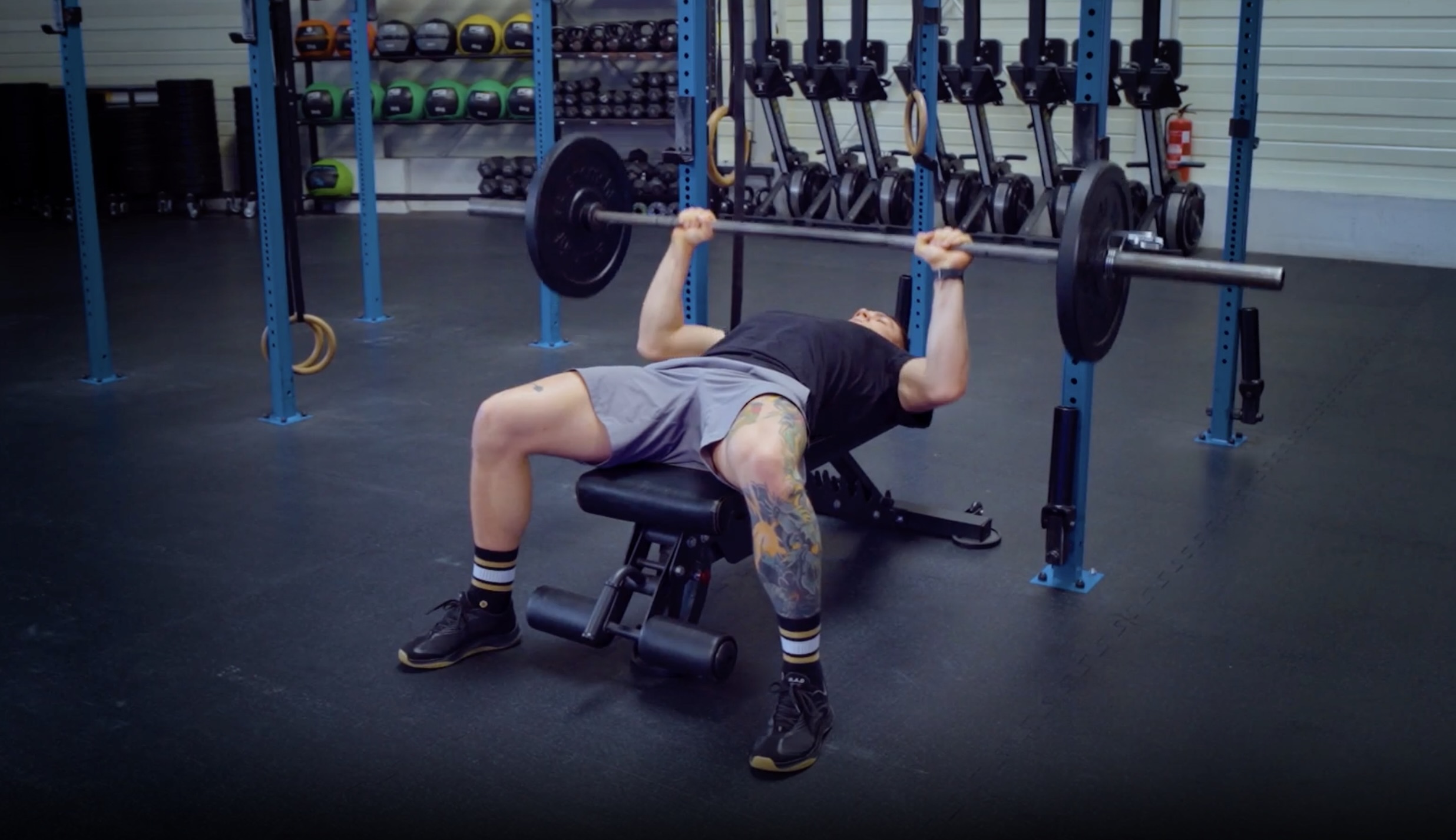


The bench press is one of the most popular strength exercises in the world. Walk into almost any commercial gym and you will find someone lying on a bench pressing a barbell. It is a classic test of upper body strength, but for beginners it can also be one of the most intimidating exercises. One of the first questions new lifters ask is simple: how much weight should I bench press?
The answer is not a specific number. It depends on your experience, body weight, technique, mobility, confidence, and overall strength. The good news is that beginners do not need to lift heavy to make excellent progress. In fact, starting lighter often leads to faster long term gains because it allows you to learn proper movement patterns while reducing injury risk.


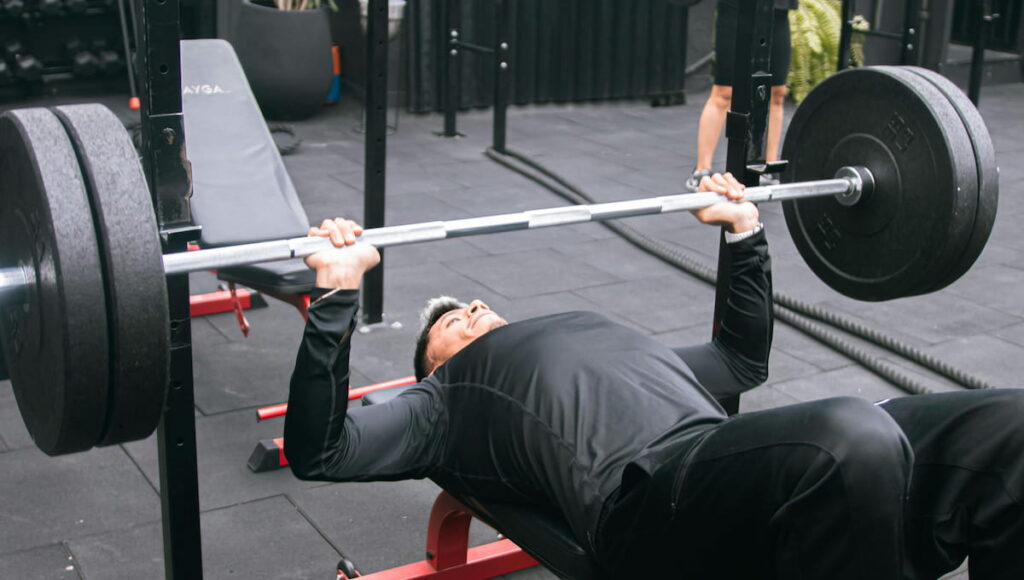
Science consistently shows that muscle growth and strength improve when resistance training is performed with good technique, progressive overload, and sufficient training effort. That means the weight on the bar matters far less than many beginners believe.
This guide explains how to choose the right starting weight, when to increase it, common mistakes to avoid, and realistic strength targets for your first year in the gym.
Why the Bench Press Is Worth Learning
The bench press primarily trains the pectoralis major, anterior deltoids, and triceps brachii. It also develops coordination between multiple muscle groups while improving upper body pushing strength.
Unlike machine exercises, the barbell bench press requires balance and stability throughout the movement. This means beginners develop not only muscle but also motor control and coordination.
Research has repeatedly shown that compound exercises involving multiple joints are highly effective for increasing strength and muscle mass because they recruit large amounts of muscle tissue and allow progressively heavier loads over time.
Learning the bench press also transfers well to many sports and daily activities that require pushing strength.
There Is No Perfect Starting Weight
Many beginners compare themselves with experienced lifters or social media influencers. This creates unrealistic expectations before they even touch the bar. Your ideal starting weight is simply the heaviest weight you can lift with excellent technique while maintaining complete control throughout every repetition. For some people this will be the empty Olympic barbell, which weighs 45 pounds or 20 kilograms.
For others, even the empty bar may be too heavy initially. There is absolutely nothing wrong with using a lighter training bar, dumbbells, or a machine while building confidence and technique.
8 Gym Exercises Most Likely to Cause Injuries, According to Buff Dudes Workouts
Some beginners may already have years of athletic experience and find the empty bar extremely easy. These individuals can safely progress beyond it after demonstrating consistent control. The goal during the first few weeks is not to impress anyone. It is to build a strong technical foundation.
Should You Start With Just the Bar?
For most healthy adults, yes. The standard Olympic bar provides enough resistance for beginners to practice every part of the movement while learning proper bar path, shoulder positioning, grip width, and breathing.
- If the bar feels challenging but manageable for sets of eight to ten repetitions, it is probably an appropriate place to start.
- If the bar feels extremely difficult or causes loss of control, reduce the load by using a lighter technique bar or dumbbells.
- If the bar feels effortless, gradually add small weight plates until the exercise becomes moderately challenging while still allowing perfect form.
Starting too light is rarely a problem. Starting too heavy often is.
How Heavy Should Your First Working Sets Be?
A simple guideline works well for nearly every beginner. Choose a weight that allows you to complete eight to twelve repetitions while feeling like you could perform two or three more repetitions before failure. Exercise scientists often describe this as leaving repetitions in reserve.
Research suggests that training close to muscular failure produces excellent muscle growth while avoiding the excessive fatigue associated with reaching complete failure every set. For beginners, maintaining good technique is more important than reaching maximum effort.
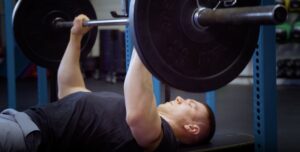
A typical first workout might look like this. After warming up, complete three working sets of eight to ten repetitions with a weight that feels challenging but controlled. If every repetition looks identical from beginning to end, the weight is probably appropriate. If your elbows flare excessively, your hips lift off the bench, or the bar path becomes unstable, the load is probably too heavy.
Technique Comes Before Weight
A technically perfect repetition builds better habits than a heavier repetition performed poorly. An effective bench press includes several important elements.
- Your feet should stay firmly planted on the floor throughout the lift.
- Your shoulder blades should remain pulled together and gently pressed into the bench.
- Your wrists should remain relatively straight rather than bending backward.
- The bar should descend under control before touching the middle portion of the chest.
- Press the bar upward in a smooth path while maintaining full body tension.
Controlled repetitions reduce unnecessary stress on the shoulders while allowing the chest, shoulders, and triceps to produce force efficiently. Studies examining resistance training technique consistently show that movement quality influences both performance and injury risk.
When Should Beginners Add More Weight?
Progressive overload is the principle that drives strength and muscle growth. Your muscles adapt only when training gradually becomes more demanding. The easiest progression strategy is straightforward.
When you can complete every prescribed repetition with excellent form for every set, increase the weight during your next session. Small increases work best. Adding five pounds or two and a half kilograms each session is often enough for upper body exercises.

If that increase feels too large, smaller fractional plates can provide even slower progression. Research demonstrates that gradual increases in training load produce sustainable improvements in strength while minimizing excessive fatigue and technical breakdown.
How Strong Should Beginners Become?
Everyone progresses differently depending on age, sex, body weight, genetics, nutrition, sleep, and training consistency. However, healthy beginners often improve rapidly during their first several months because their nervous system becomes more efficient at recruiting muscle fibers.
Many beginners can increase their bench press every week during the first few months of structured training. Approximate beginner one repetition maximum standards might look something like this after several months of consistent training.
| Experience | Typical Relative Strength |
|---|---|
| Complete beginner | Empty bar to around 0.5 times body weight |
| Three to six months | Around 0.6 to 0.8 times body weight |
| Six to twelve months | Around 0.8 to 1.0 times body weight |
These are broad estimates rather than rules. Some people progress faster while others progress more slowly. The only comparison that truly matters is whether you are stronger than you were a few weeks ago.
Should Men and Women Use Different Starting Weights?
The principles remain exactly the same. The appropriate starting weight depends on individual strength rather than sex. On average, men tend to possess greater upper body muscle mass and therefore generally bench press heavier loads than women.
However, both men and women experience substantial strength gains from resistance training. Research consistently shows that although men often lift heavier absolute loads, women improve at similar relative rates when following structured resistance training programs. Everyone should begin with a manageable weight, prioritize technique, and progress gradually.
What If the Empty Bar Is Too Heavy?
This is far more common than many people realize. There are several excellent alternatives. Dumbbell bench presses allow each arm to move independently while using lighter loads. Resistance machines provide additional stability while building confidence.
Push ups performed against a wall, bench, or elevated surface strengthen the same movement pattern. Lighter training barbells weighing 15 kilograms, 10 kilograms, or even less are increasingly available in many gyms. There is no scientific reason beginners must immediately use a standard Olympic barbell. Progressing from easier variations toward the full bench press is often the smartest approach.
Does Lifting Heavier Always Build More Muscle?
Not necessarily. One of the biggest changes in exercise science over the past decade has been the understanding that muscle growth occurs across a wide range of training loads. Research has shown that relatively light loads can stimulate similar muscle growth to heavy loads when sets are performed close to muscular failure.
Heavier weights remain superior for maximizing maximal strength because they improve the nervous system’s ability to generate force. However, beginners interested primarily in building muscle do not need to chase heavy singles or maximum lifts. Moderate weights performed with good technique provide excellent results while reducing unnecessary injury risk.
How to Know You Are Using the Right Weight
Instead of asking whether the weight looks impressive, ask yourself these questions.
- Can you control every repetition?
- Can you maintain the same technique from the first repetition to the last?
- Could you perform two or three additional repetitions if absolutely necessary?
- Do your shoulders feel comfortable throughout the movement?
- Are you progressing gradually from week to week?
If the answer is yes to all of these questions, you are probably using an appropriate training load.
Final Thoughts
The best beginner bench press weight is not determined by your age, body weight, or what someone else can lift. It is determined by your ability to perform technically sound repetitions with complete control. For many people, the empty Olympic bar is the ideal starting point. Others may need lighter equipment, while stronger beginners may quickly progress beyond it.
The real secret to getting stronger is not finding the perfect starting weight. It is showing up consistently, mastering proper technique, adding weight gradually, recovering well, and remaining patient.
The strongest lifters in the gym all started somewhere. Most of them began with weights that would seem light by today’s standards. What separated them from everyone else was not their first workout but their commitment to improving over months and years.
Key Takeaways
| Takeaway | Why It Matters |
|---|---|
| Start with a weight you can fully control | Good technique builds long term strength safely |
| The empty bar is appropriate for many beginners | It allows practice without excessive load |
| Use lighter equipment if needed | Proper form matters more than using a standard barbell |
| Perform 8 to 12 controlled repetitions | This range is highly effective for beginners |
| Leave two or three repetitions in reserve | This promotes progress while maintaining technique |
| Increase weight gradually | Small jumps produce steady long term improvements |
| Train consistently | Regular practice is more important than lifting heavy |
| Prioritize recovery | Sleep and protein are essential for strength gains |
| Build balanced upper body strength | Pulling exercises improve shoulder health and stability |
| Compare yourself only with your past performance | Consistent progress matters more than absolute numbers |
References
- American College of Sports Medicine (2021) ACSM’s Guidelines for Exercise Testing and Prescription. 11th ed. Philadelphia: Wolters Kluwer.
- Grgic, J., Schoenfeld, B.J., Orazem, J. and Sabol, F. (2022) ‘Effects of resistance training performed to repetition failure or non failure on muscular strength and hypertrophy’, Journal of Sport and Health Science, 11(2), pp. 202 to 211.
- Kraemer, W.J. and Ratamess, N.A. (2004) ‘Fundamentals of resistance training: progression and exercise prescription’, Medicine & Science in Sports & Exercise, 36(4), pp. 674 to 688.
- Morton, R.W., Murphy, K.T., McKellar, S.R., Schoenfeld, B.J., Henselmans, M., Helms, E., Aragon, A.A., Devries, M.C., Banfield, L., Krieger, J.W. and Phillips, S.M. (2018) ‘A systematic review, meta analysis and meta regression of protein supplementation on resistance training induced gains in muscle mass and strength in healthy adults’, British Journal of Sports Medicine, 52(6), pp. 376 to 384.
- Schoenfeld, B.J., Grgic, J., Ogborn, D. and Krieger, J.W. (2017) ‘Strength and hypertrophy adaptations between low load and high load resistance training: a systematic review and meta analysis’, Journal of Strength and Conditioning Research, 31(12), pp. 3508 to 3523.
- Schoenfeld, B.J. (2010) ‘The mechanisms of muscle hypertrophy and their application to resistance training’, Journal of Strength and Conditioning Research, 24(10), pp. 2857 to 2872.
- Suchomel, T.J., Nimphius, S. and Stone, M.H. (2016) ‘The importance of muscular strength in athletic performance’, Sports Medicine, 46(10), pp. 1419 to 1449.
- Wernbom, M., Augustsson, J. and Thomeé, R. (2007) ‘The influence of frequency, intensity, volume and mode of strength training on whole muscle cross sectional area in humans’, Sports Medicine, 37(3), pp. 225 to 264.