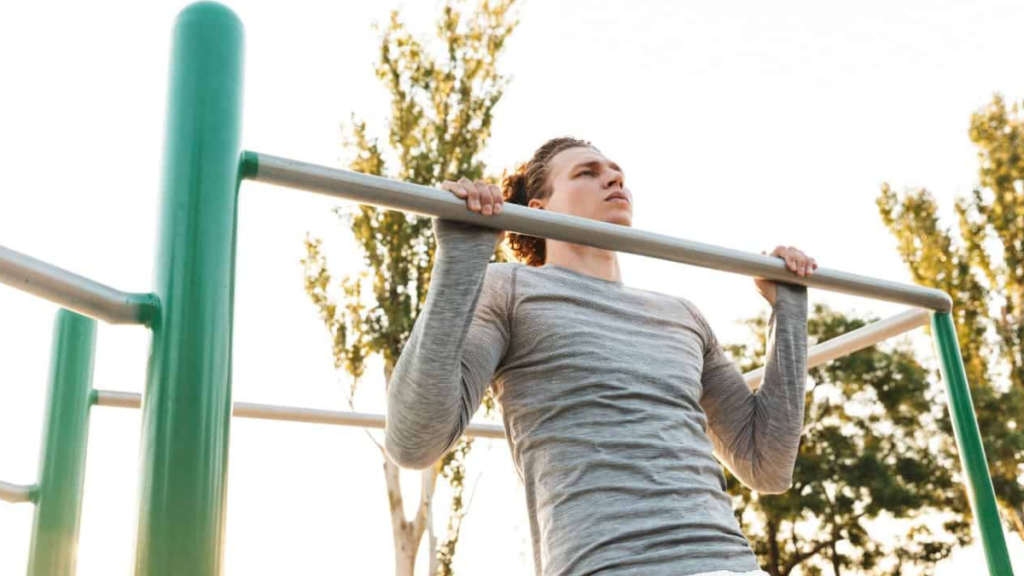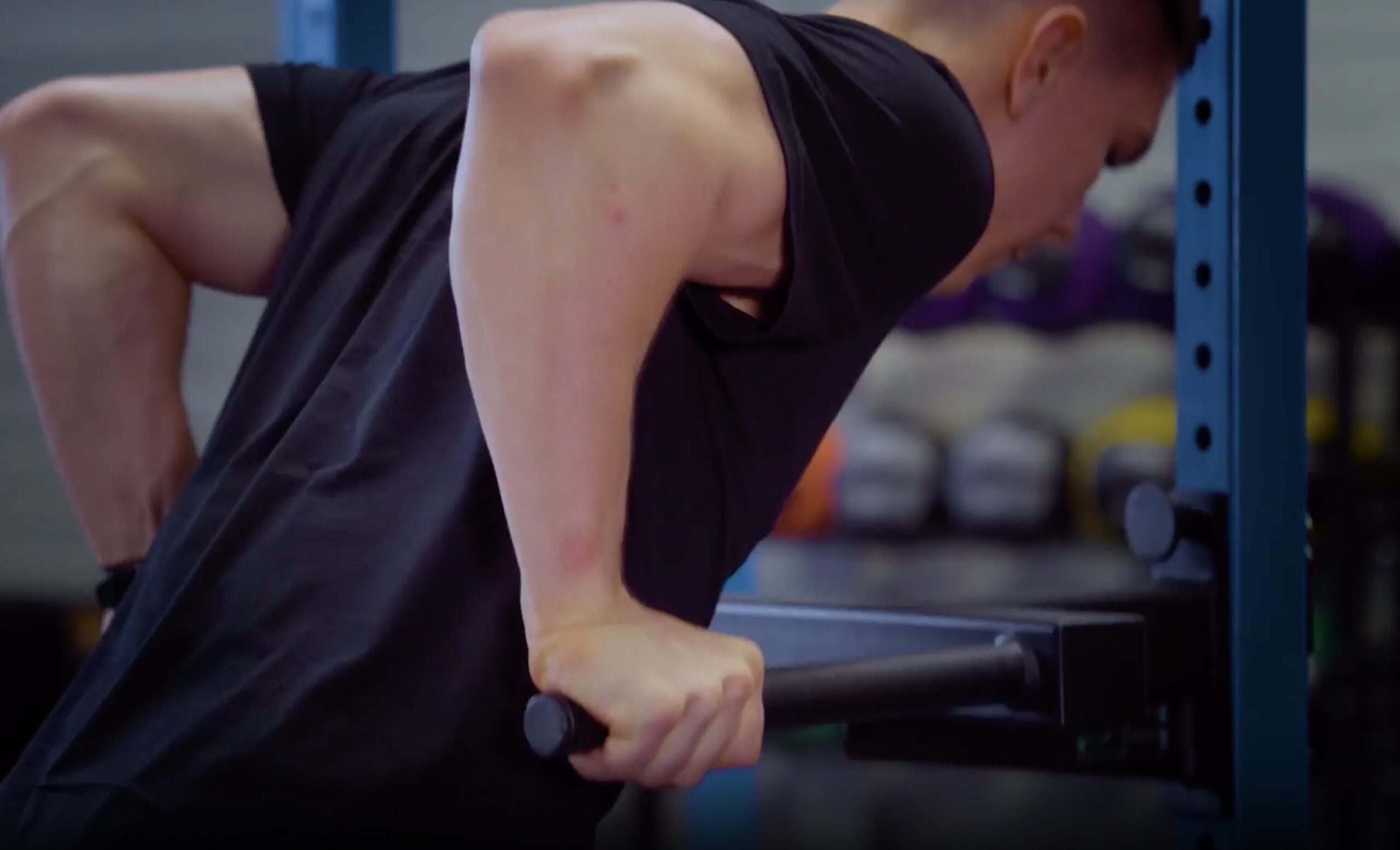


Bodyweight dips are one of the most demanding upper body exercises you can perform with nothing more than your own body weight. They build pressing strength, develop impressive triceps, chest, and shoulders, and reveal whether you possess the combination of strength, coordination, and muscular endurance needed for advanced calisthenics.
Unlike push ups, dips require you to move your entire body through a large range of motion while stabilizing your shoulders under significant load. This makes them an excellent benchmark of relative strength. So how many bodyweight dips should you actually be able to perform?


3 Best Beginner Exercises for Ripped and Attractive Abs
The answer depends on your training experience, body weight, age, and technique. A person who weighs 150 pounds will usually complete more repetitions than someone weighing 230 pounds, even if both are equally strong. Likewise, someone training specifically for gymnastics or calisthenics will outperform someone who focuses mainly on powerlifting.
Fortunately, research on muscular endurance, resistance training, and exercise performance provides enough evidence to establish realistic standards.
Why Bodyweight Dips Matter
The dip is often called the upper body squat because it trains several major muscle groups simultaneously.
A properly executed dip recruits the triceps brachii as the primary mover while heavily involving the pectoralis major, anterior deltoids, serratus anterior, and numerous stabilizing muscles around the shoulder girdle.
Electromyography studies consistently demonstrate high levels of muscle activation in the chest and triceps during dips, making them one of the most effective bodyweight pushing exercises available.
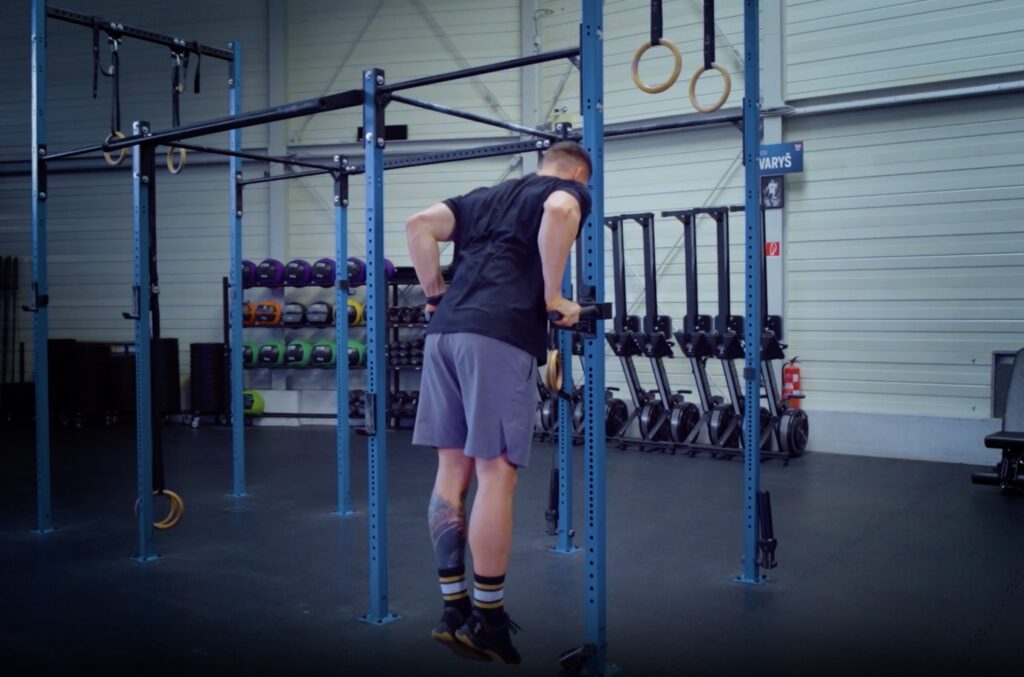
Unlike machine exercises, dips also require considerable stabilization from the core and scapular muscles. Every repetition challenges balance, shoulder control, and coordination.
Because the exercise uses your full body weight, it naturally scales with body mass. Stronger athletes eventually progress by adding external weight rather than endlessly increasing repetitions.
What Counts as a Proper Dip?
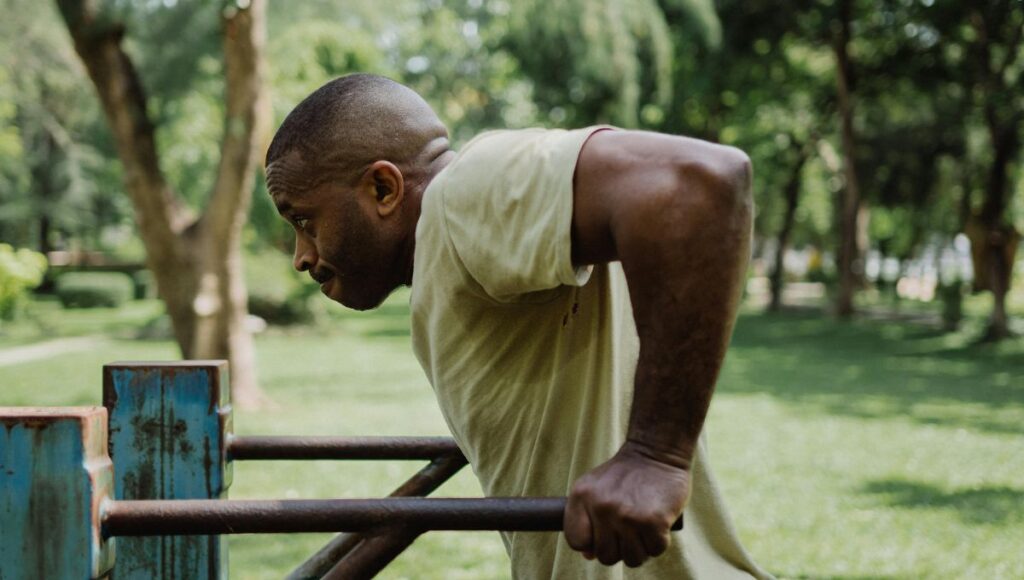
Before comparing yourself to any standard, your technique must be consistent. A full bodyweight dip begins with locked elbows and depressed shoulders. From there, lower yourself under control until your upper arms are at least parallel with the floor or your shoulders reach elbow level, depending on your mobility.
Pause briefly before pressing back to full elbow extension without bouncing or using momentum. Half repetitions should not count. Proper technique ensures the muscles do the work rather than connective tissues or momentum. Research consistently shows that full range of motion resistance training produces greater improvements in muscle growth and strength than partial repetitions for most exercises.
Average Bodyweight Dip Standards
Although there is no single universal standard, combining resistance training research with widely accepted strength benchmarks provides useful guidelines.
Men
| Performance Level | Consecutive Bodyweight Dips |
|---|---|
| Beginner | 0 to 5 |
| Novice | 6 to 10 |
| Intermediate | 11 to 20 |
| Advanced | 21 to 35 |
| Elite | 36+ |
Women
| Performance Level | Consecutive Bodyweight Dips |
|---|---|
| Beginner | 0 to 2 |
| Novice | 3 to 7 |
| Intermediate | 8 to 15 |
| Advanced | 16 to 25 |
| Elite | 26+ |
These numbers assume strict form and no assistance. They also assume that each repetition begins from full elbow extension and finishes with sufficient depth.
Why Body Weight Changes Everything
Bodyweight exercises are relative strength exercises. If two people possess identical muscle strength but one weighs 50 pounds more, the heavier athlete must move significantly more weight every repetition.
Research consistently shows that relative strength decreases as body mass increases because muscle cross sectional area grows more slowly than total body weight. This explains why elite gymnasts, climbers, and calisthenics athletes often display exceptional bodyweight performance despite having relatively modest body mass.
A lean athlete weighing 160 pounds may complete 30 strict dips while a heavily muscled athlete weighing 230 pounds struggles to complete 15. That does not necessarily mean the lighter athlete is stronger in absolute terms.
Muscles Used During Dips
The dip is an outstanding compound exercise because multiple muscles contribute simultaneously.
Triceps
The triceps perform most of the elbow extension during the upward phase.
Studies examining muscle activation consistently rank dips among the highest triceps activation exercises available.
Chest
The lower and middle portions of the pectoralis major contribute substantially, especially when the torso leans slightly forward.
Forward lean shifts more work toward the chest, while remaining upright emphasizes the triceps.
Shoulders
The anterior deltoids assist with shoulder flexion during the pressing phase.
Because the shoulders experience significant loading in deep positions, good mobility and stability are essential.
Core
Although the core is not the prime mover, abdominal muscles help maintain body position while preventing excessive swinging.
A rigid torso allows force to transfer efficiently into the bars.
Age and Dip Performance
Age influences bodyweight performance, but perhaps not as dramatically as many people assume. Healthy adults who continue resistance training preserve significantly more muscle mass, strength, and neuromuscular function than inactive individuals.
Someone in their fifties who has trained consistently for years may easily outperform an inactive twenty year old. However, aging gradually reduces muscle mass through a process known as sarcopenia. Research suggests that regular resistance training is among the most effective strategies for slowing these declines.
Rather than comparing yourself with teenagers or elite athletes, compare yourself against your own progress over time.
Common Reasons People Cannot Perform Many Dips
Many people plateau well below their potential because of a few common mistakes.
Limited Triceps Strength
Weak triceps often become the limiting factor. Close grip bench presses, overhead extensions, and controlled dip practice can improve lockout strength.
Poor Shoulder Stability
The shoulder blades must remain stable throughout every repetition. Weak serratus anterior and lower trapezius muscles can make dips feel unstable. Exercises like scapular push ups, face pulls, and overhead carries help improve shoulder control.
Insufficient Chest Strength
Because dips heavily recruit the chest, increasing overall pressing strength through bench press variations and push ups often transfers well.
Excess Body Fat
Extra body fat increases the amount of weight moved every repetition without contributing to force production. Improving body composition often leads to dramatic improvements in bodyweight exercises.
How to Increase Your Dip Numbers
Build Maximum Strength
Increasing absolute pressing strength raises your ceiling for muscular endurance. Weighted dips are particularly effective once you can perform at least 10 to 12 clean repetitions. Research consistently supports progressive overload as the primary driver of strength development.
Practice Frequently
Motor learning improves through repetition. Performing several submaximal sets throughout the week develops technique while avoiding excessive fatigue. Many successful calisthenics athletes use frequent practice rather than training to complete failure every session.
Train Full Range of Motion
Partial repetitions limit strength gains at longer muscle lengths. Research increasingly supports training through full ranges of motion for both hypertrophy and functional strength.
Improve Recovery
Muscles adapt during recovery rather than during training itself. Adequate sleep, dietary protein, and sufficient calorie intake all contribute to better performance improvements. Protein recommendations for resistance trained individuals generally fall between 1.4 and 2.2 grams per kilogram of body weight daily.
Signs You Are Truly Strong
Reaching double digit bodyweight dips already places you above the average untrained adult. Completing 20 or more strict repetitions indicates excellent relative strength and muscular endurance. Athletes capable of 30 or more strict repetitions usually possess years of consistent resistance training or calisthenics experience.
If you can perform weighted dips with substantial external resistance while maintaining strict technique, your pressing strength is exceptional regardless of how many bodyweight repetitions you complete. Ultimately, the best benchmark is continual improvement.
Adding just one or two additional quality repetitions every few months represents meaningful progress and reflects increases in both strength and muscular endurance.
Final Thoughts
Bodyweight dips remain one of the best indicators of upper body relative strength. They challenge the chest, triceps, shoulders, and core while demanding excellent stability and coordination.
For most healthy adults, performing between 10 and 20 strict repetitions represents a strong level of fitness. Exceeding 20 repetitions places you well above average, while reaching 30 or more demonstrates elite muscular endurance and years of dedicated training. Remember that body weight heavily influences performance, so comparing yourself only to repetition charts can be misleading. Focus instead on improving your own numbers while maintaining perfect technique.
Consistent resistance training, progressive overload, proper nutrition, and adequate recovery remain the most reliable ways to increase your dip performance over time.
Key Takeaways
| Measure | Benchmark |
|---|---|
| Good performance for most men | 11 to 20 strict bodyweight dips |
| Good performance for most women | 8 to 15 strict bodyweight dips |
| Advanced level | 21 to 35 repetitions for men, 16 to 25 for women |
| Elite level | More than 36 repetitions for men, more than 26 for women |
| Main muscles trained | Triceps, chest, shoulders, serratus anterior, core |
| Best way to improve | Progressive overload, full range of motion, frequent practice, adequate recovery |
| When to add weight | Around 12 to 15 strict repetitions |
| Most important factor | Maintain strict technique on every repetition |
References
- American College of Sports Medicine (2021). ACSM’s Guidelines for Exercise Testing and Prescription. 11th ed. Philadelphia: Wolters Kluwer.
- Bird, S.P., Tarpenning, K.M. and Marino, F.E. (2005). Designing resistance training programmes to enhance muscular fitness. Sports Medicine, 35(10), pp.841 to 851.
- Grgic, J., Schoenfeld, B.J., Orazem, J. and Sabol, F. (2021). Effects of resistance training performed to repetition failure or non failure on muscular strength and hypertrophy. Journal of Sport and Health Science, 11(2), pp.202 to 211.
- Kubo, K., Ikebukuro, T. and Yata, H. (2019). Effects of squat training with different depths on lower limb muscle volumes. European Journal of Applied Physiology, 119(9), pp.1933 to 1942.
- Maeo, S., Takahashi, T., Takai, Y. and Kanehisa, H. (2021). Trainability of muscular strength and muscle mass in older adults. Journal of Clinical Medicine, 10(15), 3375.
- Schoenfeld, B.J. and Grgic, J. (2020). Effects of range of motion on muscle development during resistance training interventions. Sports Medicine, 50(1), pp.169 to 180.
- Schoenfeld, B.J., Aragon, A.A. and Krieger, J.W. (2013). The effect of protein timing on muscle strength and hypertrophy. Journal of the International Society of Sports Nutrition, 10(1), 53.