A chest that does not look especially large can still produce a surprisingly strong press. That is not an excuse to ignore muscle development, but it is a useful correction to a common gym assumption. Visible size, barbell numbers, and real world pressing ability overlap, yet they are not the same quality.
Your chest may be stronger than it looks because strength depends on skill, coordination, leverage, and the contribution of several muscles, while appearance also depends on body fat, skeletal shape, and where muscle is distributed.


Strength Is Not the Same as Appearance
The pectoralis major is the largest chest muscle and its fibers help bring the upper arm across the body and forward. During a press, however, it works with the triceps, anterior deltoid, and muscles that stabilize the shoulder blade and torso. A bench press is therefore a test of a coordinated system, not a direct measurement of chest size. This explains why someone with modest looking pecs can be a capable presser, especially when they have practiced the movement for years.

Resistance training increases strength through both neural and muscular adaptations. Early strength improvements can occur before large visible changes in muscle size because practice improves coordination, motor unit activation, and the ability to apply force in the trained movement. A systematic review and meta analysis comparing low and high load training also found that heavier loading produced greater gains in maximal strength, while muscle growth was similar when training was taken sufficiently close to muscular failure. In practical terms, a person who spends time with heavier bench work may gain a strong one repetition maximum without looking dramatically different.
Muscle size still matters. Larger muscles generally have more potential to produce force because they have more contractile tissue. Yet the relationship is not perfectly fixed across people or exercises. Two lifters with similar chest size can have very different bench presses because their technique, triceps strength, shoulder strength, limb lengths, and experience with heavy loads are different. Comparing a chest in the mirror with another person’s bench press can therefore create a misleading impression.
Strong but not visibly large
How your chest looks is also influenced by factors that do not directly tell you how forcefully it can contract. The width of the rib cage, clavicle length, pectoral insertions, posture, lighting, and body fat can all change the visual result. A lean lifter may show a clear chest outline with less total muscle, while a stronger lifter carrying more body fat may look less defined. Neither visual alone is a reliable strength test.
The exercise itself changes the answer. A lifter may be strong in a barbell bench press but less skilled with dumbbells, push ups, rings, or cable presses. The barbell provides stability and lets both arms contribute to the same load. Dumbbells demand more control from each shoulder, while a push up asks the body to move as a unit. Stronger in one pattern does not automatically mean stronger in every chest exercise.
Why Your Bench Press Can Outrun Your Chest Development
Technique is a major reason. A repeatable setup with the upper back braced against the bench, feet pressing firmly into the floor, and a controlled bar path can improve force transfer. The chest is still doing important work, but a stable base gives it a better platform. The American College of Sports Medicine recommends that resistance programs use progressive loading and include multiple joint exercises, with exercise order and loading matched to the training goal. This matters because strength is specific to the task you practice.
Your body proportions also influence leverage. A shorter bar path can make a bench press more efficient, while longer arms can make the same lift more demanding. The exact effect varies with grip width, arch, range of motion, and individual anatomy, so it is not useful to declare one body type superior. It is useful to remember that a number on the bar includes the mechanics of the lifter performing it. That number is not a pure report card for pec size.
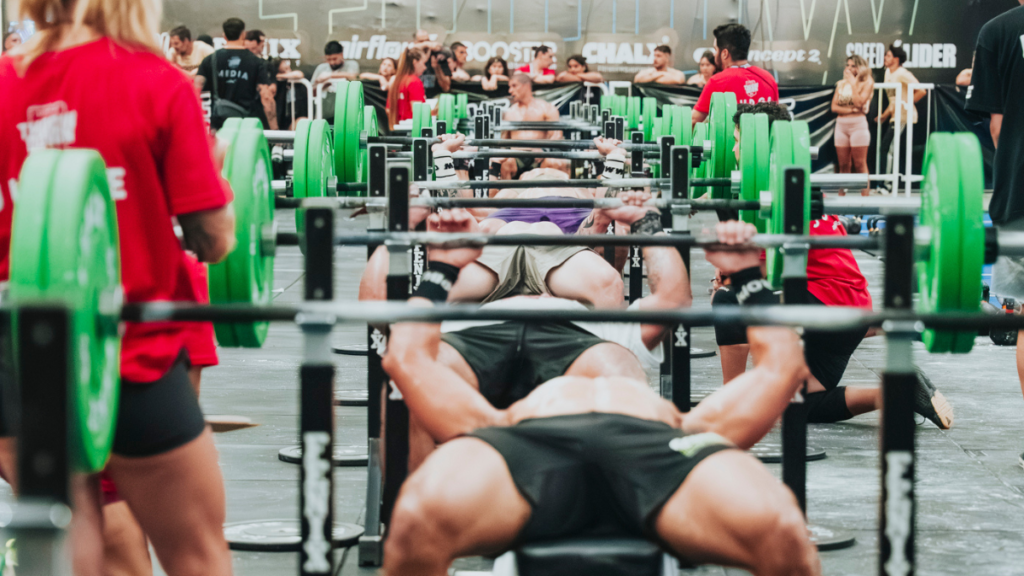
The triceps and anterior deltoids can also carry a large share of a press. If they are particularly strong, you may lock out heavy bench presses even if chest growth has lagged behind. Conversely, a bodybuilder with a very developed chest may not have a remarkable barbell bench because they use less practice with low repetition lifting, choose more stable machines, or deliberately avoid loads that aggravate a shoulder. None of these outcomes make the training ineffective. They simply show that hypertrophy and maximal strength need overlapping but distinct practice.
How to Tell Whether Your Chest Is Actually Strong
Do not use a single mirror photo as your assessment. Pick a movement you can perform comfortably, standardize the setup, and track it over time. A barbell bench press, dumbbell press, machine chest press, or weighted push up can all work. Record the load, repetitions, range of motion, and how close the set was to failure. If those conditions are similar and you can lift more weight or complete more quality repetitions, your pressing strength has improved.
Use more than one movement if you want a fuller picture. A flat press tests one pattern. An incline press alters the line of push and the balance of muscular contribution. A fly or cable press is less useful for judging maximal strength, but can reveal whether you can control the shoulder through horizontal adduction without discomfort. Research comparing bench press variations reports different muscle activity and performance responses across variations. Electromyography describes electrical activity during a lift, not guaranteed long term muscle growth, so it should guide exercise selection with caution rather than settle the question by itself.
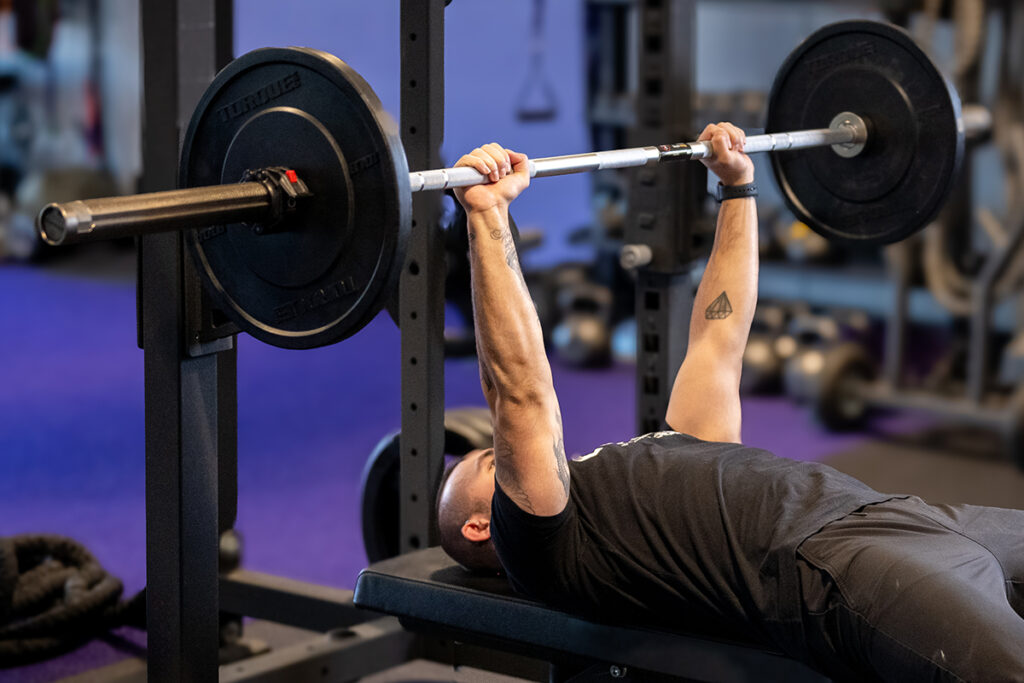
Quality matters as much as the number. A test rep that bounces from the chest, shortens the range dramatically, or shifts the shoulders into pain is not a useful comparison. Evidence from systematic reviews suggests that training through a fuller range of motion often produces at least comparable and frequently greater hypertrophy than shortening the movement, although the best range can depend on the muscle and exercise. In the gym, use the largest comfortable range you can control, then keep it consistent when you judge progress.
Signs that strength and size are out of sync
If you are progressing on a press but your chest is not changing, first look at where the lift is hardest. If the bar leaves the chest easily but stalls near lockout, triceps strength may be the main limiter. If it feels unstable at the bottom, shoulder control, confidence, or technique may need attention. If the movement is smooth yet the chest never feels like it does meaningful work, try a slightly different pressing angle, a machine, or a cable movement that lets you train hard without fighting balance. These are training observations, not medical diagnoses.
If the goal is a bigger chest, do not assume your current bench number is enough. Weekly training volume is an important driver of hypertrophy. A systematic review and meta analysis found a dose response relationship between the number of weekly resistance training sets and increases in muscle mass. More is not always better, because your performance, recovery, and joint comfort still set practical limits. Add work gradually and judge it by sustained performance, not by one punishing session.
Build Strength and Size Together
The most reliable approach is to give each quality a place in the program. Include some heavier, well controlled pressing to practice force production, then add moderate to higher repetition chest work that you can take close to failure with clean form. High and low loads can both build muscle when effort is sufficiently high, but heavier loads remain useful for improving maximal strength. This combination makes sense for the lifter who wants both a credible bench press and a more developed chest.
Train chest movements often enough to accumulate quality work without turning every session into a test. Research on frequency indicates that when weekly volume is equated, increasing how often a muscle is trained does not clearly create extra hypertrophy. Splitting the same amount of work across two or more sessions can still be helpful because it may keep later sets more productive and easier to perform well. The best schedule is one that lets you add load or repetitions over time while your shoulders and elbows remain happy.
Progression should be boringly measurable. When you reach the top of a chosen repetition range with solid technique, add a small amount of load or add another repetition the next time. The American College of Sports Medicine advises small load increases when a lifter can exceed the target repetitions. This prevents every workout from becoming a maximal attempt and gives connective tissues time to adapt to rising demands.
Nutrition supports the training signal, but it cannot replace it. A large systematic review and meta analysis found that protein supplementation during prolonged resistance training produced small additional gains in fat free mass and strength, with benefits leveling off around a total daily intake of 1.6 grams of protein per kilogram of body mass in the analyzed data. The practical message is not that everyone needs supplements. It is that adequate protein and progressive training work together, while a shake alone does not build a stronger chest.
When to Step Back
Chest training should create muscular effort, not sharp pain, numbness, or a feeling that the shoulder is unstable. Persistent pain, a sudden loss of strength after injury, visible bruising, or a change in chest shape needs assessment from a qualified health professional. Pushing through these signs because the program says it is chest day is not evidence based toughness.
For everyone else, the central lesson is straightforward. Your chest can be stronger than it looks, and it can look more developed than your current bench suggests. Treat strength as a specific performance skill and size as a long term adaptation to enough hard, recoverable work. Measure each one directly, then train for the one you want to improve.
Key Takeaways
| Observation | What it may mean | Useful response |
|---|---|---|
| Strong bench with modest chest size | Skill, leverage, triceps and deltoid contribution, and heavy practice can raise performance | Track a standardized press and add chest volume only if size is a goal |
| Developed chest with an ordinary bench | Hypertrophy focused training does not guarantee maximal strength skill | Include controlled heavier sets if maximal strength matters |
| Progressing loads but no visible change | Weekly chest volume, exercise choice, or nutrition may not support the size goal | Add gradual recoverable volume and monitor performance |
| Shoulder discomfort during pressing | The current variation, range, or loading may not be tolerated | Modify the exercise and seek clinical advice for persistent or concerning symptoms |
References
- American College of Sports Medicine (2009) ‘American College of Sports Medicine position stand. Progression models in resistance training for healthy adults’, Medicine & Science in Sports & Exercise, 41(3), pp. 687-708.
- Grgic, J., Schoenfeld, B.J., Orazem, J. and Sabol, F. (2018) ‘Effects of resistance training performed to repetition failure or non-failure on muscular strength and hypertrophy: A systematic review and meta-analysis’, Journal of Sport and Health Science, 11(2), pp. 202-211.
- Kassiano, W., Costa, B., Nunes, J.P., Ribeiro, A.S., Schoenfeld, B.J. and Cyrino, E.S. (2023) ‘Which ROMs lead to Rome? A systematic review of the effects of range of motion on muscle hypertrophy’, Journal of Strength and Conditioning Research, 37(5), pp. 1135-1144.
- Lauver, J.D., Cayot, T.E. and Rothe, M.R. (2015) ‘Influence of bench angle on upper extremity muscular activation during bench press’, European Journal of Sport Science, 16(3), pp. 309-316.
- Morton, R.W., Murphy, K.T., McKellar, S.R., Schoenfeld, B.J., Henselmans, M., Helms, E., Aragon, A.A., Devries, M.C., Banfield, L., Krieger, J.W. and Phillips, S.M. (2018) ‘A systematic review, meta-analysis and meta-regression of the effect of protein supplementation on resistance training-induced gains in muscle mass and strength in healthy adults’, British Journal of Sports Medicine, 52(6), pp. 376-384.
- Schoenfeld, B.J., Ogborn, D. and Krieger, J.W. (2016) ‘Effects of resistance training frequency on measures of muscle hypertrophy: A systematic review and meta-analysis’, Sports Medicine, 46(11), pp. 1689-1697.
- Schoenfeld, B.J., Ogborn, D. and Krieger, J.W. (2017) ‘Dose-response relationship between weekly resistance training volume and increases in muscle mass: A systematic review and meta-analysis’, Journal of Sports Sciences, 35(11), pp. 1073-1082.
- Schoenfeld, B.J., Grgic, J., Ogborn, D. and Krieger, J.W. (2017) ‘Strength and hypertrophy adaptations between low- versus high-load resistance training: A systematic review and meta-analysis’, Journal of Strength and Conditioning Research, 31(12), pp. 3508-3523.