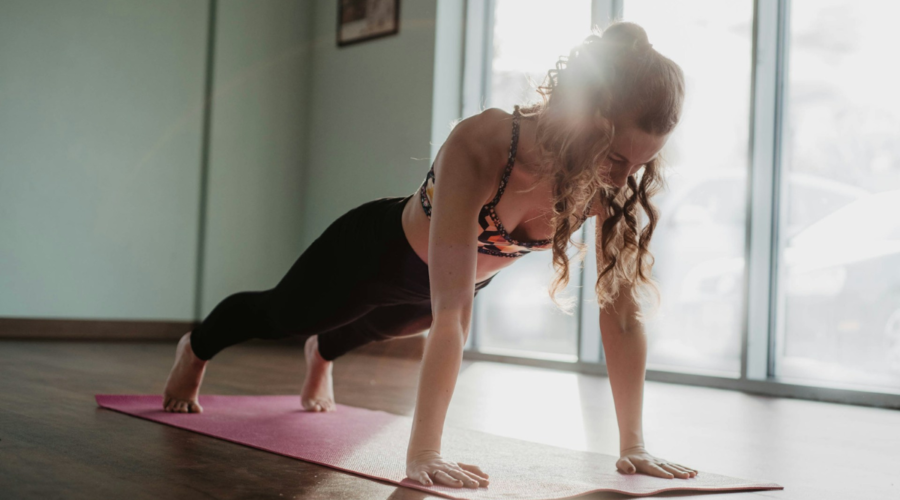


A plank looks simple. You place your forearms on the floor, lift your body into a straight line, and try to stay there. Yet the exercise asks a great deal of your body. Your abdominal muscles, back, glutes, shoulders, hips, and legs must work together to keep your spine and pelvis stable against gravity.
That makes the plank a useful test of trunk muscular endurance. It can show whether you can maintain a strong, controlled position when your core begins to fatigue. It is also an easy test to repeat over time, with no equipment beyond a timer and enough floor space.


However, the number on the stopwatch is not a complete verdict on your fitness. There are no universally accepted, population wide plank time standards for adults by age. Research protocols differ, training history matters greatly, and a long hold with poor alignment is less valuable than a shorter hold with excellent control.
Your age affects muscle mass, strength, recovery, and physical performance, but it does not determine your plank time by itself. A well trained person in their sixties may hold a cleaner plank for longer than an inactive person in their twenties. The most useful approach is to understand what the plank measures, test it consistently, and use your score as a starting point for improvement.
What Does a Plank Actually Test?
The standard forearm plank is an isometric exercise. Your muscles produce force without creating obvious movement at the joints. Rather than lifting and lowering a weight, you are resisting the tendency for your lower back to arch, your hips to drop, or your pelvis to rotate.
The exercise primarily challenges the muscles that stabilize the trunk. These include the rectus abdominis, transverse abdominis, internal and external obliques, spinal erectors, gluteal muscles, and muscles around the shoulder blade. The plank is therefore not simply an abdominal exercise. It is a full body bracing task.
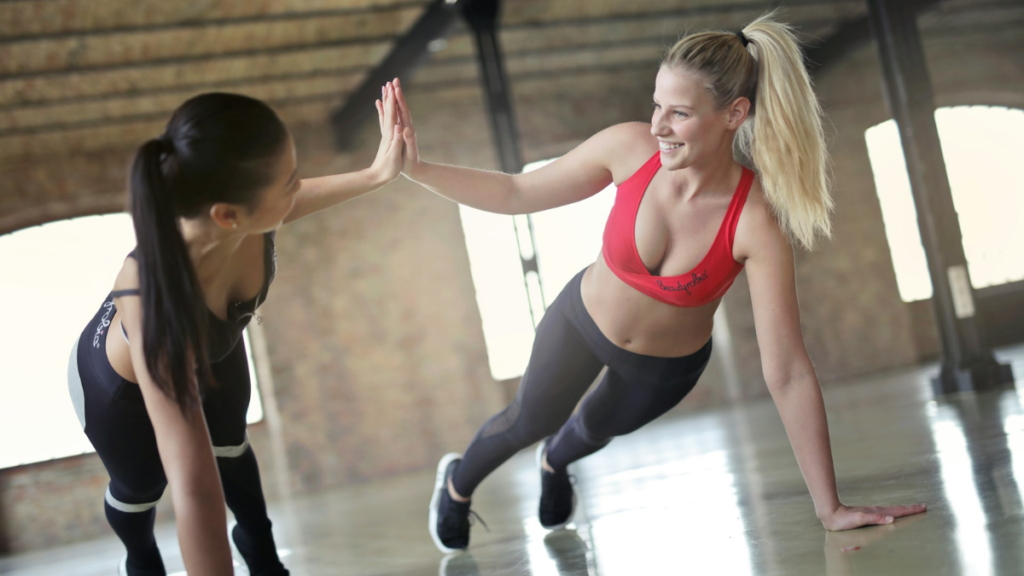
Research using electromyography has shown that plank variations create meaningful activity in the trunk muscles, although the exact amount changes with the version of the exercise. A forearm plank, high plank, side plank, plank with a leg lift, and plank performed on an unstable surface are not interchangeable tests. Each changes the demands placed on the shoulders, hips, and trunk.
This matters when comparing your score with someone else’s. A strict forearm plank with the elbows beneath the shoulders is different from a high plank on the hands. A plank with feet set wide is easier to stabilize than one with the feet close together. A test is only useful if you repeat the same version with the same standards each time.
Is There a Good Plank Time for Your Age?
The honest answer is that there is no single research validated answer for every adult age group. Unlike some aerobic fitness tests, adult plank data have not produced one widely accepted set of age and sex percentiles that can be used as a universal standard.
Studies on young, active populations have reported substantial variation in plank performance even within similar age groups. That variation is expected. Body size, relative strength, shoulder tolerance, exercise experience, previous injury, and familiarity with the exercise can all influence the time you achieve.
Age still matters because muscle mass and maximal strength tend to decline across adulthood, particularly when people become less active. Muscular endurance can also decline, although regular resistance training and physical activity can reduce this loss substantially. The key point is that age is one factor among many, not a ceiling on what you can achieve.
The Only 3 Machines You Need to Shed Body Fat Faster
For most healthy adults, a controlled hold of 30 to 60 seconds is a useful initial target. Once you can own that position, improving the challenge with additional sets, a longer lever, controlled movement, or an appropriate variation is usually more productive than chasing an extremely long maximum hold.
Practical Plank Targets by Age
The following targets are practical coaching goals, not medical cutoffs or scientific percentile rankings. They assume a strict forearm plank with consistent form. If you are new to training, have pain, or are returning after injury, start below these numbers and progress gradually.
Practical plank time targets
| Age group | Initial good form target | Strong control target | Main focus |
|---|---|---|---|
| 18 to 39 | 30 seconds | 60 seconds | Learn full body tension and stable spinal position |
| 40 to 59 | 20 to 30 seconds | 45 to 60 seconds | Maintain control while avoiding lower back compensation |
| 60 and over | 15 to 20 seconds | 30 to 45 seconds | Build confidence, balance, and trunk endurance progressively |
A score below these targets does not mean your core is weak or that something is wrong. It may simply mean that you have not practiced planks, you are carrying more body mass, your shoulders fatigue first, or the test position does not suit your current level. Your own improvement over several weeks is more meaningful than a comparison with an arbitrary online standard.
How to Test Your Max Plank Time Properly
A good test needs a clear protocol. Before attempting your maximum hold, warm up with a few easy movements such as walking, bodyweight squats, shoulder circles, and a brief practice plank.
Lie face down with your elbows under your shoulders and your forearms on the floor. Place your feet about hip width apart and rise onto your toes. Your body should form a straight line from the back of your head to your heels.
Squeeze your glutes, tighten your thighs, and gently brace your abdominal muscles as if preparing for someone to poke you in the stomach. Keep your ribs from flaring upward and avoid holding your breath. Breathe slowly throughout the hold.
Start the timer only when you are in the correct position. Stop it when your hips sag, your lower back arches, your hips rise well above shoulder height, your knees bend, or you can no longer maintain a stable position. Do not continue simply because the timer is running.
This approach makes your score more honest and more useful. A 40 second hold with a neutral spine and steady breathing is a better result than a 90 second hold spent shifting, shaking, and hanging through the lower back.
Why Form Matters More Than an Impressive Number
The plank is meant to train stiffness and control through the trunk while the arms and legs support the body. When fatigue causes the pelvis to tip forward and the lower back to arch, the exercise becomes less about controlled bracing and more about tolerating a compromised position.
Spine research has emphasized the value of muscular endurance and repeated high quality contractions rather than pursuing maximal fatigue in one prolonged effort. For many people, several shorter, technically strong holds can be a sensible way to build capacity while keeping the exercise focused on the intended muscles.
There is also a point at which a longer standard plank gives diminishing returns. If you can hold a strict plank for around a minute, you have demonstrated useful basic endurance. Instead of trying to reach three, five, or ten minutes, progress the exercise in a way that requires more control.
You could extend your arms slightly forward, reduce your base of support, add a slow shoulder tap, lift one foot briefly, or perform a side plank. These options increase the demand on the trunk without requiring you to spend increasingly long periods in the same position.
What Your Score Can and Cannot Tell You
A plank score can tell you something about your ability to resist spinal movement while your trunk muscles work isometrically. That is relevant to lifting, running, carrying, contact sports, and everyday tasks that require you to transfer force through the body.
It cannot diagnose back pain, predict whether you will become injured, or measure every aspect of athletic performance. Someone can have an excellent plank time and still need to improve their squat technique, running mechanics, hip strength, mobility, or aerobic fitness.
Research on low back pain supports exercise as part of management for many people, but no single core exercise is a universal solution. If planks trigger sharp pain, numbness, radiating symptoms, or symptoms that persist after training, stop the exercise and seek guidance from a qualified healthcare professional.
The same principle applies if shoulder discomfort limits the hold. A high plank, incline plank with the hands on a bench, or knee plank may be more appropriate while you build strength. A regression is not a failure. It is a way to train the movement with control.
How to Improve Your Plank Time
The most reliable way to improve is to practice below your maximum rather than testing yourself every workout. If your best strict plank is 20 seconds, perform several holds of about 10 to 15 seconds. This gives you enough quality practice without repeatedly reaching the point where form fails.
Train the plank two or three times each week, leaving at least a day between demanding sessions if you are sore or inexperienced. Add a small amount of total time only when each set remains clean. For example, you might begin with three 15 second holds, then progress toward three 20 second holds.
Do not rely on planks alone. General resistance training can improve the strength and endurance of the muscles that support the position. Squats, deadlifts, loaded carries, rows, presses, split squats, and hip hinges all challenge the trunk when performed with appropriate technique and loading.
Side planks are particularly useful because they train resistance to side bending and place strong demands on the obliques and lateral hip muscles. Bird dogs and dead bugs can also help you practice keeping your trunk stable while the arms and legs move.
Your goal should be to make the plank look calm. Steady breathing, quiet hips, and a neutral spine are better signs of progress than dramatic shaking or a strained facial expression.
The Bottom Line
Your max plank time can be a useful snapshot of core endurance, but it should not become a test of stubbornness. There is no universal adult plank score that proves you are fit for your age. Your training background, body size, exercise technique, and health status all affect the result.
A clean 30 to 60 second forearm plank is a worthwhile goal for many adults. If you are younger, older, new to exercise, or rebuilding after time away, use a shorter hold that you can perform with excellent control. Track the same test every few weeks, improve gradually, and treat the quality of your position as the real score.
Key Takeaways
| Point | What it means |
|---|---|
| There is no universal adult standard | Adult plank times cannot be judged accurately by one age based chart alone |
| Form determines the value of the test | End the hold when your spine, hips, or knees lose their intended position |
| Thirty to sixty seconds is a useful general goal | A strict hold in this range demonstrates practical basic trunk endurance for many healthy adults |
| Age influences performance but does not define it | Training history, strength, body size, and exercise familiarity can matter as much as chronological age |
| Progress does not require longer and longer holds | Multiple quality sets and harder plank variations can build capacity efficiently |
| Pain is a reason to modify or stop | Planks should not produce sharp, radiating, or persistent symptoms |
References
- Calatayud, J., Casaña, J., Martín, F., Jakobsen, M.D., Colado, J.C., Andersen, L.L. and Benet, I. (2017) ‘Progression of core stability exercises based on the extent of muscle activity’, American Journal of Physical Medicine and Rehabilitation, 96(10), pp. 694–699.
- Coulombe, B.J., Games, K.E., Neil, E.R. and Eberman, L.E. (2017) ‘Core stability exercise versus general exercise for chronic low back pain’, Journal of Athletic Training, 52(1), pp. 71–72.
- Granacher, U., Lacroix, A., Muehlbauer, T., Roettger, K. and Gollhofer, A. (2013) ‘Effects of core instability strength training on trunk muscle strength, spinal mobility, dynamic balance and functional mobility in older adults’, Gerontology, 59(2), pp. 105–113.
- Haruyama, Y., Kawakami, M., Otsuka, S., Nakayama, T., Sato, K., Harada, H. and Takahashi, N. (2017) ‘Effect of core stability training on trunk function, standing balance, and mobility in older adults’, Journal of Physical Therapy Science, 29(6), pp. 1010–1016.
- McGill, S.M., Childs, A. and Liebenson, C. (1999) ‘Endurance times for low back stabilization exercises: Clinical targets for testing and training from a normal database’, Archives of Physical Medicine and Rehabilitation, 80(8), pp. 941–944.
- McGill, S.M. (2010) ‘Core training: Evidence translating to better performance and injury prevention’, Strength and Conditioning Journal, 32(3), pp. 33–46.
- Reiman, M.P., Thompson, K.V., Scott, A.R., Lininger, M.R. and Heiderscheit, B.C. (2012) ‘Effects of different lumbar exercise programs on the extensor muscles of the low back’, Journal of Strength and Conditioning Research, 26(7), pp. 1901–1909.
- Schoenfeld, B.J., Contreras, B., Tiryaki Sonmez, G., Wilson, J.M., Kolber, M.J. and Peterson, M.D. (2014) ‘Regional differences in muscle activation during hamstrings exercises’, Journal of Strength and Conditioning Research, 29(1), pp. 159–164.