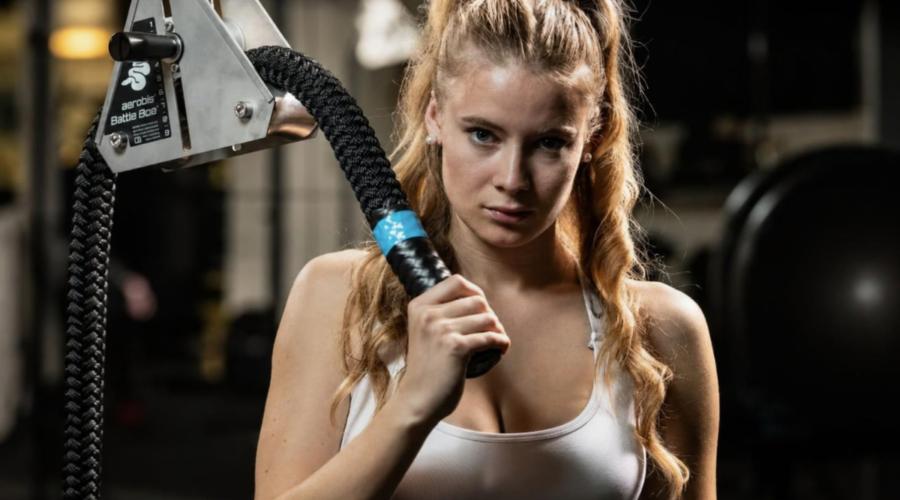


Busy athletes know the portable training trap. You are in a hotel room, garage gym, or away for a week, and you still manage to train. The session feels hard, but your strength stops progressing. Nothing becomes heavier, more stable, or more controlled.
The solution is not another random bodyweight circuit. It is a simple, repeatable method: pair a sling trainer with a continuous rope trainer, then progress the same sessions in the way you would progress a barbell program.


Why Portable Strength Training Often Fails
Most portable training plans stall for three reasons. First, bodyweight becomes the only source of load, so progression disappears once an exercise feels easy. Second, sessions become random circuits without a clear strength target. Third, athletes do not track a meaningful variable, such as body angle, stance, resistance setting, rope speed, or work-to-rest ratio.
A better approach uses two progression tools. A sling trainer lets you change body angle, use unilateral variations, and increase lever length. A continuous rope trainer adds resistance that can be progressed through higher settings, faster rope speed, and denser intervals.
The method should always come first. These tools make progression possible, but they should not replace purposeful training.
Sling Trainer vs Rope Trainer: How to Use Each Tool
Use an aeroSling ELITE, or a similar sling trainer with a deflection pulley, when your priority is strength skill, shoulder stability, and core control.
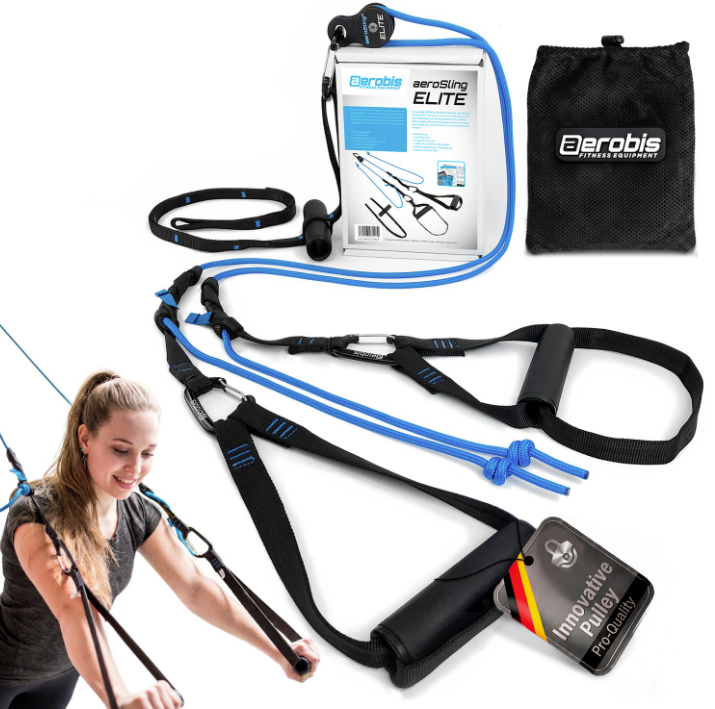
The deflection pulley allows alternating and rotational movements that can be more difficult to perform smoothly with a fixed Y-shaped suspension strap. You can anchor the trainer to a door, structural beam, tree, or ceiling mount, provided the anchor point is secure and suitable for dynamic loading.
Progress sling exercises by walking your feet closer to, or underneath, the anchor point. You can also lower the handles for pressing movements, add pauses, increase lever length, or move from bilateral to single-arm and single-leg variations.
Use a revvll continuous rope trainer when you want dense upper-body strength endurance in a short training window. The continuous rope allows you to pull, push, or rotate against resistance without needing to reset between repetitions.
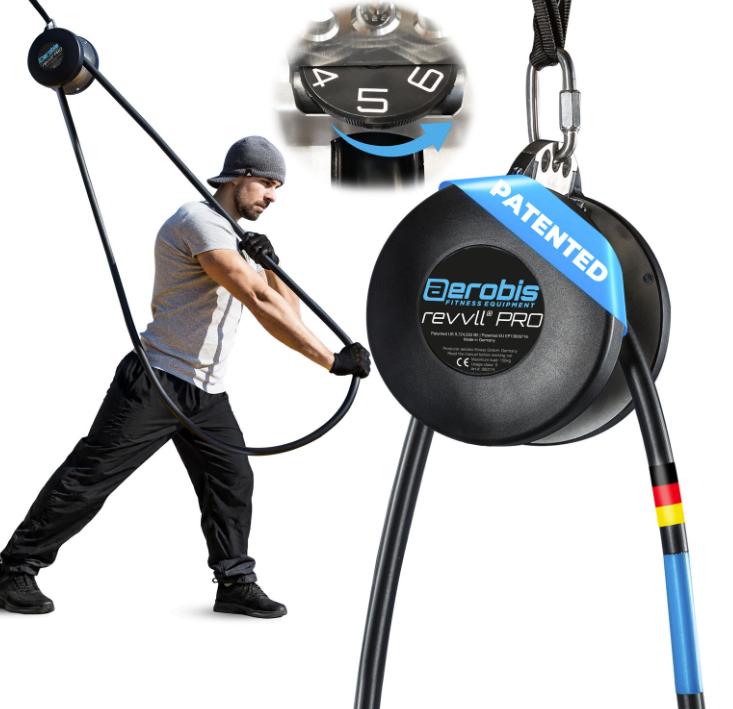
Progress rope work by increasing resistance, maintaining a higher RPM target, shortening rest periods, or completing more total work. Choose sling training when quality of position and control matter most. Choose rope training when you want challenging work density with minimal setup time.
Session A: Sling Strength Session
This session takes around 25 to 35 minutes.
Warm-Up
Spend five minutes preparing your shoulders, hips, and upper back. Start with scapular slides or light sling Y raises, followed by bodyweight hip hinges and easy sling rows performed at a high body angle.
Main Session
Complete three to four rounds. Rest for 60 to 90 seconds between exercises, or longer if needed to maintain clean technique.
Sling Row
Set your body angle so that the final two repetitions feel challenging while you can still control your shoulder blades. Pull your chest toward the handles, keep your ribs down, and avoid shrugging your shoulders toward your ears.
Sling Push-Up or Assisted Dip Pattern
Position your feet farther away from the anchor point to increase the challenge. Keep your elbows tracking naturally and avoid allowing your shoulders to rise toward your neck.
Split-Stance Sling Hinge or Reverse Lunge
Use the straps to support balance rather than to pull yourself through the movement. Load the front hip, keep your torso controlled, and aim for a smooth, stable repetition.
Anti-Rotation Press or Knee Tuck
For anti-rotation work, use a staggered stance and press the handles away from your chest without allowing your torso to rotate. For knee tucks, move slowly and avoid swinging through the hips.
How to Progress the Sling Session
Choose one progression variable each week. You can make the exercise harder by walking your feet to a more challenging angle, lengthening the lever by keeping your arms straighter, elevating the feet where safe, adding a two-second pause at the hardest point, or moving to a unilateral variation.
Log your foot position or handle height in the same way you would log weight on a barbell. That record gives you a clear way to make progress when you return to the same session.
Session B: Rope Trainer Density Session
This session takes around 20 to 30 minutes.
Warm-Up
Spend four to five minutes preparing the shoulders, hands, and upper back. Begin with shoulder circles and gentle grip opening exercises, then perform 60 to 90 seconds of light continuous rope pulls at a low resistance setting.
Main Session
Choose either an EMOM format or standard work-and-rest intervals. The aim is to produce high-quality work, not simply to move as fast as possible.
Standing Continuous Pull
Perform 40 to 60 seconds of continuous pulling at a sustainable RPM, then rest. Keep your hips stacked beneath your torso and use your back muscles rather than relying only on your arms.
Kneeling or Seated Pull
Use shorter intervals for this variation. Removing some lower-body assistance can increase the focus on your lats and upper back while helping you maintain a more controlled position.
Push or Rotation Pattern
If you already have good control of the rope trainer, include brief pushing or rotational intervals. Keep the sets short and stop before technique becomes rushed or uncontrolled.
Finisher
Finish with three to five minutes of maximum-quality work. This can be tracked as total meters, total rope cycles, or continuous pulling time. End the set if your technique breaks down significantly.
How to Progress the Rope Session
Increase the resistance by one level once you can maintain your target RPM across all intervals. You can also keep the same resistance and aim for a higher RPM, shorten rest periods by 10 to 15 seconds, or add one additional interval.
Record the resistance setting, RPM target, and work-to-rest ratio after every session. Those numbers are what turn rope training into a progressive strength-endurance tool rather than a hard but unstructured finisher.
Two-Week Portable Strength Microcycle
| Day | Focus |
|---|---|
| Monday | Session A: Sling strength |
| Wednesday | Session B: Rope trainer density |
| Friday | Short combination session: two rounds of Session A plus two or three rope intervals, or sport-specific practice |
| Tuesday, Thursday and Saturday | Recovery work, mobility, or sport practice |
| Sunday | Rest or an easy walk |
Repeat the same schedule in the second week. Change only one progression variable for each tool. For sling training, record body angle, foot position, or handle height. For rope training, record resistance, RPM, and total work.
That training log is what makes portable strength training progressive rather than decorative.
Safety and Setup Checklist
Confirm that your anchor point can handle dynamic load. Suitable options may include a structural beam, rated ceiling mount, solid outdoor anchor, or a correctly used door anchor with the door closed and locked toward the direction of pull.
Before each sling session, inspect the carabiners, webbing, handles, and foot straps. Before using a rope trainer, make sure the unit is mounted securely, the rope path is clear, and the resistance is set low enough for you to learn the movement with control.
Avoid letting ego dictate your body angle, resistance setting, or exercise selection. If your shoulder or lower back becomes painful, reduce the angle or resistance immediately and return to a variation you can control.
This plan is best suited to intermediate athletes who already have basic rowing and hip-hinging skills. Beginners should start with easier sling angles and very light rope settings while they learn each movement pattern.
Portable Strength Needs a Progression Plan
Portable training only plateaus when the plan has no clear path for progression. A sling trainer and continuous rope trainer give you useful training variables to track: body angle, stance, resistance, RPM, and work density.
Run these sessions for two weeks, log the variables, and adjust one lever at a time. Strength can travel with you. It simply needs a method that continues to progress.