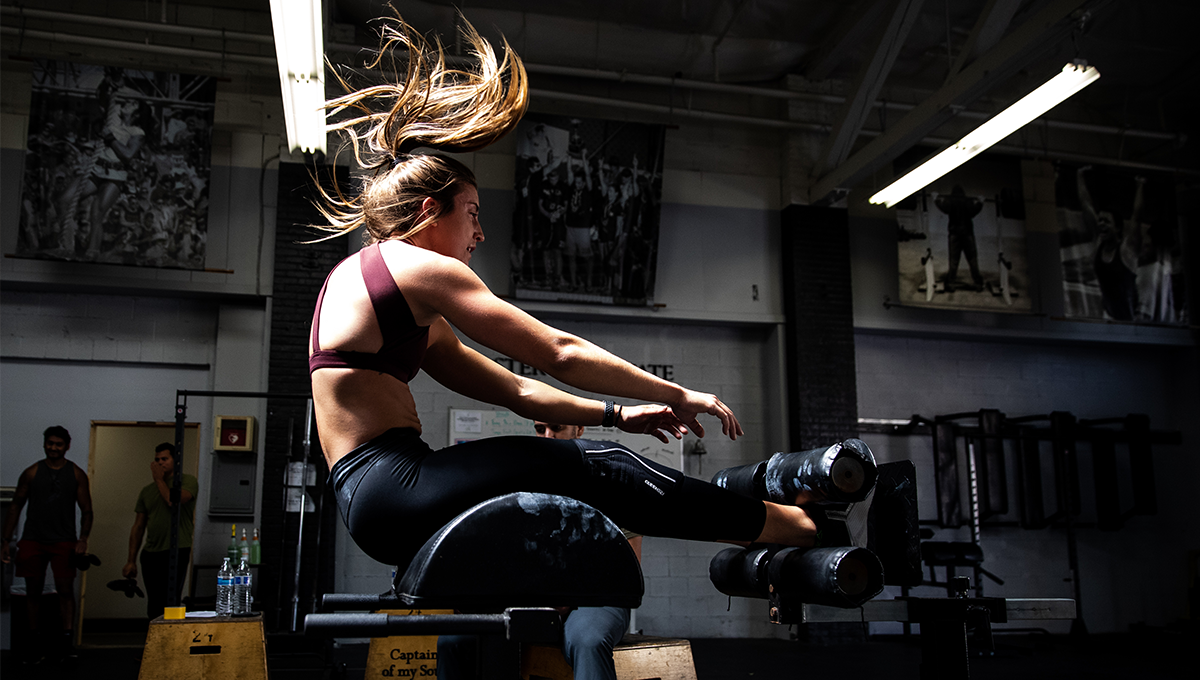


Many people train their abs hard but still feel that their upper abs do not look as defined, thick, or athletic as they want. This usually leads to a simple question: should you do more sit ups, or should you use resistance and focus on weighted crunches?
Both exercises can strengthen the muscles at the front of your torso. However, they do not challenge your body in exactly the same way. The biggest difference is that sit ups involve substantial assistance from the hip flexors, while a well performed weighted crunch can place a more direct and progressively overloadable challenge on the rectus abdominis.


If your main goal is to build thicker abs that can become visible when body fat levels are low enough, weighted crunches are generally the stronger choice. Sit ups still have a place, particularly for developing muscular endurance and improving performance in tasks that require repeated full trunk flexion. The best option depends on what you want from your training and how you perform each movement.
What Creates Ripped Upper Abs?
Before comparing exercises, it helps to understand what gives abs their visible shape. The muscle most people associate with a six pack is the rectus abdominis. It runs from the lower part of the rib cage to the pelvis and is divided by connective tissue bands that create the familiar segmented look.
Despite the common phrase “upper abs,” the rectus abdominis is one long paired muscle. You can change the emphasis of an exercise somewhat through body position and range of motion, but you cannot completely isolate a separate upper section. A crunch tends to involve a strong shortening action through the upper part of the torso because the rib cage moves toward the pelvis. Still, the whole rectus abdominis contributes to trunk flexion.

Visible abs require two things. First, the abdominal muscles need enough size and development to create definition. Second, there needs to be relatively little body fat covering them. Research has repeatedly shown that doing abdominal exercises alone does not selectively reduce fat from the stomach area. Ab training makes the muscles stronger, but overall energy balance, nutrition, daily activity, and full body training are what matter most for reducing body fat.
This means the best training approach for ripped upper abs is not hundreds of fast repetitions. It is a combination of progressive resistance training for the abs, a training plan that maintains or builds muscle across the body, and nutrition that supports an appropriate level of body fat.
The Case for Sit Ups
A traditional sit up starts with your back on the floor and finishes with the torso moving all the way to an upright position. Your rectus abdominis works during the first portion of the movement, but the hip flexors become increasingly important as your torso rises.
The major hip flexors include the iliopsoas and rectus femoris. They help pull the torso toward the thighs and are particularly active in the later stages of a sit up. This does not make sit ups ineffective. It simply means they are a compound trunk exercise rather than a highly isolated abdominal movement.
Benefits of Sit Ups
Sit ups are simple, accessible, and require no equipment. They can be useful for building the endurance needed in fitness tests, military assessments, sport conditioning sessions, and high repetition workouts. They also teach your body to coordinate the abs and hip flexors through a large range of motion.
Research using electromyography has found that both bent knee sit ups and crunches activate the rectus abdominis. Sit ups can therefore strengthen the abs, especially for beginners who have not trained the movement consistently before.
Because they are easy to perform anywhere, sit ups can also help someone build a regular core training habit. A person who has no equipment, little training experience, and limited time can still use them to begin strengthening their midsection.
Limitations of Sit Ups for Ab Size
The problem with sit ups is not that they fail to train the abs. The issue is that they are harder to load progressively without making the movement awkward or allowing the hip flexors to dominate the effort.
For muscle growth, the target muscle needs to experience sufficient mechanical tension. You can achieve this with lighter loads taken close to muscular failure or with heavier loads for fewer repetitions. However, resistance must become more challenging over time if you want to continue progressing.
3 Best Beginner Exercises for Wider and More Muscular Pecs
With sit ups, many people simply add more repetitions. This can improve endurance, but eventually the workout becomes more about surviving a high repetition set than creating a strong growth stimulus for the abs. Holding a plate during sit ups can add resistance, but it also increases the challenge to the hip flexors and can make the movement less controlled.
Sit ups can also be uncomfortable for some lifters, especially when they are performed quickly, with the feet aggressively anchored, or with excessive lower back arching. People with current back pain should be cautious and seek individual advice from a qualified healthcare professional before adding painful movements to their program.
The Case for Weighted Crunches
A weighted crunch uses the same basic action as a bodyweight crunch, but adds external resistance. You can hold a dumbbell or weight plate against your chest, use a cable stack, or perform the movement on a decline bench when appropriate.
The aim is to flex the spine in a controlled manner by bringing the rib cage toward the pelvis. In a crunch, the torso does not need to travel all the way to an upright position. This shorter range reduces the contribution of the hip flexors compared with a full sit up and keeps the focus more directly on the rectus abdominis.
Why Weighted Crunches Are Better for Building Abs
Weighted crunches make progressive overload easier. You can begin with a load that allows you to perform controlled repetitions, then gradually increase the resistance as you become stronger. This follows the same training principle used to build the chest, back, arms, and legs.
Research on resistance training shows that muscle growth can occur across a wide range of loads when sets are performed with a sufficiently high effort. In practical terms, this means your abs do not need extremely heavy weights. They do need challenging sets that are performed with control and brought reasonably close to technical failure.
A weighted crunch is also more time efficient than very high repetition sit ups. Instead of performing sets of 50 or 100 repetitions, you can use a modest load and work in a more manageable repetition range. This makes it easier to keep each repetition deliberate and to track progress from week to week.
Weighted crunches are especially useful for lifters who already have decent core endurance but want more muscular thickness. Stronger and more developed rectus abdominis muscles may look more pronounced when body fat is reduced, although no exercise can guarantee a specific appearance because genetics, fat distribution, and muscle shape also matter.
How to Perform a Weighted Crunch Well
Lie on your back with your knees bent and feet flat on the floor. Hold a light dumbbell or plate securely against your chest. Start with a load that allows you to control every repetition without jerking the torso upward.
Exhale as you curl your upper back from the floor. Think about moving your ribs toward your pelvis rather than trying to sit all the way up. Keep your chin relaxed, avoid pulling your head forward, and keep the weight firmly against your chest.
Pause briefly when your upper back is lifted, then lower slowly until your shoulder blades return to the floor. The lowering phase matters because controlled eccentric training contributes to muscle growth and helps maintain good technique.
Your lower back does not need to flatten forcefully into the floor throughout the entire set. Instead, focus on a smooth, comfortable spinal flexion that you can control. If adding weight causes you to lose control, reduce the load and improve the quality of your repetitions before progressing.
Which Exercise Targets the Upper Abs More Effectively?
Neither sit ups nor weighted crunches isolate only the upper abs. The rectus abdominis acts as one muscle, and your entire trunk contributes to the movement. However, weighted crunches are usually the more direct choice when your goal is to train the visible front of the abdominal wall with a controlled resistance stimulus.
During a sit up, the movement progresses from a trunk curl into a larger hip flexion task. This means the abs work, but they share more of the workload with the hip flexors. During a weighted crunch, the movement ends before the torso reaches upright, reducing the need for substantial hip flexor contribution.
Studies comparing traditional abdominal exercises have shown that crunches and bent knee sit ups both activate the rectus abdominis, while exercise selection changes the involvement of other muscles. This reinforces an important point: neither movement is useless, but the movement that best matches your goal should get priority.
For hypertrophy focused training, weighted crunches are easier to standardize. You can use the same range of motion, load, tempo, and repetition target each session. That makes it much easier to know whether you are improving.
How to Program Weighted Crunches for Better Abs
Train weighted crunches two or three times each week. Begin with two or three hard sets per session and use a load that allows roughly 8 to 20 controlled repetitions. Choose a weight that makes the final few repetitions difficult while still allowing you to keep the same range of motion and avoid using momentum.
When you can complete the top end of your chosen repetition range with good technique, increase the load slightly. The progression can be very small. A heavier dumbbell, a slightly larger plate, or one additional cable pin can be enough.
Total weekly training volume matters for muscle growth. Research suggests that performing multiple challenging sets for a muscle group across the week is generally more effective than performing very little training volume. Your abs also recover from other training demands, so pay attention to how your lower back, hip flexors, and overall fatigue feel.
A simple approach is to perform weighted crunches after your main lifting session on two nonconsecutive days. For example, complete three sets of 10 to 15 repetitions on one day, then three sets of 12 to 20 repetitions later in the week. Over time, improve the load, the repetitions, the control, or all three.
When Sit Ups Are the Better Choice
Sit ups remain useful when your goal is muscular endurance, task specific fitness, or conditioning. If you need to pass a fitness test involving sit ups, you should practice the exact movement that will be assessed. Specificity matters, and getting stronger at weighted crunches does not automatically make you highly skilled at repeated sit ups.
They can also be a useful variation for athletes who tolerate them well and want a simple bodyweight core exercise. Keep the repetitions controlled, avoid forcefully yanking on the neck, and do not anchor the feet unless the specific training goal requires it.
For general core development, sit ups work best as one tool among several. They should not be the only abdominal exercise you ever perform. Pair them with movements that challenge trunk flexion, anti extension, anti rotation, and lateral stability.
The Verdict
If your goal is ripped, thicker looking upper abs, weighted crunches are the better primary exercise. They train the rectus abdominis more directly than full sit ups, are easier to progress over time, and allow you to use the same muscle building principles that work for the rest of your body.
Sit ups are still valuable for endurance, fitness tests, and full range trunk flexion. They are not a bad exercise, but they are less precise for someone whose main aim is hypertrophy of the visible abdominal muscles.
Use weighted crunches as your main direct ab exercise, train them hard with excellent control, and progress gradually. Then support that work with sensible nutrition, whole body resistance training, and enough activity to manage body fat. That combination is far more effective than chasing endless sets of sit ups.
References
- Escamilla, R.F., Lewis, C., Bell, D., Bramblet, G., Daffron, J., Lambert, S., Pecson, A., Imamura, R., Paulos, L. and Andrews, J.R. (2010) ‘Core muscle activation during Swiss ball and traditional abdominal exercises’, Journal of Orthopaedic and Sports Physical Therapy, 40(5), pp. 265–276.
- Guimaraes, A.C., Vaz, M.A., de Campos, M.I. and Marantes, M.C. (1991) ‘The contribution of the rectus abdominis and rectus femoris in twelve selected abdominal exercises’, Journal of Sports Medicine and Physical Fitness, 31(2), pp. 222–230.
- Katch, F.I., Clarkson, P.M., Kroll, W., McBride, T. and Wilcox, A. (1984) ‘Effects of sit up exercise training on adipose cell size and adiposity’, Research Quarterly for Exercise and Sport, 55(3), pp. 242–247.
- Schoenfeld, B.J., Grgic, J., Ogborn, D. and Krieger, J.W. (2017) ‘Strength and hypertrophy adaptations between low versus high load resistance training: A systematic review and meta analysis’, Journal of Strength and Conditioning Research, 31(12), pp. 3508–3523.
- Schoenfeld, B.J., Ogborn, D. and Krieger, J.W. (2016) ‘Dose response relationship between weekly resistance training volume and increases in muscle mass: A systematic review and meta analysis’, Journal of Sports Sciences, 35(11), pp. 1073–1082.
Key Takeaways
| Exercise | Best use | Main advantage | Main limitation |
|---|---|---|---|
| Weighted crunch | Building thicker, more defined abs | Easy to progressively overload the rectus abdominis | Requires careful loading and controlled technique |
| Sit up | Muscular endurance and fitness test preparation | Simple, equipment free, and task specific | Greater hip flexor involvement and less direct progression for hypertrophy |
| Nutrition and full body training | Making abdominal definition visible | Supports body fat management while preserving muscle | Cannot be replaced by ab exercises alone |