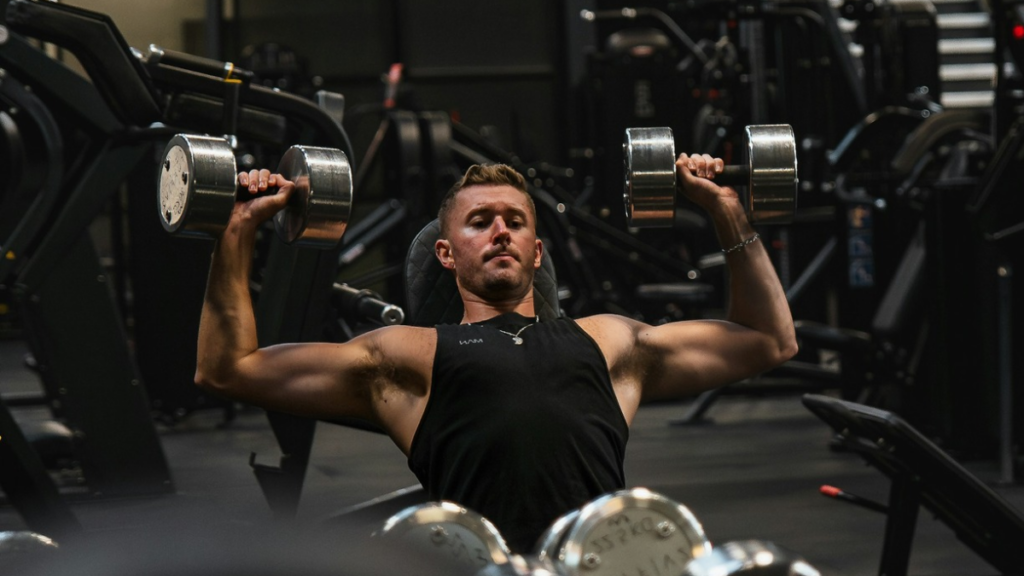


Getting older does not mean you have to accept a weaker chest, poor posture, or declining upper body strength. In fact, resistance training becomes even more important after 40. The right chest workout can help men maintain muscle mass, support healthy joints, improve athletic performance, and protect long term health.
But training after 40 is different from training in your 20s. Recovery slows down, connective tissues become less resilient, and years of repetitive movement can create shoulder pain or mobility limitations. Many men continue to train with the same heavy pressing routines they used decades earlier, only to end up with nagging injuries and stalled progress. The solution is not to stop training hard. It is to train smarter.



The best chest workout for men over 40 combines evidence based strength training principles with joint friendly exercise selection, balanced programming, and recovery strategies that support longevity. That means focusing on high quality movement patterns, appropriate training volume, intelligent exercise order, and recovery methods that allow consistent progress.
Why Chest Training Matters More After 40
Many men notice visible changes in muscle mass and strength as they age. This is not just perception. Research shows that adults begin to lose skeletal muscle mass progressively with age, especially when they become sedentary.
This age related loss of muscle tissue is known as sarcopenia. Resistance training is one of the most effective ways to slow or reverse it. Studies consistently show that strength training improves muscle mass, functional strength, metabolic health, and quality of life in middle aged and older adults. Chest training specifically offers several important benefits:
- Preserves upper body muscle mass
- Improves pushing strength for daily tasks
- Supports shoulder stability
- Enhances posture when paired with back training
- Helps maintain bone density
- Improves metabolic health
- Boosts confidence and physical performance
A stronger chest also contributes to athletic function. Pushing power is important in sports, martial arts, throwing activities, and even sprint mechanics.
However, chest training must be approached carefully after 40 because the shoulders often become the limiting factor.
The Biggest Chest Training Mistakes Men Over 40 Make
Training Too Heavy All the Time
Heavy bench pressing is effective for building strength, but constantly lifting near maximal loads increases stress on the joints and connective tissues.
Want to Deadlift 200kg? Here are 4 Numbers You Need to Hit First
Research shows that muscle growth can occur across a wide range of loading schemes as long as sets are taken close to muscular fatigue. This means men over 40 do not need to max out regularly to build an impressive chest. Moderate loads with controlled tempo and proper volume often produce excellent hypertrophy results with less orthopedic stress.
Ignoring Shoulder Health
Shoulder pain is extremely common in aging lifters. Years of pressing combined with poor posture and limited thoracic mobility can create impingement issues. Many men continue to prioritize barbell bench pressing while neglecting mobility work, rotator cuff training, and upper back development.

This imbalance often leads to chronic discomfort and reduced pressing performance.
Using Poor Exercise Selection
Some exercises simply become less joint friendly with age. Deep barbell dips, ultra wide grip bench pressing, and excessively heavy incline pressing can aggravate the shoulders for many lifters. That does not mean these exercises are universally bad. It means exercise selection should match individual mobility, injury history, and recovery capacity.
Doing Too Much Volume
More is not always better. Recovery capacity declines with age due to hormonal changes, increased life stress, and reduced tissue resilience. Excessive chest volume can lead to joint irritation and prolonged soreness. Research suggests that moderate weekly training volume is highly effective for hypertrophy when applied consistently.
The Science of Muscle Growth After 40
Muscle growth still occurs effectively after 40. In many cases, men in their 40s and 50s can continue building impressive physiques. The process simply requires better management of recovery, nutrition, and training quality.
Want to Bench Press 100kg / 220lbs? Here Are 4 Numbers You Need to Hit First
Mechanical Tension Matters Most
Mechanical tension is considered one of the primary drivers of hypertrophy. This refers to the force produced within muscle fibers during resistance training. Exercises that challenge the chest through a full range of motion with controlled form create the stimulus needed for growth.
That means:
- Controlled eccentric phases
- Strong contractions
- Progressive overload
- Sufficient effort near failure
- Consistent training frequency
Protein Intake Becomes More Important
Older adults experience anabolic resistance, meaning the muscles become less responsive to protein intake and training stimuli. Research suggests higher protein intake supports muscle preservation and growth in aging populations. Most active men over 40 benefit from consuming around 1.6 to 2.2 grams of protein per kilogram of bodyweight daily.
Recovery Drives Results
Recovery is where adaptation happens. Sleep quality, stress management, hydration, and intelligent programming become critical after 40. Many lifters fail not because they train too little, but because they recover poorly.
The Best Chest Exercises for Men Over 40
The best chest workout combines compound and isolation movements while minimizing unnecessary joint stress. These exercises provide an excellent balance of hypertrophy, strength development, and shoulder friendliness.
Flat Dumbbell Bench Press
For many men over 40, the dumbbell bench press is superior to the barbell bench press. Dumbbells allow a more natural range of motion and reduce fixed shoulder positioning. This often decreases stress on the shoulders while improving chest activation.
Key benefits include:
- Greater freedom of movement
- Reduced shoulder strain
- Improved muscular symmetry
- Better stabilization demands
Use a controlled lowering phase and avoid bouncing at the bottom.
Incline Dumbbell Press
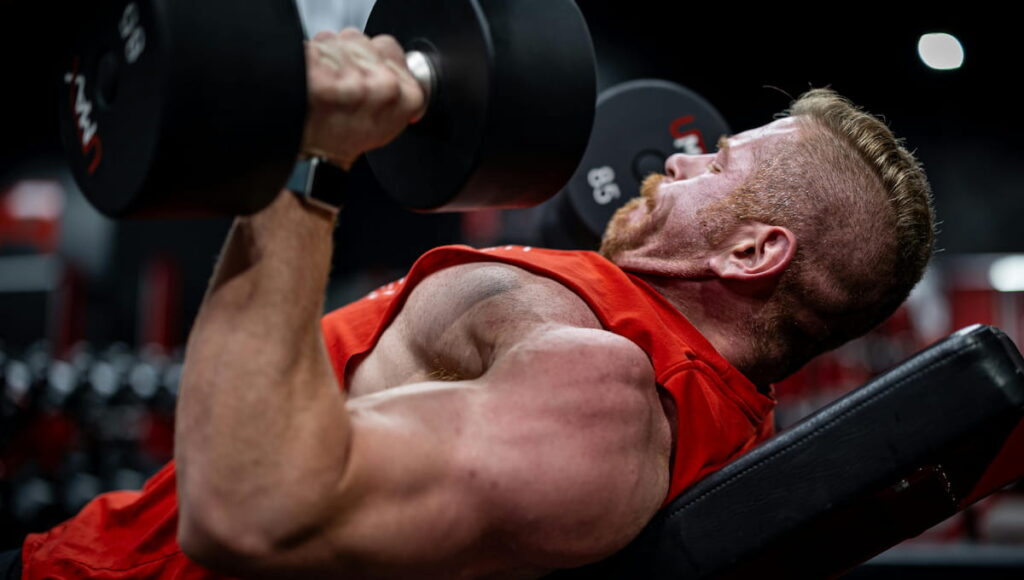
The incline dumbbell press targets the clavicular head of the pectoralis major while also training the shoulders and triceps. A moderate incline of around 15 to 30 degrees is typically more shoulder friendly than steep inclines. Avoid excessive arching or flaring the elbows too wide.
Push Ups
Push ups remain one of the best chest exercises available. Research shows push ups can produce substantial muscle activation in the chest and triceps when loaded appropriately. Push ups are especially valuable for older lifters because they:
- Encourage natural scapular movement
- Improve shoulder function
- Train core stability
- Reduce joint compression
Advanced lifters can increase difficulty using weighted vests, resistance bands, or tempo manipulation.
Machine Chest Press
Machines are often underrated. Modern chest press machines can provide high muscular tension with lower stabilization demands. This is useful for accumulating training volume safely. Machines are especially helpful when fatigue is high or joint irritation limits free weight training.
Cable Flyes
Cable flyes provide constant tension and allow lifters to train the chest through a large range of motion. Compared to dumbbell flyes, cables often place less strain on the shoulder joint at stretched positions. Keep the movement controlled and avoid excessive stretching.

Landmine Press
Although technically more of a hybrid pressing movement, the landmine press can be an excellent addition for men with shoulder limitations. The angled pressing path is often more comfortable than vertical overhead pressing.
Decline Push Ups
Decline push ups increase upper chest recruitment while maintaining the joint friendly nature of standard push ups. These are particularly effective as a burnout exercise near the end of a workout.
The Best Chest Workout for Men Over 40
This workout is designed to maximize muscle growth and strength while minimizing unnecessary joint stress. It uses moderate volume, smart exercise selection, and evidence based programming principles.
Workout Structure
Frequency: 2 chest focused sessions per week
Rest between sets:
- Compound lifts: 90 to 120 seconds
- Isolation movements: 45 to 60 seconds
Intensity:
Most sets should finish with 1 to 3 reps left in reserve.
Workout A
1. Flat Dumbbell Bench Press
4 sets x 6 to 8 reps
Focus on controlled lowering and explosive pressing.
2. Incline Dumbbell Press
3 sets x 8 to 10 reps
Use a moderate incline angle.
3. Cable Flyes
3 sets x 12 to 15 reps
Pause briefly in the contracted position.
4. Push Ups
3 sets to near failure
Maintain full body tension throughout.
5. Band Pull Aparts
3 sets x 20 reps
This supports shoulder health and postural balance.
Workout B
1. Machine Chest Press
4 sets x 8 to 10 reps
Use controlled tempo and full range of motion.
2. Neutral Grip Dumbbell Press
3 sets x 8 to 12 reps
A neutral grip often feels better on aging shoulders.
3. Low to High Cable Flyes
3 sets x 12 to 15 reps
Target the upper chest fibers.
4. Decline Push Ups
3 sets to near failure
Control each rep.
5. Face Pulls
3 sets x 15 to 20 reps
Excellent for shoulder stability and posture.
Why This Workout Works
Balanced Exercise Selection
The workout combines:
- Compound pressing for strength and hypertrophy
- Isolation work for targeted chest stimulation
- Shoulder friendly movement patterns
- Upper back exercises for joint balance
This creates a sustainable approach for long term progress.

Moderate Weekly Volume
Research suggests hypertrophy can be achieved effectively with moderate training volume. This program provides enough stimulus for growth without overwhelming recovery.
Joint Friendly Loading
The use of dumbbells, cables, and machines allows lifters to challenge the chest while reducing excessive stress on the shoulders.
Built In Shoulder Protection
Face pulls and band pull aparts improve scapular control and rotator cuff function. This is critical because healthy shoulders support better pressing performance
The Role of Testosterone and Aging
Many men worry that declining testosterone makes muscle growth impossible after 40.
While testosterone levels can decline gradually with age, resistance training remains highly effective for improving body composition.
Lifestyle factors strongly influence hormonal health.
Key habits include:
- Maintaining healthy body composition
- Resistance training consistently
- Sleeping well
- Managing stress
- Eating sufficient protein and healthy fats
Strength training itself may support healthier hormonal profiles.
Final Thoughts
The best chest workout for men over 40 is not about copying professional bodybuilders or reliving college football training sessions. It is about building strength, muscle, resilience, and longevity through intelligent training.
Men over 40 can absolutely build an impressive chest. In many cases, they can achieve their best physiques later in life because they train with more discipline and patience. The key is balancing hard work with recovery.
Focus on quality movement, smart exercise selection, moderate volume, and consistent progression. Prioritize shoulder health, sleep, nutrition, and long term sustainability. Done correctly, chest training after 40 can improve not just how you look, but how you move, perform, and feel for years to come.
Key Takeaways
| Topic | Key Point |
|---|---|
| Training Frequency | Most men over 40 respond best to chest training twice weekly |
| Best Exercises | Dumbbell presses, push ups, cables, and machines are highly effective |
| Joint Health | Shoulder friendly exercise selection is critical |
| Recovery | Sleep, nutrition, and stress management strongly affect progress |
| Volume | Moderate training volume usually outperforms excessive volume |
| Warm Ups | Proper warm ups reduce injury risk and improve performance |
| Protein Intake | Higher protein intake supports muscle growth and recovery |
| Longevity | Sustainable training beats reckless heavy lifting |
References
- American College of Sports Medicine. (2009) ‘Progression Models in Resistance Training for Healthy Adults’, Medicine and Science in Sports and Exercise, 41(3), pp. 687 to 708.
- Candow, D.G. and Chilibeck, P.D. (2008) ‘Differences in Size, Strength, and Power of Upper and Lower Body Muscle Groups in Young and Older Men’, Journal of Gerontology, 60(2), pp. 148 to 156.
- Dankel, S.J., Mattocks, K.T., Jessee, M.B., Buckner, S.L., Mouser, J.G., Counts, B.R. and Loenneke, J.P. (2017) ‘Frequency: The Overlooked Resistance Training Variable for Inducing Muscle Hypertrophy?’, Sports Medicine, 47(5), pp. 799 to 805.
- Grgic, J., Schoenfeld, B.J., Orazem, J. and Sabol, F. (2018) ‘Effects of Resistance Training Performed to Repetition Failure or Non Failure on Muscular Strength and Hypertrophy’, Journal of Sport and Health Science, 10(2), pp. 202 to 211.
- Hidayat, R., Basuki, S., Haryanto, A.I. and Kuo, Y.L. (2023) ‘Effects of Push Up Exercise on Upper Body Muscle Activation’, Journal of Human Sport and Exercise, 18(1), pp. 44 to 56.