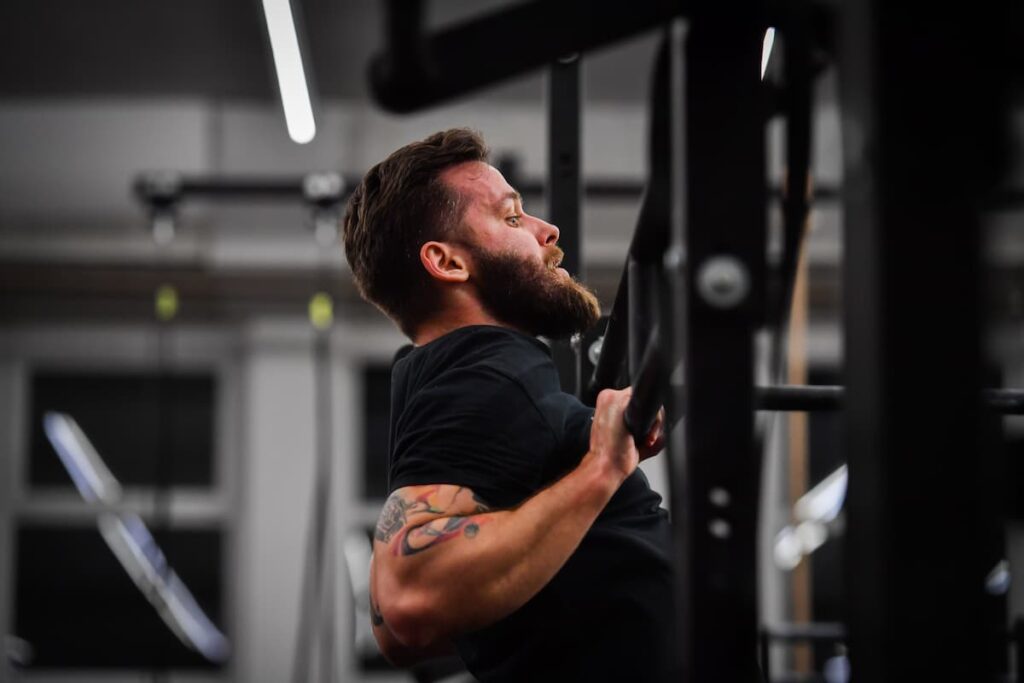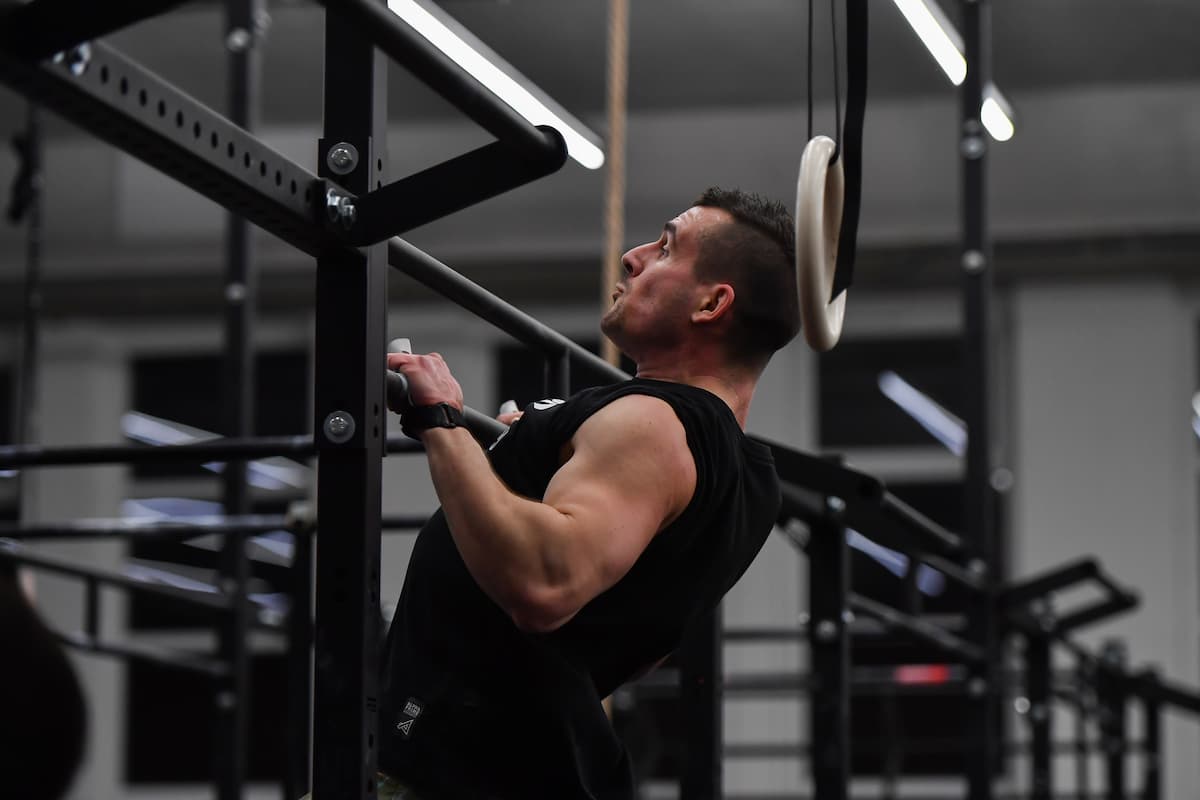


Pull ups are one of the best bodyweight exercises for building the upper back, improving relative strength, and creating the broad silhouette many lifters want. Yet one question keeps coming up: should you use a wide grip or a close grip if your goal is a wider back?
The short answer is that neither grip has been shown to build a wider back by itself. Grip width does not change the shape of your latissimus dorsi, often called the lats. Your skeletal structure, muscle attachments, total muscle mass, and body fat level determine how wide your back looks.


That said, grip choice can influence your comfort, range of motion, ability to add load, and the number of quality repetitions you can perform. Those factors matter far more for long term muscle growth than simply placing your hands farther apart on the bar.
For most people, a shoulder width or slightly wider than shoulder width overhand pull up is the most productive default. It gives you a strong lat stimulus, a useful range of motion, and a position that is easier to progress over time. A close grip can be equally valuable, particularly if it lets you train hard with better control and less shoulder discomfort.
What Actually Makes a Back Look Wider?
A wide back is mostly created by well developed lats. The lats run from the lower and middle back toward the upper arm, and their size contributes strongly to the taper between the shoulders and waist. The teres major, rear delts, upper back muscles, and overall shoulder development also influence the visual width of your upper body.
No pull up grip can selectively grow the outer part of the lats while leaving the rest untouched. Muscles do not work in separate upper, lower, inner, and outer compartments in the way many gym myths suggest. The lats contract as a whole, although different joint positions may slightly alter regional muscle activity.
Want More Muscular Shoulders? Do These 3 Barbell Exercises
The practical goal is therefore not to find a magic grip for outer lat development. It is to consistently challenge the lats through a comfortable range of motion, accumulate enough hard training volume, and progressively make the exercise more demanding. Resistance training research consistently shows that higher weekly training volume, when recoverable, is associated with greater muscle growth.
Your waist size matters too. Building the lats will improve the appearance of width, but a leaner waist can make the same amount of back muscle look more dramatic. Training for a wider back works best when it combines effective pulling training with an overall nutrition plan that supports either muscle gain or fat loss, depending on your starting point.
Wide Grip Pull Ups
A wide grip pull up generally means placing the hands well outside shoulder width in an overhand position. The elbows move outward as you pull, and the movement tends to feel like you are pulling your upper arms down toward your sides.
The Potential Benefits of a Wide Grip
A wide grip may feel more direct in the upper back because the elbows flare farther from the torso. Some lifters also find that the grip reduces their ability to rely on elbow flexion, which can make the movement feel less dominated by the biceps.
However, feeling an exercise more strongly in a muscle does not automatically mean it produces more growth. Muscle sensation can be useful feedback, but it is not a direct measurement of long term hypertrophy.
Research examining different widths during the lat pulldown found no meaningful difference in lat activity between wide and narrow grips when forearm orientation was controlled. This matters because the lat pulldown and pull up are not identical exercises, but both are vertical pulling movements requiring the lats to produce shoulder adduction and extension under load.
The same research found that an overhand grip produced slightly greater lat activity than an underhand grip, regardless of grip width. This is useful context, but it does not prove that a wide overhand pull up will build more lat muscle than a close overhand pull up.
The Limitations of Going Very Wide
The wider you place your hands, the shorter the pulling distance becomes. A very wide grip can make it difficult to start from a controlled hang and finish the repetition without shortening the range of motion. If you can perform more complete, controlled repetitions with a moderate grip, that usually gives you a better training stimulus than partial repetitions with an extreme grip.
Very wide pull ups can also be less comfortable for the shoulders. Research on pull up mechanics has found that different techniques alter how the shoulder blade and upper arm move during the exercise. A wide grip can place the shoulder in a less favorable position for some people, particularly when the athlete lacks shoulder mobility or pulls aggressively into the top position.
This does not mean wide grip pull ups are automatically harmful. Many strong and healthy athletes use them successfully. It does mean that discomfort should not be ignored just because the variation is thought to be better for width. Shoulder pain is not a sign that an exercise is working.
Close Grip Pull Ups
A close grip pull up places the hands around shoulder width or somewhat narrower. It can be performed overhand, underhand, or with a neutral grip if your equipment allows it. For this comparison, the most useful version is a close overhand pull up, as it keeps forearm position consistent with a traditional wide grip pull up.
Why a Close Grip Can Build an Excellent Back
A close grip commonly allows a larger range of motion because the arms begin in a more natural position overhead and the elbows can travel farther down toward the body. It may also allow many people to perform more repetitions with clean technique.
More high quality repetitions can be valuable because muscle growth depends on accumulating challenging sets over time. If a close grip lets you train with full control, get close to muscular failure safely, and recover well enough to repeat that work week after week, it can be an outstanding choice for lat development.
A closer grip also gives many lifters a stronger mechanical position. That can make weighted pull ups easier to progress. Once bodyweight repetitions are well established, gradually adding external load is an efficient way to keep creating overload for the lats and the rest of the pulling muscles.
A close grip does not automatically turn a pull up into a biceps exercise. The lats remain major contributors to every strict pull up variation. The biceps assist by bending the elbows, but the lats are still responsible for bringing the upper arms down toward the torso.
When a Close Grip Is the Better Choice
A close grip is often a better option when wide pull ups cause shoulder discomfort, force you to use shortened repetitions, or make it hard to control the bottom position. It can also suit lifters who want to build strength for weighted pull ups, climbing, obstacle racing, or other activities requiring strong vertical pulling.
If close grip pull ups feel cramped, do not force an extremely narrow hand position. Shoulder width is close enough for most people. The goal is to choose a grip that allows stable shoulders, smooth elbow movement, and a strong full repetition.
The Most Important Limitation in the Research
There is a crucial distinction between muscle activation research and muscle growth research. Electromyography measures electrical activity during an exercise. It can help researchers understand which muscles are active and how exercise variations may change recruitment patterns.
It cannot directly tell us which exercise variation produces the most hypertrophy after months of training. A muscle can show a high activation reading during one movement without that movement necessarily producing superior long term growth.

There is no strong direct evidence showing that wide grip pull ups build wider lats than close grip pull ups. The best available evidence from related vertical pulling research does not support the claim that simply widening the grip meaningfully increases lat activity.
This is why the wide grip versus close grip debate should be treated as a programming question, not a question of muscle shape. The most effective grip is the one you can load, control, and perform consistently without irritating your joints.
How to Perform Pull Ups for Back Growth
Start each repetition from a controlled hang. Your arms should be straight, but you do not need to forcefully relax into a painful shoulder position. Keep your rib cage controlled and avoid swinging your legs to create momentum.
Initiate the repetition by allowing the shoulder blades to move naturally, then drive the elbows down toward your sides. Think about moving your elbows rather than trying to pull your chin toward the bar. This cue often helps prevent excessive neck craning and keeps the movement focused on the shoulders and upper back.
Pull until your chin clearly passes the bar or your upper chest approaches it, depending on your build and shoulder comfort. Lower under control until you return to the start position. A full, controlled range of motion is generally more productive than cutting the repetition short to chase extra numbers.
You do not need an artificially slow tempo, but the lowering phase should be deliberate. Avoid dropping from the top position. Controlled eccentric training is a useful part of resistance exercise because muscles can produce high force while lengthening under load.
Train close enough to failure that the final repetitions are demanding while still technically sound. You do not need to take every set to absolute failure, particularly if you are doing several sets or adding weight. Leaving a small number of repetitions in reserve is a practical approach that can preserve form and help manage fatigue.
A Simple Pull Up Plan for a Wider Back
Train pull ups one to three times per week based on your current strength, total training volume, and recovery. If you can perform fewer than five strict repetitions, use assisted pull ups, band assistance, slow negatives, and lat pulldowns to build the movement.
If you can perform five to ten strict repetitions, complete three to five hard sets per session. Use a moderate overhand grip as your main variation and add a close or neutral grip variation if it feels comfortable. Aim to improve total repetitions while maintaining a full range of motion.
If you can perform more than ten clean repetitions, weighted pull ups become especially useful. Start with a small amount of external load and build gradually. Use sets of roughly five to ten repetitions, then include lighter bodyweight sets if you want additional volume.
You can rotate grips across the week without confusing your progress. For example, use a moderate overhand grip in one session and a close neutral grip in another. This adds variety, reduces repetitive stress, and allows you to discover which grip gives you the best combination of performance and comfort.
For complete back development, combine pull ups with horizontal pulls such as chest supported rows, cable rows, or dumbbell rows. Pull ups are excellent for the lats, but rows add valuable work for the middle back, rear delts, and muscles that control the shoulder blades.
Wide Grip vs Close Grip Pull Ups: The Verdict
Wide grip pull ups do not have a proven advantage for building a wider back. A wide hand position does not change the shape of your lats, and the best available research from vertical pulling variations shows that grip width alone does not meaningfully increase lat activity.
A moderate overhand grip is the best starting point for most lifters. It offers a strong lat stimulus without the reduced range of motion and potential shoulder irritation that can come with an extreme wide grip.
Close grip pull ups can build just as much back width when they are performed hard, through a full range of motion, and progressed over time. They may even be the more productive choice if they allow you to do more clean repetitions, add weight more easily, or train without discomfort.
Choose the grip that lets you train the lats consistently for months and years. That is what builds a wider back.
Key Takeaways
| Question | Practical answer |
|---|---|
| Does a wide grip build wider lats? | No direct evidence shows that it does. Grip width does not change lat shape. |
| Is wide grip better for lat activation? | Related lat pulldown research found no meaningful difference in lat activity between wide and narrow grips when hand position was controlled. |
| What grip should most lifters use? | Use an overhand grip around shoulder width or slightly wider, provided it feels comfortable. |
| Can close grip pull ups build a wide back? | Yes. They can be equally effective when you use a full range of motion and progress the exercise. |
| What matters most for back width? | Hard sets, sufficient weekly volume, progressive overload, good technique, recovery, and nutrition. |
| Should you use very wide pull ups? | Use them only if they feel comfortable and you can maintain controlled full repetitions. They are not required for lat growth. |
References
- Dickie, J.A., Funk, L., Matwiyoff, J.C., Lamontagne, M. and Gill, H.S. (2017) ‘Scapula kinematics of pull up techniques: Avoiding impingement risk with training changes’, Journal of Science and Medicine in Sport, 20(3), pp. 250–255.
- Lusk, S.J., Hale, B.D. and Russell, D.M. (2010) ‘Grip width and forearm orientation effects on muscle activity during the lat pull down’, Journal of Strength and Conditioning Research, 24(7), pp. 1895–1900.
- Schoenfeld, B.J. and Grgic, J. (2020) ‘Effects of range of motion on muscle development during resistance training interventions: A systematic review’, SAGE Open Medicine, 8, pp. 1–10.
- Schoenfeld, B.J., Ogborn, D. and Krieger, J.W. (2017) ‘Dose response relationship between weekly resistance training volume and increases in muscle mass: A systematic review and meta analysis’, Journal of Sports Sciences, 35(11), pp. 1073–1082.
- Schoenfeld, B.J., Grgic, J., Ogborn, D. and Krieger, J.W. (2017) ‘Strength and hypertrophy adaptations between low versus high load resistance training: A systematic review and meta analysis’, Journal of Strength and Conditioning Research, 31(12), pp. 3508–3523.
- Signorile, J.F., Zink, A.J. and Szwed, S.P. (2002) ‘A comparative electromyographical investigation of muscle utilization patterns using various hand positions during the lat pull down’, Journal of Strength and Conditioning Research, 16(4), pp. 539–546.