A strong, visible six pack depends on two things. Your rectus abdominis muscles need enough size to create definition, and your level of body fat needs to be low enough for that definition to be visible. Sit ups can help with the first part, but no sit up variation can selectively burn fat from your stomach.
If your goal is to build thicker, more noticeable abs, the best sit up variation is the one that lets you train the rectus abdominis hard, through a controlled range of motion, and progressively add challenge over time. For most healthy lifters, that means a weighted decline sit up performed with control and without using momentum.


That answer needs some context. A classic bodyweight sit up is useful for improving sit up endurance and learning the movement, but it is not automatically the best choice for muscle growth. Once you can perform high repetitions easily, the stimulus becomes limited unless you add resistance, slow the movement, or use a more demanding setup.
What a Six Pack Actually Is
The muscle responsible for the visible six pack is the rectus abdominis. It runs vertically from the rib cage to the pelvis and helps flex the spine, bringing the ribs closer to the pelvis. The connective tissue crossing the muscle creates the segmented appearance commonly called a six pack.
Your genetics influence the shape, symmetry, and number of visible segments. Training cannot change those features, but it can increase the size of the rectus abdominis and improve how clearly it stands out when body fat levels are appropriate.
The external obliques, internal obliques, and deeper abdominal muscles also matter. They support trunk movement and stability, while well developed obliques can contribute to a stronger looking midsection. However, the rectus abdominis is the main muscle to prioritize if your goal is classic front facing abdominal definition.
Research using electromyography shows that abdominal exercises can produce different levels of activity in the rectus abdominis, obliques, and hip flexors. However, muscle activation during one repetition is not the same thing as long term muscle growth. The best exercise is still one you can perform safely, load progressively, and repeat consistently over months.
The Best Sit Up for 6 Pack Abs
Weighted Decline Sit Up
The weighted decline sit up is the strongest overall option for building the rectus abdominis if you have good control, no relevant low back pain, and access to a decline bench. The decline angle increases the challenge because your trunk must move against more resistance than it does during a flat bodyweight sit up. Holding a dumbbell, weight plate, or medicine ball close to your chest gives you a simple way to add progressive overload.
Muscle growth requires a sufficiently challenging training stimulus. In resistance training, the practical goal is to make the target muscle work hard enough that sets are performed close to muscular failure with sound technique. A weighted decline sit up can meet that requirement much more easily than a standard floor sit up performed for endless repetitions.
Start by holding a light plate against your chest. Lower yourself under control until your torso is close to the bench, then curl back up by bringing your rib cage toward your pelvis. Avoid throwing your body upward or aggressively pulling with the hip flexors. Think about shortening the distance between your sternum and the front of your hips.
The movement should be challenging in the abdominal muscles, not a fast race to sit upright. If you cannot control the lowering phase, reduce the load or use a less demanding angle.
Why It Beats the Standard Floor Sit Up
A flat, bodyweight sit up can train the abs, especially for beginners. It also has a clear role when you are preparing for a fitness test that requires high repetition sit ups. In one randomized study, people who trained sit ups improved their two minute sit up performance more than those who trained curl ups. That result reflects specificity. If you want to become better at sit ups, practice sit ups.
For aesthetic abdominal development, though, performance on a timed sit up test is not the same as building the most muscle. A bodyweight floor sit up becomes easier as you adapt. You can add more repetitions, but adding external resistance is often a more efficient way to keep the exercise demanding.
The decline bench also provides a practical way to scale difficulty. You can begin with bodyweight, hold a light load, increase the load gradually, or slow the lowering portion. Those options make it easier to maintain a useful muscle building stimulus as you get stronger.
Why Not Simply Do Hundreds of Sit Ups?
High repetition sit ups can build local muscular endurance, but more repetitions do not automatically mean more muscle. Once an exercise becomes too easy, the set may end because of boredom or time rather than because the abdominal muscles have been challenged enough to adapt.
Resistance training evidence shows that muscle growth can occur across a range of loads when sets are hard enough. The important point is effort and progressive overload. For abs, that means choosing a variation that makes a moderate set challenging while allowing clean reps.
For many people, three to five sets of eight to 20 controlled weighted sit ups will provide a more useful hypertrophy stimulus than trying to complete hundreds of fast bodyweight repetitions. The exact number is not magic. Your final repetitions should feel demanding without your technique breaking down.
The Problem With Full Sit Ups
A full sit up is not a pure abdominal exercise. As you rise toward an upright position, the hip flexors contribute substantially to the movement. The rectus femoris and iliopsoas help flex the hip and bring the torso toward the thighs.
Research comparing sit up and curl up positions has found meaningful differences in abdominal and hip flexor activation. A full sit up can involve greater hip flexor contribution than a smaller curl up. This does not make the full sit up useless, but it explains why some people feel the exercise mainly in the front of their hips rather than in their abs.

For this reason, a controlled weighted decline sit up should not become an exaggerated rush to touch your chest to your knees. Curl your torso upward deliberately, keep the load close to your body, and stop the set if your hip flexors take over completely.
If full sit ups consistently irritate your low back or hips, switch to an exercise that trains spinal flexion with less hip flexor involvement. The best exercise is never the one that causes pain.
Are Crunches Better Than Sit Ups?
For isolating the rectus abdominis, a crunch is often a better starting point than a full floor sit up. During a crunch, you lift the shoulder blades from the floor while keeping the movement focused on spinal flexion. The hips remain relatively still, which can reduce the role of the hip flexors.
A crunch is especially useful if you are new to direct abdominal training, have poor control during sit ups, or struggle to feel your abs working. It is also easy to progress by holding a small weight against your chest or using a cable machine.
The limitation is that a basic floor crunch can become easy quickly. If you can complete many controlled repetitions with little challenge, it is time to make the exercise harder. A weighted crunch, cable crunch, or decline sit up gives you more room to progress.
There is no need to treat sit ups and crunches as enemies. A smart training plan can include both. Use weighted decline sit ups as a larger movement that you can overload, then use cable crunches or weighted floor crunches for additional direct abdominal work.
A Better Alternative for Some Lifters: The Cable Crunch
Although it is not technically a sit up, the kneeling cable crunch deserves mention because it is one of the most practical ab building exercises. It allows you to apply external resistance through a large range of spinal flexion while progressing the load in small increments.
Kneel facing away from a high cable pulley and hold the rope attachment beside your head. Keep your hips mostly fixed, curl your ribs down toward your pelvis, pause briefly in the shortened position, and return slowly. The key is to avoid turning the exercise into a hip hinge. Your abs should create the movement.
A cable crunch may be a better choice than a weighted decline sit up if you find the decline setup uncomfortable, lack a secure bench, or want highly controlled progression. Studies of core exercise activity also show that exercise choice changes how much the rectus abdominis, obliques, and hip flexors contribute. This supports using the exercise that lets you feel and progressively challenge the target muscles rather than following a single universal rule.
Do Sit Ups Burn Belly Fat?
No sit up variation can target fat loss from the stomach. This idea is called spot reduction, and controlled research does not support it. In one study, participants completed six weeks of abdominal exercise training, but the program did not significantly reduce abdominal fat or waist circumference compared with a control group.
Sit ups can strengthen and develop the muscles beneath body fat, but nutritional intake, total activity, and whole body training determine whether fat loss occurs. Resistance training is valuable during fat loss because it helps preserve or build lean mass, while regular physical activity contributes to energy expenditure and health.
For a visible six pack, train the abs directly, train the rest of your body with resistance exercise, and use a sustainable nutrition approach that supports gradual fat loss when appropriate. Extreme dieting can harm training quality and make it harder to retain muscle.
How to Perform the Weighted Decline Sit Up
Set the bench to a moderate decline angle rather than choosing the steepest position immediately. Secure your feet, lie back with a light plate or dumbbell against your chest, and take a breath before beginning the rep.
Start the upward phase by tightening your abs and curling your rib cage toward your pelvis. Keep the load close to your chest so it does not pull your shoulders forward. Rise smoothly without swinging your arms or using a violent hip drive.
At the top, squeeze your abs briefly rather than forcing a large forward bend. Lower yourself slowly until your torso is close to the bench, then begin the next repetition. The controlled lowering phase matters because it increases the total challenge placed on the abdominal muscles.
Use a load that allows you to maintain this control. If you need to pull on the bench, throw your torso upward, or feel sharp discomfort in your back, the exercise is too difficult in its current form.
A Simple Plan for Bigger Abs
Train your abs two or three times per week, ideally after your larger compound lifts or at the end of a session. Start with two or three sets of weighted decline sit ups. Choose a load that allows roughly eight to 15 quality reps, with the last few repetitions feeling difficult.
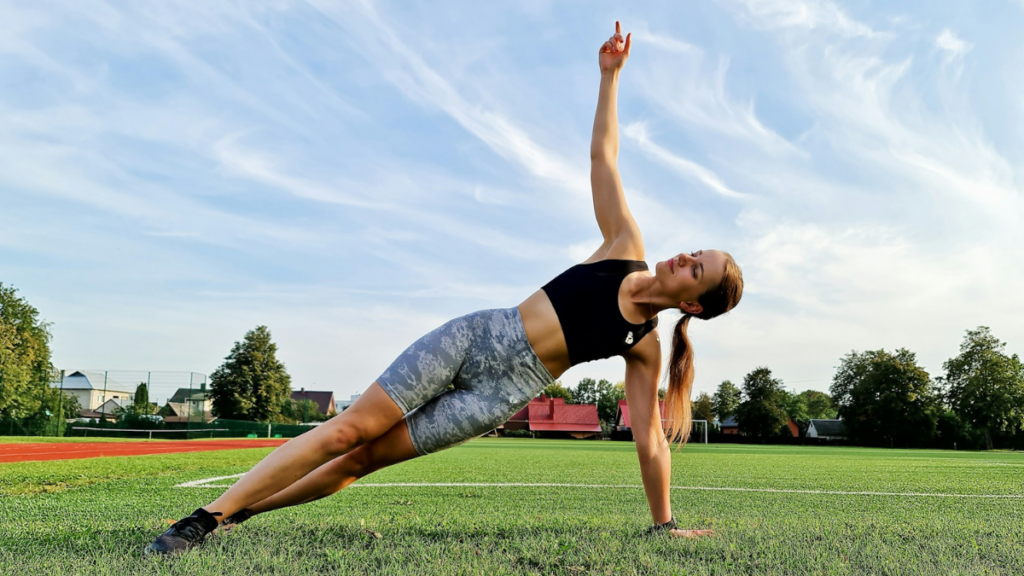
Add a second exercise that complements the sit up. Cable crunches are a strong option for more direct spinal flexion. A side plank, suitcase carry, or controlled rotational exercise can add work for the obliques and improve trunk control in a different way.
When you can perform the top end of your chosen repetition range with clean technique, increase the load slightly. This gradual progression is more reliable than constantly changing exercises in search of a secret movement.
The Bottom Line
The weighted decline sit up is the best sit up variation for six pack abs because it is easy to progressively overload, challenging through a long range of motion, and practical for building stronger, thicker abs. It is not automatically right for everyone, especially if it causes back or hip discomfort.
A standard floor sit up is useful for developing sit up performance and endurance, but it becomes less effective for muscle growth once high repetitions are easy. Crunches and cable crunches can be better options when you want to reduce hip flexor involvement or load the abs with more control.
Most importantly, train your abs like any other muscle. Use good form, apply gradual progression, recover properly, and remember that visible definition also requires a body fat level low enough to reveal the muscle you have built.
Key Takeaways
| Key takeaway | What it means |
|---|---|
| Best overall sit up | A weighted decline sit up is the most practical option for progressively challenging the rectus abdominis. |
| Best for beginners | A controlled crunch or light bodyweight sit up is easier to learn and can build a foundation of strength. |
| Best for isolating the abs | A weighted crunch or cable crunch can reduce hip flexor involvement compared with a full sit up. |
| Best for a sit up test | Practice standard sit ups because training adaptations are specific to the task. |
| What reveals a six pack | Direct ab training builds muscle, while overall fat loss determines whether the abs become visible. |
References
- Baxter, R.E., Moore, J.H., Pendergrass, T.L., Crowder, T.A. and Lynch, S. (2003) ‘Improvement in sit up performance associated with two different training regimens’, Journal of Orthopaedic and Sports Physical Therapy, 33(1), pp. 40 to 47.
- Escamilla, R.F., Lewis, C., Bell, D., Bramblet, G., Daffron, J., Lambert, S., Pecson, A., Imamura, R., Paulos, L. and Andrews, J.R. (2010) ‘Core muscle activation during Swiss ball and traditional abdominal exercises’, Journal of Orthopaedic and Sports Physical Therapy, 40(5), pp. 265 to 276.
- Martuscello, J.M., Nuzzo, J.L., Ashley, C.D., Campbell, B.I., Orriola, J.J. and Mayer, J.M. (2013) ‘Systematic review of core muscle activity during physical fitness exercises’, Journal of Strength and Conditioning Research, 27(6), pp. 1684 to 1698.
- Oliva Lozano, J.M. and Muyor, J.M. (2020) ‘Core muscle activity during physical fitness exercises: A systematic review’, International Journal of Environmental Research and Public Health, 17(12), 4306.
- Park, S.Y. and Yoo, W.G. (2015) ‘Effect of traditional versus modified bent knee sit up on abdominal and hip flexor muscle electromyographic activity’, Journal of Physical Therapy Science, 27(1), pp. 157 to 159.
- Vispute, S.S., Smith, J.D., LeCheminant, J.D. and Hurley, K.S. (2011) ‘The effect of abdominal exercise on abdominal fat’, Journal of Strength and Conditioning Research, 25(9), pp. 2559 to 2564.
- Warden, S.J., Wessel, J. and Ng, C.W. (2008) ‘The effects of different sit and curl up positions on activation of abdominal and hip flexor musculature’, Archives of Physical Medicine and Rehabilitation, 89(12), pp. 2357 to 2364.
- American College of Sports Medicine (2026) ‘Resistance training prescription for muscle function, hypertrophy, and physical performance in healthy adults: An overview of reviews’, Medicine and Science in Sports and Exercise, 58(3), pp. 455 to 479.