

A strong, defined midsection is built through two goals: developing the abdominal muscles and reducing enough body fat for those muscles to become visible. Barbell training can help with both by challenging the trunk under load and supporting full body strength training.
The term upper abs is useful for describing the area near the rib cage, but the rectus abdominis is one continuous muscle. You cannot completely isolate its upper section from its lower section. Different exercises can change how the trunk is loaded, but they do not allow you to train only one small section of the six pack.


The three exercises below are the barbell rollout, front squat, and landmine press. They train the abs through anti extension, bracing, and resistance to unwanted movement. They also build strength across the legs, shoulders, chest, back, and arms.
What Makes Abs Visible
The rectus abdominis creates the visible blocks of a six pack. The obliques contribute definition along the sides of the waist, while deeper trunk muscles help control the spine and pelvis.
Training can make these muscles stronger and thicker. However, direct ab exercises cannot remove fat from your stomach. Research does not support spot reduction through localized exercise.
3 Best Standing Core Exercises for Beginners that Want a Stronger Six Pack
For more visible abs, you need to build the abdominal muscles and improve overall body composition. Resistance training, regular physical activity, adequate protein intake, and a sustainable energy deficit are more useful than endless crunches.
1. Barbell Rollout
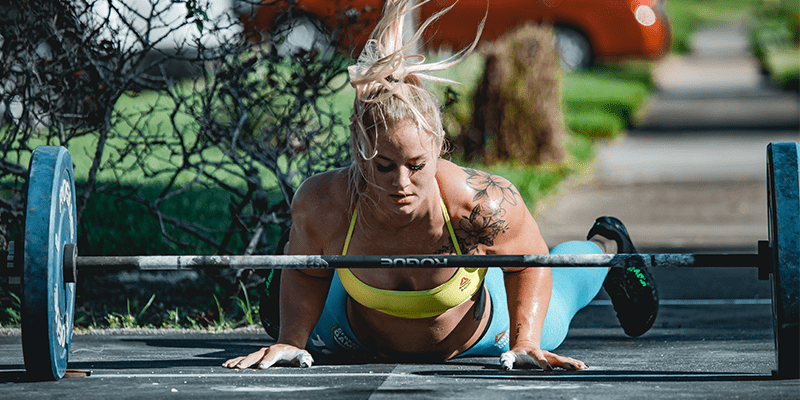
The barbell rollout is the most direct abdominal exercise in this article. It challenges the rectus abdominis, obliques, lats, shoulders, and trunk muscles as you resist excessive extension through the lower back.
Load a barbell with round weight plates that can roll smoothly. Kneel on a pad with the barbell in front of you. Grip the bar with both hands and begin with your shoulders over the bar.
Slowly roll the bar forward while keeping your ribs controlled and your glutes lightly engaged. Extend only as far as you can without your lower back arching. Pull the bar back toward your knees using the muscles of your trunk and upper body.
The goal is not to roll as far as possible. The goal is to create controlled tension through the abs. A shorter rollout with a stable pelvis is more useful than a long rollout that turns into a lower back arch.
Research on trunk exercises shows that rollout variations create substantial activation in the abdominal muscles. The movement is demanding because the abs must resist the force that tries to pull the spine into extension.
How to Progress the Barbell Rollout
Start with two or three sets of five to eight repetitions. Roll only a short distance at first. As you get stronger, extend the range gradually.
You can also make the exercise harder by slowing the forward roll, pausing at the furthest controlled point, or adding repetitions. Do not add range and repetitions at the same time.
Common Barbell Rollout Errors
The most common mistake is letting the hips sag and the lower back arch. Keep the glutes lightly tight and think about drawing your ribs toward your pelvis.
Another mistake is moving too quickly. Slow movement gives the abs time to control the load and makes it easier to notice when your position begins to fail.
2. Front Squat
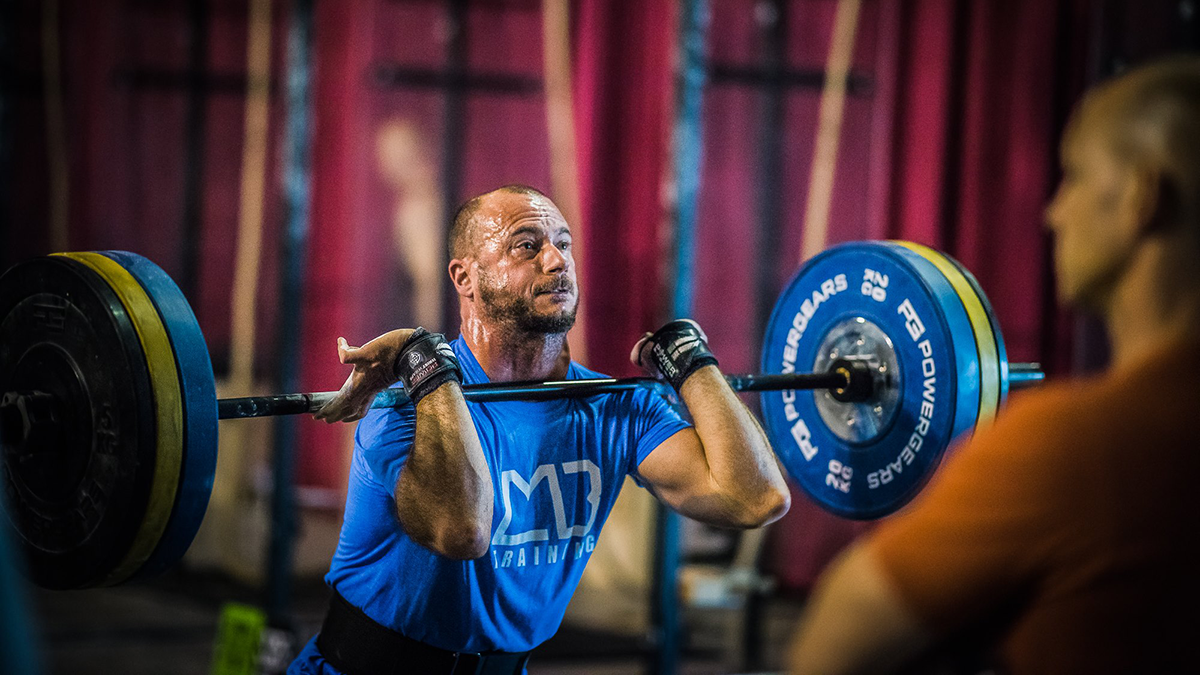
The front squat is primarily a leg exercise, but it is also an excellent loaded core movement. Holding a barbell on the front of the shoulders creates a forward pulling force that the trunk must resist.
Set the barbell across the front of your shoulders with your elbows high. Stand with your feet around shoulder width apart. Take a breath, brace your abdominal muscles, and lower into a squat by bending your knees and hips together. Keep the chest tall and the elbows lifted as you descend. Press through the floor to stand up, maintaining the same stable torso position.
The front squat trains the quadriceps, glutes, adductors, calves, upper back, and trunk. The rectus abdominis and obliques contribute by helping the rib cage and pelvis stay organized under load. Research on squatting shows that it can improve lower body strength and performance. The front squat does not replace direct ab training, but it provides a practical way to train bracing while building muscular legs.
How to Progress the Front Squat
Beginners should first learn the front rack position with a light barbell or a pair of crossed arms. Start with two or three sets of five to eight repetitions.
Increase the load gradually only when you can maintain a stable torso and elevated elbows. If the bar rolls forward or your chest collapses, reduce the weight and improve your position before progressing.
Common Front Squat Errors
A common error is allowing the elbows to drop during the descent. This can pull the bar forward and make the torso harder to control. Keep the elbows lifted throughout the repetition.
Another mistake is losing abdominal tension at the bottom. Take a controlled breath before each repetition and keep the trunk braced as you stand.
3. Landmine Press
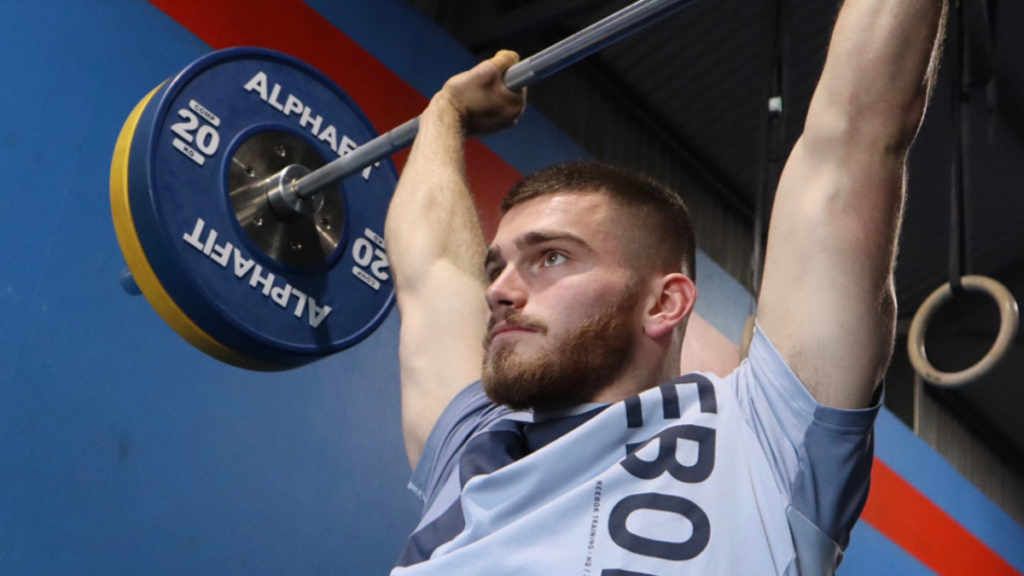
The landmine press uses one end of a barbell anchored safely in a landmine attachment or secure corner. It trains the chest, shoulders, triceps, upper back, and trunk while requiring the abs to resist rotation and excessive extension. Stand facing the loaded end of the barbell. Hold it at chest height with one or both hands. Use a split stance and keep your ribs stacked over your pelvis.
Press the bar forward and upward in an arc until your arm is extended. Lower it slowly back to the chest and repeat. The angle is less demanding overhead than a strict barbell press, making it a useful option for many beginners.
The one arm variation is particularly useful for the obliques because the uneven load tries to rotate the torso. Your core must resist that rotation while the shoulder and arm create the pressing movement.
Research on trunk stabilization supports exercises that challenge the torso to control unwanted movement. The landmine press is not a direct ab isolation exercise, but it provides useful integrated core work alongside upper body pressing.
How to Progress the Landmine Press
Start with two or three sets of eight to twelve repetitions per side. Use a load that lets you keep your hips and shoulders facing forward. Once you can complete all sets with control, add a small amount of weight or use a slower lowering phase. Avoid adding weight if you need to lean backward or twist to finish the press.
Common Landmine Press Errors
The most common mistake is allowing the ribs to flare upward as the bar moves away from the body. Lightly tighten your abs and glutes to keep the torso stable. Another mistake is rotating toward the working arm. Keep your shoulders and hips as square as possible throughout the set.
How to Program These Exercises
Train your abs directly two or three times each week. The barbell rollout can be performed after your primary strength work, while front squats and landmine presses can be placed earlier in a session because they involve several large muscle groups.
A simple workout can include three sets of front squats, two sets of landmine presses per side, and two sets of barbell rollouts. This gives you direct core work and compound strength work without requiring a separate, excessive ab session.
Research shows that muscle growth is supported by adequate weekly training volume and progressive overload. Start with manageable training volume and add work only when your recovery and technique remain good.
Final Thoughts
The barbell rollout, front squat, and landmine press are three effective barbell exercises for building stronger and more muscular abs. The rollout directly challenges the abdominal wall. The front squat trains heavy bracing while building strong legs. The landmine press develops anti rotation control during an upper body movement.
None of these exercises can isolate only the upper abs or remove stomach fat by themselves. Combined with full body resistance training, sustainable nutrition, and regular activity, they can help build the strong midsection that supports a jacked and attractive physique.
Key Takeaways
| Exercise | Main core demand | Starting recommendation | Main technique priority |
|---|---|---|---|
| Barbell rollout | Resisting lower back extension | Two or three sets of five to eight repetitions | Keep ribs and pelvis controlled |
| Front squat | Bracing under a front loaded barbell | Two or three sets of five to eight repetitions | Keep elbows high and torso stable |
| Landmine press | Resisting rotation and extension | Two or three sets of eight to twelve repetitions per side | Keep hips and shoulders facing forward |
| Overall strategy | Ab development and body composition | Train abs two or three times weekly | Progress gradually and avoid spot reduction myths |
References
- Escamilla, R.F., Babb, E., DeWitt, R., Jew, P., Kelleher, P., Burnham, T., Busch, J., D Anna, K. and Montalvo, S. (2006) ‘Electromyographic analysis of traditional and nontraditional abdominal exercises: Implications for rehabilitation and training’, Physical Therapy, 86(5), pp. 656 to 671.
- McGill, S.M. and Karpowicz, A. (2009) ‘Exercises for spine stabilization: Motion and motor patterns, stability progressions, and clinical technique’, Archives of Physical Medicine and Rehabilitation, 90(1), pp. 118 to 126.
- Schoenfeld, B.J., Ogborn, D. and Krieger, J.W. (2017) ‘Dose response relationship between weekly resistance training volume and increases in muscle mass: A systematic review and meta analysis’, Journal of Sports Sciences, 35(11), pp. 1073 to 1082.
- Vispute, S.S., Smith, J.D., LeCheminant, J.D. and Hurley, K.S. (2011) ‘The effect of abdominal exercise on abdominal fat’, Journal of Strength and Conditioning Research, 25(9), pp. 2559 to 2564.
- Wirth, K., Keiner, M., Hartmann, H., Sander, A. and Mickel, C. (2016) ‘Effect of 8 weeks of free weight squat training on strength, sprint performance, and jump power in recreationally trained men and women’, Journal of Strength and Conditioning Research, 30(10), pp. 2762 to 2769.