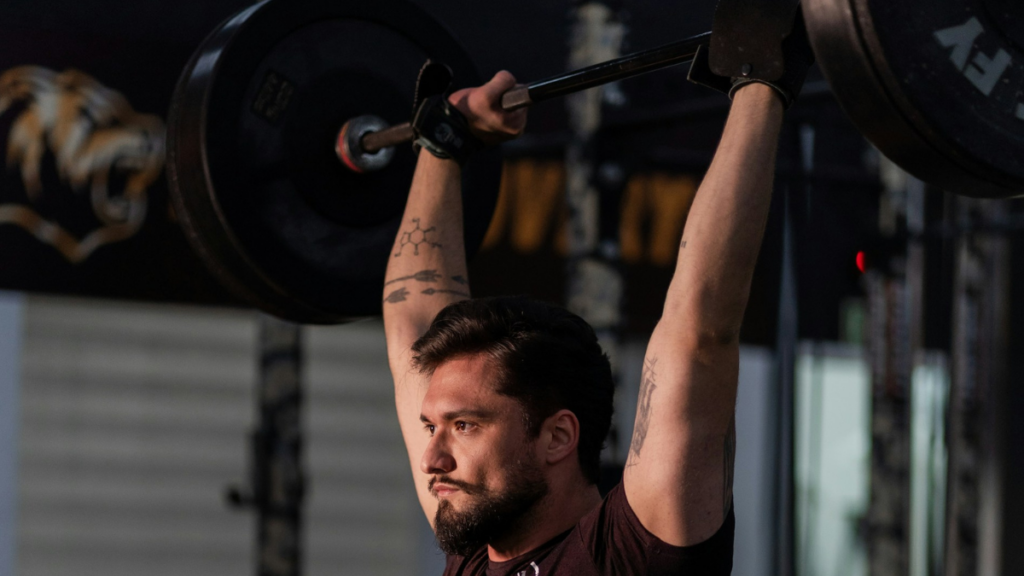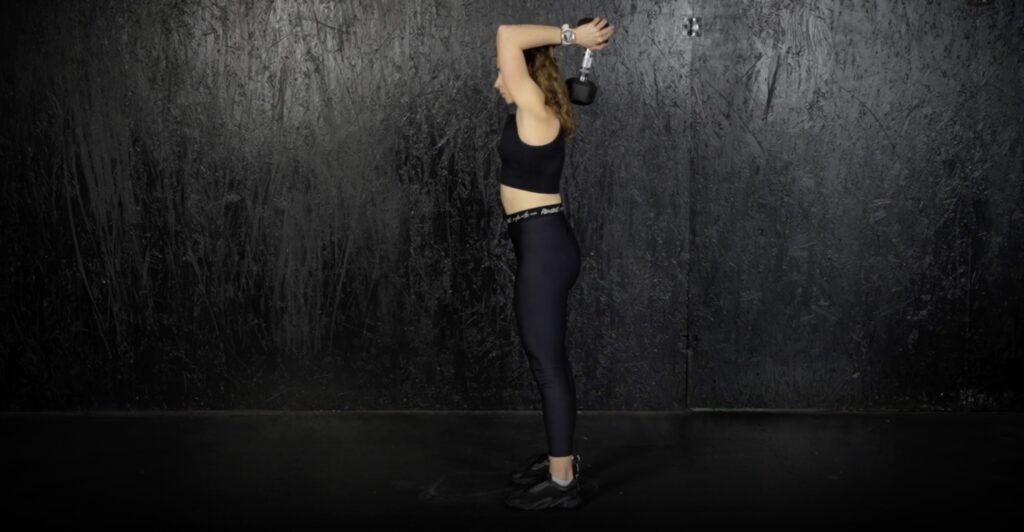


Strong front delts can make your shoulders look fuller, improve your pressing strength, and help you build a more powerful upper body. The front deltoid is the muscle at the front of your shoulder. It works whenever you raise your arm in front of your body and plays a major role in pressing movements such as push ups, bench presses, and overhead presses.
Beginners often make one mistake when trying to grow their shoulders. They use lots of lateral raises and front raises but do not get stronger at the big pressing movements that provide the foundation for long term progress. Direct isolation work can help, but it works best when it supports a solid pressing program.


The three exercises below are simple, effective, and easy to progress. Together, they train the front delts through different movement patterns while also strengthening the chest, triceps, and shoulder stabilizers. This gives beginners a balanced approach that can build strength without turning every workout into a complicated shoulder session.
Why Strong Front Delts Matter
Your deltoid muscle has three main sections. The anterior deltoid sits at the front of the shoulder, the lateral deltoid sits on the outside, and the posterior deltoid sits at the back. All three matter for shoulder function and appearance, but the front delts are especially active during pressing exercises.
The front delts help move your upper arm forward and upward. This is important in daily life when you reach for an object, put something on a high shelf, push a door open, or lift a bag overhead. In the gym, they are heavily involved in bench pressing, push ups, incline pressing, and overhead pressing.
Chin-Ups vs Pull-Ups – Which Is Better for Wider and Bigger Arms?
Research using muscle activity measurements has found that the front delts are substantially active during both bench press and shoulder press variations. Shoulder pressing tends to create particularly high anterior deltoid activity, while bench pressing can also provide a meaningful training stimulus for the muscle. This means you do not need to rely only on front raises to train the area well.
A stronger front delt can also support better pressing performance. The muscle works with the chest and triceps to produce force during horizontal and vertical presses. However, shoulder training should never mean ignoring the upper back and rear delts. A balanced program that includes rowing movements, pulling exercises, and sensible pressing volume is more likely to support long term shoulder health and performance.
How Beginners Should Train Their Front Delts
Beginners do not need an enormous amount of shoulder isolation work. If you already perform push ups, bench presses, or chest presses, your front delts are already receiving training. The goal is to add enough direct work to build strength and confidence without creating unnecessary fatigue or irritation.
Start with controlled repetitions and weights that allow you to maintain good technique. The most productive weight is not necessarily the heaviest one you can lift. It is the one you can control through a comfortable range of motion while keeping your torso stable and your shoulder position consistent.
For most beginners, training the front delts twice per week is practical. This can be achieved through two upper body workouts or two full body workouts. Research suggests that training a muscle group more than once per week can be an effective way to distribute quality training volume and support muscle growth.
Choose one primary pressing exercise, then add an incline press or a front raise depending on your experience and recovery. As you gain strength, progress gradually by adding a small amount of weight, performing an additional repetition, or improving your control at the same load.
1. Seated Dumbbell Shoulder Press
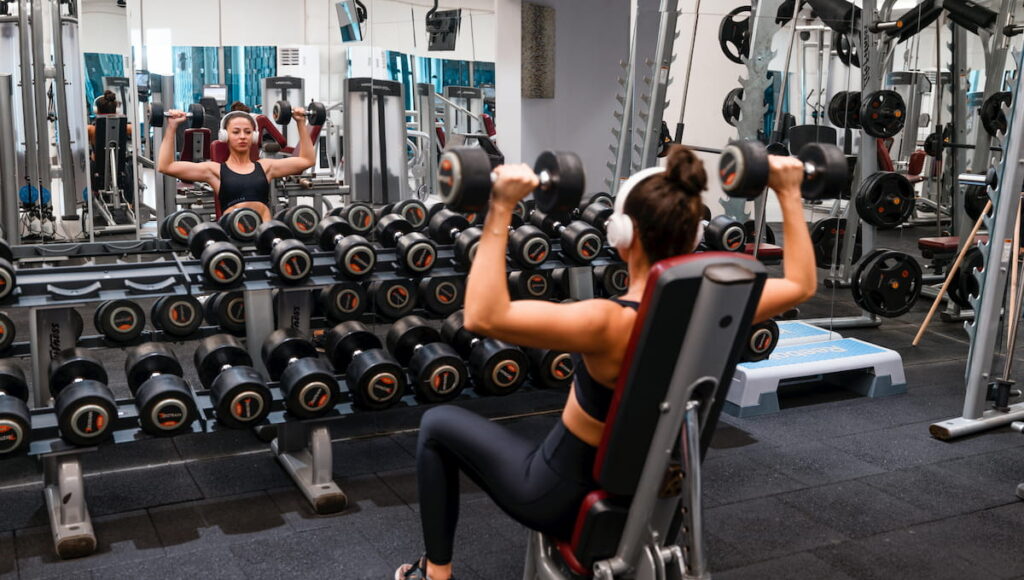
The seated dumbbell shoulder press is the best foundation exercise for beginners who want stronger front delts. It trains the front delts through a large range of motion and also challenges the triceps and upper chest. Using dumbbells allows each arm to work independently, which can help you develop more even control from side to side.
A machine shoulder press can also be an excellent starting point if dumbbells feel difficult to control. The machine provides more stability, allowing you to focus on learning the pressing pattern. Once you feel comfortable, dumbbells can be a useful next step because they require more coordination and stabilization.
How to Do It
Sit on a bench with back support and place your feet firmly on the floor. Hold a dumbbell in each hand at about shoulder height, with your palms facing forward or slightly inward. Keep your chest tall and your ribs stacked over your pelvis rather than arching your lower back.
Press the dumbbells upward until your arms are nearly straight. Do not forcefully lock out your elbows or allow the weights to crash together overhead. Lower the dumbbells slowly until they return to a comfortable position near shoulder height.
Your elbows should travel slightly in front of your body rather than directly out to the sides. This usually feels more natural for the shoulder joint and makes it easier to keep the front delts working hard without losing control.
Why It Works
The shoulder press trains the front delts in one of their main roles: lifting the arm overhead. It also allows you to use more load than a front raise, making it useful for building general upper body strength. Research comparing upper body exercises has shown that shoulder pressing produces high anterior deltoid muscle activity.
The seated position is especially useful for beginners because it reduces the temptation to use the legs or lower back to move the weight. You can focus on pressing with the shoulders and arms rather than turning the movement into a standing backbend.
Start with two or three sets of eight to 12 repetitions. Leave one or two good repetitions in reserve at the end of each set. This encourages productive training while keeping technique from breaking down.
2. Incline Dumbbell Press
The incline dumbbell press is often thought of as a chest exercise, but it is also highly effective for the front delts. Raising the bench shifts more of the pressing demand toward the upper chest and anterior deltoids. It is an excellent choice for beginners because it builds pressing strength without needing to lift weights directly overhead.
A moderate incline is usually enough. Set the bench at roughly 30 to 45 degrees. A very steep bench can turn the exercise into something closer to a shoulder press, while a low incline will place more emphasis on the chest.
How to Do It
Sit on an incline bench with a dumbbell in each hand and carefully lean back. Begin with the dumbbells beside your upper chest. Your wrists should stay stacked above your elbows, and your feet should remain firmly on the floor throughout the set.
Press the dumbbells upward and slightly inward until your arms are almost straight. Keep your shoulder blades gently pulled back against the bench, but do not force them into an exaggerated position. Lower the dumbbells under control until your upper arms reach a comfortable depth.
Avoid allowing the elbows to flare directly outward. Keeping them at a slight angle from the torso usually feels stronger and more comfortable. Do not bounce the weights at the bottom or shorten the range of motion to lift a heavier weight.
Why It Works
The incline dumbbell press combines front delt training with chest and triceps work. This makes it efficient for beginners who want to build a stronger upper body while keeping their workouts simple. Bench press variations have been shown to activate the anterior deltoid, and the incline position can increase the demand placed on the shoulder flexors compared with a flatter press.
Dumbbells also allow a natural arm path. You can use a grip and elbow angle that feels comfortable for your shoulders rather than being locked into the fixed position of a barbell. This is valuable while learning how your body responds to pressing exercises.
Perform two or three sets of eight to 15 repetitions. Use a load that allows a smooth lowering phase and a controlled press. If your shoulders feel pinched or painful, lower the bench angle, reduce the load, or choose a machine chest press while you develop more control.
3. Dumbbell Front Raise
The dumbbell front raise is the most direct isolation exercise in this article. It trains shoulder flexion, which is one of the front delt’s primary actions. Unlike a press, it does not require much assistance from the triceps, so it can be useful when you want extra front delt work after your main compound exercises.
The front raise should not be the centerpiece of a beginner shoulder program. It is best used as a finishing exercise after pressing movements. Since the front delts already work hard during pressing, a small amount of well controlled isolation work is usually more useful than many heavy, swinging sets.
How to Do It
Stand tall with a dumbbell in each hand resting in front of your thighs. Keep a soft bend in your knees and gently brace your abdominal muscles. Hold the dumbbells with your palms facing your thighs.
Raise the weights in front of your body until they reach about shoulder height. You can lift both dumbbells together or alternate arms. Pause briefly when the weights reach the top, then lower them slowly back to the starting position.
Keep the movement smooth. Your torso should stay still, and you should not use momentum from your hips or lower back. If you need to swing the dumbbells upward, the weight is too heavy.
Why It Works
The front raise gives the front delts direct work through shoulder flexion. It is easy to learn, requires minimal equipment, and can help beginners feel the target muscle working. The exercise also uses relatively light weights, which makes it a useful addition when your chest and triceps are already tired from pressing.
The key is to resist the urge to go too heavy. Front raises are not a test of strength. They are an opportunity to use clean repetitions, consistent control, and a full comfortable range of motion. Lighter loads can be effective for muscle growth when sets are performed with sufficient effort and good technique.
Perform two sets of 10 to 15 repetitions at the end of an upper body workout. If you already do plenty of bench pressing, push ups, and overhead pressing, you may only need one or two weekly front raise sessions.
A Simple Beginner Front Delt Workout
A productive front delt workout does not need to be complicated. Perform the seated dumbbell shoulder press first, when you are fresh and can focus on technique. Follow it with incline dumbbell presses to build more upper body pressing volume. Finish with front raises only if you feel recovered and your shoulders are comfortable.
Aim to improve gradually over time. For example, when you can complete all your prescribed repetitions with excellent technique, increase the dumbbell weight by the smallest available amount. You can also add one repetition to each set before increasing the load.
Muscle growth is driven by consistent resistance training over time. Research shows that a range of loads can build muscle when training sets are performed with sufficient effort. For beginners, moderate weights and controlled repetitions are usually the easiest way to learn technique and build a reliable base of strength.
Do not train through sharp pain, pinching, or pain that increases from set to set. Normal muscular effort and fatigue are expected, but joint pain is a signal to stop and assess the exercise. A qualified health professional can help if pain persists or affects your daily activities.
The Bottom Line
Strong front delts are built with consistent pressing, sensible exercise selection, and gradual progression. The seated dumbbell shoulder press should be your main strength exercise. The incline dumbbell press adds productive pressing volume while building the chest and triceps. The dumbbell front raise provides direct front delt work without needing heavy loads.
Focus on clean technique, train your whole upper body, and give yourself time to improve. Your shoulders do not need endless exercises. They need a few effective movements performed consistently and with control.
References
- Botton, C.E., Wilhelm, E.N., Ughini, C.C., Pinto, R.S. and Lima, C.S. 2013, ‘Electromyographical analysis of the deltoid muscle between different strength training exercises’, Medicina Sportiva, 17(2), pp. 67 to 71.
- Schoenfeld, B.J., Ogborn, D. and Krieger, J.W. 2016, ‘Effects of resistance training frequency on measures of muscle hypertrophy: A systematic review and meta analysis’, Sports Medicine, 46(11), pp. 1689 to 1697.
- Schoenfeld, B.J., Grgic, J., Ogborn, D. and Krieger, J.W. 2017, ‘Strength and hypertrophy adaptations between low versus high load resistance training: A systematic review and meta analysis’, Journal of Strength and Conditioning Research, 31(12), pp. 3508 to 3523.
- American College of Sports Medicine 2009, ‘American College of Sports Medicine position stand: Progression models in resistance training for healthy adults’, Medicine and Science in Sports and Exercise, 41(3), pp. 687 to 708.
Key Takeaways
| Exercise | Main benefit | Beginner starting point |
|---|---|---|
| Seated dumbbell shoulder press | Builds front delt and overall pressing strength | Two to three sets of eight to 12 repetitions |
| Incline dumbbell press | Trains the front delts alongside the upper chest and triceps | Two to three sets of eight to 15 repetitions |
| Dumbbell front raise | Adds direct front delt isolation work | Two sets of 10 to 15 repetitions |
| Weekly approach | Spreads training across manageable sessions | Train the front delts through pressing twice per week |