

If you want bigger upper arms, your triceps deserve at least as much attention as your biceps. The triceps brachii makes up a large proportion of the upper arm’s muscle mass, and its long head is particularly important for creating fullness along the back of the arm.
Many lifters build their triceps mainly with pressdowns, bench presses, and push ups. These are useful movements, but they may not be the most effective choices if your specific goal is to emphasize the long head. The long head has a feature that separates it from the other two triceps heads. It crosses both the elbow and shoulder joints.



That anatomy changes how you should train it. Exercises that place your arm overhead lengthen the long head at the shoulder before it extends the elbow. Research comparing elbow extension exercises has found that training in this overhead position can produce considerably greater long head triceps growth than training with the arms by the sides.
You do not need an enormous exercise list or a complicated routine. You need a few movements that challenge the long head through a comfortable, controlled range of motion, then enough progressive overload to give the muscle a reason to adapt.
Why the Long Head of the Triceps Matters
The triceps brachii has three heads: the long head, lateral head, and medial head. All three help straighten the elbow, which is why they work during pressing exercises such as push ups, bench presses, dips, and overhead presses.
The long head is different because it begins on the shoulder blade rather than the upper arm bone. As a result, it also helps control the shoulder joint. It contributes to shoulder extension, which is the action of bringing the upper arm down and back from an overhead position.
3 Squat Milestones Every Man 30+ Should Aim For
This dual joint role matters during training. When the shoulder is flexed and your upper arm is overhead, the long head begins in a more lengthened position. It must then produce force as you straighten your elbow. Research examining triceps growth after resistance training has found that elbow extension performed overhead can be especially effective for increasing the size of the long head.
This does not mean pressdowns and close grip pressing are bad exercises. They can build your triceps, improve pressing strength, and provide useful training volume. However, if you always train with your upper arms close to your torso, you may miss a valuable opportunity to challenge the long head in a different position.

A good triceps program combines heavy presses with direct extension work. The three exercises below give the long head the focused training it needs while still being practical for beginners and experienced lifters.
What Makes an Exercise Effective for the Long Head?
The best long head exercises share a few important qualities. First, they place the shoulder into flexion, meaning the upper arm moves overhead or close to it. This lengthens the long head and changes the challenge compared with an exercise performed with the arms by the sides.
Second, they allow you to train through a substantial range of motion. The triceps should bend deeply at the elbow during the lowering phase, then straighten fully under control. Partial repetitions can be useful in some situations, but most of your work should involve a consistent and comfortable full range.
Third, the exercise should be stable enough for you to apply progressive overload. You do not need to use extremely heavy weight. The triceps respond to hard sets performed with a wide range of loads, provided you take the set reasonably close to muscular failure. A cable, dumbbell, or machine can all work well if you can gradually increase repetitions, load, control, or total quality training volume.
Finally, the movement needs to feel good on your elbows and shoulders. Triceps exercises can irritate joints when technique is rushed or when the load is too high for your current control. The best exercise is not only one that works in theory. It is one you can perform consistently, safely, and hard enough to make progress.
1. Overhead Cable Triceps Extension
The overhead cable triceps extension is one of the strongest choices for direct long head training. It places the upper arm overhead, provides continuous resistance, and makes it easy to adjust the load in small increments.
Set a cable pulley at its lowest position and attach a rope handle. Face away from the cable, take the rope overhead, and step forward until there is tension on the stack. Your elbows should point generally forward and upward, with your upper arms close to your head. Bend your elbows to lower the rope behind your head, then extend your elbows until your arms are straight.
Keep your upper arms as still as possible. Your elbows do not need to be locked into one exact position, but they should not drift far backward and forward throughout each repetition. The goal is to make elbow extension the main action rather than turning the movement into a shoulder exercise.
Why It Works
The cable keeps tension on the triceps throughout the movement, including near the shortened position when your elbows approach full extension. More importantly, the overhead arm position lengthens the long head at the shoulder. This gives the exercise a clear advantage over a standard pressdown when long head development is the priority.
The rope attachment is useful because it often feels more natural on the wrists and elbows than a straight bar. At the end of the repetition, allow your hands to separate slightly if that helps you fully straighten the elbows without discomfort.
Choose a weight that lets you lower the rope slowly and reach a deep stretch without losing your torso position. If your lower back arches heavily, reduce the load, stagger your stance, and brace your abs before each set.
How to Program It
Use two to four sets of eight to 15 repetitions. Start with a controlled load and stop each set with one to three repetitions left before failure. As your technique becomes more reliable, take some sets closer to failure while maintaining a smooth tempo.
This exercise works especially well after compound pressing. For example, you could perform close grip bench presses or dumbbell presses first, then use overhead cable extensions to give the long head focused work without needing to handle very heavy loads.
2. Single Arm Overhead Dumbbell Triceps Extension
The single arm overhead dumbbell triceps extension is simple, effective, and ideal when you do not have access to a cable machine. It also allows each arm to work independently, which can help you identify and gradually reduce obvious side to side differences in strength or control.
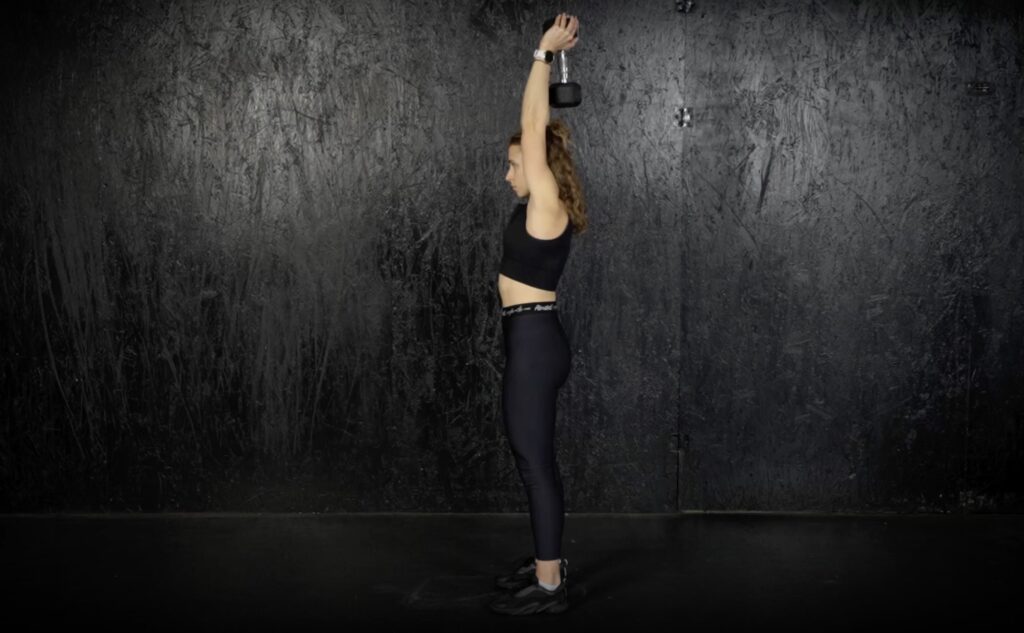
Hold one dumbbell overhead with a neutral grip, meaning your palm faces inward. Keep your elbow pointed upward and bend it to lower the dumbbell behind your head. Lower only as far as your shoulder and elbow can comfortably tolerate, then straighten the arm by contracting the triceps.
A bench with back support can make the exercise easier to control, particularly if you are new to overhead training. You can also perform it standing, but avoid leaning backward to turn the lift into a lower back challenge.
Why It Works
Like the cable variation, this movement trains the long head with the shoulder flexed. The dumbbell also allows a natural arm path because each shoulder can move slightly according to your individual mobility and structure.
Unilateral training may be especially useful if one side consistently takes over during barbell pressing or two handed cable work. It does not automatically eliminate strength differences, but it ensures that each arm must contribute its own repetitions.
The key limitation is that the dumbbell provides less resistance near the top of the movement, where gravity has a smaller moment arm at the elbow. That does not make the exercise ineffective. It simply means you should focus on controlled repetitions, a deep but comfortable stretch, and enough effort near the end of each set.
How to Program It
Perform two to three sets of 10 to 15 repetitions per side. Start with your weaker or less coordinated arm, then match that number of repetitions on the other side. Do not add extra work to the stronger arm simply because it could do more.
Use a moderate tempo. Take roughly two to three seconds to lower the dumbbell, pause briefly in the stretched position if it feels comfortable, then extend the elbow with control. Avoid bouncing out of the bottom position, as that can shift stress away from the triceps and make the movement harder on the elbow.
3. Lying Dumbbell Triceps Extension With Shoulder Flexion
The lying dumbbell triceps extension is often called a skull crusher, although the name is more dramatic than the exercise needs to be. Performed with sensible technique, it can be a very productive long head builder. The important detail is the position of your upper arms.
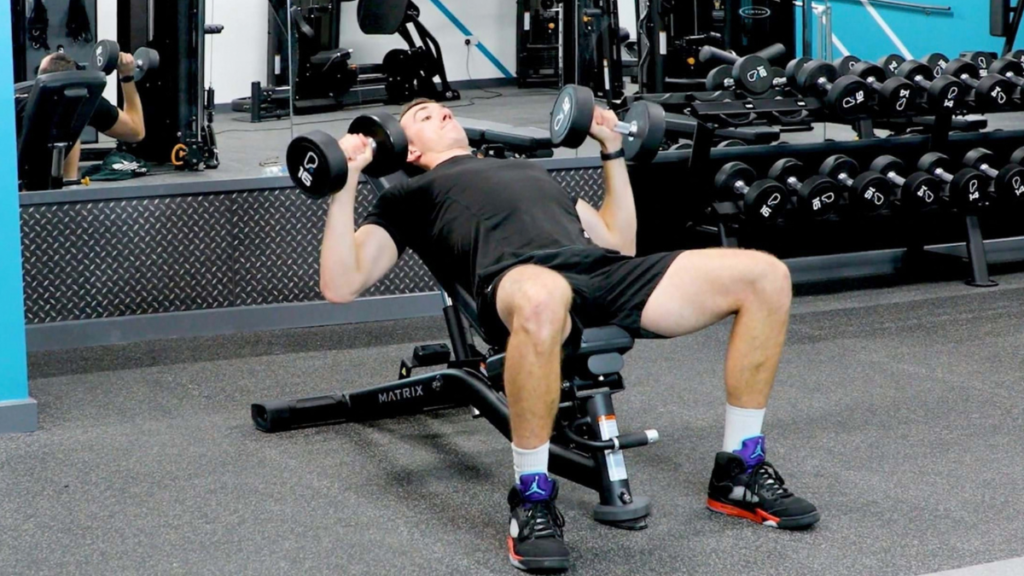
Lie on a flat bench holding two dumbbells above your chest. Instead of keeping your arms perfectly vertical, move your upper arms slightly back so the dumbbells begin above your forehead or just behind it. Bend your elbows and lower the dumbbells beside your head or slightly behind it. Then extend your elbows until the dumbbells return to the starting position.
Your upper arms should remain angled back throughout the set. This places the shoulder into some flexion and gives the long head more stretch than a version performed with the arms directly over the chest.
Why It Works
The supported lying position reduces the balance demands of standing extensions. That makes it easier to focus on elbow motion, use consistent form, and challenge the triceps hard without compensating through the torso.
Dumbbells are often a better starting point than a straight bar because they allow the wrists and elbows to find a more comfortable path. Some lifters lower the dumbbells beside the head, while others prefer to lower them just behind the head. Either option can work if you feel a controlled stretch in the triceps and your elbows remain comfortable.
The movement also teaches an important lesson about long head training. Small changes in shoulder position can change how an exercise feels and where the triceps experience the most stretch. You do not need to force an extreme arm angle. A modest backward position is usually enough to make the exercise feel more long head focused.
How to Program It
Perform two to four sets of eight to 12 repetitions. Begin with a lighter weight than you think you need because this exercise becomes difficult quickly when you use a full range of motion.
Keep the dumbbells under control during the lowering phase. Avoid allowing your elbows to flare widely, but do not force them to stay uncomfortably close together either. Aim for a stable path that lets you lower deeply without elbow pain or shoulder pinching.
If the flat bench version does not feel comfortable, try a slight incline bench. The incline can make it easier to keep the upper arms in a flexed position while giving you a more comfortable line of pull.
How Much Long Head Training Do You Need?
You do not need to perform all three exercises in every workout. Most lifters can make excellent progress with one or two direct triceps movements after their pressing work.
A productive starting point is six to10 direct triceps sets per week, spread across two sessions. If you already do substantial pressing for your chest and shoulders, begin at the lower end of that range. Add volume only when you are recovering well, your elbows feel good, and your performance is no longer progressing on the current workload.
For example, you could perform three sets of overhead cable extensions after an upper body workout, then three sets of lying dumbbell extensions later in the week. This gives the long head repeated direct work without making your entire training plan revolve around isolation exercises.
As you become more experienced, you may need more total volume to keep progressing. Even then, quality matters more than chasing endless sets. Train with good technique, work reasonably close to failure, and record your repetitions and loads. If you are completing more repetitions with the same load or using more load for the same controlled repetitions, you are moving in the right direction.
Common Mistakes That Limit Triceps Growth
The most common mistake is loading the exercise too heavily. Excessive weight often causes the elbows to drift, the lower back to arch, or the shoulders to take over. Your triceps should be doing most of the work, not your momentum.
Another mistake is using only pressing and pressdown variations. These movements are valuable, but they do not replace the benefit of direct overhead extension work when you want to emphasize the long head.
Many lifters also cut the range of motion short. If the weight only travels through the easiest part of the movement, the triceps receive less useful stimulation. Use a load that allows a deep, comfortable bend at the elbow and a controlled lockout.
Finally, do not ignore discomfort. Mild muscular effort and fatigue are normal. Sharp elbow pain, lingering joint pain, or shoulder pinching are signs to change the load, range of motion, attachment, or exercise variation. Consistent training beats forcing a movement that your joints do not tolerate.
The Bottom Line
The long head is a major contributor to triceps size, and it responds well when you train it with your arms overhead. Overhead cable extensions, single arm overhead dumbbell extensions, and lying dumbbell extensions with the upper arms angled back are three practical options that place the long head in a lengthened position.
You do not need to abandon bench presses, push ups, or pressdowns. Keep them in your program if they help you get stronger and add useful training volume. Then add one or two overhead focused extension exercises, perform them with control, and gradually make them more challenging over time.
That combination gives your triceps the strength work, direct tension, and long head emphasis needed to build bigger arms.
References
- Maeo, S., Kan, S., Sakamoto, M., Murata, K., Fujita, S., Kanehisa, H. and Isaka, T. (2023) ‘Triceps brachii hypertrophy is substantially greater after elbow extension training performed in the overhead versus neutral arm position’, European Journal of Sport Science, 23(4), pp. 549–557.
- Schoenfeld, B.J., Grgic, J., Ogborn, D. and Krieger, J.W. (2017) ‘Strength and hypertrophy adaptations between low versus high load resistance training: A systematic review and meta analysis’, Journal of Strength and Conditioning Research, 31(12), pp. 3508–3523.
- Schoenfeld, B.J., Ogborn, D. and Krieger, J.W. (2017) ‘Dose response relationship between weekly resistance training volume and increases in muscle mass: A systematic review and meta analysis’, Journal of Sports Sciences, 35(11), pp. 1073–1082.
- Wakahara, T., Miyamoto, N., Sugisaki, N., Murata, K., Kanehisa, H., Kawakami, Y. and Fukunaga, T. (2012) ‘Association between regional differences in muscle activation during resistance exercise and in muscle hypertrophy after resistance training’, European Journal of Applied Physiology, 112(4), pp. 1569–1576.
Key Takeaways
| Focus | What to do |
|---|---|
| Best long head position | Use overhead extensions that place the upper arm in shoulder flexion. |
| Best cable exercise | Perform overhead cable triceps extensions with controlled elbow movement and a full comfortable range. |
| Best dumbbell exercise | Use single arm overhead dumbbell extensions to train each side independently. |
| Best supported option | Use lying dumbbell triceps extensions with the upper arms angled slightly back. |
| Weekly starting point | Begin with six to 10 direct triceps sets per week across two sessions. |
| Main progression goal | Gradually improve repetitions, load, control, or total quality sets while keeping your elbows comfortable. |