

Building big, well-rounded shoulders is one of the most effective ways to improve your physique and overall upper body strength. The shoulder complex is made up of three distinct heads of the deltoid muscle: anterior, lateral, and posterior. Each head has a different function and contributes to the visual width, roundness, and balance of the shoulders.
Compound movements like overhead presses are important, but they do not fully develop all three heads equally. Isolation exercises allow you to target each portion of the deltoid more precisely. This leads to better muscle activation, improved symmetry, and ultimately more hypertrophy.


Why Isolation Exercises Matter for Shoulder Growth
The Anatomy of the Deltoid
The deltoid muscle has three heads:
- Anterior deltoid: responsible for shoulder flexion and internal rotation
- Lateral deltoid: responsible for shoulder abduction
- Posterior deltoid: responsible for shoulder extension and external rotation
Each head has unique fiber orientations and activation patterns. Research using electromyography shows that different exercises preferentially activate different heads of the deltoid, meaning no single movement is sufficient for complete development.
Limitations of Compound Movements
Compound lifts like the overhead press heavily recruit the anterior deltoid and triceps, but they often under-stimulate the lateral and posterior heads. This can lead to muscular imbalances and less aesthetic shoulder development. Studies show that isolation exercises can produce higher activation in specific muscle regions compared to compound movements when the goal is targeted hypertrophy.
Hypertrophy and Mechanical Tension
Muscle growth is primarily driven by mechanical tension, metabolic stress, and muscle damage. Isolation exercises allow you to:
- Increase time under tension
- Improve mind muscle connection
- Target weak points
- Reduce fatigue from supporting muscles
These factors contribute to more efficient hypertrophy over time.
Exercise 1: Dumbbell Lateral Raise
Why It Works
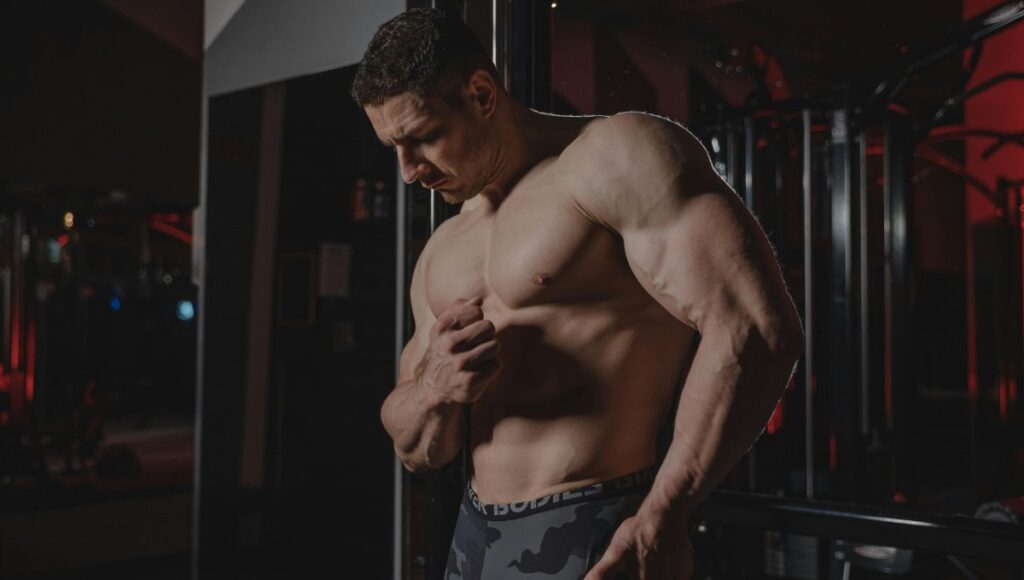
The dumbbell lateral raise is one of the most effective exercises for targeting the lateral deltoid. This muscle is responsible for shoulder width, which is a key factor in achieving a broad and aesthetic physique.
Electromyographic studies consistently show high activation of the lateral deltoid during lateral raises compared to pressing movements. This makes it essential for maximizing shoulder hypertrophy.
How to Perform It Correctly
Stand upright holding a dumbbell in each hand at your sides. Keep a slight bend in your elbows and raise the weights out to your sides until your arms are parallel to the ground. Lower them slowly back to the starting position.
Key technique points:
- Keep your torso stable and avoid swinging
- Lead with your elbows, not your hands
- Maintain a controlled tempo
- Stop at shoulder height to maintain tension
Common Mistakes
Many lifters turn this into a momentum exercise, which reduces effectiveness and increases injury risk. Avoid:
- Using excessive weight
- Shrugging the traps excessively
- Swinging the torso
- Raising the arms too high
Programming Tips
- Reps: 10 to 20
- Sets: 3 to 5
- Rest: 45 to 75 seconds
Higher repetitions are effective because the lateral deltoid responds well to metabolic stress.
Science Summary
- High lateral deltoid activation compared to compound lifts
- Improved hypertrophy when included alongside presses
- Effective for increasing shoulder width
Exercise 2: Rear Delt Fly
Why It Works
The rear delt fly targets the posterior deltoid, which is often underdeveloped in many lifters. This muscle plays a critical role in posture, shoulder stability, and balanced aesthetics.
Research shows that rowing movements alone are not sufficient to fully activate the posterior deltoid. Isolation movements like the rear delt fly significantly increase activation in this region.
How to Perform It Correctly
Hold a pair of dumbbells and hinge forward at the hips so your torso is nearly parallel to the floor. Let your arms hang down and raise the weights out to the sides in a reverse fly motion. Key technique points:
- Keep a neutral spine
- Maintain a slight bend in the elbows
- Focus on squeezing the shoulder blades apart
- Move slowly and under control
Common Mistakes
- Turning the movement into a row
- Using momentum instead of muscle control
- Lifting too heavy
- Rounding the back
Programming Tips
- Reps: 12 to 20
- Sets: 3 to 4
- Rest: 45 to 75 seconds
Rear delts respond well to higher repetitions and strict form.
Science Summary
- Posterior deltoid often under-activated in compound lifts
- Isolation increases activation and hypertrophy
- Supports shoulder health and posture
Exercise 3: Cable Front Raise
Why It Works
The anterior deltoid is heavily involved in pressing movements, but isolation can still enhance hypertrophy and improve muscle definition. Cable front raises provide constant tension throughout the range of motion, which can lead to greater muscle activation compared to free weights.
How to Perform It Correctly
Attach a handle to a low cable pulley. Stand facing away from the machine and hold the handle with one or both hands. Raise the handle in front of you until your arm is parallel to the ground, then lower it slowly. Key technique points:
- Keep your core engaged
- Avoid leaning back
- Use controlled movement
- Keep tension throughout the lift
Common Mistakes
- Using body momentum
- Raising the weight too high
- Losing control on the eccentric phase
Programming Tips
- Reps: 10 to 15
- Sets: 3 to 4
- Rest: 60 seconds
Science Summary
- Constant tension improves muscle activation
- Complements pressing movements
- Enhances anterior deltoid hypertrophy
How to Combine These Exercises
To build jacked shoulders, you need to train all three heads effectively. A simple structure could look like this:
- Dumbbell lateral raise for width
- Rear delt fly for balance and posture
- Cable front raise for anterior development
Perform these exercises after compound movements to maximize fatigue and hypertrophy.
Sample Workout
- Overhead press: 3 sets of 6 to 10
- Dumbbell lateral raise: 4 sets of 12 to 15
- Rear delt fly: 4 sets of 15 to 20
- Cable front raise: 3 sets of 10 to 15
Key Points Summary
- Isolation exercises target specific deltoid heads
- Lateral raises are essential for shoulder width
- Rear delt flies improve posture and balance
- Cable front raises provide constant tension
- High repetitions improve hypertrophy in shoulder muscles
Recovery and Progression
Progressive Overload
To continue building muscle, gradually increase:
- Weight
- Repetitions
- Time under tension
Recovery
Muscle growth occurs during recovery. Ensure:
- Adequate protein intake
- Sufficient sleep
- Proper training frequency
Research shows that training each muscle group two times per week can optimize hypertrophy.
Final Thoughts
Isolation exercises are not optional if your goal is to build fully developed shoulders. They allow you to target each head of the deltoid with precision, leading to better symmetry, improved aesthetics, and greater overall muscle growth. By consistently applying these three exercises with proper form and progressive overload, you can significantly improve your shoulder development.
Bibliography
- Journal of Strength and Conditioning Research – Boeckh-Behrens, W. and Buskies, W. (2000). Results of electromyographic studies of shoulder exercises.
- European Journal of Applied Physiology – Andersen, L.L. et al. (2014). Muscle activation patterns during shoulder exercises.
- Journal of Sports Sciences – Schoenfeld, B.J. (2010). The mechanisms of muscle hypertrophy and their application to resistance training.
- Sports Medicine – Schoenfeld, B.J. (2016). Science and development of muscle hypertrophy.
- Journal of Electromyography and Kinesiology – Paoli, A. et al. (2010). Activation of shoulder muscles during strength exercises.