

A more muscular torso is built by developing the chest, upper back, shoulders, and arms in proportion. You do not need complicated workouts, advanced equipment, or a different exercise for every muscle. A pair of dumbbells and a few well chosen movements can provide enough resistance to build visible muscle when you train consistently and make the exercises gradually more challenging.
The goal is not to chase an unrealistic image of perfection. An attractive torso usually means one that looks strong, balanced, athletic, and well cared for. Wider shoulders and upper back can create more of a tapered shape, while a stronger chest adds depth from the front and side. Building these areas also helps support everyday pushing, pulling, carrying, and overhead tasks.


The three exercises below are easy to learn, simple to progress, and effective for beginners. Together, they train the major muscles that change the appearance of your upper body most clearly: the chest, shoulders, triceps, lats, upper back, and biceps. They can form the foundation of a straightforward dumbbell workout that keeps getting results long after the first few weeks.
Why Simple Dumbbell Training Works
Muscle growth happens when a muscle is exposed to enough mechanical tension, performed through a useful range of motion, and given time to recover and adapt. Dumbbells work well because they allow each arm to contribute independently, which can reduce the temptation for one side of the body to do more of the work. They also allow a natural range of motion that many lifters find comfortable for their shoulders.
Research shows that resistance training can increase muscle size across a wide range of loading schemes, provided the sets are challenging and sufficient overall training volume is completed. This is useful for beginners because you do not have to start with very heavy dumbbells. Moderate or lighter weights can still build muscle when you use controlled repetitions and finish each set close to the point where another good repetition would be difficult.
You will make better progress by repeating a small group of movements and improving them over time than by changing exercises every session. Keep track of the weight you use, the repetitions you complete, and how difficult each set feels. When you can complete the top end of your repetition target with solid technique, use a slightly heavier dumbbell or add another repetition.
1. Dumbbell Bench Press
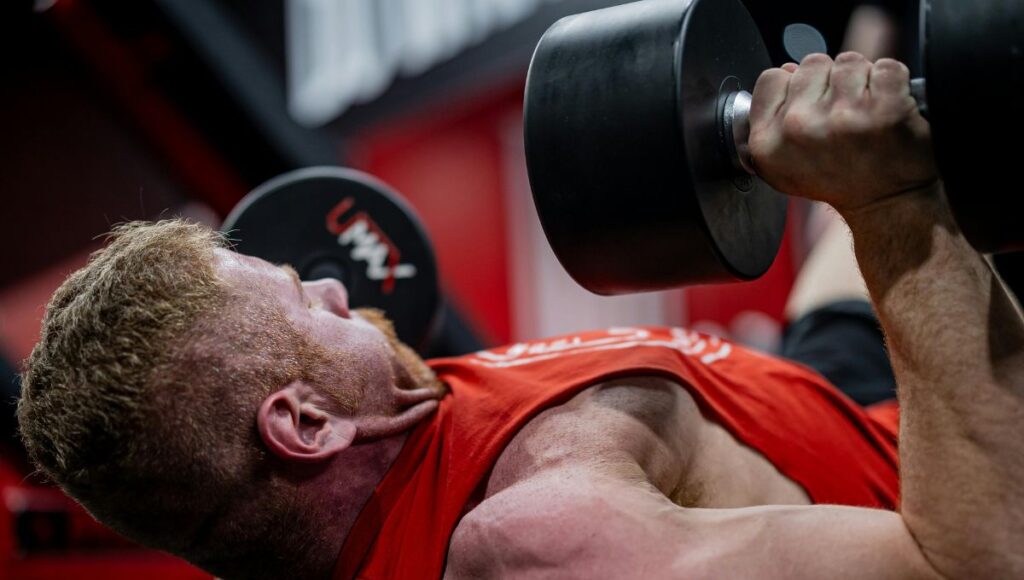
The dumbbell bench press is one of the easiest and most effective exercises for adding size to the chest, shoulders, and triceps. It is a simple horizontal pressing movement that can help create a fuller looking chest while also strengthening the muscles that contribute to a powerful upper body.
Compared with a barbell press, dumbbells let each arm move independently. This can make it easier to find a pressing path that feels natural at the shoulder joint. It also means both sides have to work, which can be useful if you have a noticeable difference in strength or control between your left and right arm.
How to Perform the Dumbbell Bench Press
Lie on a flat bench with a dumbbell in each hand. Place your feet firmly on the floor and keep your upper back in contact with the bench. Begin with the dumbbells positioned near the sides of your chest, with your palms facing forward or slightly inward.
Press the dumbbells upward until your arms are straight but not forced into an aggressive lockout. Keep your wrists stacked over your elbows and avoid allowing the weights to drift too far toward your shoulders. Lower the dumbbells slowly and under control until they return to a comfortable depth beside your chest.
3 Best Beginner Glutes Exercises with Dumbbells (Get Super Strong Now!)
Your shoulder blades should remain gently pulled back and down throughout the exercise. This gives the chest a stable platform to press from and can help you avoid turning the movement into a shoulder dominant exercise.
Why It Builds a Better Looking Torso
The chest is a major visual feature of the upper body. Developing it can make the torso look stronger from the front, create more shape through a fitted shirt, and add thickness from the side. The dumbbell bench press also trains the triceps and front portion of the shoulders, which helps make the entire upper body look more complete.
A controlled lowering phase is especially valuable. Eccentric muscle actions create substantial mechanical tension, and this tension is an important driver of muscular adaptation. Do not rush the weights down. Aim to lower them steadily, pause briefly if needed, then press with control.
Start with three sets of eight to twelve repetitions. Choose a weight that allows you to complete the set with good technique while making the final two or three repetitions challenging. Rest for around two minutes between sets so you can continue producing high quality repetitions.
2. One Arm Dumbbell Row
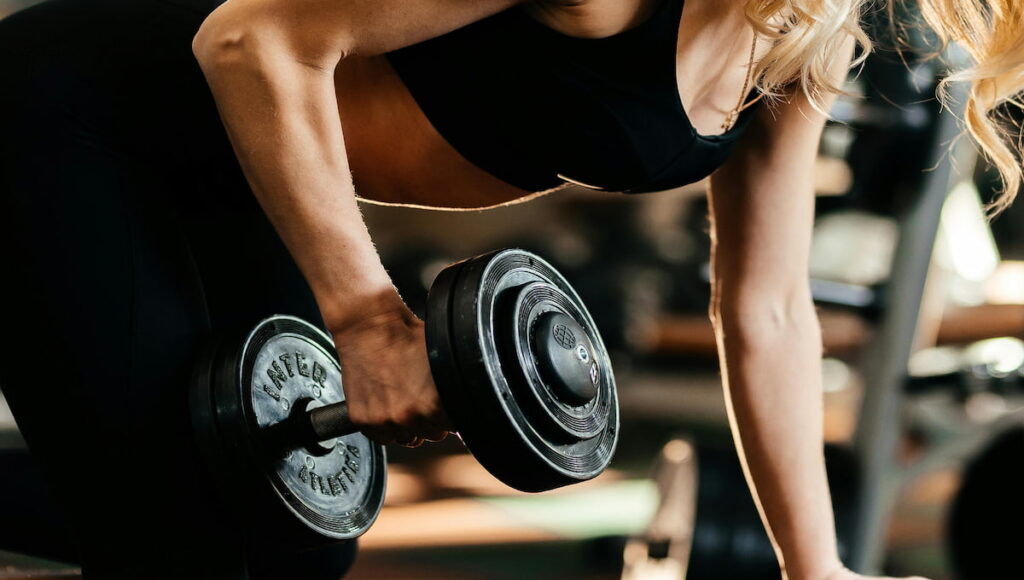
The one arm dumbbell row is a beginner friendly pulling exercise that builds the lats, upper back, rear shoulders, and biceps. If you want a torso that looks wider and more athletic, regular rowing is essential. Many people focus heavily on pressing exercises but do not give their back enough attention. That often leaves strength and visual development on the table.
The latissimus dorsi, commonly called the lats, are broad muscles that run along the sides of the back. When developed, they contribute to the appearance of a wider upper body and a more pronounced taper toward the waist. The row also develops the muscles between and around the shoulder blades, helping add density to the back and support better posture.
How to Perform the One Arm Dumbbell Row
Place one knee and the same side hand on a flat bench. Keep the other foot on the floor and hold a dumbbell in the free hand. Set your torso so it is close to parallel with the floor, while keeping your spine neutral and your neck relaxed.
Allow the dumbbell to hang beneath your shoulder, then pull your elbow back toward your hip. Think about drawing the upper arm behind the torso rather than simply curling the weight upward. Pause briefly at the top when your back muscles are contracted, then lower the dumbbell slowly until your arm is fully extended again.
Avoid twisting your torso hard to lift the dumbbell. A small amount of natural movement is not a problem, but the main work should come from the back rather than momentum. If you have to rotate dramatically or jerk the weight, it is probably too heavy.
Why It Builds a More Athletic Shape
Rows train the muscles that balance pressing movements and provide a strong visual contrast to the chest. A stronger upper back can make the shoulders look broader, improve the appearance of the waist by comparison, and add detail to the torso from the side and rear.
Pulling exercises are also important for shoulder health and long term training balance. The shoulder is designed to move in many directions, and a program that includes both pushing and pulling patterns is more complete than one focused only on chest work. Building the upper back can improve control around the shoulder blades, which is useful for pressing, pulling, and overhead movement.
Perform three sets of eight to fifteen repetitions per side. Begin with a manageable weight and make every repetition look similar. You should feel your upper back working far more than your lower back. If your lower back is getting tired before your back muscles, use a lighter dumbbell and take more support from the bench.
3. Dumbbell Lateral Raise
The dumbbell lateral raise is one of the most direct ways to train the side portion of the shoulders. Although it uses lighter weights than pressing and rowing, it can make a major difference to the shape of your torso. Well developed side deltoids increase shoulder width, which can make the chest and upper back look more impressive and the waist appear narrower.
This exercise is simple, but it rewards patience and precision. The side deltoids do not need huge weights to work hard. In fact, using very heavy dumbbells often encourages swinging, shrugging, and momentum, which reduce the work done by the target muscle.
How to Perform the Dumbbell Lateral Raise
Stand tall with a dumbbell in each hand by your sides. Keep a soft bend in your elbows and brace your midsection so your torso stays still. Raise the dumbbells out to your sides in a wide arc until your upper arms are roughly level with the floor or slightly below it.
Keep your hands in line with your arms and avoid lifting your shoulders toward your ears. Lower the dumbbells slowly until they reach your sides, then begin the next repetition without swinging. You can use a very slight forward angle with your arms if that feels more comfortable for your shoulders.
Use a weight that feels almost too light at the start of the set. The exercise becomes much harder as repetitions accumulate, especially when you avoid momentum. Your goal is to make the deltoids work through a smooth and repeatable range of motion.
Why Wider Shoulders Change Your Torso
The shoulders sit at the top of the torso and strongly influence its outline. Greater development in the side deltoids can make the upper body look broader from the front and rear. This can improve the visual balance between the chest, back, arms, and waist without needing extreme muscle size.
The lateral raise also complements the other two exercises well. The bench press trains the chest, front shoulders, and triceps. The row trains the back, rear shoulders, and biceps. The lateral raise gives dedicated work to the side shoulders, helping ensure the upper body does not look flat or narrow.
Perform three sets of twelve to twenty repetitions. Rest for around sixty to ninety seconds between sets. Keep the lowering phase controlled and stop the set when you can no longer raise the weights without swinging your body.
How to Turn These Three Exercises Into a Simple Workout
Complete this workout two or three times per week, leaving at least one day between sessions. This gives your muscles enough frequent practice to improve technique while allowing time for recovery. Beginners often do well with a moderate amount of work performed consistently, rather than trying to train every day with excessive volume.
Begin with the dumbbell bench press for three sets of eight to twelve repetitions. Follow it with the one arm dumbbell row for three sets of eight to fifteen repetitions on each side. Finish with the dumbbell lateral raise for three sets of twelve to twenty repetitions.

The final repetitions of each set should feel difficult, but your technique should remain controlled. You do not need to take every set to complete muscular failure. Training close to failure is often enough to stimulate growth while making it easier to maintain form and recover for the next session.
Progress is the missing ingredient in many dumbbell workouts. If you use the same weight, same repetitions, and same effort every week, your body has little reason to keep changing. Try to add one repetition at a time until you reach the top of the range. Then increase the weight by the smallest amount available and work back toward the lower end of the range.
Make Your Results Visible
Training builds the muscle, but recovery and nutrition help determine how much progress you can make. Protein supports muscle repair and adaptation after resistance training. Total daily protein intake matters more than relying on a single shake or meal. Spreading protein across meals can be a practical way to consistently reach your target.
Sleep also matters. Resistance training is the stimulus, but the body adapts during recovery. Regularly sleeping too little can interfere with training quality, appetite regulation, and recovery. Aim for a consistent sleep routine that lets you train with energy and repeat your workouts week after week.
Finally, give the process time. Building a muscular torso is not about finding a secret exercise. It comes from doing simple movements well, gradually increasing the challenge, eating enough to support your goal, and staying consistent for months. These three dumbbell exercises make that process easier because they cover the major upper body areas without creating unnecessary complexity.
References
- American College of Sports Medicine (2009) ‘American College of Sports Medicine position stand: Progression models in resistance training for healthy adults’, Medicine and Science in Sports and Exercise, 41(3), pp. 687 to 708.
- Grgic, J., Schoenfeld, B.J., Orazem, J. and Sabol, F. (2022) ‘Effects of resistance training performed to repetition failure or non failure on muscular strength and hypertrophy: A systematic review and meta analysis’, Journal of Sport and Health Science, 11(2), pp. 202 to 211.
- Morton, R.W., Murphy, K.T., McKellar, S.R. et al. (2018) ‘A systematic review, meta analysis and meta regression of the effect of protein supplementation on resistance training induced gains in muscle mass and strength in healthy adults’, British Journal of Sports Medicine, 52(6), pp. 376 to 384.
- Schoenfeld, B.J., Ogborn, D. and Krieger, J.W. (2017) ‘Dose response relationship between weekly resistance training volume and increases in muscle mass: A systematic review and meta analysis’, Journal of Sports Sciences, 35(11), pp. 1073 to 1082.
- Schoenfeld, B.J., Grgic, J., Van Every, D.W. and Plotkin, D.L. (2021) ‘Loading recommendations for muscle strength, hypertrophy, and local endurance: A re examination of the repetition continuum’, Sports, 9(2), 32.
- Schoenfeld, B.J. (2010) ‘The mechanisms of muscle hypertrophy and their application to resistance training’, Journal of Strength and Conditioning Research, 24(10), pp. 2857 to 2872.
- Wackerhage, H., Schoenfeld, B.J., Hamilton, D.L., Lehti, M. and Hulmi, J.J. (2019) ‘Stimuli and sensors that initiate skeletal muscle hypertrophy following resistance exercise’, Journal of Applied Physiology, 126(1), pp. 30 to 43.
Key Takeaways
| Exercise | Main muscles trained | Best repetition range | Key technique focus |
|---|---|---|---|
| Dumbbell bench press | Chest, triceps, front shoulders | 8 to 12 | Lower under control and keep the shoulder blades stable |
| One arm dumbbell row | Lats, upper back, rear shoulders, biceps | 8 to 15 per side | Pull the elbow toward the hip without twisting the torso |
| Dumbbell lateral raise | Side shoulders | 12 to 20 | Use light weights and avoid swinging |
| Weekly approach | Entire upper torso | Two or three sessions | Add repetitions or weight gradually while preserving form |