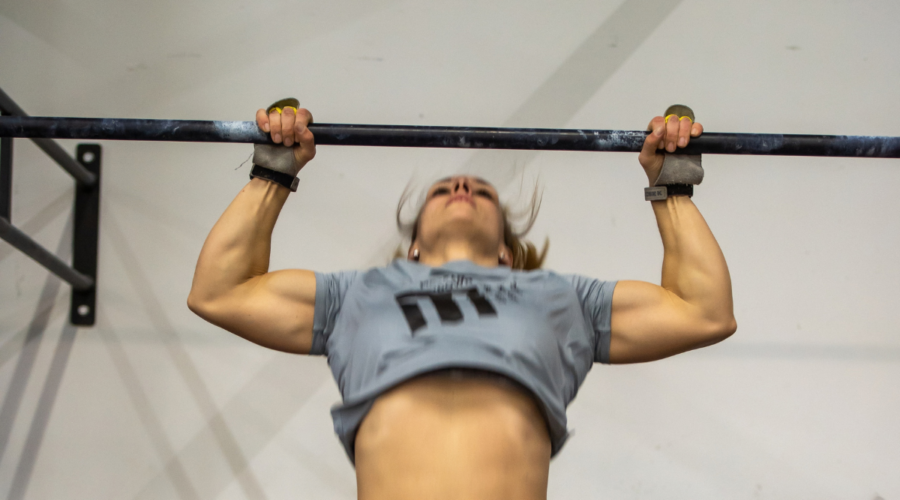


Kipping pull-ups divide opinion. Some athletes see them as a useful CrossFit skill, while others dismiss them as a shortcut or claim they are not “real” pull-ups. Both views miss the point.
A kipping pull-up is not meant to replace strict pull-ups. It is a different movement with a different purpose. Strict pull-ups are an excellent test and builder of upper-body pulling strength. Kipping pull-ups are a dynamic, full-body skill designed to help an athlete complete repeated bar work efficiently in a conditioning setting.


The movement has roots in gymnastics and became widely recognized when CrossFit included it in high-volume workouts during the early 2000s. It uses a controlled swing between arch and hollow body positions. The athlete creates momentum through the hips and trunk, then uses the upper body to finish with the chin above the bar.
That does not make it an easier version of a strict pull-up. It makes it a movement that requires timing, shoulder control, grip endurance, trunk stiffness, and the ability to transfer force through the whole body. When it is taught properly and used by an athlete with the right prerequisites, the kipping pull-up can be a very useful addition to training.
First, Know When a Kipping Pull-Up Is Appropriate
Kipping pull-ups are a skill for athletes who already have a foundation of strict pulling strength and shoulder control. They should not be the first pull-up variation a beginner learns.
Before practicing kipping pull-ups, you should be able to hang from a bar comfortably, maintain a controlled overhead position, and perform strict pulling work appropriate to your current ability. That may mean strict pull-ups, band-assisted pull-ups, ring rows, lat pulldowns, or slow eccentric pull-ups.
The reason is simple. The kip adds speed, momentum, and a larger movement pattern to an overhead hanging position. An athlete who lacks the strength or control to manage their shoulders during a strict pull-up is unlikely to be ready to manage them well during a fast, repeated kipping movement.
Research comparing strict, kipping, and butterfly pull-ups has found that the variations place different demands on the body. Kipping pull-ups involve more lower-body and trunk contribution than strict pull-ups, while strict pull-ups place greater demand on the lats during the pulling phase. This is exactly why the two movements should sit alongside each other in a training program rather than compete for the same role.
Reason 1: They Teach You to Transfer Power Through Your Whole Body
A good kipping pull-up begins at the shoulders and travels through the entire body. The athlete moves from an arch position to a hollow position while maintaining a connected shape through the trunk, hips, and legs. At the right moment, the athlete uses the momentum created by that swing to pull upward.
This is an example of coordinated force transfer. The hips and trunk help create momentum, while the shoulders, upper back, arms, and grip direct the body toward the bar. The goal is not to throw the legs around as wildly as possible. The goal is to use a smooth and repeatable sequence that makes each repetition efficient.
This kind of coordination matters in many athletic movements. Running, jumping, throwing, swimming, Olympic lifting, and gymnastics all rely on the body’s ability to move force between the lower body, trunk, and upper body. Kipping pull-ups do not replace sport-specific training for those activities, but they can develop awareness of how the body works as a connected system.
The kip also teaches athletes that powerful movement is not always about isolating one muscle. Sometimes the goal is to organize the whole body well enough to produce a useful result with less wasted effort.
The Hips Do Not Do All the Work
A common mistake is trying to generate the kip entirely by kicking the legs forward and backward. This usually creates a large swing but very little control. It can also make the pull-up harder to repeat because the athlete loses their rhythm.
Instead, the movement should begin with active shoulder action. As you move into the arch position, think about pulling your chest slightly forward through the arms. As you move into the hollow position, press down into the bar and create tension through the trunk. The legs follow the body position rather than taking over the movement.
This produces a more controlled and more repeatable kip. It also makes the transition into the pull more efficient.
Reason 2: They Are a Genuine Full-Body Exercise
Kipping pull-ups involve much more than the arms. The lats, biceps, forearms, and upper-back muscles all contribute to the pull and stabilize the shoulder. The trunk helps maintain the hollow and arch positions. The glutes, hip flexors, quadriceps, and hamstrings contribute to creating and controlling the swing.
Research examining muscle activity during strict, kipping, and butterfly pull-ups found that kipping pull-ups increased activation in the rectus femoris, gluteus maximus, and rectus abdominis compared with strict pull-ups. The same research found lower latissimus dorsi activation during the kipping pull-up’s concentric phase than during the strict pull-up.
That finding is important because it explains why kipping pull-ups should not be your main exercise for building maximum upper-body pulling strength or back muscle size. Strict pull-ups, rows, pulldowns, and other loaded pulling exercises are better choices for those goals.
However, the full-body contribution is also what makes kipping pull-ups valuable in the right setting. They demand that you create stiffness through the trunk while moving dynamically from the shoulders. Your hips and legs must contribute without losing the body shape that allows you to transfer momentum to the bar.
This makes the movement useful for athletes who enjoy functional fitness, gymnastics-based training, obstacle-course racing, or workouts that demand repeated pulling under fatigue.
Reason 3: They Help You Complete More Work in Conditioning Workouts
The kipping pull-up allows athletes to perform more repetitions in less time than they could with strict pull-ups alone. This is not cheating. It is the intended function of the movement.
In a workout that includes running, rowing, burpees, kettlebell swings, or barbell work, the goal may be to complete a prescribed amount of work efficiently while maintaining good movement quality. If an athlete has the necessary skill and strength foundation, kipping pull-ups can make that possible.
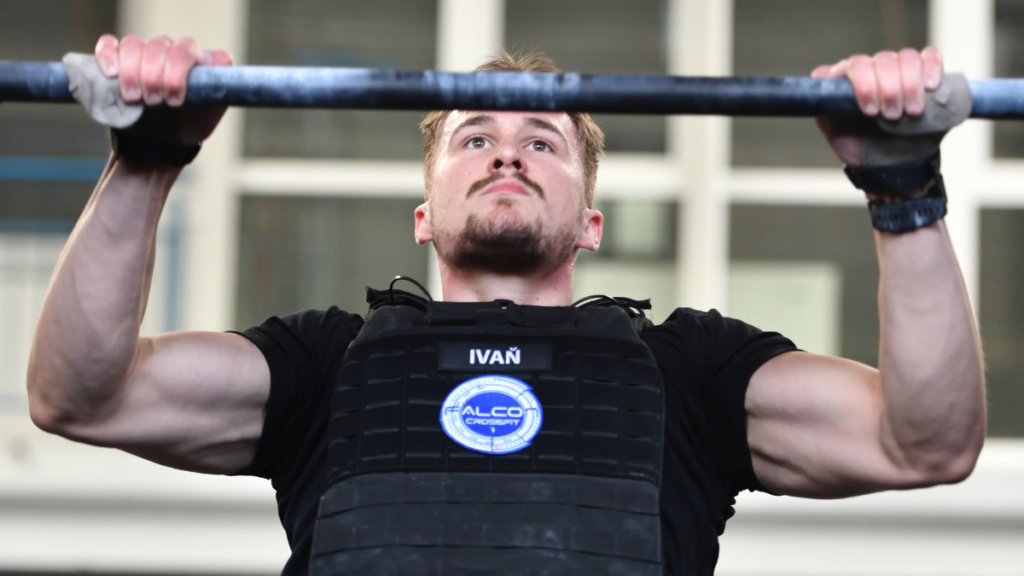
A strict pull-up requires the upper body to overcome bodyweight with relatively little assistance from the lower body. A kipping pull-up uses momentum generated through the hips and trunk to reduce the amount of upper-body force needed on each repetition. The athlete still needs to pull, stabilize the shoulders, grip the bar, and maintain control, but the work is distributed differently.
This means kipping pull-ups can be useful for muscular endurance and sport-specific conditioning. They allow athletes to practice maintaining rhythm and movement quality while breathing hard and working at a high output.
That does not mean every workout should include them. If your goal is to increase your strict pull-up maximum, improve your first pull-up, or build your lats, then strict pulling should remain central to your training. But if your goal is to perform well in workouts that feature high-repetition pull-ups, avoiding the kip completely leaves a useful skill undeveloped.
Reason 4: They Build Coordination Under Fatigue
A kipping pull-up is easy to make messy when fatigue rises. That is precisely why it can be a worthwhile skill to develop.
When you are tired, it becomes harder to keep a strong hollow position, initiate the swing from the shoulders, delay the pull until you have enough upward momentum, and press away from the bar after each repetition. Athletes often lose their rhythm, pull too early with the arms, or drop passively from the top of the bar.
Practicing the movement with controlled sets can improve your ability to recognize and correct those errors. This is useful for anyone who trains in mixed-modality environments, where technical quality must be maintained alongside rising heart rate and fatigue.
A good progression is to first learn controlled arch and hollow swings. Then practice a few swings followed by one kipping pull-up. This gives you time to find the right rhythm rather than rushing into a long set. As your technique improves, you can connect repetitions while keeping the same quality of movement.
The ability to maintain coordination while tired is a valuable physical quality. It can help athletes become more efficient in demanding training sessions and better understand when technique is beginning to break down.
Do Not Pull Too Early
One of the most common kipping pull-up errors is pulling with the arms before the body has created upward momentum. This turns the movement into a less efficient pull-up with a large swing attached to it.
Wait until you have moved through the hollow position and feel the hips drive upward. Then use the upper body to finish the repetition. The pull should support the momentum, not replace it.
A useful drill is to perform two controlled kip swings, then one kipping pull-up. This teaches patience and gives you a clearer sense of when to pull.
Reason 5: They Can Improve Your Overhead Movement Awareness
Kipping pull-ups require you to repeatedly move through an overhead hanging position. This can help you become more aware of your shoulder position, trunk control, and ability to maintain tension while your arms are overhead.
That said, it is important to be precise here. Kipping pull-ups are not a guaranteed shoulder-mobility exercise, and they should not be used to force range of motion that you do not own. General resistance training can improve range of motion when it is performed through a suitable active range, but kipping is only appropriate when the athlete can already control the overhead position.
If you struggle to reach overhead without compensating through the lower back, bending the elbows early, or turning the shoulders inward, address that first. Controlled hangs, scapular pull-ups, wall slides, cable work, and appropriately loaded pressing or pulling exercises may be better starting points.
For athletes who already have adequate shoulder motion and control, kipping pull-ups can reinforce the skill of moving dynamically through a large overhead range while maintaining an organized trunk and active shoulders.
The key word is control. A bigger range of motion is not automatically better if you cannot stabilize it.
How to Use Kipping Pull-Ups Safely
The best way to use kipping pull-ups is as a skill and conditioning movement, not as a shortcut around strict strength work. Keep strict pulling in your weekly program. Use kipping work when it matches your training goals and when you can maintain quality.
Start with small sets. A few high-quality repetitions are more useful than a large set full of loose shoulders, uncontrolled swinging, and rushed pulls. Stop the set when you lose rhythm or cannot return smoothly to the next repetition.
The descent matters as much as the ascent. From the top of the pull-up, press away from the bar and guide yourself back into the next hollow position. Do not simply drop into a passive hang. A controlled return keeps the shoulders active and allows the next repetition to begin smoothly.
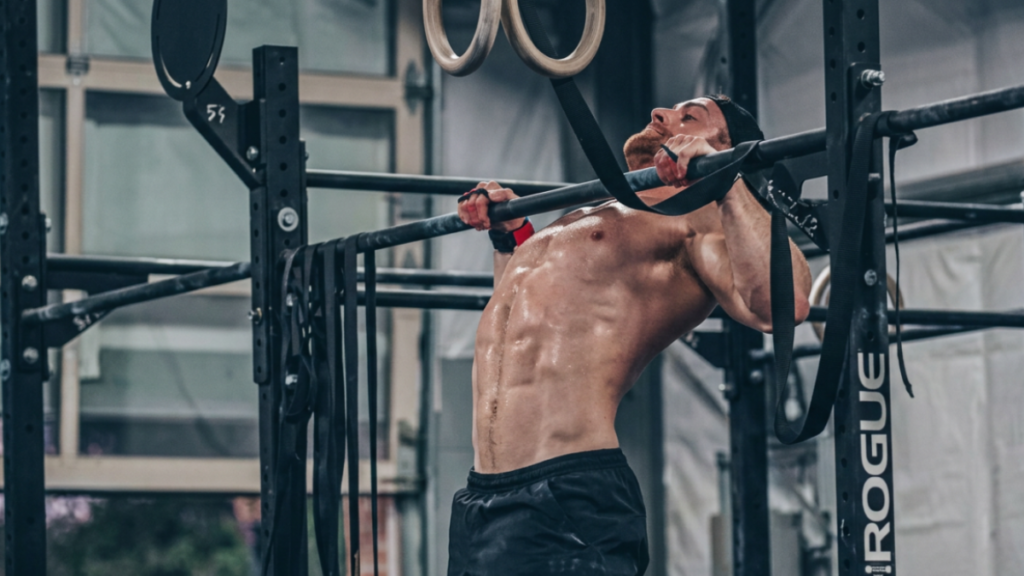
If you have shoulder pain, current shoulder symptoms, a history of instability, or are returning from an injury, seek individual advice from a qualified healthcare professional or coach before adding kipping pull-ups.
The Bottom Line
Kipping pull-ups are a good idea when they match your goals, your current ability, and the demands of your sport or training. They are not a replacement for strict pull-ups, and they are not the best option for every athlete.
They are a full-body movement that can improve coordination, develop efficient force transfer, increase the amount of work you can complete in conditioning sessions, and teach you to maintain movement quality under fatigue. The movement rewards patience, shoulder control, and practice.
Build your strict pulling strength first. Learn the arch and hollow positions. Keep the swing controlled. Then use the kipping pull-up for what it is: a legitimate athletic skill with a clear purpose.
References
- Afonso, J., Clemente, F.M., Nakamura, F.Y., Morouço, P., Sarmento, H., Inman, R.A. and Ramirez-Campillo, R. (2021) ‘The effectiveness of resistance training to improve muscular strength and flexibility in healthy adults: A systematic review and meta-analysis’, Sports Medicine, 51(10), pp. 2051–2067.
- Dominski, F.H., Calegari, D.R., Mussi, R.K., Serafim, T.T., Tavares, V.D., de Lima, M.I.P., de Andrade, A. and Andrade, A. (2022) ‘Injury profile in CrossFit practitioners: Systematic review and meta-analysis’, Physical Therapy in Sport, 53, pp. 91–100.
- Summitt, R.J., Cotton, R.A., Kays, A.C. and Slaven, E.J. (2016) ‘Shoulder injuries in individuals who participate in CrossFit training’, Sports Health, 8(6), pp. 541–546.
- Williamson, T. and Price, P. (2021) ‘A comparison of muscle activity between strict, kipping and butterfly pull-ups’, Journal of Sport and Exercise Science, 5(2), pp. 149–155.
- Youdas, J.W., Budach, B.D., Ellerbusch, J.V., Stucky, C.M., Wait, K.R. and Hollman, J.H. (2010) ‘Comparison of muscle activation levels during pull-up and chin-up exercises’, Journal of Strength and Conditioning Research, 24(12), pp. 3404–3414.
Key Takeaways
| Point | What It Means |
|---|---|
| Kipping pull-ups have a specific role | They are primarily a skill and conditioning movement, not a replacement for strict pulling strength. |
| Full-body coordination matters | The movement uses the shoulders, trunk, hips, and legs to create and transfer momentum efficiently. |
| Strict strength remains essential | Strict pull-ups and other pulling exercises should remain part of your training program. |
| Technique determines value | A controlled arch, hollow position, correctly timed pull, and active return improve efficiency and reduce unnecessary stress. |
| They are not for every athlete | Build shoulder control and strict pulling ability first, then introduce kipping progressively if it suits your training goals. |