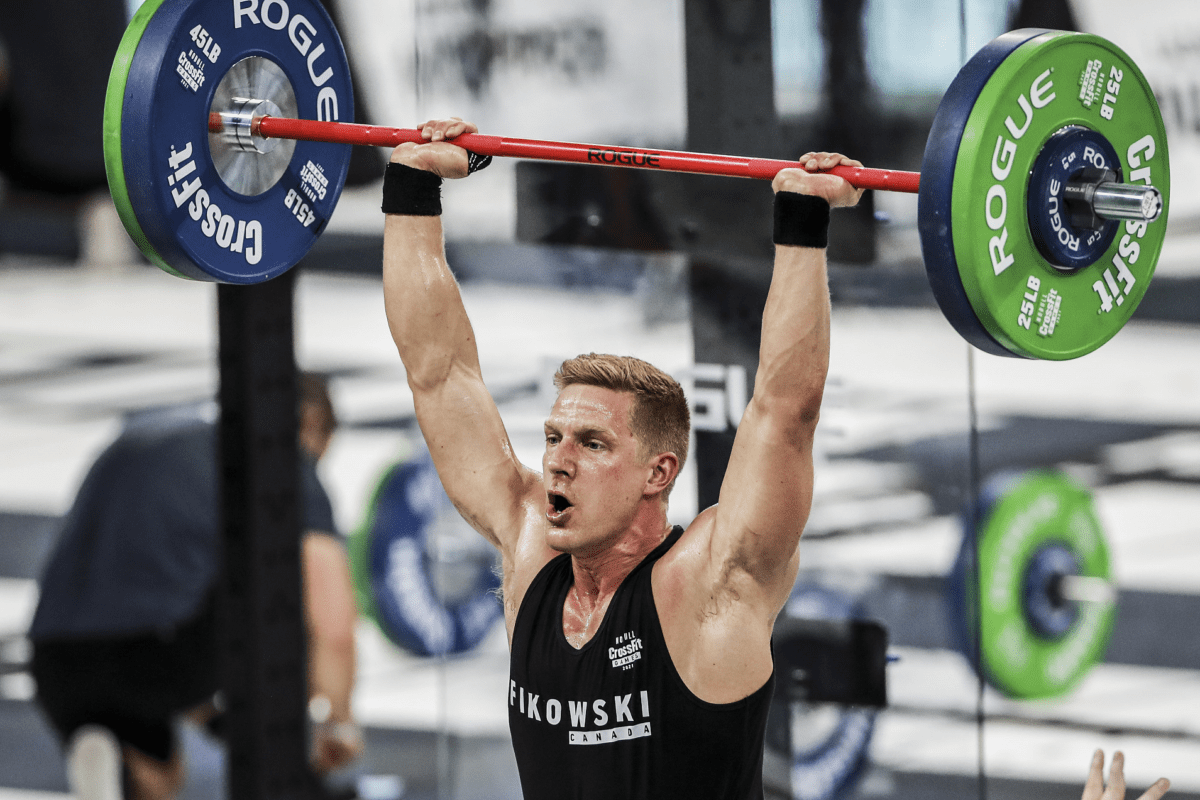


Barbell thrusters have a reputation. They look simple, but anyone who has done them under load or fatigue knows how brutally demanding they are.
A thruster combines a front squat and an overhead press into one fluid movement, forcing your legs, core, shoulders, arms, lungs, and nervous system to work together at high intensity. That is precisely why thrusters are so popular in CrossFit, weightlifting-based conditioning, and strength-and-conditioning programs.


But “hard” does not have to mean “inefficient.” Thrusters often feel harder than they need to be because of technical inefficiencies, poor breathing strategies, or mismatches between mobility and loading. When those factors are fixed, athletes frequently report immediate improvements in performance and reduced fatigue at the same weight.
This article breaks down three science-backed hacks that can make barbell thrusters easier without reducing the training effect. Each hack is grounded in biomechanics, physiology, and peer-reviewed research. The goal is not to make thrusters comfortable—they never will be—but to make them more efficient, repeatable, and sustainable.
Why Thrusters Feel So Hard
Before diving into the hacks, it helps to understand why thrusters are uniquely taxing.
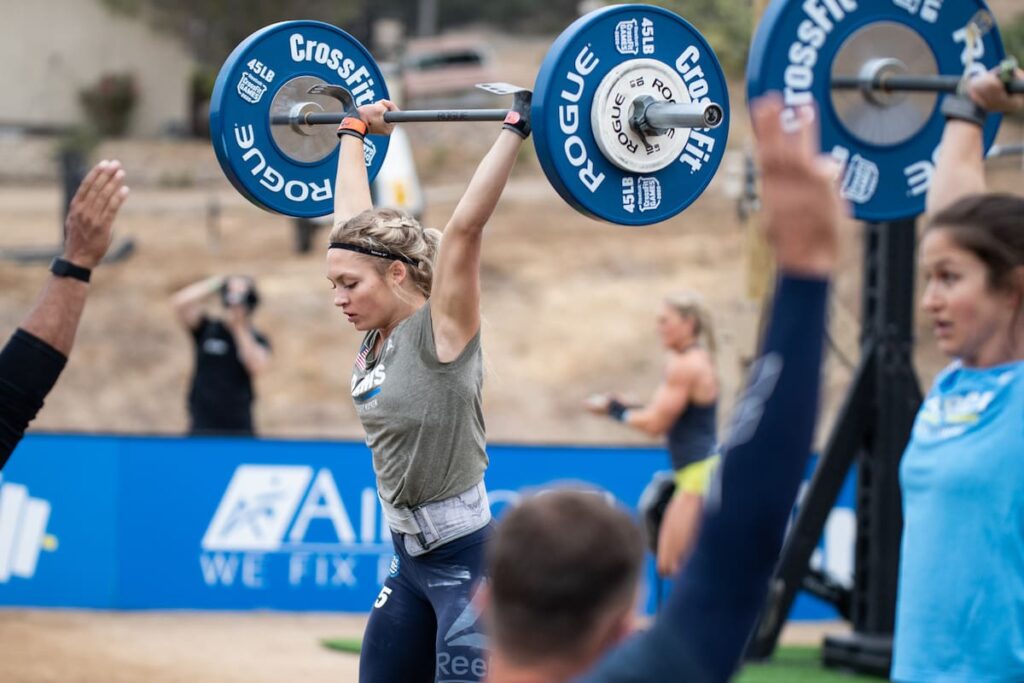
Thrusters demand high power output from the lower body, rapid force transfer through the trunk, and coordinated upper-body pressing. At the same time, they significantly elevate heart rate and oxygen consumption. Research comparing multi-joint exercises shows that movements involving both the lower and upper body simultaneously produce higher metabolic cost than isolated lifts, even at moderate loads (Haff and Triplett, 2016).
Thrusters also require precise timing. If force from the legs is not efficiently transferred to the bar, the shoulders and arms must compensate. That increases local muscular fatigue and raises perceived exertion. Studies on exercise economy consistently show that small inefficiencies in movement pattern can lead to disproportionate increases in energy cost (Cavanagh and Williams, 1982).
The following three hacks target those inefficiencies directly.
Hack 1: Use the Stretch-Shortening Cycle to Drive the Bar
What the Stretch-Shortening Cycle Is
The stretch-shortening cycle (SSC) refers to a natural muscle function where a rapid eccentric (lengthening) contraction is immediately followed by a concentric (shortening) contraction. When timed correctly, elastic energy stored in the muscle-tendon unit during the eccentric phase is released during the concentric phase, increasing force output without additional metabolic cost.
This mechanism is well documented in jumping, sprinting, and Olympic lifting. Studies show that concentric force and power output are significantly higher when preceded by a rapid eccentric action compared to a static start (Komi, 2000).
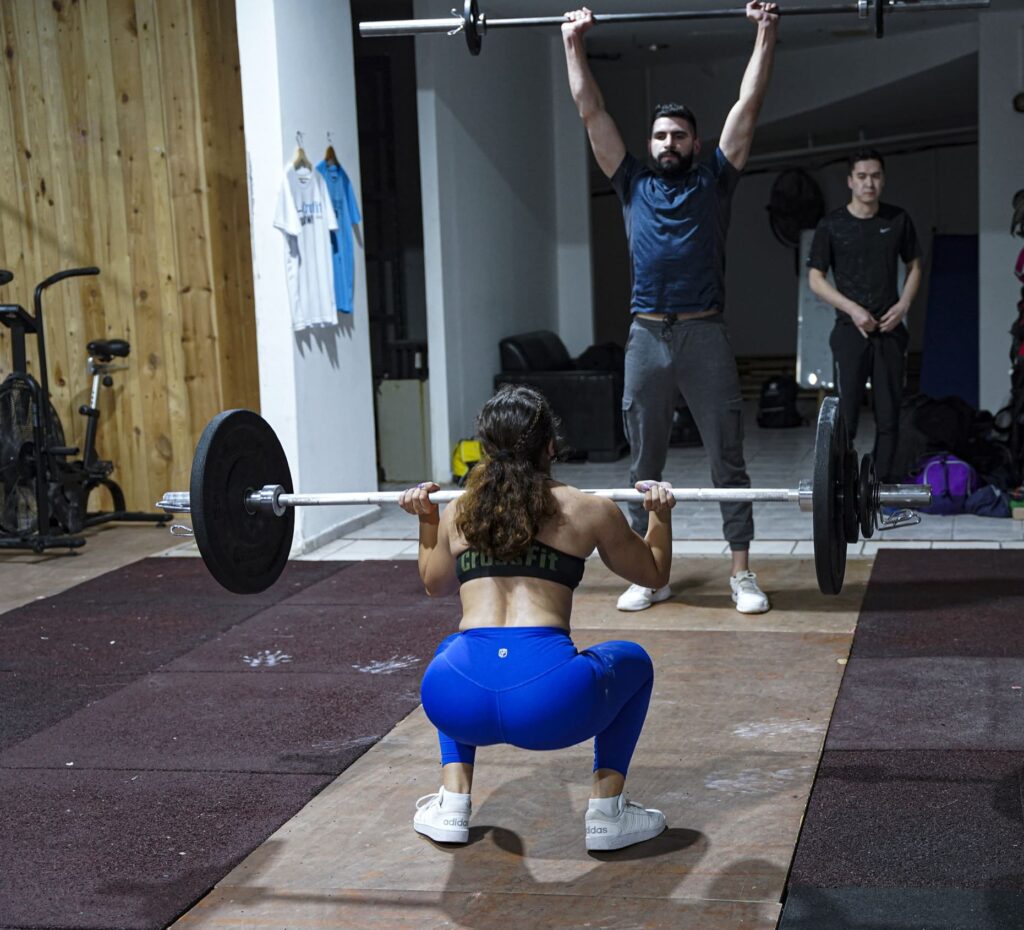
In thrusters, the SSC occurs at the bottom of the front squat.
Why Pausing Makes Thrusters Harder
Many athletes unconsciously pause at the bottom of the squat, either due to caution, poor confidence, or mobility restrictions. While pauses have training value in strength work, they remove the benefits of the stretch-shortening cycle.
Research shows that pausing longer than approximately 0.5 seconds dissipates stored elastic energy and reduces force output in the concentric phase (Bobbert et al., 1996). When that happens in a thruster, the legs contribute less upward momentum, forcing the shoulders and arms to work harder to press the bar overhead.
This increases shoulder fatigue and overall energy expenditure, making the movement feel disproportionately difficult.
How to Apply This Hack
To use the SSC effectively in thrusters:
Descend under control, not slowly. The eccentric phase should be smooth and deliberate, but not excessively slow.
Reverse direction immediately at the bottom. Think “bounce,” not “pause.”
Maintain tension throughout the descent. Relaxing at the bottom reduces elastic energy storage.
Electromyography studies show that muscle activation patterns during dynamic reversals are more efficient than static-to-dynamic transitions (Komi and Gollhofer, 1997). This means you get more output for the same neural input.
Why This Makes Thrusters Easier
Using the SSC allows your legs to contribute more to bar acceleration. Since the bar already has upward momentum when it leaves the squat, the shoulders press a moving load instead of a dead weight.
Biomechanical analyses of push presses and jerks show that higher bar velocity at the start of the press phase significantly reduces shoulder joint torque (Cormie et al., 2007). The same principle applies to thrusters.
The result is lower perceived effort, less shoulder burn, and better consistency across repetitions.
Hack 2: Optimize Your Breathing and Bracing Strategy
The Hidden Cost of Poor Breathing
Many athletes hold their breath throughout the entire thruster or breathe randomly under fatigue. While breath-holding can temporarily increase trunk stiffness, it also spikes blood pressure and accelerates fatigue when used improperly.
Research on resistance training shows that prolonged Valsalva maneuvers increase cardiovascular strain without improving force output during repeated dynamic efforts (MacDougall et al., 1992).
Thrusters are cyclical and repetitive. They reward rhythmic breathing patterns rather than maximal breath holds.
Bracing Versus Breath Holding
Bracing refers to creating circumferential tension around the trunk using the diaphragm, abdominal muscles, and spinal stabilizers. Proper bracing does not require holding the breath for the entire movement.
Ultrasound and pressure-based studies show that diaphragmatic breathing combined with abdominal bracing increases spinal stability more effectively than breath holding alone (Hodges et al., 2005).
In thrusters, effective bracing protects the spine during the squat and transfers force efficiently during the drive.
The Most Efficient Breathing Pattern for Thrusters
A common and effective strategy is a segmented breathing pattern:
Inhale deeply before descending into the squat.
Maintain brace through the bottom.
Exhale forcefully as you drive upward and press the bar overhead.
Briefly reset at the top before the next rep.
This pattern aligns with findings that exhalation during concentric effort can reduce perceived exertion while maintaining force output (Pott et al., 2003).
Elite weightlifters use similar breathing strategies during cleans and jerks, which are biomechanically comparable to thrusters in terms of force transfer and trunk demands.
Why This Makes Thrusters Easier
Proper breathing improves oxygen delivery, reduces unnecessary cardiovascular strain, and maintains trunk stiffness without excessive pressure. Over repeated reps, this delays fatigue and improves movement consistency.
Studies on endurance and resistance exercise show that synchronized breathing reduces overall energy cost for a given workload (Sheel, 2002). That means thrusters feel easier not because the load changes, but because your body is working more efficiently.
Hack 3: Adjust Bar Path and Grip to Reduce Shoulder Demand
Why Bar Path Matters More Than You Think
In an ideal thruster, the bar travels in a nearly vertical path over the midfoot. Deviations forward or backward increase joint torque and muscular demand.
Biomechanical modeling shows that even small horizontal displacements of the barbell significantly increase shoulder and lumbar spine loading (McLaughlin et al., 1977). In thrusters, a forward bar path often results from poor rack position or limited thoracic mobility.
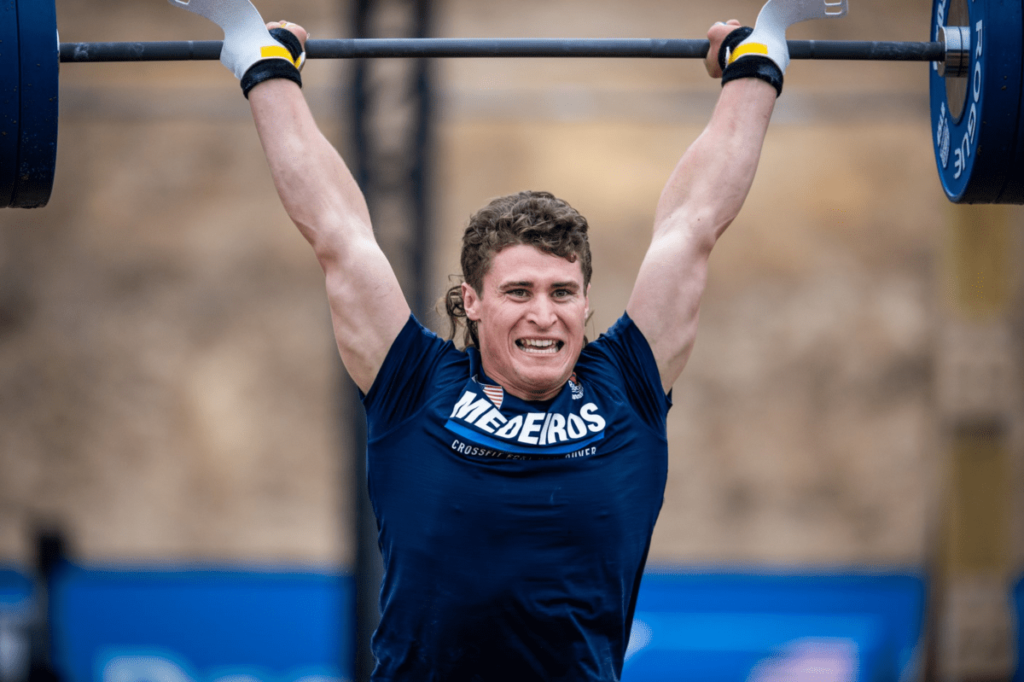
When the bar drifts forward, the shoulders must generate more torque to keep it overhead, increasing fatigue and perceived difficulty.
Grip Width and Wrist Position
Grip width affects shoulder mechanics. A grip that is too narrow increases shoulder flexion demand, while a grip that is too wide can compromise pressing strength and stability.
Electromyographic studies of overhead pressing show that moderate grip widths minimize shoulder joint stress while maintaining high deltoid activation (Barnett et al., 1995).
Wrists also matter. Excessive wrist extension in the front rack position often leads to bar drift and poor force transfer. Maintaining a neutral or slightly extended wrist allows better elbow position and bar alignment.
How to Apply This Hack
Set your grip so that, at the bottom of the squat, elbows point slightly forward and up, not down.
Allow the bar to rest on the shoulders, not in the hands, during the squat phase.
As you drive up, think about pushing the bar straight up, not out.
Motion capture studies in Olympic lifts show that athletes who maintain a vertical bar path exhibit lower joint torques and higher mechanical efficiency (Gourgoulis et al., 2009). Thrusters follow the same principles.
Why This Makes Thrusters Easier
A vertical bar path reduces unnecessary shoulder and spinal loading. When joints move in mechanically efficient ranges, muscles can produce force with less strain.
Over multiple repetitions, this reduces local muscular fatigue in the shoulders and upper back, which are often the limiting factors in thrusters.
How These Hacks Work Together
Each hack targets a different bottleneck:
The stretch-shortening cycle improves lower-body power transfer.
Optimized breathing improves trunk stability and oxygen efficiency.
Improved bar path reduces shoulder torque and wasted effort.
Together, they reduce the total energy cost of each repetition. Exercise physiology research consistently shows that reducing energy leaks in movement patterns improves performance without additional strength gains (Saunders et al., 2004).
That is why athletes often feel an immediate difference when these changes are implemented, even before any physical adaptation occurs.
Common Mistakes That Undo These Hacks
Even with good intentions, certain habits can negate the benefits:
Over-slow eccentrics that kill the stretch-shortening cycle.
Holding the breath for too long under fatigue.
Letting elbows drop and the bar drift forward.
Awareness and deliberate practice are key. Motor learning research shows that focused attention on movement cues improves technical retention more than volume alone (Wulf and Lewthwaite, 2016).
How to Practice These Hacks Without Overthinking
Use light to moderate loads initially.
Practice in short sets of 3–5 reps.
Focus on one hack at a time.
Gradually integrate all three into heavier or higher-rep sets. This approach aligns with evidence that skill acquisition improves when complexity is introduced progressively (Schmidt and Lee, 2011).
Final Thoughts
Thrusters will always be demanding, but they do not need to feel chaotic or inefficient. By respecting basic principles of biomechanics and physiology, you can make each repetition smoother, more powerful, and less draining.
These three hacks do not reduce the stimulus of the movement. They enhance it by allowing your body to work as a coordinated system rather than a collection of fatigued parts.
When thrusters feel easier, performance improves—and that is exactly what good training should do.
References
• Barnett, C., Kippers, V. and Turner, P. (1995) ‘Effects of variations of the bench press exercise on the EMG activity of five shoulder muscles’, Journal of Strength and Conditioning Research, 9(4), pp. 222–227.
• Bobbert, M.F., Gerritsen, K.G.M., Litjens, M.C.A. and Van Soest, A.J. (1996) ‘Why is countermovement jump height greater than squat jump height?’, Medicine and Science in Sports and Exercise, 28(11), pp. 1402–1412.
• Cavanagh, P.R. and Williams, K.R. (1982) ‘The effect of stride length variation on oxygen uptake during distance running’, Medicine and Science in Sports and Exercise, 14(1), pp. 30–35.
• Cormie, P., McBride, J.M. and McCaulley, G.O. (2007) ‘Power-time, force-time, and velocity-time curve analysis of the countermovement jump’, Journal of Strength and Conditioning Research, 21(3), pp. 707–715.