Building serious upper body muscle does not require barbells, machines, or a gym membership. A well-designed Calisthenics Workout for Mass can stimulate hypertrophy just as effectively as traditional weight training—when programmed correctly.
The key is not just doing push-ups and pull-ups. It is understanding how muscle growth works, applying progressive overload, training close to failure, managing volume, and choosing exercises that challenge your upper body through full ranges of motion.


This guide breaks down the science behind muscle growth and shows you exactly how to build size using the best upper body calisthenics exercises. Every claim is supported by peer-reviewed research, and the workout provided is structured for real hypertrophy—not random fatigue.
How Muscle Growth Actually Works
Before designing the best Calisthenics Workout for Mass, we need to understand what stimulates hypertrophy.
Mechanical Tension Is the Primary Driver
Mechanical tension is the most important factor in muscle growth. When muscle fibers are exposed to high tension—especially under stretch—they trigger anabolic signaling pathways such as mTOR that promote protein synthesis (Schoenfeld, 2010).
Mechanical tension increases when:
• You train close to failure
• You use challenging loads
• You control tempo
• You increase time under tension
In calisthenics, “load” is manipulated by changing leverage, range of motion, tempo, or adding external weight.
Training Close to Failure Is Critical
Research shows that hypertrophy can occur across a wide range of rep ranges (5–30 reps) as long as sets are performed close to muscular failure (Morton et al., 2016).

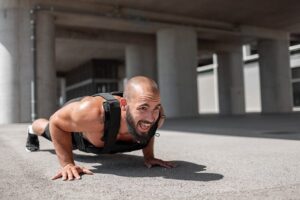
That means push-ups can build muscle—if they are hard enough.
Stopping 4–5 reps shy of failure reduces motor unit recruitment and limits growth stimulus (Schoenfeld et al., 2019). A proper Calisthenics Workout for Mass should take most working sets to 0–2 reps in reserve.
Volume Matters
Total weekly volume per muscle group strongly predicts hypertrophy. Research suggests around 10–20 hard sets per muscle group per week is effective for maximizing growth (Schoenfeld, Ogborn and Krieger, 2017).
If you want a bigger chest, back, shoulders, and arms, you need sufficient weekly set volume.
Progressive Overload Still Applies
Muscles grow only when demands increase over time. Progressive overload can be achieved in calisthenics by:
• Elevating feet
• Using one-arm variations
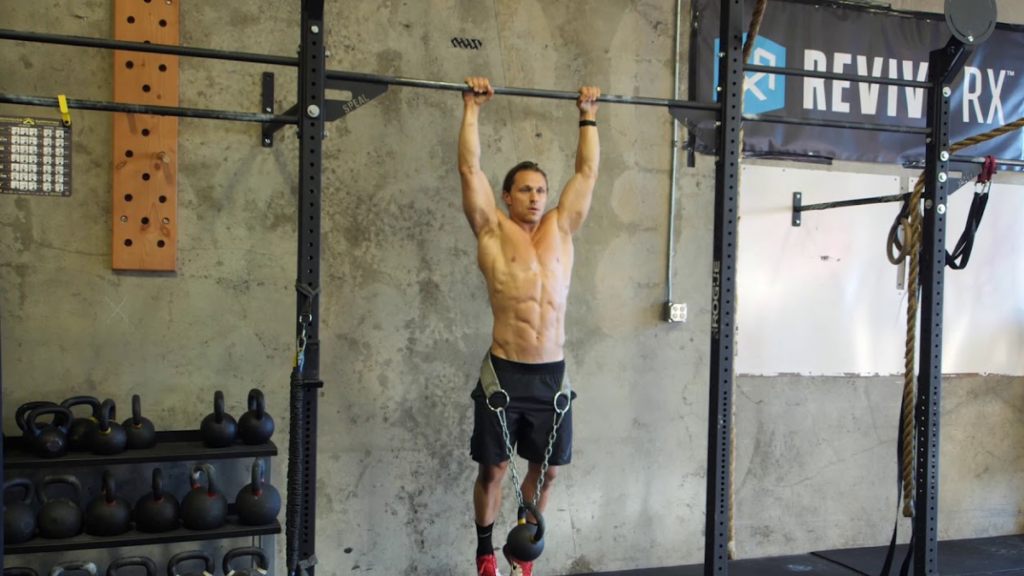
• Adding weight with a vest or belt
• Increasing reps
• Slowing tempo
• Increasing range of motion
Without progression, growth stalls.
Why a Calisthenics Workout for Mass Actually Works
Many assume bodyweight training is only for endurance. The research says otherwise.
A study comparing push-ups and bench press found similar increases in muscle thickness and strength when volume and intensity were matched (Kikuchi and Nakazato, 2017).
Another study showed low-load training (as low as 30 percent of 1RM) taken to failure can produce similar hypertrophy to high-load training (Morton et al., 2016).
This means a properly structured Calisthenics Workout for Mass can build serious size.
The limiting factor is not equipment. It is intensity and programming.
Principles of the Best Upper Body Calisthenics Workout for Mass
Before we build the program, here are the rules it must follow:
- Train each muscle group at least twice per week
- Perform 10–20 hard sets weekly per major muscle
- Take most sets close to failure
- Use progressive overload
- Control tempo
- Include full range of motion
- Include vertical and horizontal pushing and pulling
Now let’s break down the key muscle groups.
Chest: Building Size With Bodyweight
The chest responds extremely well to push-up variations and dips.
Best Exercises
• Deficit Push-Ups
• Feet-Elevated Push-Ups
• Ring Push-Ups
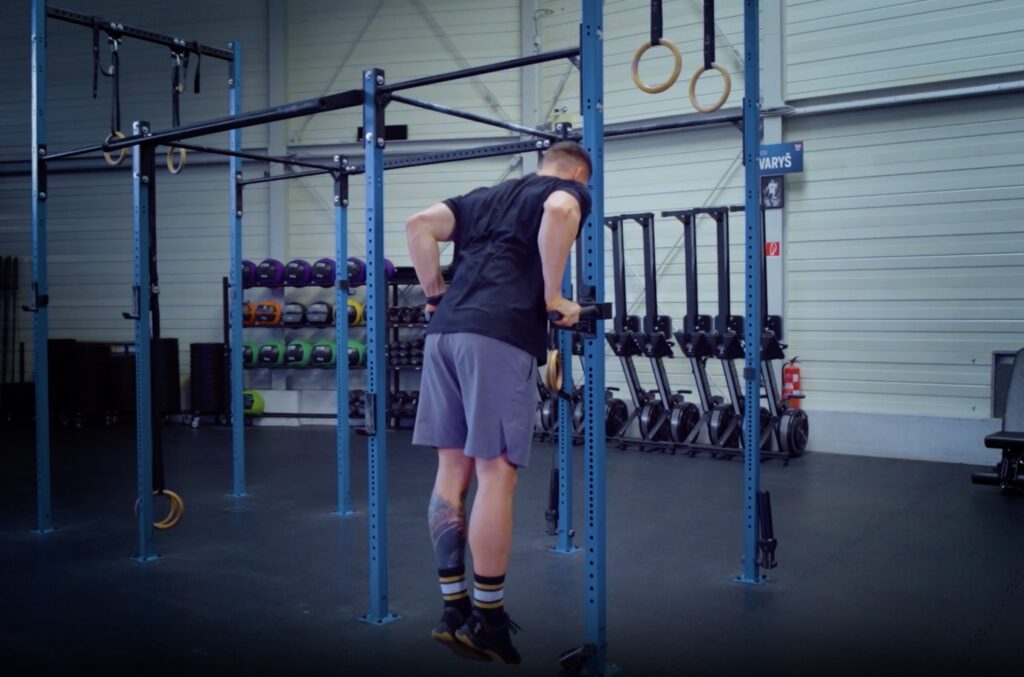
• Dips
• Weighted Dips
Push-ups activate the pectoralis major significantly, especially when performed with feet elevated or on unstable surfaces like rings (Calatayud et al., 2015).
Dips emphasize the lower chest and triceps and allow for heavy loading.
Programming Tip
Use slower eccentrics (3–4 seconds down). Eccentric loading enhances hypertrophy due to higher mechanical tension and muscle damage (Schoenfeld, 2010).
Back: The Foundation of Upper Body Mass
A complete Calisthenics Workout for Mass must heavily prioritize pulling movements.
Best Exercises
• Pull-Ups
• Chin-Ups
• Neutral-Grip Pull-Ups
• Archer Pull-Ups
• Inverted Rows
• Front Lever Progressions
Pull-ups produce high activation of the latissimus dorsi and biceps brachii (Youdas et al., 2010).
Chin-ups tend to produce greater biceps activation than pull-ups (Youdas et al., 2010), making them valuable for arm development.
Key Principle: Full Range and Control
Avoid half-reps. Full shoulder extension and controlled eccentrics maximize muscle recruitment and stretch-mediated hypertrophy.
Shoulders: Size Without Pressing Barbells
You can build capped shoulders without overhead pressing a barbell.
Best Exercises
• Pike Push-Ups
• Handstand Push-Ups
• Elevated Pike Push-Ups
• Ring Support Holds
Handstand push-ups heavily recruit the anterior deltoid and triceps due to high vertical pressing demands.
For medial delts, bodyweight lateral raises are difficult, but you can use:
• Lean-away lateral raises with bands
• Ring lateral raises
Shoulder hypertrophy is strongly correlated with total volume and mechanical tension (Schoenfeld, Ogborn and Krieger, 2017).
Arms: Yes, Calisthenics Builds Big Arms
Arm growth is driven by elbow flexion and extension under tension.
Biceps
• Chin-Ups
• Archer Chin-Ups
• Bodyweight Curls on Rings
Chin-ups significantly activate the biceps brachii (Youdas et al., 2010).
Triceps
• Dips
• Diamond Push-Ups
• Close-Grip Deficit Push-Ups
Dips produce high triceps activation due to shoulder extension demands.
Direct arm work increases hypertrophy beyond compound lifts alone (Schoenfeld, 2010).
The Complete Upper Body Calisthenics Workout for Mass
This is a science-based, hypertrophy-focused upper body program.
Train 2–3 times per week.

Rest 2–3 minutes between compound sets.
Day A
Pull-Ups – 4 sets of 6–10 reps
Deficit Push-Ups – 4 sets of 8–15 reps
Dips – 3 sets of 8–12 reps
Inverted Rows – 3 sets of 10–15 reps
Chin-Ups – 3 sets of 6–10 reps
Ring Curls – 3 sets of 10–15 reps
Day B
Chin-Ups – 4 sets of 6–10 reps
Feet-Elevated Push-Ups – 4 sets of 8–15 reps
Pike Push-Ups – 4 sets of 6–12 reps
Inverted Rows (Feet Elevated) – 3 sets of 8–12 reps
Diamond Push-Ups – 3 sets to near failure
Ring Triceps Extensions – 3 sets of 10–15 reps
Alternate A and B.
Aim for 12–18 total weekly sets per major muscle group.
Progression Strategy
If you exceed the top rep range, progress by:
• Elevating feet
• Adding weight
• Slowing tempo
• Moving to unilateral variations
Progression is mandatory. Hypertrophy stops without it.
Tempo and Time Under Tension
Slower eccentric phases increase muscle activation and time under tension (Schoenfeld, 2010).
Use a 3-second lowering phase.
Explode up with control.
Rest Periods
Longer rest intervals (2–3 minutes) allow for greater volume and strength output, supporting hypertrophy (Schoenfeld et al., 2016).
Avoid short rest if size is the goal.
Nutrition for Maximizing Mass
No Calisthenics Workout for Mass works without proper nutrition.
Protein Intake
Daily protein intake of 1.6–2.2 g/kg bodyweight maximizes hypertrophy (Morton et al., 2018).
Caloric Surplus
A modest calorie surplus supports muscle gain.
Sleep
Sleep restriction reduces muscle protein synthesis (Dattilo et al., 2011).
Aim for 7–9 hours per night.
Common Mistakes
- Training too easy
- Avoiding failure
- Not progressing
- Too little weekly volume
- Poor nutrition
Final Thoughts
The best upper body Calisthenics Workout for Mass is not random circuits. It is structured hypertrophy training using bodyweight movements progressed intelligently over time.
Train hard. Train close to failure. Progress weekly. Eat enough protein. Sleep.
Do that consistently, and you will build serious upper body muscle—without touching a barbell.
Key Takeaways
| Principle | Why It Matters | Application |
|---|---|---|
| Mechanical Tension | Primary driver of hypertrophy | Train close to failure |
| Volume | 10–20 sets per muscle weekly | Track total sets |
| Progressive Overload | Required for growth | Increase difficulty weekly |
| Full ROM | Improves muscle recruitment | Avoid half reps |
| Protein | Maximizes muscle synthesis | 1.6–2.2 g/kg daily |
| Rest | Supports strength output | 2–3 minutes between sets |
References
• Calatayud, J., Borreani, S., Colado, J.C., Martin, F., Rogers, M.E. and Behm, D.G. (2015) ‘Bench press and push-up at comparable levels of muscle activity results in similar strength gains’, Journal of Strength and Conditioning Research, 29(1), pp. 246–253.
• Dattilo, M., Antunes, H.K., Medeiros, A., Monico Neto, M., Souza, H.S., Tufik, S. and de Mello, M.T. (2011) ‘Sleep and muscle recovery: endocrinological and molecular basis for a new and promising hypothesis’, Medical Hypotheses, 77(2), pp. 220–222.
• Kikuchi, N. and Nakazato, K. (2017) ‘Low-load bench press and push-up induce similar muscle hypertrophy and strength gain’, Journal of Exercise Science and Fitness, 15(1), pp. 37–42.
• Morton, R.W., Oikawa, S.Y., Wavell, C.G., Mazara, N., McGlory, C., Quadrilatero, J., Baechler, B.L., Baker, S.K. and Phillips, S.M. (2016) ‘Neither load nor systemic hormones determine resistance training-mediated hypertrophy or strength gains’, Journal of Applied Physiology, 121(1), pp. 129–138.
• Morton, R.W., Murphy, K.T., McKellar, S.R., Schoenfeld, B.J., Henselmans, M., Helms, E., Aragon, A.A., Devries, M.C., Banfield, L., Krieger, J.W. and Phillips, S.M. (2018) ‘A systematic review, meta-analysis and meta-regression of the effect of protein supplementation on resistance training-induced gains’, British Journal of Sports Medicine, 52(6), pp. 376–384.