

For many lifters, a 100kg or 220lb bench press is the first major strength milestone that really matters. It is heavy enough to demand real upper body strength, solid technique, intelligent programming, and consistent training habits.
But most people fail to reach it because they focus too much on attempting the big lift itself instead of building the physical foundation required to press it successfully.


If you want to bench 100kg, there are four benchmark sets you should aim to hit first:
- 60kg x 20
- 70kg x 14
- 80kg x 8
- 90kg x 4
These numbers are not random. They reflect key strength qualities that contribute directly to a successful 100kg bench press. They also line up closely with modern strength prediction formulas and evidence based resistance training principles.
Why These Numbers Matter
A one rep max is not built from max attempts alone. Heavy singles matter, but they are only the final expression of several underlying adaptations:
• Muscle mass
• Neural efficiency
• Technique consistency
• Force production
• Work capacity
• Fatigue resistance
The four benchmark sets above develop all of these qualities simultaneously.
When a lifter can bench 60kg for 20 repetitions, they demonstrate muscular endurance and sufficient upper body conditioning. When they can press 90kg for 4 repetitions, they have already built most of the force production needed for 100kg.
In practical terms, these benchmarks create overlapping pathways toward the same goal. Most strength prediction equations estimate that:
• 80kg x 8 predicts roughly a 100kg max
• 90kg x 4 predicts roughly a 100kg max
• 70kg x 14 also falls near the same estimated ceiling
That overlap matters because it reduces the chance that your strength is dependent on only one quality.
A lifter who can grind out a heavy triple but lacks endurance may fail under fatigue. A lifter with high endurance but poor maximal force production may stall near lockout. Balanced development produces more reliable strength gains.
The Science Behind Rep Strength Relationships
Strength coaches have known for decades that submaximal repetitions can accurately estimate maximal strength.
Research on repetition maximum testing consistently shows strong correlations between higher rep performance and one rep max strength when technique and exercise selection remain consistent. The body adapts to resistance training through several mechanisms:
Increased Muscle Cross Sectional Area
Larger muscles can produce more force, when programmed correctly. Hypertrophy training with moderate loads and higher repetitions contributes significantly to long term strength development when built into a program that also has strength blocks.
This is why sets like 60kg x 20 and 70kg x 14 matter. They create sufficient training volume to stimulate muscle growth in the chest, shoulders, and triceps.
Improved Neural Efficiency
Heavy training improves the nervous system’s ability to recruit motor units quickly and efficiently. Sets such as 90kg x 4 teach the body how to coordinate high force output under challenging loads. This adaptation is critical for maximal strength expression.
Better Intermuscular Coordination
Bench pressing is a technical movement. Strong pressing requires synchronized contribution from the pecs, triceps, anterior deltoids, upper back, and core. Repeated exposure to progressively heavier sets improves movement efficiency and bar path consistency.
Why You Need Both Volume and Intensity
One of the biggest mistakes intermediate lifters make is training exclusively heavy all year. Maximal strength is not built by constantly testing max strength.
Research consistently shows that combining moderate volume training with periods of higher intensity produces superior long term outcomes compared to using only one style of training. This is where periodization becomes essential.
Understanding Strength Training Periodization
- Periodization is the planned manipulation of training variables over time to maximize progress while managing fatigue.
- Instead of doing the same workouts every week, periodized training changes volume, intensity, and repetition ranges strategically.
A successful path toward a 100kg bench press usually involves several phases.
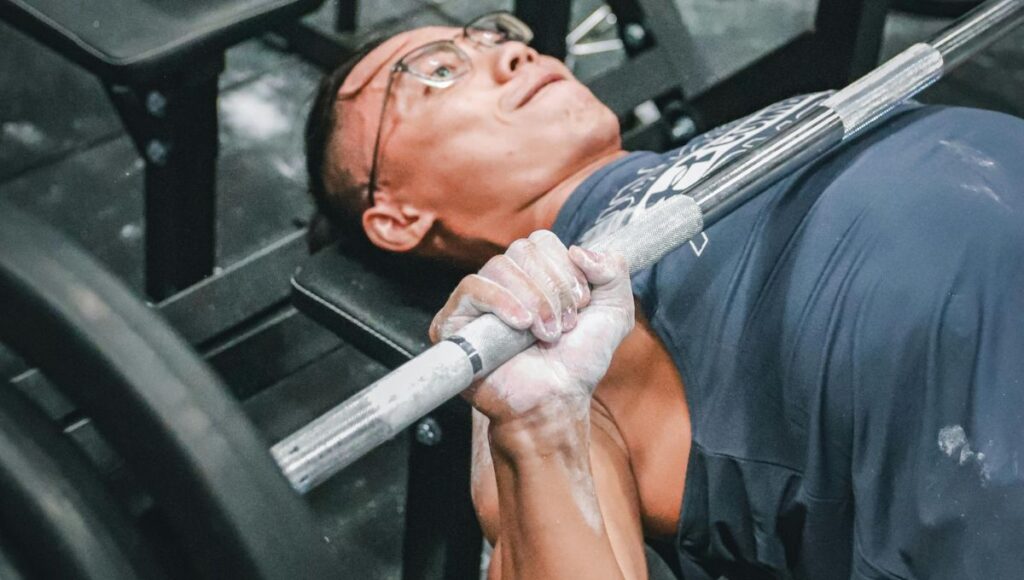
Phase 1: Build Muscle and Work Capacity
During this phase, training focuses on moderate weights and higher repetitions.
Typical training includes:
• Sets of 8 to 15 reps
• Higher weekly volume
• Controlled tempo work
• Technique refinement
This is where benchmarks like 60kg x 20 and 70kg x 14 are developed. The goal is to increase muscle size, tendon resilience, and overall pressing capacity. Without this foundation, heavier training becomes difficult to recover from.
Phase 2: Develop Maximal Strength
Once a solid base exists, training shifts toward heavier loads and lower repetitions.
Typical training includes:
• Sets of 3 to 6 reps
• Longer rest periods
• Heavier compound pressing
• Reduced total volume
This phase develops the strength qualities required for benchmarks like 80kg x 8 and 90kg x 4. The nervous system becomes more efficient at generating high force output.
Phase 3: Peak for 100kg
Peaking reduces fatigue while maintaining strength adaptations. Training becomes highly specific to heavy singles.
Typical training includes:
• Singles and doubles at high intensity
• Lower total training volume
• More recovery emphasis
• Technical precision
At this stage, a 100kg attempt becomes far more realistic because the underlying qualities have already been developed.
How to Progress Toward the Four Benchmarks
A practical approach is to focus on progressive overload while managing recovery carefully.
Key principles include:
Train the Bench Press 2 to 3 Times Weekly
Higher training frequency improves motor learning and technique consistency.
Research suggests that training a muscle group multiple times weekly often produces superior strength gains compared to once weekly training.
Use Small Weight Increases
Adding anything from 0.5 – 2.5kg at a time allows sustainable progression without excessive fatigue accumulation. Strength development is rarely linear forever. Small jumps prolong progress.
Prioritize Technique
Key technical points include:
• Stable upper back positioning
• Consistent bar path
• Leg drive
• Controlled lowering phase
• Strong lockout mechanics
Poor technique limits force transfer and increases injury risk.
Build the Supporting Muscles
Weak triceps, shoulders, and upper back muscles often limit pressing strength. Helpful accessory movements include:
• Close grip bench press
• Incline dumbbell press
• Barbell rows
• Weighted dips
• Overhead press
• Face pulls
Recovery Is Part of Strength Training
Strength adaptations occur during recovery, not during the workout itself. Research consistently demonstrates that sleep quality, nutrition, and fatigue management directly affect performance and muscle growth.
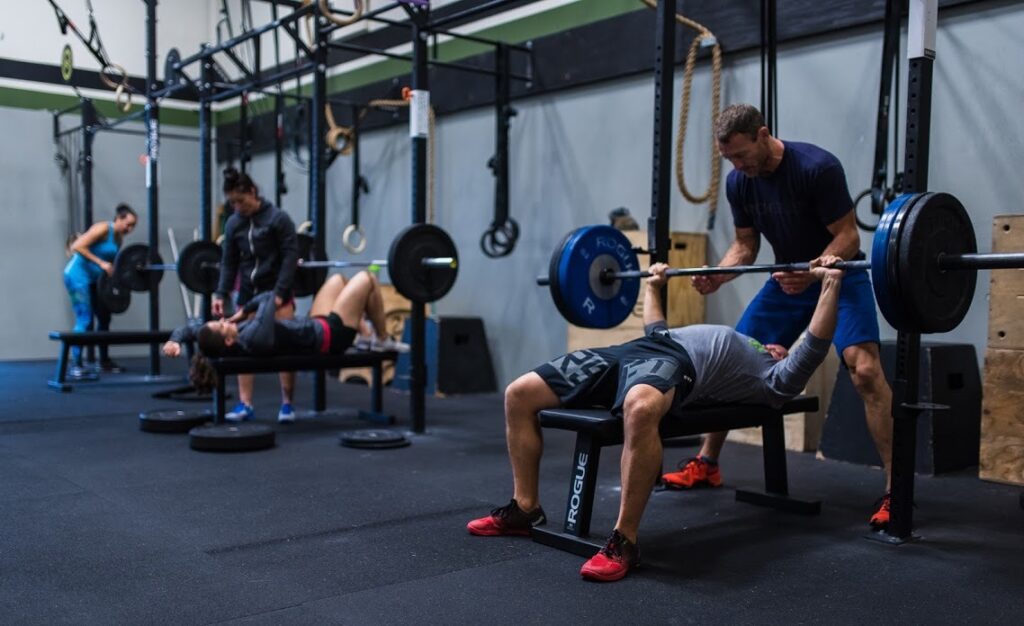
To maximize progress:
• Sleep at least 7 to 9 hours nightly
• Consume sufficient protein daily
• Avoid excessive training volume
• Deload periodically when fatigue accumulates
Lifters who ignore recovery often plateau despite working harder.
The Psychological Value of Milestones
Intermediate goals improve motivation and consistency. Chasing 100kg directly can feel intimidating. Chasing 80kg x 8 or 90kg x 4 feels more manageable and measurable.
These smaller victories also provide objective evidence that progress is occurring. That confidence matters when attempting a psychologically significant lift.
Final Thoughts
A 100kg bench press is not achieved by accident. It represents a combination of muscle mass, neural adaptation, technical skill, recovery management, and intelligent programming.
The four benchmark sets provide a reliable roadmap:
60kg x 20
70kg x 14
80kg x 8
90kg x 4
Each one develops a different component of pressing strength, and together they build the foundation necessary to press 100kg successfully.
Focus on building the qualities behind the lift instead of rushing toward the final number. The stronger foundation you create, the more reliable your progress becomes.
Want to Deadlift 200kg? Here are 4 Numbers You Need to Hit First
Key Takeaways
| Benchmark | What It Develops | Why It Matters |
|---|---|---|
| 60kg x 20 | Muscular endurance and hypertrophy | Builds work capacity and muscle mass |
| 70kg x 14 | Strength endurance | Improves fatigue resistance and pressing consistency |
| 80kg x 8 | Foundational maximal strength | Predicts near 100kg pressing ability |
| 90kg x 4 | High force production | Develops neural efficiency and confidence with heavy loads |
| Periodization | Structured training progression | Balances fatigue and long term progress |
| Recovery | Adaptation and performance | Essential for muscle growth and strength gains |
Bibliography
• American College of Sports Medicine. (2009). Progression models in resistance training for healthy adults. Medicine & Science in Sports & Exercise, 41(3), pp.687-708.
• Grgic, J., Lazinica, B., Mikulic, P. and Schoenfeld, B.J. (2020). Test retest reliability of the one repetition maximum bench press assessment. Sports Medicine Open, 6(1), pp.1-9.
• Helms, E.R., Storey, A., Cross, M.R., Brown, S.R., Lenetsky, S., Ramsay, H., Dillen, C. and Zourdos, M.C. (2018). RPE and velocity relationships for the back squat, bench press, and deadlift in powerlifters. Journal of Strength and Conditioning Research, 32(2), pp.292-297.
• Kraemer, W.J. and Ratamess, N.A. (2004). Fundamentals of resistance training: progression and exercise prescription. Medicine & Science in Sports & Exercise, 36(4), pp.674-688.
• Rhea, M.R., Alvar, B.A., Ball, S.D. and Burkett, L.N. (2002). Three sets of weight training superior to one set with equal intensity for eliciting strength. Journal of Strength and Conditioning Research, 16(4), pp.525-529.
• Schoenfeld, B.J. (2010). The mechanisms of muscle hypertrophy and their application to resistance training. Journal of Strength and Conditioning Research, 24(10), pp.2857-2872.
• Schoenfeld, B.J., Ogborn, D. and Krieger, J.W. (2016). Effects of resistance training frequency on measures of muscle hypertrophy: a systematic review and meta analysis. Sports Medicine, 46(11), pp.1689-1697.