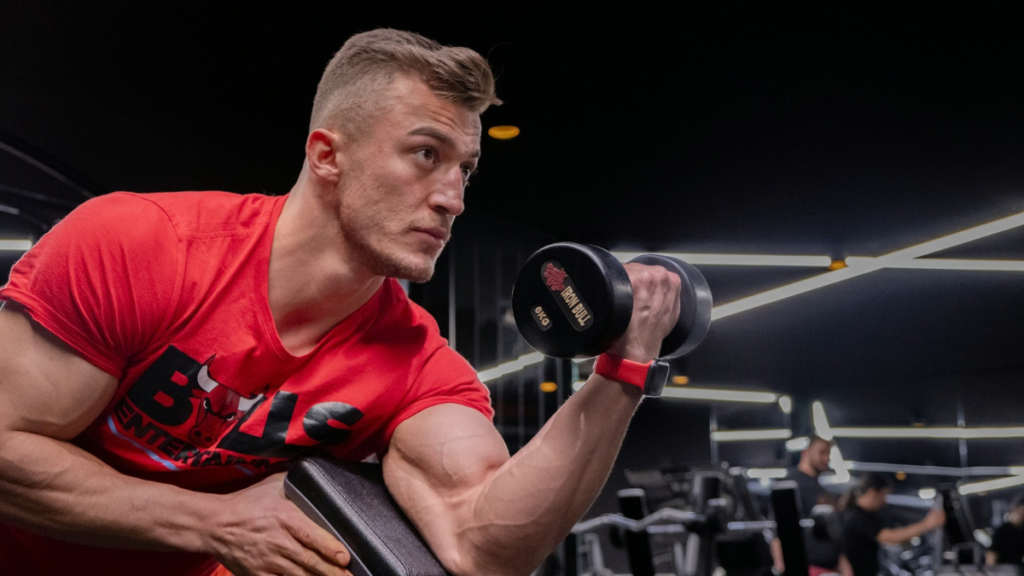
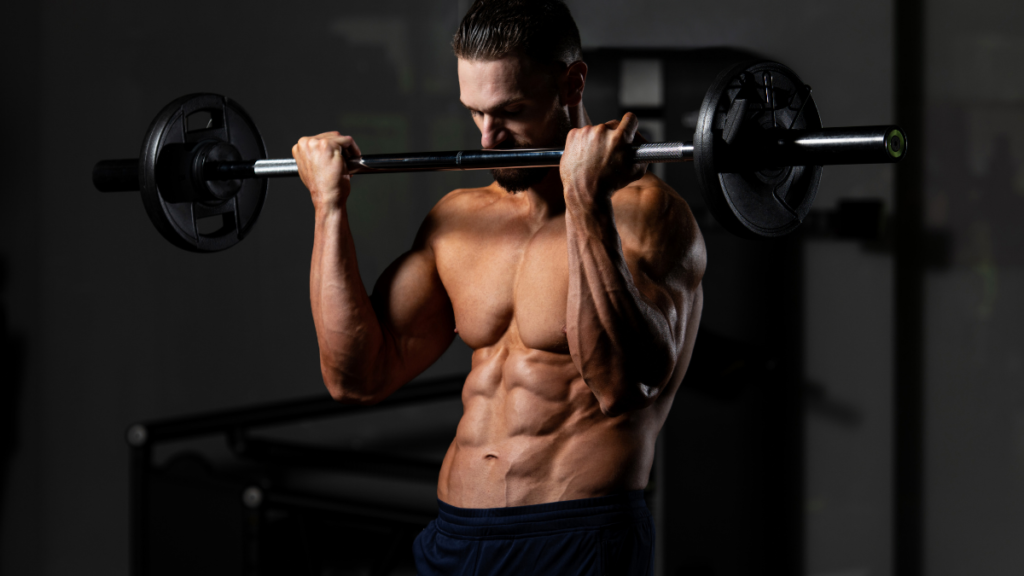
Barbell curls are one of the most recognizable exercises in strength training history. Walk into almost any gym and you will see someone standing in front of a mirror curling a straight bar, hoping to build bigger arms. The exercise has become a symbol of upper body training for good reason. It is simple, accessible, and effective. But there is a problem.
Barbell curls are not necessarily the best choice for maximizing biceps growth. Research in muscle hypertrophy, biomechanics, and resistance training now shows that several other exercises can create greater muscle activation, a stronger stretch stimulus, and more favorable resistance profiles for building bigger arms.


That does not mean barbell curls are useless. They still work. However, if your goal is to maximize muscle growth as efficiently as possible, there are better options available.
The biceps are more complex than most people realize. Different exercises challenge the muscle in different positions. Some movements emphasize the long head of the biceps, which contributes to the peak appearance of the arm. Others place more tension on the short head, helping create width and fullness. Certain exercises also recruit the brachialis and brachioradialis, two muscles that can dramatically improve total arm size.
Modern hypertrophy research suggests that exercises which load the muscle in a stretched position may provide superior muscle growth compared to movements that are hardest in the shortened position. This matters because traditional barbell curls lose tension near the bottom of the movement and often encourage momentum and cheating.
The following four exercises solve many of those problems.
Why Barbell Curls Are Not Optimal for Maximum Growth
Before looking at the alternatives, it helps to understand the limitations of the classic barbell curl.
Limited Tension at Long Muscle Lengths
One of the biggest drawbacks of the barbell curl is the resistance curve. The exercise becomes hardest around the middle of the lift, when the forearm is parallel to the floor. At the bottom position, where the biceps are stretched, tension is relatively low.
This matters because recent hypertrophy research suggests muscles may grow especially well when challenged under high tension while lengthened. Exercises that maintain tension in the stretched position may create a stronger hypertrophic stimulus.
Fixed Wrist Position
Straight barbell curls lock the wrists into full supination. Many people find this uncomfortable, especially if they have limited wrist mobility or elbow irritation. A fixed grip can also reduce freedom of movement and may not align well with individual anatomy.
Easy to Cheat
Heavy barbell curls often turn into partial reps with excessive body swing. Once momentum takes over, the biceps do less work and the shoulders and lower back contribute more to moving the weight.
That may help ego lifting, but it reduces muscular tension where you actually want it.
Less Constant Tension
Free weight curls lose tension near the top because gravity no longer strongly resists the movement when the forearm becomes vertical. Cable exercises often solve this issue by maintaining tension through a greater range of motion.
What Actually Builds Bigger Biceps?
Muscle growth is primarily driven by three mechanisms:
- Mechanical tension
- Sufficient training volume
- Progressive overload
Modern evidence strongly favors mechanical tension as the dominant factor.
To maximize biceps hypertrophy, exercises should ideally:
- Train the muscle through a full range of motion
- Create high tension in stretched positions
- Allow controlled execution
- Minimize momentum
- Be easy to progressively overload
The four exercises below check those boxes better than standard barbell curls.
1. Incline Dumbbell Curl
The incline dumbbell curl is arguably one of the best biceps exercises ever created for hypertrophy.
Why It Works Better
When you sit back on an incline bench with your arms hanging behind your torso, the long head of the biceps becomes heavily stretched. This creates significant tension at longer muscle lengths.
That stretched position is one of the key reasons this exercise is so effective for muscle growth. Unlike barbell curls, incline dumbbell curls also allow each arm to move independently. This improves range of motion and lets lifters naturally rotate the wrist during the curl.
The dumbbells create a more comfortable movement pattern while increasing total muscular recruitment.
The Science Behind It
Research has shown that training muscles at longer lengths can produce greater hypertrophy compared to shortened range training. A study published in the European Journal of Sport Science found that exercises emphasizing stretch mediated tension led to superior muscle growth outcomes.
Another investigation comparing preacher curls and incline curls showed that incline curls may preferentially stimulate the long head because of the shoulder position.
How to Perform It Correctly
Set an adjustable bench to around 45 to 60 degrees. Sit back with your chest up and arms hanging fully extended. Key execution points:
- Keep elbows behind the torso
- Fully extend at the bottom
- Curl without swinging
- Supinate hard as you lift
- Lower slowly for maximum tension
Avoid rushing the eccentric phase. The lowering portion is critical for hypertrophy.
Best Rep Range
For hypertrophy:
- 8 to 15 reps
- 3 to 5 sets
- Controlled tempo
- Full range of motion
2. Bayesian Cable Curl
The Bayesian curl has become increasingly popular among evidence based coaches and bodybuilders. There is a good reason for that.
It creates enormous tension in the stretched position while maintaining constant cable resistance throughout the entire movement.
Why It Outperforms Barbell Curls
In a Bayesian curl, the cable pulls your arm backward while you curl forward. This means the biceps remain under tension even at full extension. Unlike free weights, cables do not rely entirely on gravity. They maintain resistance across the range of motion.
This makes the exercise extremely effective for hypertrophy. The movement also minimizes momentum because the cable immediately punishes sloppy execution.
What the Research Says
Cable based exercises often produce higher continuous muscular activation compared to free weight versions.
Electromyography studies have demonstrated that cable curls maintain stronger activation profiles throughout the movement due to uninterrupted tension. Research into hypertrophy mechanisms also supports exercises that challenge muscles under stretch. The Bayesian curl does exactly that.
How to Perform the Exercise
Set a cable pulley to the lowest position. Grab a single handle and step forward so the working arm trails behind the torso. Execution cues:
- Keep chest tall
- Let the arm fully extend behind you
- Curl toward shoulder level
- Squeeze hard at the top
- Lower slowly
The movement should feel smooth and controlled.
Why Lifters Feel a Stronger Pump
The constant tension from the cable creates significant metabolic stress alongside mechanical tension. While metabolic stress alone is not the primary driver of hypertrophy, it can contribute to training quality and perceived muscle activation.

Many lifters report that Bayesian curls create an intense contraction and stretch simultaneously.
Best Rep Range
- 10 to 15 reps
- 3 to 4 sets
- Moderate weight
- Slow eccentric
3. Preacher Curl
The preacher curl has survived decades of bodybuilding trends because it works. It removes momentum, isolates the elbow flexors, and creates massive tension in the mid to shortened range.
Why It Can Beat Barbell Curls
Barbell curls allow too much cheating. Preacher curls eliminate that issue by locking the upper arm into position.
This strict setup forces the biceps to handle the workload directly. The exercise is especially effective for improving the short head of the biceps, which contributes to overall arm thickness.
EZ Bar Versus Dumbbells
Both variations can work well. EZ bars often feel easier on the wrists, while dumbbells allow unilateral correction of imbalances. Cable preacher curls may be even better because they maintain tension throughout the movement.
Proper Technique
Set the armpits comfortably against the pad.
Key points:
- Fully lower the weight under control
- Avoid bouncing at the bottom
- Keep shoulders relaxed
- Curl smoothly
- Squeeze at peak contraction
Do not rush the reps.
Best Rep Range
- 8 to 12 reps
- 3 to 5 sets
- Controlled repetitions
- Moderate to heavy loading
4. Hammer Curl
Technically, hammer curls target more than just the biceps. That is exactly why they deserve a spot on this list. If your goal is bigger arms overall, hammer curls are essential.
Why Hammer Curls Build More Total Arm Mass
Hammer curls heavily recruit the brachialis, a muscle that sits underneath the biceps brachii and plays a major role in overall arm size. As the brachialis grows, it can help push the biceps upward, creating the appearance of larger and fuller arms. Hammer curls also strongly target the brachioradialis, which adds thickness to the upper forearm and contributes to greater overall arm density. Traditional barbell curls tend to place less emphasis on these muscles because the fully supinated grip shifts more of the workload directly onto the biceps brachii.
Dumbbell Versus Rope Hammer Curls
Both dumbbell hammer curls and cable rope hammer curls are excellent choices for building bigger arms. Dumbbells allow each arm to move independently and provide a more natural wrist alignment, which many lifters find more comfortable on the elbows and wrists. Cable rope hammer curls, on the other hand, maintain more consistent tension throughout the movement, helping keep the muscles under load for longer.
Since each variation offers unique benefits, alternating between them can be an effective strategy for maximizing arm development.
How to Perform Hammer Curls Correctly
Hold the weights with palms facing inward.
Execution tips:
- Keep elbows close to the torso
- Avoid swinging
- Lift with control
- Lower slowly
- Maintain neutral wrists
The movement should remain strict throughout.
Best Rep Range
- 10 to 15 reps
- 3 to 4 sets
- Moderate loads
- Controlled tempo
How to Program These Exercises for Maximum Growth
The best biceps program does not rely on a single exercise. Different exercises challenge the muscle differently. Combining movements with varying resistance curves and arm positions creates a more complete hypertrophy stimulus.
Sample Biceps Workout
Here is an effective evidence based structure:
- Incline Dumbbell Curl
- 4 sets of 10 to 12
- Bayesian Cable Curl
- 3 sets of 12 to 15
- Preacher Curl
- 3 sets of 8 to 10
- Hammer Curl
- 3 sets of 12 to 15
This combination trains:
- Long head
- Short head
- Brachialis
- Brachioradialis
- Stretch focused tension
- Peak contraction
- Constant resistance
Are Barbell Curls Completely Useless?
Absolutely not. Barbell curls still build muscle. They allow heavy loading and can remain part of a well designed arm program. However, they are not automatically the king of biceps exercises.
Many lifters plateau because they rely too heavily on traditional curls while ignoring exercises that better challenge the muscle in stretched positions or maintain constant tension. If arm growth has stalled, replacing some barbell curls with the exercises above may produce better results.
Final Thoughts
Barbell curls earned their legendary reputation because they are effective, but exercise science continues to evolve, and modern evidence suggests there are more efficient ways to maximize biceps hypertrophy. Incline dumbbell curls create exceptional stretch mediated tension for the long head of the biceps, while Bayesian cable curls maintain constant resistance and heavily load the muscle in the stretched position.
Preacher curls reduce momentum and isolate the biceps through strict mechanics, and hammer curls help build the brachialis and brachioradialis for thicker, more impressive arms overall. The most effective strategy is not relying on a single exercise forever, but understanding how different movements challenge the muscles and combining them intelligently within a training program. Train hard, control every repetition, progressively overload over time, and prioritize recovery. That combination builds bigger arms far more reliably than endlessly swinging a barbell in front of the mirror.
Key Takeaways
| Exercise | Main Advantage | Primary Muscles Emphasized | Best Rep Range |
|---|---|---|---|
| Incline Dumbbell Curl | Maximum stretch tension | Long head of biceps | 8 to 15 |
| Bayesian Cable Curl | Constant cable resistance | Entire biceps with stretch emphasis | 10 to 15 |
| Preacher Curl | Strict isolation and reduced cheating | Short head of biceps | 8 to 12 |
| Hammer Curl | Greater total arm thickness | Brachialis and brachioradialis | 10 to 15 |
Bibliography
- Brad Schoenfeld, B. (2010) ‘The mechanisms of muscle hypertrophy and their application to resistance training’, Journal of Strength and Conditioning Research, 24(10), pp. 2857 to 2872.
- Maeo, S., Jespersen, J.G., Jacobsen, M.H., et al. (2021) ‘Muscular adaptations to range of motion in resistance training’, Frontiers in Physiology, 12, pp. 1 to 12.
- Pedrosa, G.F., Lima, F.V., Schoenfeld, B.J., et al. (2023) ‘Training at long muscle lengths promotes greater muscle hypertrophy’, European Journal of Sport Science, 23(6), pp. 923 to 932.
- Schoenfeld, B.J., Ogborn, D. and Krieger, J.W. (2017) ‘Dose response relationship between weekly resistance training volume and increases in muscle mass’, Journal of Sports Sciences, 35(11), pp. 1073 to 1082.
- Oliveira, L.F., Matta, T.T., Alves, D.S., et al. (2009) ‘Effect of the shoulder position on biceps brachii EMG in different dumbbell curls’, Journal of Sports Science and Medicine, 8(1), pp. 24 to 29.
- Signorile, J.F., Kwiatkowski, K., Caruso, J.F. and Robertson, B. (2002) ‘Effect of muscle length and joint angle on EMG activity in the biceps brachii muscle’, Journal of Strength and Conditioning Research, 16(3), pp. 347 to 352.