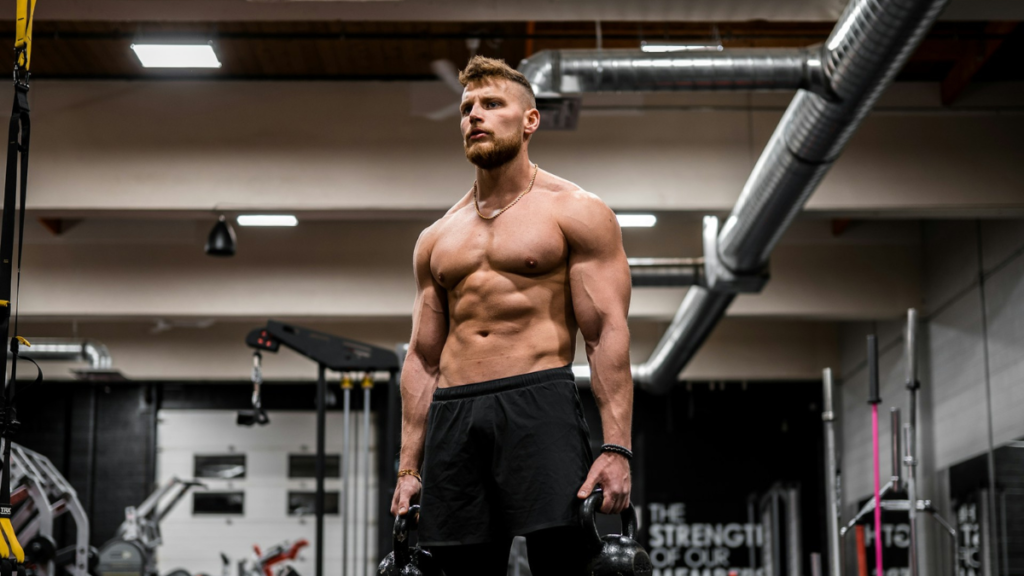


Building a thick, well defined chest after 30 is absolutely achievable, but it requires a smarter approach than what worked in your early twenties. Recovery is slower, joint tolerance changes, and muscle protein synthesis becomes slightly less responsive. The upside is that with better technique, exercise selection, and consistency, men over 30 can still build an impressive chest that looks strong and athletic.
This article breaks down the three most effective chest exercises backed by science, explains why they work, and shows you how to use them to maximize muscle growth while protecting your joints.


Why Chest Training Changes After 30
Muscle Growth Is Still Possible
Contrary to popular belief, hypertrophy does not suddenly stop at 30. Research shows that resistance training remains highly effective for building muscle well into middle age and beyond. However, the rate of muscle protein synthesis can decline slightly, meaning training quality and nutrition become more important.
Recovery Becomes More Important
Recovery capacity tends to decrease with age. This does not mean you need to train less, but you need to train smarter:
- Prioritize sleep and nutrition
- Manage total weekly volume
- Avoid excessive joint stress
Joint Health Matters More
Shoulders and elbows often become limiting factors in chest training. Poor exercise selection or technique can lead to chronic pain. Choosing movements that allow natural joint positioning and stable loading is key.
What Makes an Exercise Effective for Chest Growth
Before jumping into the best exercises, it helps to understand what actually drives hypertrophy.
Mechanical Tension
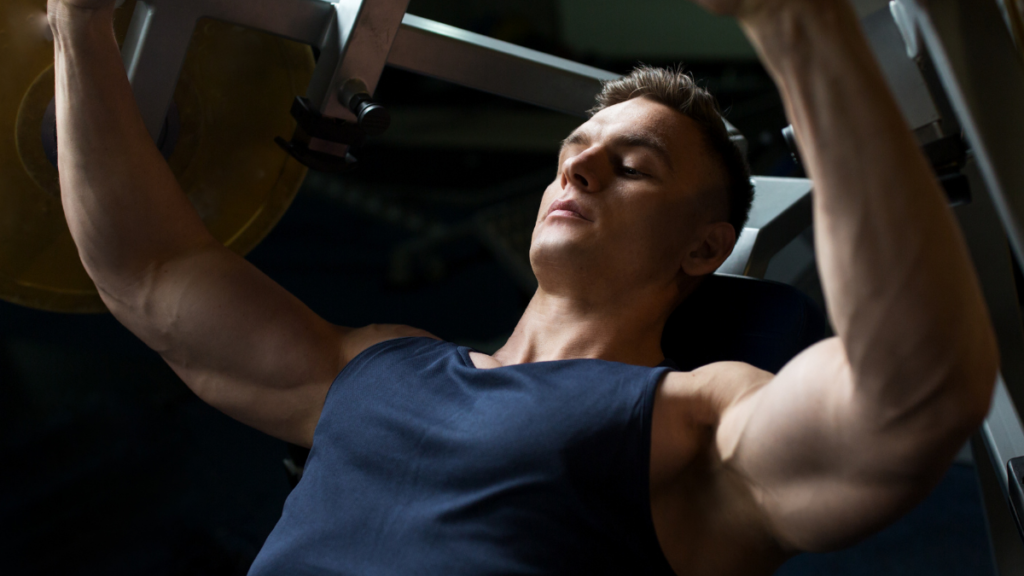
Mechanical tension is the primary driver of muscle growth. This occurs when muscles are loaded through a full range of motion under resistance.
Muscle Activation
Exercises that produce high activation of the pectoralis major tend to be more effective for hypertrophy. Electromyography studies consistently show that pressing and fly variations activate the chest well when performed correctly.
Stretch and Range of Motion
Training muscles in a stretched position appears to enhance hypertrophy. Deep range pressing and controlled fly movements are particularly effective.
Progressive Overload
You must gradually increase resistance, reps, or training density over time to continue growing.
The 3 Best Chest Exercises for Guys Over 30
These exercises were selected based on research into muscle activation, joint safety, and hypertrophy outcomes.
1. Incline Dumbbell Press
Why It Works
The incline dumbbell press is one of the best exercises for building the upper chest, which contributes significantly to a full, jacked look.
Studies comparing barbell and dumbbell pressing show that dumbbells allow greater range of motion and more balanced activation between sides. They also reduce stress on the shoulders due to more natural arm movement.
Key Benefits
- Greater stretch at the bottom position
- Improved muscle symmetry
- Reduced shoulder strain compared to barbell pressing
- Strong activation of the clavicular head of the pecs
How to Perform It Correctly
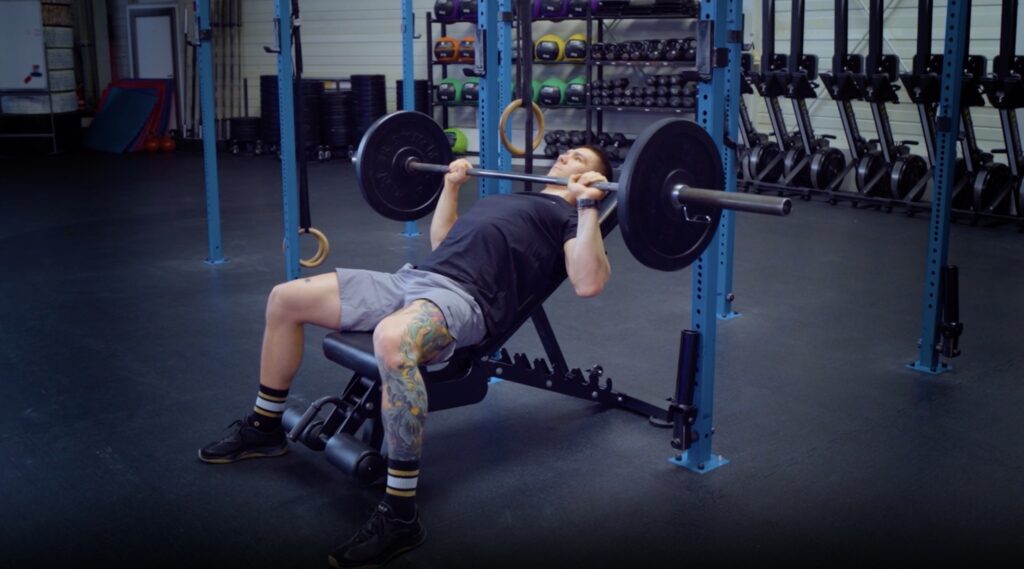
Set a bench at about 30 to 45 degrees. Sit with a dumbbell in each hand and press them overhead.
Lower the weights slowly while keeping your elbows slightly tucked. Aim for a deep stretch without losing control. Press the weights back up while squeezing your chest at the top. Focus on control rather than momentum.

Common Mistakes
- Setting the bench too steep, which shifts work to the shoulders
- Flaring elbows excessively
- Using weights that are too heavy and sacrificing range of motion
Programming Tips
- 3 to 4 sets of 6 to 10 reps
- Rest 90 to 120 seconds
- Use a controlled tempo
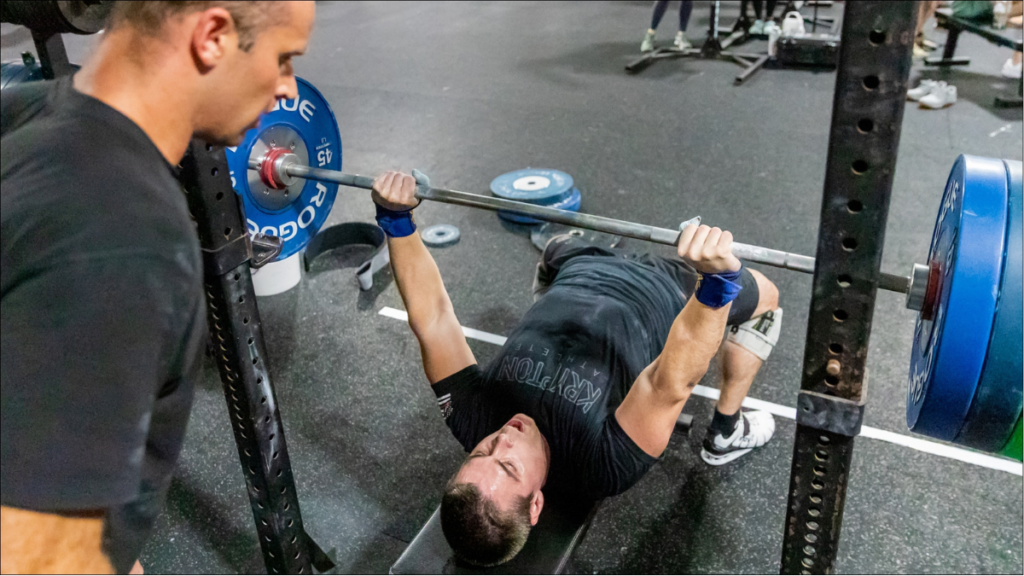
2. Flat Barbell Bench Press
Why It Works
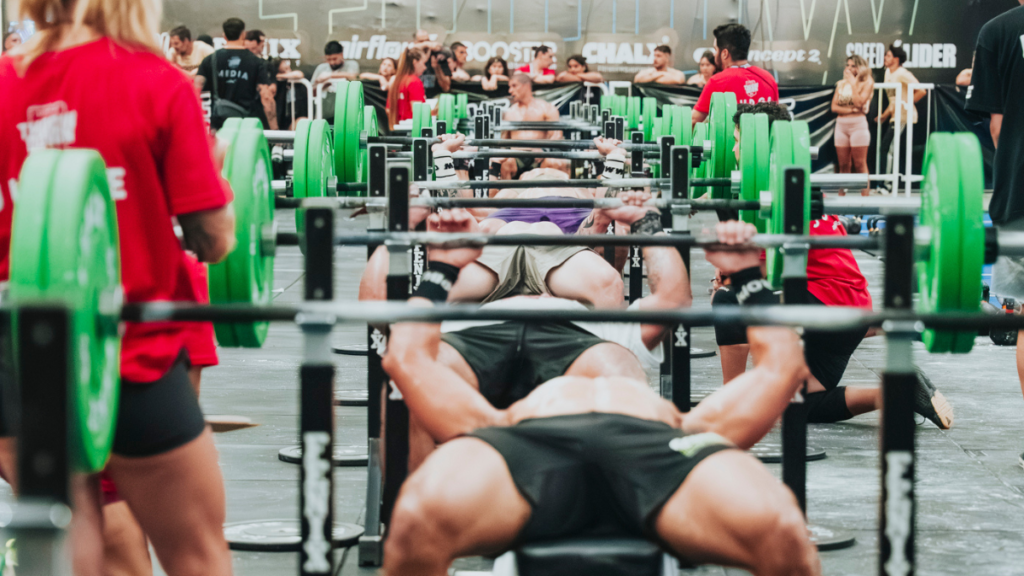
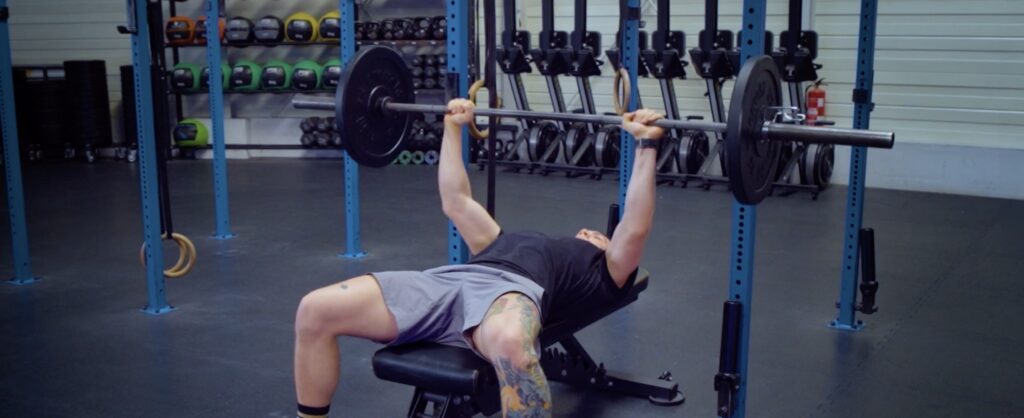
The barbell bench press remains one of the most effective exercises for overall chest mass. It allows heavy loading, which is essential for mechanical tension. Research shows that multi joint compound exercises like the bench press produce high levels of muscle activation and strength gains.
Key Benefits
- Allows maximal loading
- Builds overall chest thickness
- Improves pressing strength
- Efficient for progressive overload
How to Perform It Correctly
Lie flat on a bench with your feet planted firmly on the floor. Grip the bar slightly wider than shoulder width. Lower the bar under control to your mid chest. Keep your shoulder blades retracted and your chest lifted. Press the bar back up while maintaining tension through your chest and triceps.
Common Mistakes
- Bouncing the bar off the chest
- Letting shoulders roll forward
- Using excessive arch without control
- Poor bar path
Joint Friendly Adjustments
For men over 30, small modifications can make a big difference:
- Use a moderate grip width
- Avoid locking out aggressively
- Consider using a slight decline if shoulder discomfort occurs
Programming Tips
- 3 to 5 sets of 4 to 8 reps
- Focus on progressive overload
- Rest 2 to 3 minutes between sets
3. Cable Chest Fly
Why It Works
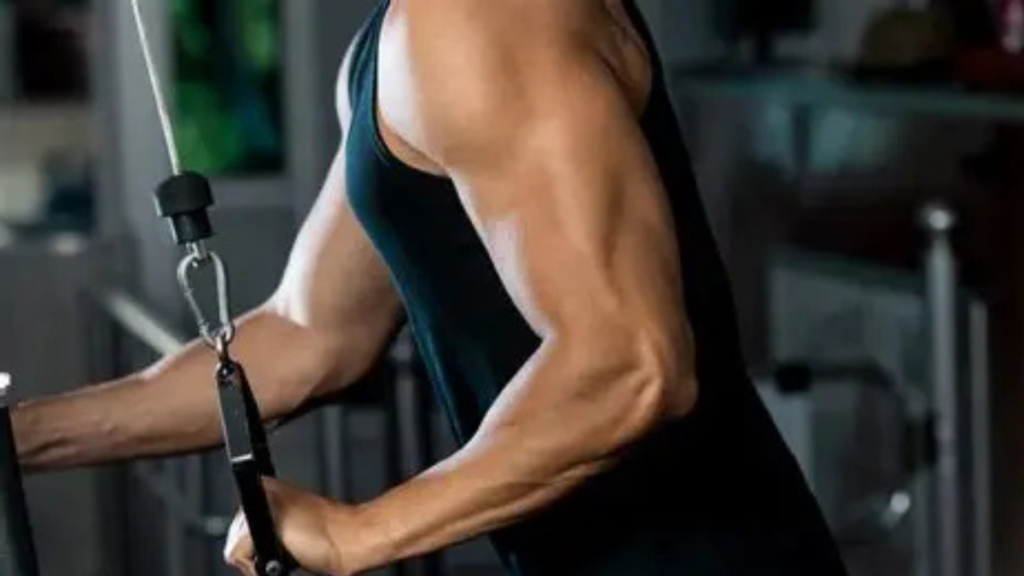
The cable chest fly provides constant tension throughout the movement, especially in the stretched and contracted positions. This is something free weights cannot fully replicate.
Studies suggest that constant tension and stretch under load can enhance hypertrophy, particularly when combined with compound lifts.
Key Benefits
- Continuous tension on the chest
- Excellent for mind muscle connection
- Low joint stress
- Effective for finishing the workout
How to Perform It Correctly
Set the cables slightly above shoulder height. Grab the handles and step forward into a stable stance. With a slight bend in your elbows, bring your hands together in front of your chest. Slowly return to the starting position while maintaining control and feeling the stretch in your chest.
Common Mistakes
- Turning the movement into a press
- Using too much weight
- Losing tension at the top
Programming Tips
- 3 to 4 sets of 10 to 15 reps
- Use lighter weight with strict form
- Focus on stretch and contraction
How to Combine These Exercises Into a Chest Workout
A simple and effective chest workout for men over 30 could look like this:
Sample Workout
- Incline Dumbbell Press: 4 sets of 8 reps
- Flat Barbell Bench Press: 4 sets of 6 reps
- Cable Chest Fly: 3 sets of 12 reps
Weekly Frequency
Training chest 2 times per week is ideal for most people. This allows enough stimulus while still giving time for recovery.
Volume and Intensity Guidelines
Weekly Volume
Research suggests that 10 to 20 sets per muscle group per week is optimal for hypertrophy.
Intensity
Training close to failure is important, but not every set needs to go all out.
- Leave 1 to 2 reps in reserve for most sets
- Push closer to failure on the final set
Nutrition for Chest Growth
Protein Intake
Adequate protein intake is essential for muscle growth. Studies recommend around 1.6 to 2.2 grams of protein per kilogram of body weight per day.
Caloric Intake
To build muscle, you need a slight calorie surplus. Around 250 to 500 extra calories per day is usually sufficient.
Meal Timing
Protein distribution across the day helps maximize muscle protein synthesis.
- Aim for 3 to 5 protein rich meals daily
Recovery Strategies
Sleep
Sleep is one of the most important factors for recovery and muscle growth. Aim for 7 to 9 hours per night.
Deload Weeks
Every 6 to 8 weeks, reduce training intensity or volume to allow full recovery.
Mobility Work
Incorporate shoulder and thoracic mobility exercises to maintain joint health.
Common Mistakes Guys Over 30 Should Avoid
Training Too Heavy Too Often
Going heavy all the time increases injury risk and slows recovery.
Ignoring Warm Ups
Proper warm ups improve performance and reduce injury risk.
Poor Technique
Form becomes even more important with age. Prioritize quality over ego lifting.
Neglecting Recovery
Skipping sleep and nutrition will limit results no matter how hard you train.
Key Points Summary
- Muscle growth is still highly achievable after 30
- Smart exercise selection protects joints and improves results
- Incline dumbbell press targets upper chest effectively
- Barbell bench press builds overall mass and strength
- Cable fly provides constant tension and enhances hypertrophy
- Training twice per week is ideal for most men
- Nutrition and recovery are just as important as training
Conclusion
Getting a jacked chest after 30 is not about training harder. It is about training smarter. The combination of incline dumbbell presses, flat barbell bench presses, and cable chest flies provides everything you need for size, strength, and definition.
Stick to proper form, manage your recovery, and stay consistent. Over time, these three exercises can transform your chest and keep you strong for years to come.
Key Takeaways Table
Exercise | Primary Benefit | Rep Range | Why It Works
Incline Dumbbell Press | Upper chest development | 6 to 10 | Greater stretch and joint friendly movement
Flat Barbell Bench Press | Overall mass and strength | 4 to 8 | Allows heavy loading and progressive overload
Cable Chest Fly | Constant tension and isolation | 10 to 15 | Maximizes stretch and contraction
Bibliography
- Schoenfeld, B.J. (2010). The mechanisms of muscle hypertrophy and their application to resistance training. Journal of Strength and Conditioning Research, 24(10), 2857 to 2872.
- Schoenfeld, B.J. (2016). Science and development of muscle hypertrophy. Human Kinetics, 1, 1 to 320.
- Wakahara, T. et al. (2013). Association between regional differences in muscle activation and hypertrophy. European Journal of Applied Physiology, 113(6), 1569 to 1580.
- Gentil, P. et al. (2017). Effects of adding single joint exercises to a multi joint exercise resistance training program. Journal of Strength and Conditioning Research, 31(3), 1 to 7.
- Krieger, J.W. (2010). Single vs multiple sets of resistance exercise for muscle hypertrophy. Journal of Strength and Conditioning Research, 24(4), 1150 to 1159.
- Morton, R.W. et al. (2018). Protein intake to maximize muscle mass. British Journal of Sports Medicine, 52(6), 376 to 384.