

A strong back does much more than improve your physique. It supports healthy posture, protects the spine, improves athletic performance, and helps you perform everyday tasks with less effort. While the conventional deadlift is often considered one of the best exercises for building back strength, it is not the only option.
Many people avoid deadlifts because of previous injuries, mobility limitations, lower back pain, or simply personal preference. Others may not have access to barbells or heavy weights. The good news is that research consistently shows that muscles grow and become stronger when they are challenged with sufficient resistance, regardless of whether that resistance comes from a deadlift or another well chosen exercise.


The back is made up of several major muscle groups, including the latissimus dorsi, trapezius, rhomboids, erector spinae, teres major, and smaller stabilizing muscles around the shoulder blades and spine. Building these muscles requires a combination of horizontal pulling, vertical pulling, and exercises that strengthen the muscles responsible for spinal stability.
If your goal is to develop a powerful, healthy back without ever performing a deadlift, these five exercises can help you get there.
Why You Do Not Need Deadlifts to Build a Strong Back
Deadlifts are highly effective because they train many muscles at the same time. However, they are not unique. Research on resistance training consistently demonstrates that muscle growth depends primarily on mechanical tension, training volume, progressive overload, and sufficient recovery rather than any single exercise.
Electromyography studies also show that many rowing and pulling movements activate the lats, traps, rhomboids, and spinal erectors to levels comparable to or even greater than deadlifts for specific muscles.
This means you can build impressive back strength by combining exercises that target different movement patterns.
Exercise 1: Chest Supported Row
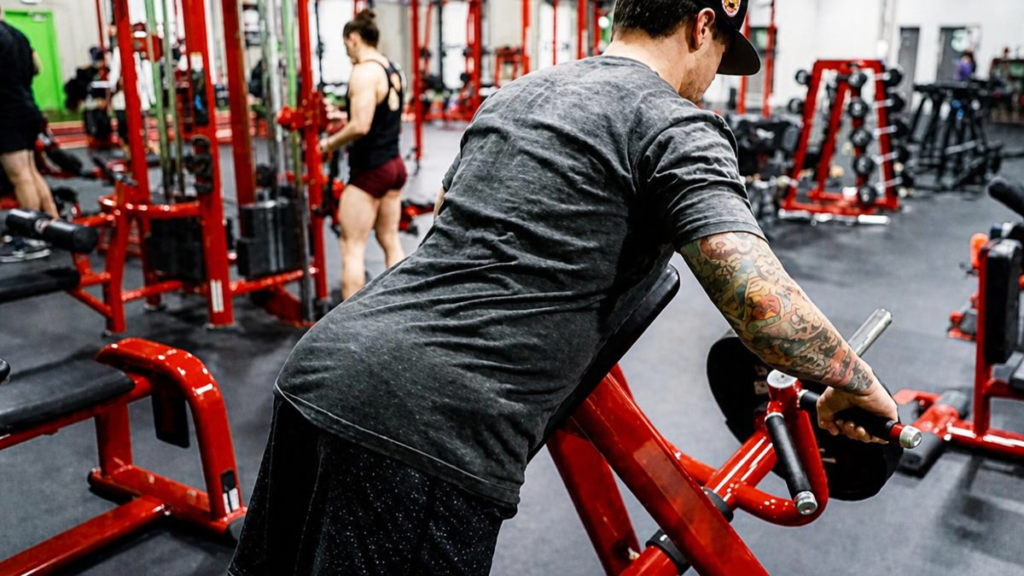
The chest supported row removes much of the stress from the lower back while allowing you to train the upper and middle back with high intensity.
Supporting your chest against an incline bench reduces the need for spinal stabilization, allowing you to focus almost entirely on pulling with your back muscles. This makes the exercise particularly useful for people recovering from lower back discomfort or those who simply want to maximize muscular development.
Keep your chest firmly against the bench and pull the weights toward your lower ribs. Focus on squeezing your shoulder blades together while keeping your neck relaxed. Lower the weights slowly under control before beginning the next repetition.
Research examining muscle activation during rowing exercises has shown high recruitment of the latissimus dorsi, middle trapezius, rhomboids, and posterior deltoids. Controlled eccentric lowering also increases muscular tension, which is an important driver of hypertrophy.
Aim for three to five sets of eight to fifteen repetitions.
Why It Works
The chest supported row minimizes momentum while maximizing tension on the muscles responsible for pulling and scapular retraction. This allows for excellent muscle development with less fatigue in the lower back.
Exercise 2: Pull Up or Assisted Pull Up
Few exercises rival the pull up when it comes to developing upper body strength. Pull ups primarily target the latissimus dorsi while heavily involving the biceps, teres major, lower trapezius, and core stabilizers. Strong lats contribute to shoulder stability, pulling strength, and the wide appearance many people seek.
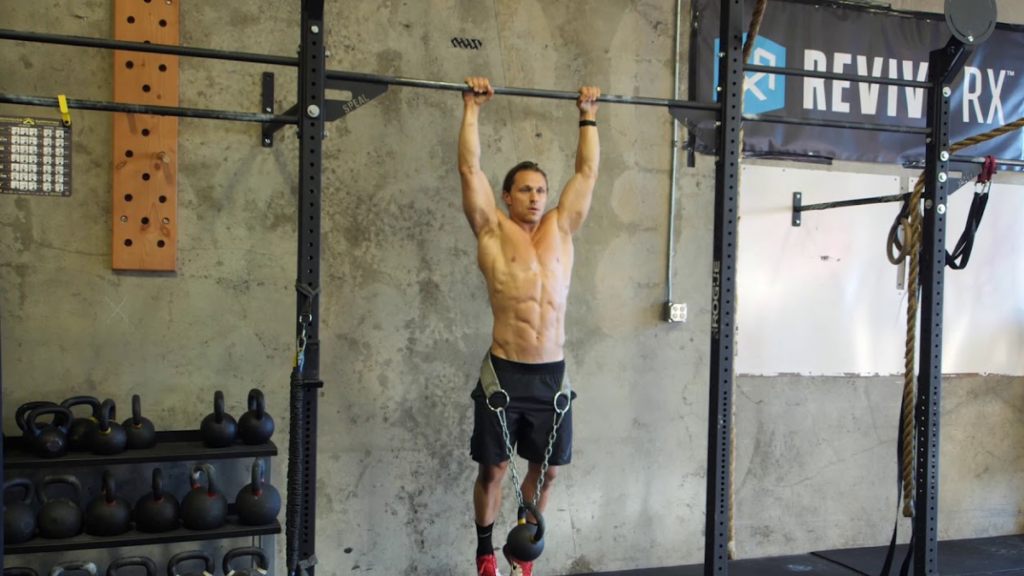
If full bodyweight pull ups are not yet possible, resistance bands or assisted pull up machines provide an excellent progression. Studies show that assisted variations preserve similar movement mechanics while allowing beginners to accumulate sufficient training volume.
Start each repetition from a full hang with your shoulders engaged. Pull your chest toward the bar while driving your elbows down toward your sides. Lower yourself under control to maintain tension throughout the movement.
Three or four sets performed close to muscular fatigue are highly effective for building both strength and muscle.
Why It Works
Vertical pulling movements emphasize shoulder adduction and extension, both of which heavily recruit the latissimus dorsi. The pull up also improves grip strength and upper body coordination.
Exercise 3: Seated Cable Row
The seated cable row is one of the most versatile back exercises because it provides constant resistance throughout the entire range of motion. Unlike free weights, cable machines maintain muscular tension during both the pulling and lowering phases. This continuous resistance may improve training quality and encourage greater muscular fatigue.
Sit tall without rounding your back. Pull the handle toward your lower abdomen while keeping your elbows close to your body. Pause briefly when your shoulder blades are fully retracted before returning to the starting position in a controlled manner. Different attachments can slightly change muscle emphasis. Neutral grips often feel more comfortable for the shoulders, while wider grips increase upper back involvement.

Research suggests that varying grip positions may slightly alter muscle recruitment, but consistent progressive overload remains the primary factor influencing long term strength and hypertrophy.
Three to four sets of ten to fifteen repetitions work well for most lifters.
Why It Works
The seated cable row develops the rhomboids, trapezius, lats, and rear shoulders while improving scapular control, which plays an important role in shoulder health.
Exercise 4: Lat Pulldown
If pull ups are not accessible, the lat pulldown is an excellent substitute. Studies comparing pull ups and pulldowns show similar activation of the latissimus dorsi when performed with proper technique. Because resistance can be adjusted easily, pulldowns are particularly valuable for beginners and for higher repetition training.
Grip the bar slightly wider than shoulder width. Pull the bar toward your upper chest while keeping your torso relatively upright. Avoid excessive leaning or using momentum to complete repetitions.

Control the upward phase and allow your shoulders to move naturally at the top without completely relaxing the muscles. Moderate repetition ranges between eight and fifteen repetitions produce an effective balance between strength and muscle growth.
Why It Works
The lat pulldown allows progressive overload across all fitness levels while effectively strengthening the muscles responsible for shoulder extension and scapular stability.
Exercise 5: Back Extension
Although many people think of back extensions as a lower back exercise, they strengthen much more than the spinal erectors. Properly performed back extensions also recruit the glutes, hamstrings, and upper back stabilizers. Strong spinal extensor muscles help maintain posture and support the spine during both athletic activities and everyday movement.
Position yourself so your hips rest comfortably on the pad. Lower your torso until you feel a stretch without rounding your spine excessively. Raise yourself until your body forms a straight line. Avoid hyperextending your lower back at the top. Holding a weight plate across your chest provides a simple method of progressive overload once bodyweight repetitions become easy.
Research indicates that endurance and strength of the spinal extensor muscles are associated with lower rates of low back pain and improved functional performance.
Perform three sets of ten to fifteen repetitions with strict technique.
Why It Works
Back extensions strengthen the muscles responsible for spinal stability while complementing rowing and pulling movements that primarily target the upper back.
How to Program These Exercises
Building a stronger back depends on more than choosing the right exercises. Training quality and consistency matter just as much.
Most evidence suggests training each muscle group at least twice per week produces greater hypertrophy than training only once weekly, provided total weekly training volume is matched.
The 5 Fat Loss Mistakes Even Experienced Gym-Goers Make
A balanced session might begin with pull ups or pulldowns while energy levels are highest. Follow with chest supported rows and seated cable rows to accumulate additional volume. Finish with back extensions to strengthen the posterior chain. Aim for approximately ten to twenty challenging sets per week for the back, depending on your experience and recovery capacity.
Each set should finish with one to three repetitions left before complete muscular failure. Research consistently demonstrates that training close to failure maximizes muscle fiber recruitment without necessarily requiring every set to end in complete exhaustion.
Final Thoughts
Deadlifts have earned their reputation as an outstanding strength exercise, but they are far from essential for building a strong, muscular back.
Chest supported rows, pull ups, seated cable rows, lat pulldowns, and back extensions collectively train every major muscle of the back while reducing the technical complexity and spinal loading associated with conventional deadlifts.
When combined with progressive overload, sufficient training volume, proper nutrition, and consistent recovery, these exercises can produce impressive gains in strength, muscle size, posture, and overall function.
Whether you are avoiding deadlifts because of injury history, equipment limitations, or personal preference, you can still build a back that is both powerful and resilient.
Key Takeaways
| Topic | Key Point |
|---|---|
| Deadlift Alternative | Deadlifts are effective but not required for building a strong back. |
| Best Exercise | Chest supported rows maximize upper back tension with minimal lower back stress. |
| Vertical Pulling | Pull ups and lat pulldowns effectively develop the latissimus dorsi. |
| Horizontal Pulling | Seated cable rows improve back thickness and scapular control. |
| Lower Back | Back extensions strengthen the spinal erectors and improve spinal endurance. |
| Training Volume | Aim for approximately 10 to 20 challenging back sets each week. |
| Frequency | Train the back at least twice weekly for optimal muscle growth. |
| Recovery | Adequate protein intake and quality sleep are essential for strength and hypertrophy. |
References
- American College of Sports Medicine. (2009) ‘Progression models in resistance training for healthy adults’, Medicine & Science in Sports & Exercise, 41(3), pp. 687 to 708.
- Bird, S.P., Tarpenning, K.M. and Marino, F.E. (2005) ‘Designing resistance training programmes to enhance muscular fitness’, Sports Medicine, 35(10), pp. 841 to 851.
- Grgic, J., Schoenfeld, B.J., Orazem, J. and Sabol, F. (2020) ‘Effects of resistance training performed to repetition failure or non failure on muscular strength and hypertrophy’, Journal of Sport and Health Science, 10(3), pp. 263 to 273.
- McGill, S.M. (2007) Low Back Disorders: Evidence Based Prevention and Rehabilitation. 2nd ed. Champaign: Human Kinetics.
- Schoenfeld, B.J. (2010) ‘The mechanisms of muscle hypertrophy and their application to resistance training’, Journal of Strength and Conditioning Research, 24(10), pp. 2857 to 2872.
- Schoenfeld, B.J., Ogborn, D. and Krieger, J.W. (2016) ‘Effects of resistance training frequency on measures of muscle hypertrophy’, Sports Medicine, 46(11), pp. 1689 to 1697.
- Schoenfeld, B.J., Grgic, J., Ogborn, D. and Krieger, J.W. (2017) ‘Strength and hypertrophy adaptations between low and high load resistance training’, Journal of Strength and Conditioning Research, 31(12), pp. 3508 to 3523.
- Signorile, J.F., Zink, A.J. and Szwed, S.P. (2002) ‘A comparative electromyographical investigation of muscle utilization patterns using various hand positions during the lat pulldown’, Journal of Strength and Conditioning Research, 16(4), pp. 539 to 546.
- Steele, J., Bruce Low, S. and Smith, D. (2015) ‘A review of the specificity of exercises designed for conditioning the lumbar extensors’, British Journal of Sports Medicine, 49(5), pp. 291 to 297.
- Wernbom, M., Augustsson, J. and Thomeé, R. (2007) ‘The influence of frequency, intensity, volume and mode of strength training on whole muscle cross sectional area in humans’, Sports Medicine, 37(3), pp. 225 to 264.