

The bench press is one of the most popular strength exercises in the world. Walk into almost any commercial gym and you will probably find someone waiting for the bench. It has become a universal test of upper body strength and one of the first numbers people ask about when discussing training.
Despite its popularity, most men never develop an impressive bench press. Many spend years training without adding much weight to the bar. Others hit an early plateau and stay there for months or even years. The problem is rarely a lack of motivation. More often, it comes down to training mistakes that limit progress.


Research on strength development has grown dramatically over the past two decades. Scientists now understand much more about muscle growth, neural adaptations, training volume, exercise technique, recovery, and nutrition. The evidence paints a clear picture of why some lifters steadily improve while others remain stuck. If your bench press has not improved in a long time, there is a good chance one or more of these factors is holding you back.
Reason 1: You Train the Bench Press, But Not the Muscles That Drive It
The bench press is often treated as a chest exercise. While the pectoralis major plays a major role, it is only one part of a complex movement involving the shoulders, triceps, upper back, and core.
Electromyography studies consistently show that the pectoralis major, anterior deltoid, and triceps brachii all contribute significantly during the bench press. Weakness in any one of these muscles can become the limiting factor that prevents heavier lifts.
3 Best Dumbbell Exercises for Beginners to Build a Jacked and Muscular Torso
Many gym goers spend most of their upper body training on chest exercises while neglecting their triceps and upper back. This creates muscular imbalances that reduce force production and make heavy pressing less stable.
The Triceps Matter More Than Most People Think
As the bar moves away from the chest, the triceps become increasingly responsible for elbow extension and locking out the lift. If you consistently miss lifts near the top, weak triceps are often the reason.
Close grip bench presses, weighted dips, overhead extensions, and skull crushers can all strengthen the triceps through different ranges of motion. Research comparing resistance exercises has shown that training muscles through sufficient loading and volume leads to significant improvements in strength.

The goal is not simply to perform more isolation work. It is to make sure the triceps receive enough challenging work every week.
The Upper Back Creates the Foundation
Many lifters overlook the importance of the muscles on the back of the body because they are not directly involved in pressing the bar upward. However, the upper back provides the stable platform from which pressing strength is generated.
Strong rhomboids, traps, rear deltoids, and lats help maintain shoulder position, improve force transfer, and reduce unnecessary movement during the lift. Studies examining resistance training and shoulder function have shown that balanced strength around the shoulder joint improves stability and reduces injury risk.
Rows, pull ups, face pulls, and rear delt exercises are not optional accessories if your goal is a bigger bench press. They are essential components of the program.
More Muscle Usually Means More Strength
Strength is influenced by several factors, including technique, nervous system efficiency, and muscle size. While elite powerlifters become exceptionally skilled at maximizing force production, muscle cross sectional area remains one of the strongest predictors of absolute strength.
Research consistently demonstrates that increasing muscle mass through progressive resistance training improves the potential for force production. This means that lifters who avoid hypertrophy focused work because they only care about strength often leave progress on the table. Building bigger muscles creates a larger engine that can later produce greater force.
Reason 2: Your Training Is Too Random
One of the biggest reasons lifters stop progressing is the absence of a structured plan. Many people walk into the gym and simply load whatever weight feels challenging that day. Others attempt personal records every week, believing that maximum effort is the fastest path to getting stronger.
Science suggests otherwise. Strength improves through progressive overload, which means gradually increasing training demands over time while allowing the body to recover and adapt. Without progression, there is no reason for the body to become stronger.
Progressive Overload Is More Than Adding Weight
Adding weight is only one way to overload the muscles. You can also increase repetitions, improve technique, perform additional sets, reduce rest periods, or increase training frequency.
Research on resistance training consistently shows that progressive increases in workload are necessary for continued adaptation. Small improvements performed consistently over months produce far better results than constantly chasing dramatic jumps. Adding five pounds every few weeks for an entire year is far more effective than failing repeated attempts at adding twenty pounds overnight.
Training Volume Matters
One of the strongest findings in modern resistance training research is the importance of weekly training volume. Higher training volumes generally produce greater increases in muscle growth and strength, provided recovery is adequate.
For most recreational lifters, performing multiple challenging sets each week for the bench press and supporting muscles produces better results than doing only a few heavy singles. Strength athletes often combine heavy work with moderate repetition sets because this develops both neural efficiency and muscle size. The exact number varies between individuals, but research suggests that moderate to high weekly volume is more effective than minimal training.
Frequency Can Accelerate Progress
Many lifters only bench press once each week. While this can work for beginners, evidence suggests that training a movement more frequently often improves skill acquisition and strength development. Bench pressing two or even three times per week allows more opportunities to practice technique while distributing training volume across multiple sessions.
This approach often leads to higher quality repetitions because fatigue is lower within each workout. Improved movement efficiency is one of the major reasons experienced powerlifting programs often include multiple bench sessions every week.
Reason 3: Recovery Is Limiting Your Results
Many men assume strength is built while lifting weights. In reality, lifting provides the stimulus. The actual adaptations occur afterward. If recovery is consistently poor, performance eventually stalls regardless of how hard you train.
Sleep Is a Performance Enhancer
Sleep is one of the most powerful recovery tools available. Research has shown that inadequate sleep reduces strength, decreases power output, impairs reaction time, and negatively affects muscle recovery. Sleep restriction also alters hormones involved in muscle growth and recovery.
Athletes who consistently sleep seven to nine hours each night generally recover more effectively than those who regularly sacrifice sleep. Many lifters search for expensive supplements while ignoring the simplest intervention with the strongest evidence. Improving sleep quality often produces noticeable improvements in gym performance within weeks.
Protein Intake Supports Adaptation
Resistance training creates microscopic muscle damage that stimulates repair and growth. Protein provides the amino acids required for this rebuilding process. Large systematic reviews have concluded that higher protein intake supports greater increases in lean body mass and strength during resistance training.
For most active individuals performing regular strength training, consuming approximately 1.6 grams of protein per kilogram of body weight each day appears sufficient to maximize muscle growth. Spreading protein across multiple meals may further support muscle protein synthesis throughout the day.
Energy Intake Cannot Be Ignored
Many men attempt to build maximum strength while eating too little. Building muscle and improving strength require energy. Although experienced athletes can sometimes gain strength while maintaining body weight, long term progress is generally faster when calorie intake supports recovery and muscle growth.
Research has shown that energy deficiency negatively affects performance, recovery, hormone production, and training adaptations. If your body lacks sufficient fuel, it will prioritize basic survival over building stronger muscles.
Technique Mistakes That Quietly Limit Strength
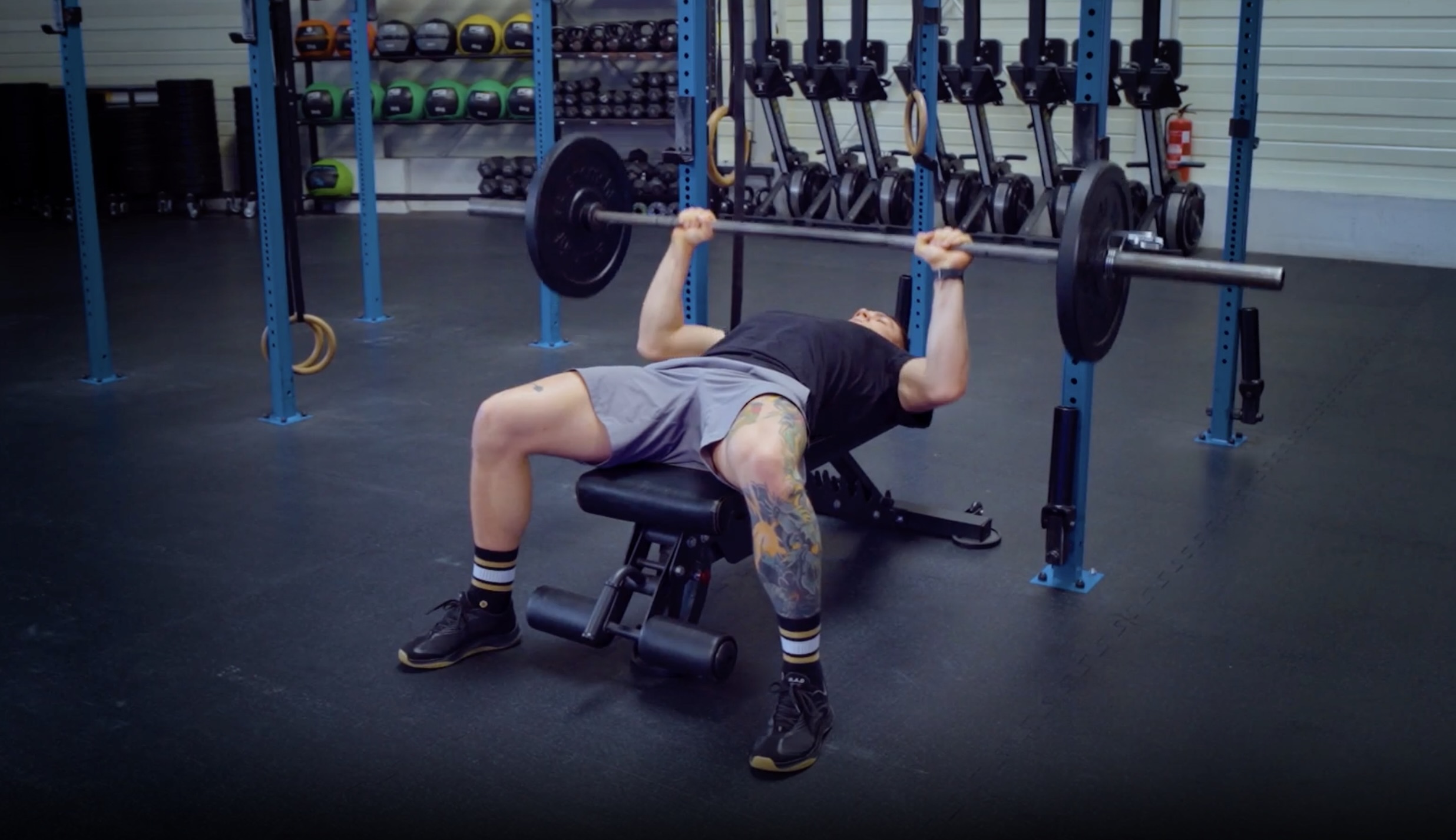
Even strong athletes can lose significant force through inefficient technique. The best bench pressers are not only stronger. They also move the bar more efficiently. A stable setup begins with the feet firmly planted on the floor. Leg drive helps create full body tension that improves force transfer throughout the lift.
Retracting and depressing the shoulder blades creates a stronger pressing platform while reducing unnecessary shoulder movement. The bar should travel in a controlled path rather than moving straight up and down. Most successful lifters naturally follow a slight curved path that keeps the bar over the strongest leverage points.
Grip width also matters. Extremely narrow or extremely wide grips may reduce force production depending on individual anatomy. Most lifters perform best with a grip that places the forearms nearly vertical when the bar touches the chest.
Practicing consistent technique improves movement efficiency. Over time, the nervous system becomes better at recruiting muscle fibers in the correct sequence, allowing heavier loads to be lifted with the same amount of muscle mass.
Why Patience Wins
Perhaps the biggest difference between successful lifters and frustrated ones is consistency. Strength development is surprisingly slow. Research shows that early improvements often come from neural adaptations, while later progress increasingly depends on muscle growth, technical mastery, and long term progressive overload.
The strongest recreational lifters rarely become strong because they discovered a secret exercise. They become strong because they followed effective training principles month after month without constantly changing programs. If you bench press regularly, train all of the muscles involved, recover properly, and progressively increase training demands over time, your chances of building an impressive bench press increase dramatically.
There are no shortcuts. There are only habits that either support long term progress or quietly limit it.
Most men never build a truly strong bench press because they focus on what feels hard instead of what actually works. The good news is that every one of these mistakes can be corrected. The science is remarkably consistent. Build more muscle, follow a structured progression, prioritize recovery, and refine your technique. Do those things consistently, and you will likely become the exception.
References
- Ahtiainen, J.P., Pakarinen, A., Alen, M., Kraemer, W.J. and Häkkinen, K., 2003. Muscle hypertrophy, hormonal adaptations and strength development during strength training in strength trained and untrained men. European Journal of Applied Physiology, 89(6), pp.555 to 563.
- Grgic, J., Schoenfeld, B.J., Orazem, J. and Sabol, F., 2018. Effects of resistance training frequency on gains in muscular strength. Sports Medicine, 48(5), pp.1207 to 1220.
- Helms, E.R., Aragon, A.A. and Fitschen, P.J., 2014. Evidence based recommendations for natural bodybuilding contest preparation. Journal of the International Society of Sports Nutrition, 11(20).
- Krieger, J.W., 2010. Single versus multiple sets of resistance exercise for muscle hypertrophy. Journal of Strength and Conditioning Research, 24(4), pp.1150 to 1159.
- Morton, R.W., Murphy, K.T., McKellar, S.R., Schoenfeld, B.J., Henselmans, M., Helms, E., Aragon, A.A., Devries, M.C., Banfield, L., Krieger, J.W. and Phillips, S.M., 2018. A systematic review, meta analysis and meta regression of protein supplementation on resistance training induced gains in muscle mass and strength in healthy adults. British Journal of Sports Medicine, 52(6), pp.376 to 384.
- Schoenfeld, B.J., Ogborn, D. and Krieger, J.W., 2017. Dose response relationship between weekly resistance training volume and increases in muscle mass. Journal of Sports Sciences, 35(11), pp.1073 to 1082.
- Schoenfeld, B.J., Grgic, J., Ogborn, D. and Krieger, J.W., 2017. Strength and hypertrophy adaptations between low load and high load resistance training. Journal of Strength and Conditioning Research, 31(12), pp.3508 to 3523.