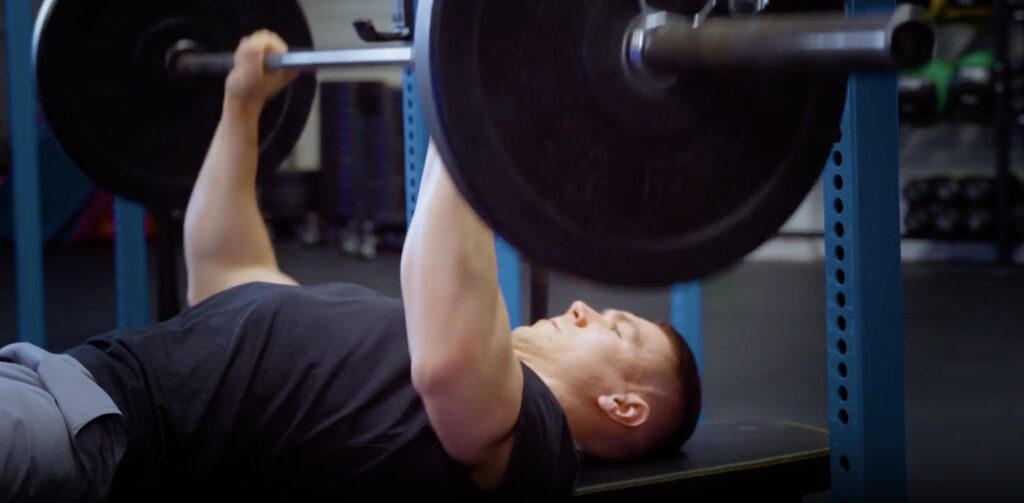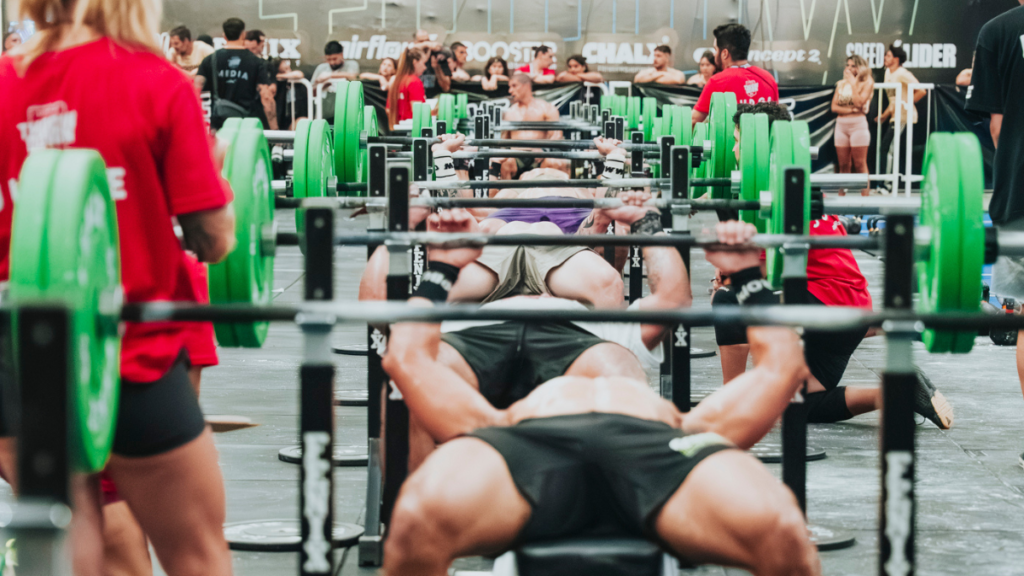


Walk into a serious powerlifting gym and you will probably see lifters performing an unusual version of the bench press. Instead of lowering the bar until it touches the chest, they stop just an inch or two above it, pause briefly, and then drive the weight back to lockout. This is the Spoto Press.
Named after elite powerlifter Eric Spoto, who once held the raw bench press world record with a staggering 722 pound lift, the exercise has become popular among strength athletes looking to improve pressing power. But does it also deserve a place in a bodybuilding routine? Can it help build a bigger, thicker chest, or is it simply a niche movement reserved for competitive powerlifters?


The answer is more nuanced than many people think. The Spoto Press offers several unique benefits for muscle growth, particularly when performed with good technique and intelligent programming. However, it also comes with limitations that prevent it from being the perfect chest exercise.
Let’s look at the science behind the movement and see whether the Spoto Press deserves a regular place in your workouts.
What Is the Spoto Press?
The Spoto Press is a variation of the traditional barbell bench press.
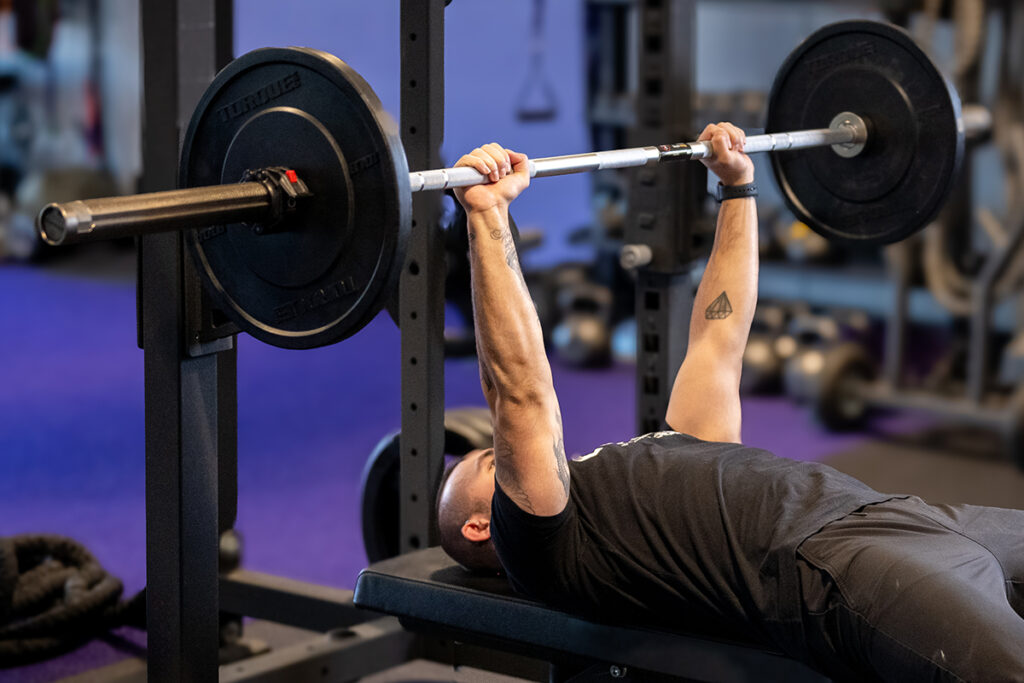
Instead of lowering the bar all the way to the chest, you stop approximately one to two inches above the sternum. You then pause for one to three seconds while maintaining full muscular tension before pressing the bar explosively back to the starting position.
Unlike a board press, there is no physical object limiting the range of motion. Unlike a paused bench press, the bar never rests on the chest. Every inch of the movement is controlled by the muscles.
This small change dramatically increases the demands placed on the chest, shoulders, and triceps because there is no opportunity to relax at the bottom of the lift.
Why Was the Spoto Press Created?
Eric Spoto developed the exercise to improve control during the weakest portion of the bench press. Many lifters lose tightness when the bar touches the chest. They bounce the weight, shift shoulder position, or rely on momentum instead of muscular force.
By removing chest contact entirely, the Spoto Press teaches athletes to stay tight throughout the entire repetition while producing force entirely through muscular contraction.
3 Best Beginner Exercises for Bigger Arms Only Using Machines
Although its original purpose was increasing maximal bench press strength, these same qualities also make it appealing for hypertrophy training.
How the Spoto Press Builds Muscle
Increased Time Under Tension
One of the biggest drivers of muscle growth is mechanical tension. Modern hypertrophy research consistently shows that muscles respond best when they experience high levels of tension across a full range of active contraction. By pausing just above the chest, the Spoto Press extends the duration that the pectorals remain under significant load.
Instead of quickly reversing the movement after touching the chest, the muscles must continue producing force while holding the bar completely still.
This longer period of tension may enhance the hypertrophic stimulus, especially when combined with moderate training volumes.
Eliminates Momentum
Many lifters unintentionally bounce the bar off the chest during regular bench pressing. Even a slight rebound reduces the amount of muscular work required to initiate the concentric portion of the lift. The Spoto Press removes this assistance entirely.
Because the bar never reaches the chest, every repetition begins from a dead stop created purely by muscular force. This increases the work performed by the chest, anterior deltoids, and triceps.

Research examining resistance training consistently demonstrates that minimizing momentum increases muscular activation and training quality.
Better Technique
One underrated benefit of the Spoto Press is technical consistency. Since the movement demands complete control, lifters naturally become more aware of bar path, shoulder position, and upper back tightness.
Improved technique often leads to more effective training across all pressing movements. Better mechanics also reduce wasted movement, allowing more of the training stress to reach the intended muscles.
Does the Chest Actually Work Harder?
Electromyography studies comparing bench press variations provide useful insight. The pectoralis major is most active during the lower half of the bench press, particularly as the bar changes direction.
Because the Spoto Press pauses precisely in this mechanically demanding position, the chest remains highly active for longer than during a traditional touch and go repetition.
Several studies examining paused versus continuous bench pressing have found increased muscle activation and greater force production demands when momentum is removed.
Although researchers have not specifically studied the Spoto Press itself, the biomechanics strongly suggest that the pause increases muscular effort in the pecs while also challenging stabilizing muscles around the shoulder.
The Role of Mechanical Tension
Current evidence suggests that mechanical tension is the primary stimulus responsible for muscle hypertrophy. Mechanical tension occurs whenever muscles produce force under load, particularly while stretched. The Spoto Press excels in this area because the pause occurs with the pectoralis major close to its stretched position while still actively producing force.
Rather than relaxing against the chest, the pecs remain fully engaged throughout the pause. This combination of stretch and sustained tension may produce an excellent anabolic stimulus when performed with appropriate loads.
Stability Creates More Muscle Recruitment
Holding a heavy barbell perfectly still above the chest is surprisingly difficult.
- The body recruits numerous stabilizing muscles to prevent unwanted movement.
- These include the rotator cuff muscles, serratus anterior, upper back musculature, and core.
- Improved stability allows greater force production over time and may reduce energy leaks during pressing exercises.
Developing these stabilizers also contributes to healthier shoulders by improving control of the scapula and humerus during loaded movements.
Strength Carries Over to Bigger Pecs
Strength and muscle size are closely connected. Although maximal strength alone does not guarantee hypertrophy, becoming stronger allows you to expose muscles to progressively heavier loads over time.
The Spoto Press is particularly effective for improving strength in the most difficult portion of the bench press. Breaking through sticking points enables continued progressive overload during traditional bench pressing. Progressive overload remains one of the most reliable predictors of long term muscle growth.

If the Spoto Press increases your regular bench press by improving bottom end strength, your chest will ultimately benefit from handling greater loads during all pressing exercises.
How Does It Compare With the Standard Bench Press?
The traditional bench press remains one of the best upper body exercises ever developed. It allows heavy loading, excellent progression, and significant activation of the chest, shoulders, and triceps. However, the standard version often allows lifters to rely on rebound off the chest.
The Spoto Press removes this advantage while improving positional awareness. The tradeoff is that most people cannot lift as much weight during the Spoto Press. Reduced loading is not necessarily a disadvantage for hypertrophy because muscle growth depends on effort and tension rather than absolute weight alone.
For many lifters, alternating both exercises provides the best combination of maximal strength development and muscle growth.
Who Should Use the Spoto Press?
The exercise works particularly well for intermediate and advanced lifters.
- Beginners often benefit more from mastering the standard bench press before introducing specialized variations.
- Powerlifters use the movement to improve competition performance.
- Bodybuilders use it to increase muscular tension and eliminate cheating.
Athletes in sports requiring upper body power can also benefit because the movement improves force production from static positions.
How to Perform the Spoto Press Correctly
- Lie on the bench with your eyes directly beneath the bar.
- Retract and depress your shoulder blades while maintaining a slight natural arch in your lower back.
- Grip the bar with your normal bench press width.
- Unrack the bar and position it directly above the shoulders.
- Lower the bar under complete control until it is approximately one to two inches above your chest.
- Pause without allowing the bar to drift downward.
- Maintain full body tension throughout the pause.
- Drive the bar upward explosively while keeping the bar path consistent.
- Avoid relaxing at any point during the repetition.
- The pause should feel active rather than passive.
Is It the Perfect Chest Exercise?
Probably not. No single exercise perfectly develops every aspect of the chest. The Spoto Press does an exceptional job of increasing tension, improving control, strengthening the most difficult portion of the press, and reinforcing excellent technique.
However, it lacks some of the advantages offered by other exercises. A full range of motion bench press allows heavier loading.
- Incline presses emphasize the upper chest.
- Dumbbell presses permit greater freedom of movement and often produce larger stretches across the pectorals.
- Cable flyes maintain continuous tension throughout the entire range of motion.
Each exercise contributes something unique to chest development. The Spoto Press deserves recognition as one of the most valuable bench press variations available, particularly for experienced lifters seeking better technique and increased muscular tension.
For anyone serious about building bigger pecs while simultaneously improving pressing strength, it is certainly one of the smartest additions to a training program.
Final Verdict
The Spoto Press successfully bridges the gap between powerlifting and bodybuilding.
Originally designed to improve world class bench pressing strength, it also creates many of the conditions known to support muscle growth. Longer time under tension, elimination of momentum, improved stability, and enhanced mechanical tension all contribute to a powerful hypertrophy stimulus.
Scientific evidence consistently supports progressive overload, mechanical tension, controlled repetitions, and proper technique as key ingredients for muscle growth. The Spoto Press checks every one of these boxes. Is it the perfect chest exercise for building jacked pecs? No single movement can claim that title.
But if your goal is to build a stronger, thicker chest while improving your bench press technique at the same time, the Spoto Press deserves a permanent place among your primary pressing exercises.
Key Takeaways
| Topic | Takeaway |
|---|---|
| Primary Benefit | Increases mechanical tension during the hardest portion of the bench press. |
| Best For | Intermediate and advanced lifters seeking strength and chest hypertrophy. |
| Main Muscles | Pectoralis major, anterior deltoids, triceps, and upper body stabilizers. |
| Unique Feature | Bar pauses one to two inches above the chest without touching it. |
| Hypertrophy Value | High due to increased time under tension and elimination of momentum. |
| Programming | Three to five sets of six to ten repetitions with one to three second pauses. |
| Limitations | Cannot replace the benefits of full range pressing or isolation exercises. |
| Overall Rating | Excellent accessory exercise for building both pressing strength and muscular chest development. |
References
- Barnett, C., Kippers, V. and Turner, P., 1995. Effects of variations of the bench press exercise on the EMG activity of five shoulder muscles. Journal of Strength and Conditioning Research, 9(4), pp.222 to 227.
- Gentil, P., Fisher, J. and Steele, J., 2017. A review of the acute effects and long term adaptations of single and multi joint exercises during resistance training. Sports Medicine, 47(5), pp.843 to 855.
- Grgic, J., Schoenfeld, B.J., Orazem, J. and Sabol, F., 2022. Effects of resistance training performed to repetition failure or non failure on muscular strength and hypertrophy. Scandinavian Journal of Medicine and Science in Sports, 32(11), pp.1541 to 1557.
- Krzysztofik, M., Wilk, M., Wojdala, G. and Golas, A., 2019. Maximizing muscle hypertrophy through resistance training. International Journal of Environmental Research and Public Health, 16(24), 4897.
- Schoenfeld, B.J., 2010. The mechanisms of muscle hypertrophy and their application to resistance training. Journal of Strength and Conditioning Research, 24(10), pp.2857 to 2872.
- Schoenfeld, B.J., Ogborn, D. and Krieger, J.W., 2017. Dose response relationship between weekly resistance training volume and increases in muscle mass. Journal of Sports Sciences, 35(11), pp.1073 to 1082.
- Suchomel, T.J., Nimphius, S. and Stone, M.H., 2016. The importance of muscular strength in athletic performance. Sports Medicine, 46(10), pp.1419 to 1449.
- Wakahara, T., Fukutani, A., Kawakami, Y. and Yanai, T., 2013. Nonuniform muscle hypertrophy. Sports Medicine, 43(9), pp.891 to 902.