

Big traps can make the upper body look more powerful, but the trapezius is not only a physique muscle. It helps control the shoulder blades, supports overhead movement, and contributes to carrying, pulling, lifting, and posture.
Many people train traps only with shrugs. Shrugs can be effective, especially for the upper portion of the muscle, but they do not train the entire trapezius equally. A complete trap program should include movements that challenge shoulder elevation, loaded carrying, and controlled shoulder blade movement.


The three best exercises for strong and muscular traps are the barbell shrug, farmer carry, and face pull. Together, they train the upper, middle, and lower regions of the trapezius while also developing grip, upper back strength, and shoulder control.
Research on resistance training shows that muscles grow when training creates enough mechanical tension, effort, and progressive overload. These three exercises can meet those requirements when you perform them consistently and gradually increase the challenge.
What the Trapezius Actually Does
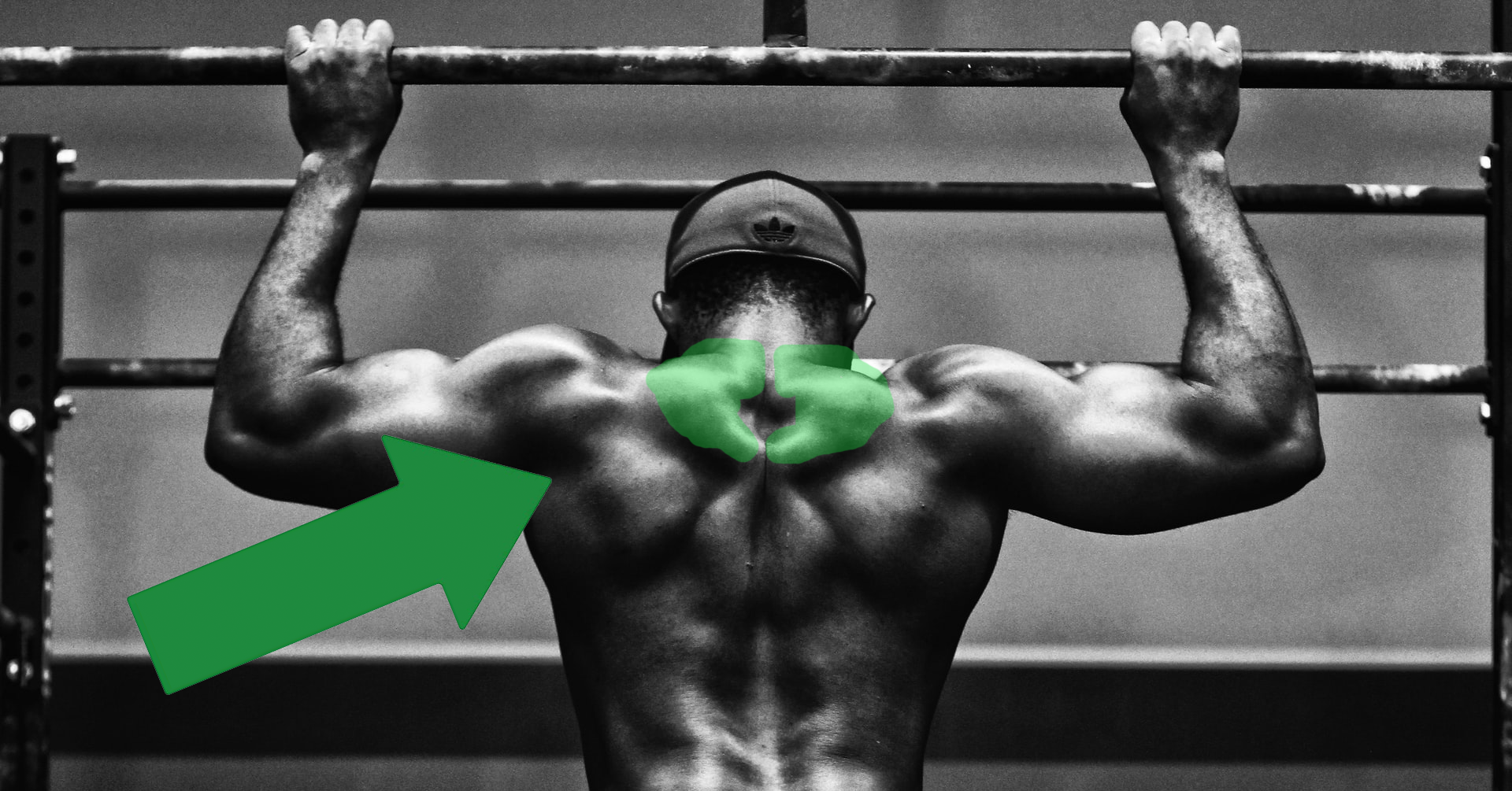
The trapezius is a large diamond shaped muscle that runs from the base of the skull down the upper back and across to the shoulder blades. It is often divided into upper, middle, and lower regions because different parts contribute to different shoulder blade actions.
The upper trapezius helps elevate the shoulder blades. This is the action you perform during a shrug. It also contributes to upward rotation of the shoulder blade when you raise your arms overhead.
3 Best Beginner Exercises for Wider and More Attractive Shoulders
The middle trapezius helps pull the shoulder blades toward the spine. This action is important during rows and other horizontal pulling movements. The lower trapezius helps control the shoulder blades during overhead work and contributes to upward rotation and depression of the shoulder blade.
These regions do not work in complete isolation. The trapezius works with the serratus anterior, rhomboids, rotator cuff, rear deltoids, and other shoulder muscles to control movement. That is why a balanced approach works better than performing only heavy shrugs.
1. Barbell Shrug
The barbell shrug is one of the most direct exercises for building the upper traps. It allows you to use substantial load and make small, measurable increases in weight over time.
Set the barbell in a rack at around thigh height, or lift it from the floor using a controlled deadlift setup. Hold the bar with your hands just outside hip width and stand tall with your arms straight. Keep the bar close to your thighs and your chest comfortably lifted.
Raise your shoulders upward toward your ears. Pause briefly at the top, then lower your shoulders under control until they return to the starting position. The movement should travel straight up and down.
Research using muscle activity measurements has shown that shrug variations effectively recruit the upper trapezius. The barbell shrug is especially useful for muscle growth because it allows progressive loading with a stable and simple movement pattern.
The goal is not to use the heaviest possible barbell at the expense of movement quality. Your shoulders should move through a controlled range, and your neck should remain relaxed. A heavy load can be productive, but it should not cause you to bend your elbows, roll your shoulders, or jerk the bar upward.
How to Program the Barbell Shrug
Start with two or three sets of eight to fifteen repetitions. Use a load that allows you to pause briefly at the top of each repetition. The final few repetitions should feel challenging, but your shoulders should still move smoothly.
When you can complete all sets at the top of the repetition range with control, increase the load slightly. You can also make the exercise harder by slowing the lowering phase or holding the top position for one or two seconds.
The upper traps often tolerate moderate to high repetition work well. However, do not assume that more repetitions always produce better results. Progressive overload and consistent technique are more important than endless sets.
Common Barbell Shrug Errors
The most common error is rolling the shoulders backward in a circular motion. This does not improve trap activation and can make the movement less controlled. Lift your shoulders directly upward and lower them directly downward.
Another common error is using too much weight. If you need to bend the elbows, lean backward, or bounce the bar, reduce the load. The traps should do the work, not momentum.
2. Farmer Carry
The farmer carry is one of the best full body exercises for building strong traps. Hold a heavy weight in each hand and walk with control. The traps, upper back, hands, forearms, trunk, hips, and legs all work together to manage the load.
Use dumbbells, kettlebells, farmer carry handles, or trap bar handles if they are available. Stand between the weights with your feet around hip width apart. Hinge down, grip the handles firmly, and stand up with a controlled motion.
Walk forward with short, steady steps. Keep your shoulders level and away from your ears. Your arms should stay long at your sides while the weights remain close to your legs. Keep your ribs stacked over your pelvis and avoid leaning backward or forward.
The farmer carry challenges the upper traps because they help support the shoulder girdle under load. It also trains grip strength, which is important for deadlifts, pullups, rows, kettlebell work, and many everyday tasks.
Research on loaded carries and grip strength supports their relevance for trunk stability and physical function. Direct research on farmer carries for trap hypertrophy is limited, but the exercise provides a clear progressive loading opportunity for the upper back and shoulder muscles.
How to Program the Farmer Carry
Start with two or three carries of twenty to forty seconds. Use a load that challenges your grip but still allows you to walk with normal steps and level shoulders.
If your goal is trap and grip strength, use a heavier weight for shorter carries. If your goal is muscular endurance and conditioning, use a lighter weight for longer carries. Both approaches can have value, but maintain good posture in every carry.
Progress by increasing the load, duration, or distance. Change only one variable at a time. If you add more weight, reduce the carry time temporarily until you can regain control.
Common Farmer Carry Errors
The most common error is walking too quickly. Fast walking can make the weights swing and pull you out of position. Use a deliberate pace and focus on keeping the torso stable.
Another error is allowing the shoulders to rise toward the ears. The traps will work hard during the carry, but you should not actively shrug throughout the movement. Keep the neck relaxed and shoulders organized.
3. Face Pull
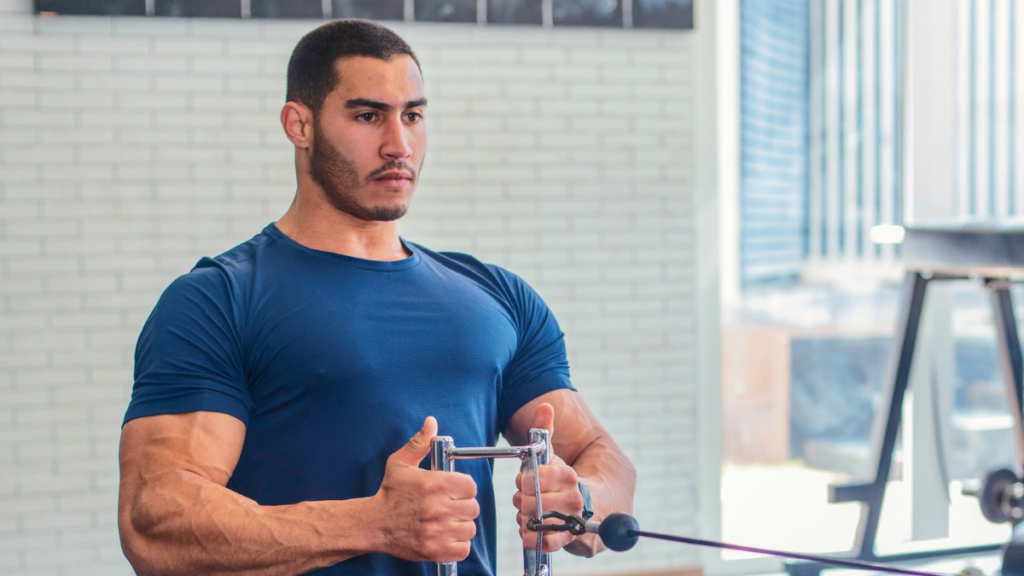
The face pull is one of the best exercises for training the middle and lower traps alongside the rear deltoids and rotator cuff muscles. It is usually performed with a cable machine or resistance band, making it easy to adjust and suitable for a wide range of training levels.
Set the cable or resistance band at about face height. Hold the rope or band with both hands and step back until there is light tension. Start with your arms extended in front of you and your feet planted firmly.
Pull the handles toward your face while bringing your elbows outward and backward. As you pull, rotate your hands so they finish near the sides of your head. Pause briefly when your upper arms are roughly in line with your torso, then return to the start position slowly.
The face pull trains shoulder blade retraction and controlled external rotation of the upper arm. Research on shoulder exercises shows that movements involving shoulder blade control and external rotation can activate the middle and lower trapezius along with the muscles that help stabilize the shoulder.
The face pull is not a magic exercise for shoulder pain or poor posture. It can, however, be a useful part of a balanced upper body program that includes pressing, rowing, pulling, and overhead work.
How to Program the Face Pull
Start with two or three sets of ten to fifteen repetitions. Use a light to moderate load that allows you to pause in the contracted position without leaning backward or shrugging your shoulders.
Focus on the quality of each repetition. The face pull is not an exercise for chasing maximum load. It works best when you can control the shoulder blades and upper arms throughout the entire range of motion.
When you can perform fifteen repetitions with excellent control, increase the resistance slightly or add a longer pause at the end of each repetition.
Common Face Pull Errors
The most common mistake is pulling the rope toward the chest instead of the face. Keep the anchor point at face height and pull toward your forehead, nose, or eye level. This creates a more useful upper back and rear shoulder position.
Another mistake is arching the lower back to move the weight. Keep the ribs down and the trunk stable. If you must lean back, the resistance is too heavy.
How to Build Trap Muscle Over Time
Train the traps two or three times per week. You can include shrugs after heavier pulling exercises, farmer carries at the end of a full body workout, and face pulls after pressing or rowing movements.
Research indicates that total weekly training volume is an important factor in muscle growth. Beginners can begin with six to ten challenging trap focused sets per week, including shrugs and face pulls. Carries can be counted separately as loaded work for the upper back, grip, and trunk.
Use a range of repetition targets. Shrugs can work well in moderate ranges such as eight to fifteen repetitions. Face pulls often work best with lighter loads and higher repetitions. Carries are usually measured by time or distance rather than repetitions.
Rest enough to maintain quality. One to two minutes of rest is suitable for many face pull and shrug sets. Heavy farmer carries may require longer rest because grip and total body fatigue can be substantial.
Final Thoughts
The barbell shrug, farmer carry, and face pull are three of the best exercises for building strong and muscular traps. The shrug directly overloads the upper traps. The farmer carry develops the traps through heavy loaded support while improving grip and whole body stability. The face pull trains the middle and lower trapezius while supporting balanced shoulder development.
Use controlled technique, train the movements consistently, and increase the challenge gradually. Strong traps are built through patient progressive training, not through one exercise performed with reckless weight.
Key Takeaways
| Exercise | Main trap focus | Starting recommendation | Main technique priority |
|---|---|---|---|
| Barbell shrug | Upper trapezius | Two or three sets of eight to fifteen repetitions | Lift the shoulders straight upward without rolling |
| Farmer carry | Upper traps, grip, upper back, trunk | Two or three carries of twenty to forty seconds | Walk tall with level shoulders and controlled steps |
| Face pull | Middle and lower traps, rear shoulders | Two or three sets of ten to fifteen repetitions | Pull toward face height while keeping the torso stable |
| Weekly training | Trap strength and muscle growth | Train two or three times per week | Add load or repetitions gradually |
References
- Ekstrom, R.A., Donatelli, R.A. and Carp, K.C. (2003) ‘Electromyographic analysis of exercises for the trapezius and serratus anterior muscles’, Journal of Orthopaedic and Sports Physical Therapy, 33(5), pp. 247 to 258.
- Leong, D.P., Teo, K.K., Rangarajan, S., Lopez Jaramillo, P., Avezum, A., Orlandini, A., Seron, P., Ahmed, S.H., Rosengren, A., Kelishadi, R. and others (2015) ‘Prognostic value of grip strength: Findings from the Prospective Urban Rural Epidemiology study’, The Lancet, 386(9990), pp. 266 to 273.
- McGill, S.M. and Marshall, L.W. (2012) ‘Kettlebell swing, snatch, and bottoms up carry: Back and hip muscle activation, motion, and low back loads’, Journal of Strength and Conditioning Research, 26(1), pp. 16 to 27.
- Schoenfeld, B.J., Ogborn, D. and Krieger, J.W. (2017) ‘Dose response relationship between weekly resistance training volume and increases in muscle mass: A systematic review and meta analysis’, Journal of Sports Sciences, 35(11), pp. 1073 to 1082.
- Youdas, J.W., Coleman, K.C., Holstad, E.E., Long, S.D., Veldkamp, N.L. and Hollman, J.H. (2010) ‘Cervical rotation, shoulder girdle elevation, and upper extremity muscle activation during a shrug exercise’, Journal of Strength and Conditioning Research, 24(12), pp. 3415 to 3421.