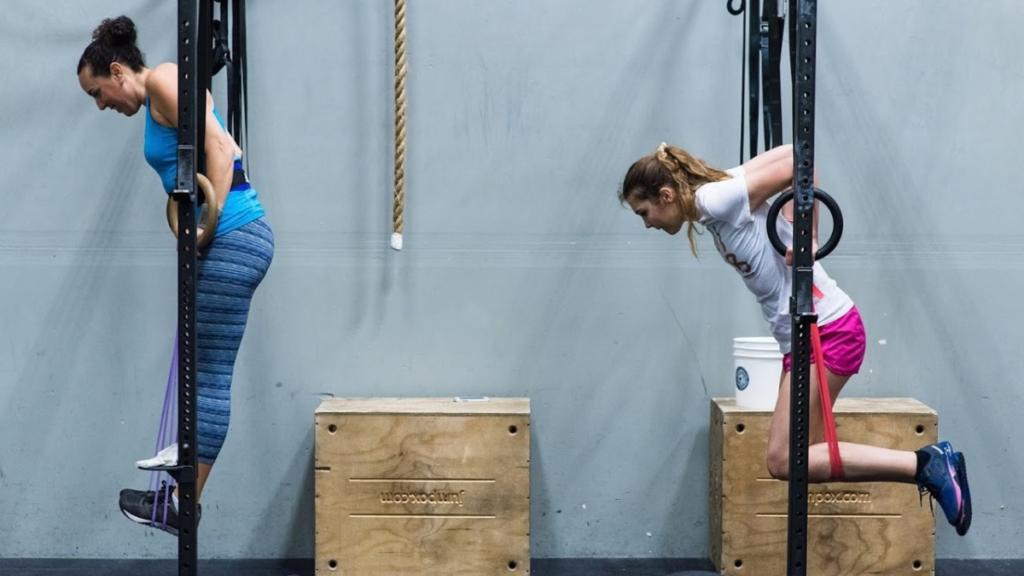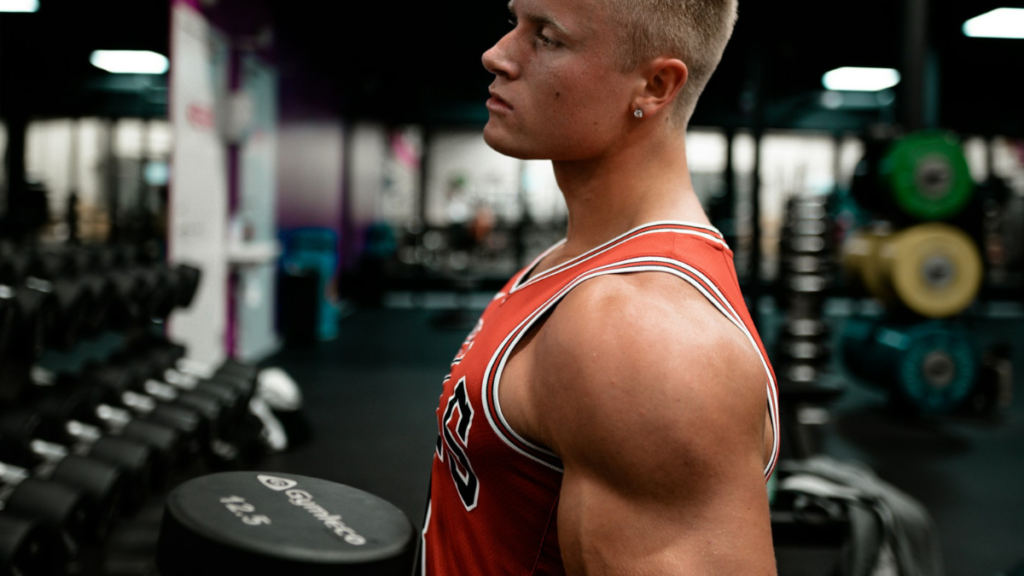


A broader upper body is not created by adding endless pressing volume. It comes largely from building the muscles that add visible width across the shoulders, especially the lateral deltoids, while also developing the rear deltoids so the shoulder looks complete from the side and back. Consistent resistance training can increase muscle size, and higher weekly training volumes generally produce greater hypertrophy when recovery is adequate.
The problem is that many shoulder routines rely almost entirely on overhead presses, dumbbell lateral raises, and machine work. These exercises can be effective, but they are not the only useful options. In practice, people often stop progressing because the same movement path becomes uncomfortable, the resistance curve does not match their strength, or technique turns a lateral delt exercise into a trap dominant lift.


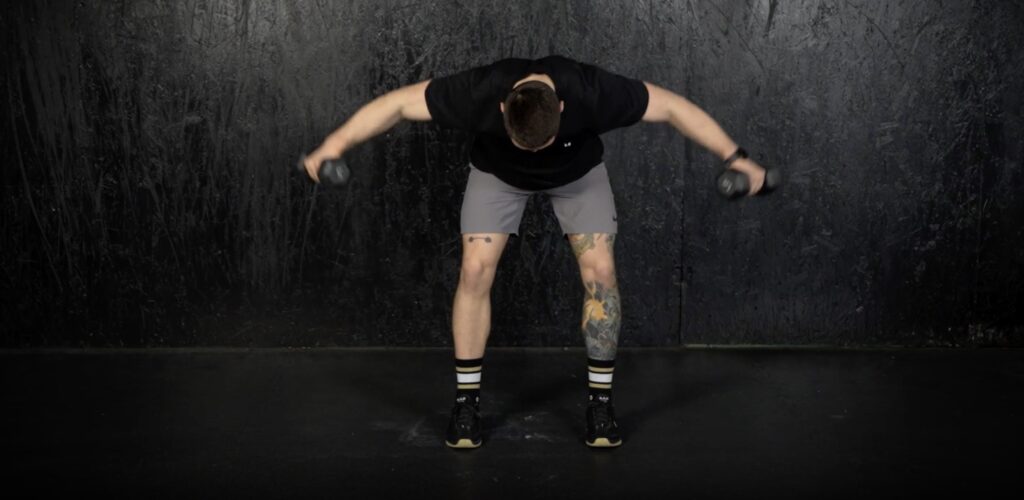
The three exercises below are worth revisiting because they change the position of the arm, torso, or resistance source. That can make it easier to train the target muscle through a challenging range of motion without forcing excessively heavy loads. There is limited direct hypertrophy research comparing these exact variations head to head, so it is important to be honest about what the evidence can and cannot say.
The strongest evidence supports progressive resistance training, sufficient weekly volume, controlled repetitions, and hard sets performed with good technique. Exercise selection should then help you apply those principles comfortably and consistently.
Why Shoulder Width Requires More Than Pressing
The deltoid has anterior, lateral, and posterior regions that contribute to different shoulder actions. Pressing movements strongly involve the anterior deltoid, especially when the arm moves overhead or in front of the body. The lateral deltoid is particularly important for shoulder abduction, which is the action of moving the upper arm away from the torso. The posterior deltoid contributes to shoulder extension, horizontal abduction, and external rotation related actions.
For visual width, the lateral deltoid deserves focused work. A well developed lateral delt increases the distance between the neck and upper arm, helping create a stronger shoulder to waist contrast. That appearance is also influenced by body composition, rib cage shape, clavicle length, and lat development, but deltoid hypertrophy remains one of the most trainable contributors.
3 Best Barbell Exercises for Jacked and Attractive Upper Abs
Pressing alone is often insufficient for this goal. Compound presses distribute effort across the chest, triceps, anterior deltoids, and stabilizing muscles. That is useful for overall strength, but it can make it difficult to give the lateral and posterior deltoids enough direct weekly work. Research on resistance training volume indicates that muscle growth tends to improve as productive weekly sets increase, although the useful amount varies between individuals and excessive volume can impair recovery.
A good shoulder plan therefore includes presses if they suit your goals, but also direct work for the lateral and posterior deltoids. The following movements give you practical ways to do that.
Exercise One: Incline Side Lying Lateral Raise
Why This Variation Deserves Attention
The incline side lying lateral raise is performed on an adjustable bench set to a low or moderate incline. You lie sideways against the bench, hold one dumbbell in the upper hand, and raise the arm out from the body in a controlled arc. The bench supports the torso, which reduces the ability to generate momentum with the hips and lower back.
This position can make a light dumbbell feel surprisingly demanding. Traditional standing dumbbell lateral raises are easier near the bottom because the dumbbell sits close to the body, creating little external torque at the shoulder. When you perform the movement while supported on an incline, the arm begins farther from the line of gravity. That can create meaningful tension earlier in the repetition, where many people typically rush through the lift.
3 Best Beginner Quad Exercises for Jacked and Muscular Legs
The goal is not to claim that this variation is universally superior. Rather, it offers a different resistance profile and removes several common cheating strategies. A resistance exercise that keeps the target muscle under control through more of the available range can be a useful addition, particularly when standard lateral raises feel repetitive or cause you to swing.
How to Perform It
Set the bench to an incline that allows your torso to remain comfortably supported. Lie on your side with the working shoulder above the nonworking shoulder. Hold the dumbbell with a neutral grip and begin with the arm hanging toward the floor.
Raise the arm outward in the scapular plane, which is slightly forward of directly out to the side. This is generally a comfortable position for many lifters because it respects the natural orientation of the shoulder blade. Keep a soft bend in the elbow and stop around shoulder height, or slightly below if higher ranges produce discomfort. Lower the dumbbell slowly until you feel the shoulder return to the start position without relaxing completely.
Use a load that allows you to avoid shrugging hard toward the ear. The upper trapezius plays an important role in upward rotation of the scapula, so some trap activity is normal and necessary. The point is simply to avoid turning every repetition into a full body heave. Controlled shoulder training is more likely to maintain tension in the intended movement pattern and reduce the chance that load selection overwhelms technique.
Programming Guidance
This exercise works well for moderate to high repetitions because the lateral deltoid is small and the movement becomes technically messy when load is excessive. Two to four hard sets of approximately eight to twenty repetitions can fit well after pressing or as part of a shoulder focused session. The final repetitions should be difficult, but the form should remain recognizable.
Exercise Two: One Arm Cable Lateral Raise From Behind the Body
Why the Cable Changes the Exercise
A cable lateral raise from behind the body is a simple way to change how resistance is applied. Stand beside a low cable pulley, grasp the handle with the far hand, and allow the cable to travel behind the hips before raising the arm outward. The cable provides resistance throughout the movement rather than relying only on gravity.
This matters because resistance curves influence how challenging an exercise feels at different joint angles. With a dumbbell, the external torque changes greatly as the arm moves relative to gravity. With a cable, the line of pull can be arranged to create useful tension in positions where a dumbbell may feel relatively easy. The cable also allows smaller load jumps, which is valuable for lateral delt training because adding even a small amount of dumbbell weight can be a large percentage increase.
The behind the body start position can also create a long, controlled movement path. Training muscles at longer lengths has produced favorable hypertrophy outcomes in several studies, although the effects depend on the muscle, the exercise, the loading approach, and the amount of total work performed. This does not mean every repetition must be stretched aggressively. It means that a comfortable, controlled bottom position can be worth preserving rather than cutting short.
How to Perform It
Set the pulley at its lowest position and stand with the cable crossing behind your body. Start with the working arm slightly behind the torso, not forced into an extreme shoulder extension. Keep the ribs stacked over the pelvis and avoid leaning so far away from the machine that the movement becomes difficult to control.
Raise the handle outward and slightly forward until the upper arm reaches approximately shoulder height. Keep the elbow gently bent and lead with the elbow rather than trying to lift with the hand. Pause briefly when the arm reaches the top, then lower under control until you return to the starting position.
The shoulder should feel like it is doing the work. If the neck tightens immediately, reduce the load, shorten the range slightly, and slow the lowering phase. You do not need to lift the handle above shoulder height to make the lateral deltoid work hard.
Programming Guidance
Use this variation for two to four sets of ten to twenty repetitions per side. Because cable machines provide constant external resistance, the final part of each set can become demanding quickly. A controlled tempo and a repeatable setup are more useful than chasing a heavy stack number.
Exercise Three: Chest Supported Rear Delt Row
Why Rear Delts Help the Upper Body Look Wider
The rear deltoids do not add the same direct side to side width as the lateral deltoids, but they make the shoulder look fuller and more three dimensional. They also help balance the high amount of pressing and chest work found in many training programs. A shoulder that is developed only from the front can look narrow from the side and incomplete from behind.
The chest supported rear delt row uses a high elbow rowing pattern to bias shoulder horizontal abduction. Supporting the chest reduces momentum from the lower back and makes it easier to keep the torso stable. This matters because free standing rows can shift load toward the lats, biceps, and spinal erectors when fatigue rises. Those muscles are valuable, but they are not the main target here.
Electromyography research shows that changes in arm path and grip can alter relative muscle activation during pulling exercises. Electromyography does not prove long term muscle growth by itself, but it helps explain why a high elbow row feels different from a close elbow lat focused row. For muscle growth, the practical requirement remains progressive loading through a stable, repeatable movement.
How to Perform It
Set an incline bench high enough to support your chest while allowing your arms to hang freely. Use dumbbells, cables, or a machine that lets you pull with the elbows traveling outward rather than tucked tightly beside the ribs.
Begin with your chest firmly against the pad and your neck relaxed. Pull the elbows out and back until the upper arms approach the line of the torso. Think about moving the upper arms rather than squeezing the shoulder blades as hard as possible. A small amount of shoulder blade movement is normal, but an exaggerated shrug can move attention away from the rear delts.
Lower slowly and allow the arms to lengthen without losing chest contact with the bench. Select a load that permits a brief pause near the top without bouncing. The rear deltoids respond well to deliberate repetitions because they are easily overshadowed by larger back muscles when momentum takes over.
Programming Guidance
Perform two to four sets of eight to fifteen repetitions. Place the exercise after heavier pulling work if your priority is upper back strength, or move it earlier if rear delt development is a clear weakness. Weekly volume should be increased gradually, since more sets only help when they can be recovered from and performed with quality.
How to Use These Exercises Together
You do not need all three exercises in every workout. A practical approach is to choose one lateral delt movement and one rear delt movement for each upper body session. Over the course of a week, include enough direct shoulder work to create progress while keeping pressing, chest work, and pulling volume in balance.
Progress can come from adding repetitions, improving control, increasing load in small increments, or completing more productive sets over time. Research consistently shows that resistance training builds muscle across a range of loads when sets are challenging enough. Heavier loads may be useful for strength, while moderate and lighter loads can be highly effective for hypertrophy when effort and volume are adequate.
Pay attention to joint feedback. Muscle fatigue and a strong local burn are normal during direct delt work. Sharp pain, persistent pinching, loss of strength, or symptoms that do not settle after training deserve assessment from a qualified health professional. The best shoulder exercise is not the one that looks most impressive. It is the one you can load progressively, perform consistently, and recover from.
Table: Key Takeaways
| Exercise | Main target | Best reason to use it | Practical loading approach |
|---|---|---|---|
| Incline side lying lateral raise | Lateral deltoid | Limits momentum and makes lighter loads challenging early in the lift | Two to four sets of eight to twenty repetitions |
| One arm cable lateral raise from behind the body | Lateral deltoid | Provides resistance through a long and controlled movement path | Two to four sets of ten to twenty repetitions per side |
| Chest supported rear delt row | Posterior deltoid | Reduces torso momentum and supports a high elbow pulling path | Two to four sets of eight to fifteen repetitions |
| Overall strategy | Shoulder hypertrophy | Direct delt work complements pressing and pulling | Progress gradually while maintaining clean technique |
References
- Grgic, J., Schoenfeld, B.J., Davies, T.B., Lazinica, B., Krieger, J.W. and Pedisic, Z. (2018) ‘Effect of resistance training frequency on gains in muscular strength: A systematic review and meta analysis’, Sports Medicine, 48(5), pp. 1207 to 1220.
- Lasevicius, T., Schoenfeld, B.J., Silva Batista, C., Barros de Souza, A., Brendon, H., Aihara, A.Y., Cardoso, F.N., Tricoli, V. and Teixeira, E.L. (2019) ‘Muscle failure promotes greater muscle hypertrophy in low load but not in high load resistance training’, Journal of Strength and Conditioning Research, 36(2), pp. 346 to 352.
- Liu, J., Hughes, R.E., Smutz, W.P., Niebur, G. and Nan An, K. (1997) ‘Roles of deltoid and rotator cuff muscles in shoulder elevation’, Clinical Biomechanics, 12(1), pp. 32 to 38.
- Schoenfeld, B.J., Ogborn, D. and Krieger, J.W. (2016) ‘Effects of resistance training frequency on measures of muscle hypertrophy: A systematic review and meta analysis’, Sports Medicine, 46(11), pp. 1689 to 1697.
- Schoenfeld, B.J., Ogborn, D. and Krieger, J.W. (2017) ‘Dose response relationship between weekly resistance training volume and increases in muscle mass: A systematic review and meta analysis’, Journal of Sports Sciences, 35(11), pp. 1073 to 1082.
- Schoenfeld, B.J., Grgic, J., Ogborn, D. and Krieger, J.W. (2017) ‘Strength and hypertrophy adaptations between low versus high load resistance training: A systematic review and meta analysis’, Journal of Strength and Conditioning Research, 31(12), pp. 3508 to 3523.
- Signorile, J.F., Zink, A.J. and Szwed, S.P. (2002) ‘A comparative electromyographical investigation of muscle utilization patterns using various hand positions during the lat pull down’, Journal of Strength and Conditioning Research, 16(4), pp. 539 to 546.