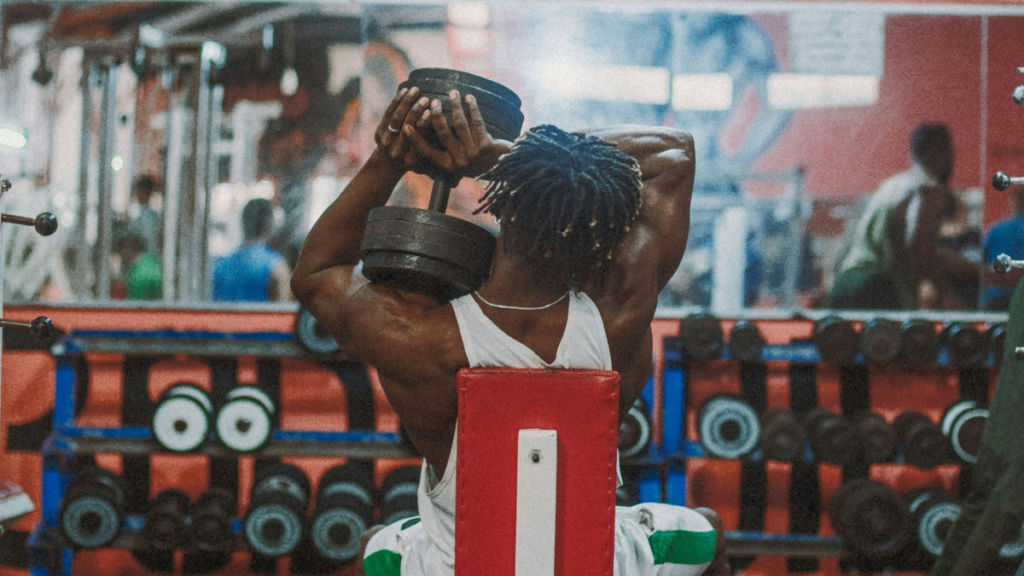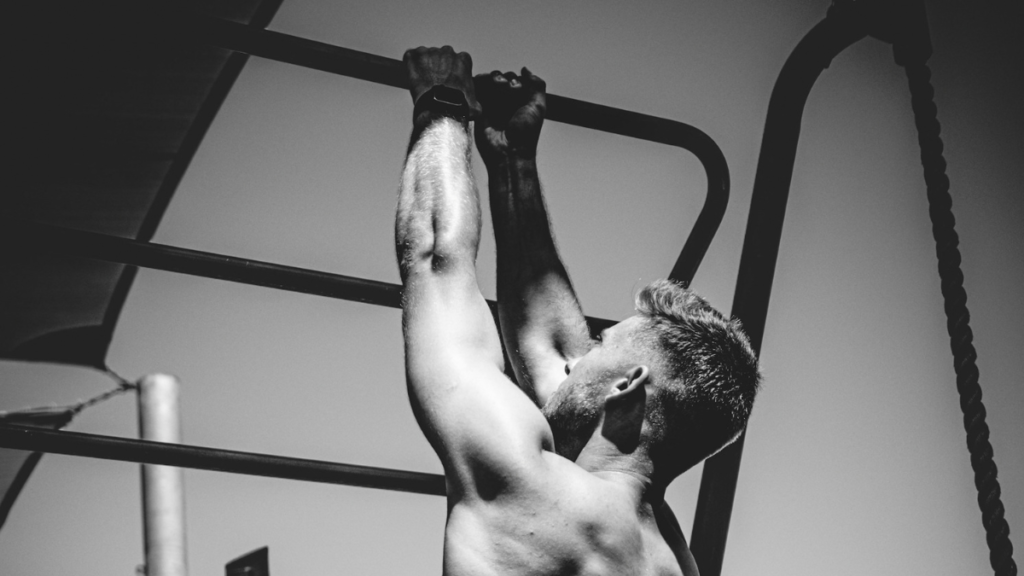


A bigger chest is a common gym goal, and for good reason. Strong pecs look athletic, support pressing performance, and help create a muscular upper body. But if you want to change the way your whole physique looks, the muscle that deserves at least as much attention is your deltoids, especially the side delts.
Well developed shoulders can make your torso appear broader, your waist appear smaller, and your arms look more substantial even before you add much direct arm work. This is not a claim that chest training is unimportant. It is a reminder that physique development is about proportions, not simply building the muscles that are easiest to see in the mirror.


Research on perceptions of the ideal male body consistently highlights the importance of upper body width relative to waist size. Building the deltoids is one of the few ways to increase that visible width through training. Your skeletal frame sets limits, but shoulder muscle can still make a meaningful difference to your silhouette.
Why Shoulder Width Changes Your Whole Physique
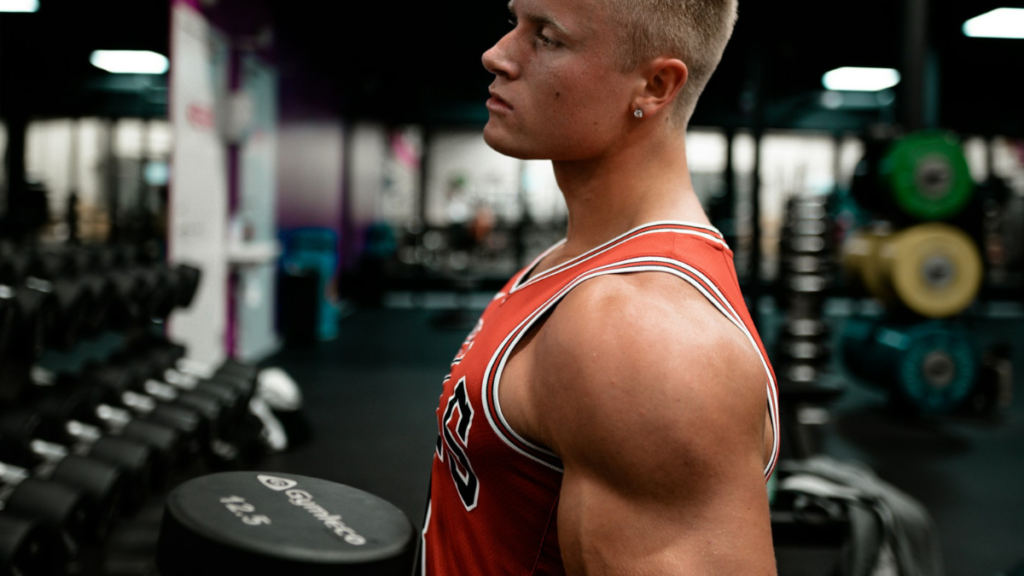
The deltoid is the large muscle that caps the shoulder. It has three main regions: the anterior deltoid at the front, the lateral deltoid on the outside, and the posterior deltoid at the back. All three matter for balanced shoulder function and development, but the lateral deltoid has the most direct effect on the visual width of your upper body.

A larger chest adds depth and thickness to the front of the torso. Larger lateral deltoids add width from the front, side, and back. This difference matters because most people see your outline before they notice individual muscles. A broader outline can create a stronger V shaped appearance even when body weight changes very little.
Studies using adjustable three dimensional body models have found that people’s preferences for male physiques are strongly influenced by the relationship between the shoulders, chest, and waist. In practical terms, a more pronounced upper body relative to the waist tends to produce a more athletic visual impression. The study does not prove that larger shoulders alone determine attractiveness, since body perception is influenced by many personal and cultural factors. It does support the practical idea that proportions have a major influence on how a physique is judged.
The Side Delt Is Often the Missing Piece
The anterior deltoid receives substantial work during pressing exercises such as bench presses, incline presses, overhead presses, pushups, and dips. For many lifters, it is not the portion of the shoulder that needs more attention. The lateral deltoid usually receives less stimulus from these movements and often needs direct training.
Before You Bench 100kg, You Should Be Able to Do These 3 Things
This is why someone can bench press impressive weight, have a visibly developed chest, and still look narrow through the shoulders. The issue is not a lack of effort. It is that heavy pressing does not necessarily provide enough direct work for the muscle that creates the widest part of the shoulder line.
The posterior deltoid is also important. It contributes to shoulder balance and helps fill out the upper back from the side. Rows and pulling movements can train it, although direct rear delt work may still be useful when it is lagging behind. A complete shoulder plan should include all regions, but the lateral deltoid is usually the priority when the goal is a broader appearance.
What the Evidence Says About Building Muscle
Muscle hypertrophy is driven by progressive resistance training performed consistently over time. A large systematic review and network meta analysis found that resistance training programs using multiple sets were among the most effective approaches for hypertrophy. It also found that a range of loading strategies can build muscle when training is performed effectively.
This is useful because it means lateral deltoid training does not require a single magic rep range or a special exercise. You need enough challenging sets, good technique, and a way to progress over time. The goal is to give the lateral deltoid meaningful work without turning every shoulder session into a test of joint tolerance.
Use Exercises That Match the Muscle’s Job
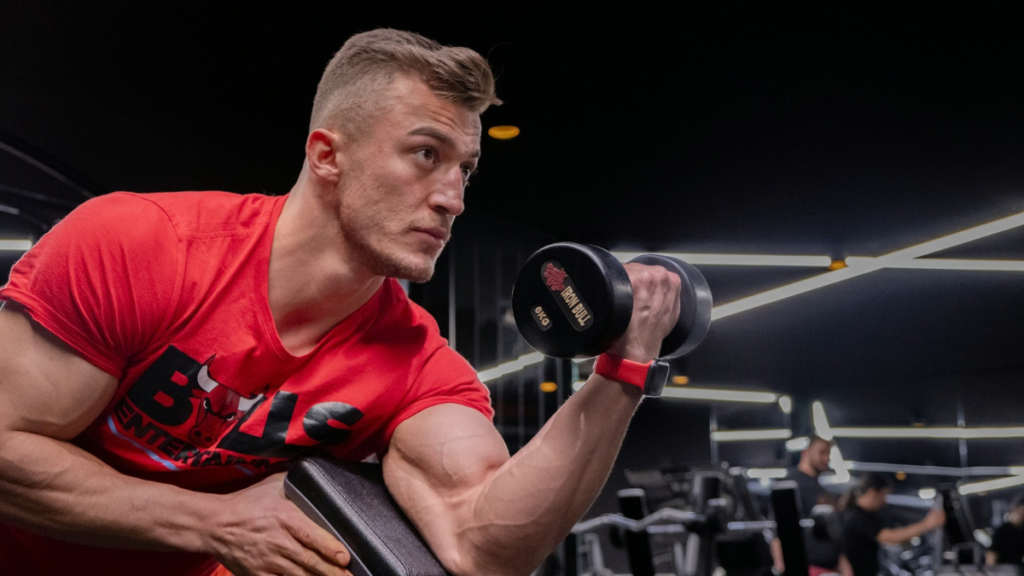
The lateral deltoid is a major contributor to moving the upper arm away from the body, a movement called shoulder abduction. Lateral raise variations are therefore a logical choice for directly training it. These can be performed with dumbbells, cables, machines, or resistance bands.
An electromyography study in competitive bodybuilders compared several lateral raise variations and found differences in lateral deltoid activity across exercises. Electromyography does not measure long term muscle growth by itself, so it should not be treated as a final ranking of the best exercise. Still, it can help explain why the lateral raise is a sensible starting point when the target is the side delt.
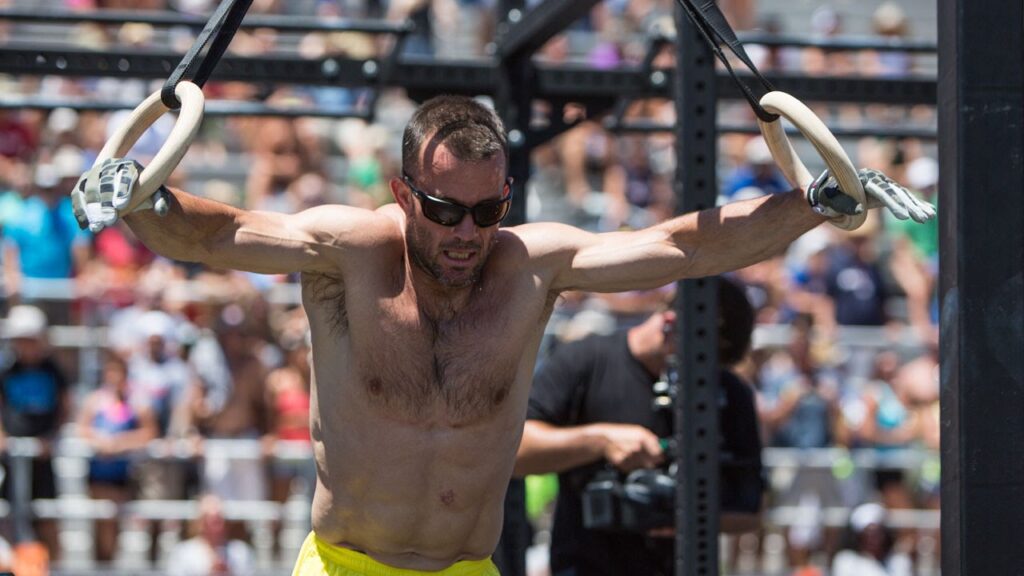
Cables and machines can be particularly useful because they make it easier to keep tension on the muscle throughout the movement and to train close to muscular fatigue with less need for balance. Dumbbells work extremely well too, especially when you can control the lift without swinging your torso or shrugging the weight upward.
The best option is often the variation you can perform comfortably, progressively, and with consistent technique. If a movement causes sharp pain, pinching, or symptoms that persist after training, do not force it. Exercise selection should support long term training, not win an argument about which raise variation is superior.
How to Train the Delts Without Neglecting Your Chest
The answer is not to stop bench pressing. It is to balance your weekly training so that shoulder width receives enough direct attention.
A sensible approach for many lifters is to train the lateral deltoids two or three times each week. Start with a manageable number of hard sets and add work only when recovery, technique, and progress are still good. Multiple sets performed twice weekly are strongly supported by current evidence as an effective general approach for hypertrophy.
Choose a load that lets you control the movement and train with a full, comfortable range of motion. Lateral raises often work well with moderate to high repetition sets because the deltoids are relatively small and because lighter loads can reduce the temptation to turn the movement into a full body swing. What matters most is that the set becomes challenging and that your technique remains stable.
A Practical Shoulder Focus
You can place lateral raises after your main pressing work, or train them at the beginning of a session when shoulder growth is your highest priority. Training a muscle earlier in a workout can help you give it more attention and effort, although total quality work over time remains more important than the exact exercise order.
A simple shoulder focused session might include an overhead press for general pressing strength, lateral raises for the side delts, and a rear delt movement such as a reverse fly or rear delt machine. You do not need a complicated collection of exercises. Repeating a few movements well and recording your performance is usually more productive than changing the plan every week.
Progress can mean adding repetitions with the same weight, using slightly more load while maintaining control, completing an additional set, or improving range of motion and technique. The point is not to force a weight increase at every workout. The point is to create a gradual improvement in the training stimulus.
Technique Matters More Than Ego
A common mistake on lateral raises is using a weight that is too heavy to control. The lifter bends the elbows dramatically, throws the torso backward, shrugs hard, and lets momentum do much of the work. Some body movement is normal in difficult sets, but when the movement stops resembling a lateral raise, the lateral deltoid is no longer receiving the intended stimulus.
Keep your rib cage reasonably stable, raise the arms in a controlled arc, and avoid treating the exercise as a competition. You do not need to raise your hands as high as possible if doing so causes shoulder discomfort. A pain free range that keeps tension on the target muscle is more valuable than forcing range of motion.
The shoulders also respond well to patience. They are involved in many upper body exercises, including chest pressing and overhead work, so piling on excessive direct volume can make recovery difficult. Persistent soreness, falling performance, joint irritation, and worsening technique are signs that your plan may need adjustment.
Do Not Chase Width at the Expense of Shoulder Health
Your deltoids work with the rotator cuff and shoulder blade muscles to control the upper arm. Training the rear delts, upper back, and pulling muscles alongside the chest and side delts can help you build a more balanced upper body. This is not a guarantee against injury, since pain and injury risk are influenced by many factors, but balanced training is a sensible part of a long term resistance program.
Resistance training itself provides broad benefits beyond appearance. Evidence reviews show that it improves muscular strength and can increase muscle size in healthy adults. A shoulder focused phase should therefore fit inside a complete program that includes lower body work, pulling movements, pressing movements, appropriate recovery, and nutrition that supports your goal.
If your chest is already progressing but your physique still looks narrow, prioritize your lateral delts for the next several months. You may find that the most noticeable visual change does not come from another chest exercise. It comes from building the muscle that changes your body’s outline.
Key Takeaways
| Focus | What it means | Practical action |
|---|---|---|
| Prioritize lateral delts | They contribute directly to visible upper body width | Include direct lateral raise work two or three times weekly |
| Keep chest training | Chest development still adds upper body size and strength | Maintain pressing, but do not let it replace side delt work |
| Use multiple hard sets | Multiple set resistance training is strongly supported for hypertrophy | Build volume gradually and recover well between sessions |
| Choose controllable exercises | Good technique helps keep the target muscle under tension | Use dumbbells, cables, machines, or bands that you can control |
| Progress patiently | Hypertrophy takes repeated quality training over time | Add reps, load, sets, or better execution gradually |
| Train the whole shoulder | Front, side, and rear delts all contribute to a balanced physique | Combine presses, lateral raises, and rear delt focused work |
References
- Currier, B.S., McLeod, J.C., Banfield, L., Beyene, J., Welton, N.J., D’Souza, A.C., Keogh, J.A., Lin, L., Coletta, G., Yang, A., Colenso-Semple, L., Lau, K.J., Verboom, A. and Phillips, S.M. (2023) ‘Resistance training prescription for muscle strength and hypertrophy in healthy adults: A systematic review and Bayesian network meta analysis’, British Journal of Sports Medicine, 57(18), pp. 1211–1220.
- Gomes, P.S.C. and Coutinho, J. (2020) ‘An electromyographic analysis of lateral raise variations and frontal raise in competitive bodybuilders’, International Journal of Environmental Research and Public Health, 17(16), 5715.
- Swami, V. and Tovée, M.J. (2013) ‘What is an attractive body? Using an interactive 3D program to create the ideal body for you and your partner’, PLoS ONE, 7(11), e50601.