

Many lifters think bigger arms begin and end with biceps curls. Curls are useful, but a biceps focused approach can leave visible arm size on the table. If your goal is arms that look thicker from the front, side, and back, the triceps deserve at least as much attention as the biceps.
The reason is simple anatomy. The triceps brachii is a larger muscle group than the biceps brachii, and it occupies a substantial amount of the upper arm. It also has three heads, including the long head, which crosses both the shoulder and elbow joints. That structure gives the triceps a major role in the overall circumference and silhouette of the arm.


This does not mean you should stop training biceps. It means that an arm program built mostly around curls may not match the visual result you want. Better looking arms usually come from adding size across the whole upper arm, with deliberate work for the triceps, biceps, and brachialis.
The Triceps Have More Potential to Change Arm Size
The biceps are visible when you flex your arm, so they get most of the attention. However, the triceps sit on the back of the upper arm and contribute heavily to its total muscle volume. Anatomical research measuring upper limb muscle volume confirms that the triceps brachii has considerably more total volume than the biceps brachii in healthy adults.
That matters because an arm looks large when it has thickness in a relaxed position, not only when the biceps are flexed. The triceps are especially important for the side view of the upper arm. A well developed triceps can create the rounded, full appearance that many lifters associate with muscular arms.

The three triceps heads are the long head, lateral head, and medial head. All three extend the elbow, but the long head has another job because it crosses the shoulder joint. It helps extend the shoulder as well. This makes exercise selection more important than many people realize. A movement that trains elbow extension in one arm position may not challenge the long head in the same way as a movement performed with the arm overhead.
Why the Long Head Deserves Attention
The long head is the only triceps head that crosses the shoulder. When you raise your arms overhead, the long head is placed at a longer muscle length. Research comparing elbow extension training in different shoulder positions found substantially greater triceps hypertrophy after overhead training than after training with the arms in a neutral position.
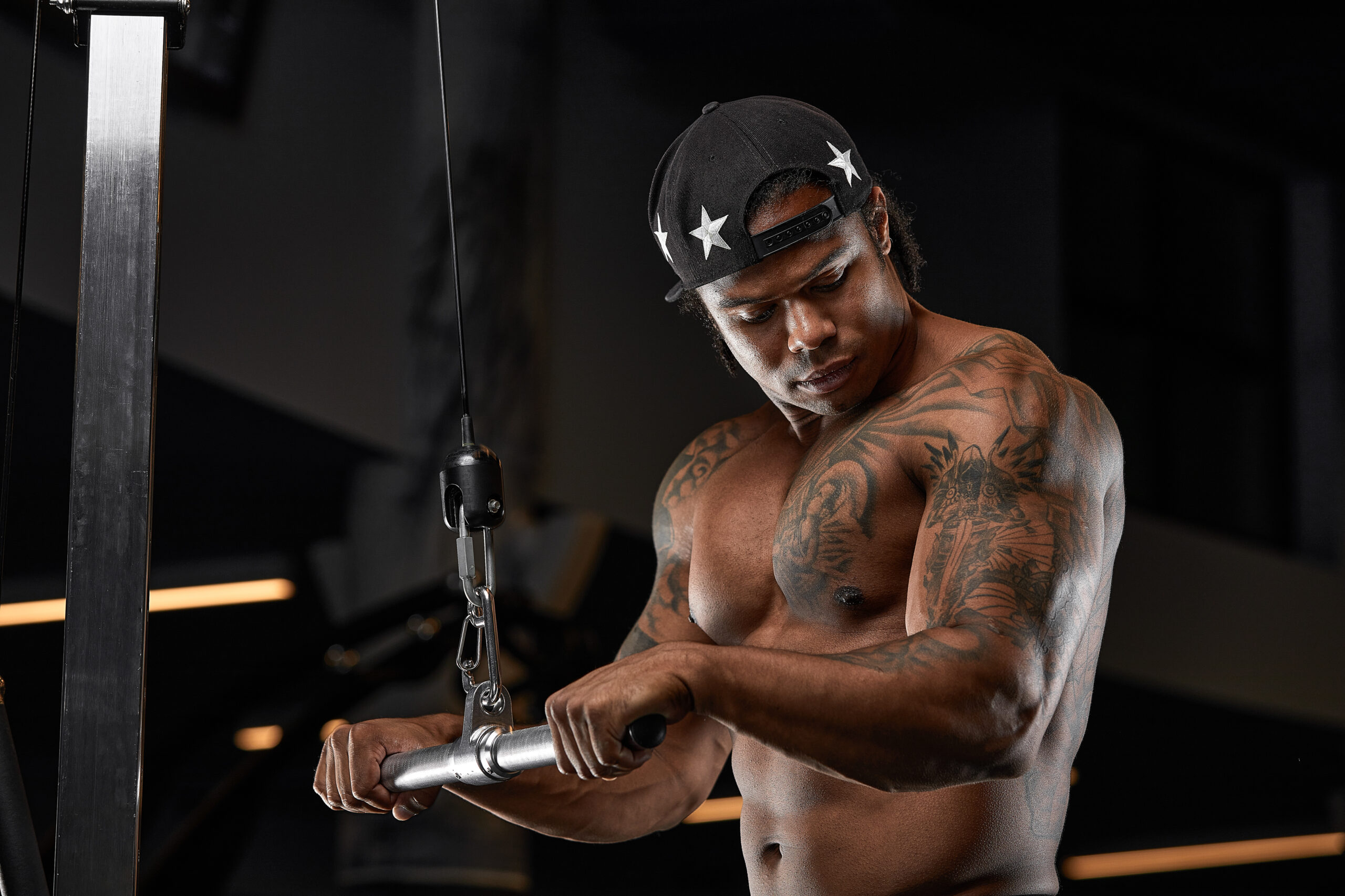
This does not mean every triceps set must be an overhead extension. Pressdowns, close grip presses, dips, and other elbow extension exercises can still be productive. The useful lesson is that variation in shoulder position can help you train the triceps more completely.
Cardio vs Strength Training – Which Is More Important After 40?
For many lifters, a combination of pressing movements, cable pressdowns, and an overhead extension is a practical way to cover the bases. The exact exercises matter less than using stable technique, training hard enough, and progressing over time.
Curls Still Matter, but They Are Not the Whole Answer
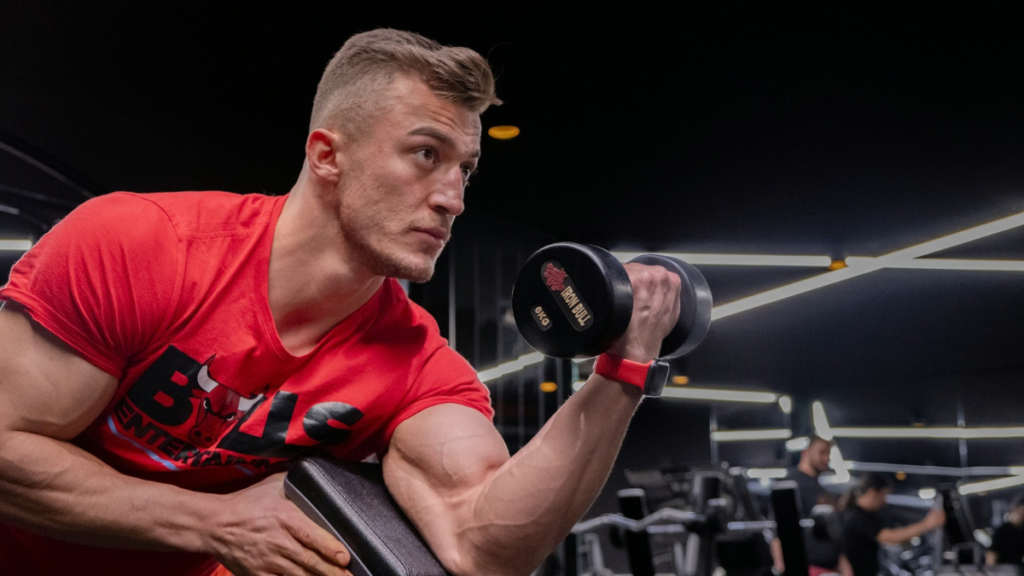
Biceps curls remain valuable because the biceps flex the elbow and help rotate the forearm into a palm up position. Training them directly can increase biceps size, improve elbow flexion strength, and create a more pronounced peak when the arm is flexed.
However, biceps training should not become repetitive. If every arm session consists of several nearly identical curl variations, you may be adding fatigue without adding much new stimulus. A simple curl performed through a controlled range of motion, with adequate effort and progression, can be highly effective.

The brachialis also deserves attention. It sits beneath the biceps and contributes to upper arm thickness. Because it is a strong elbow flexor regardless of forearm position, exercises such as hammer curls and reverse curls can be useful additions. These movements can complement traditional supinated curls instead of replacing them.
A balanced approach is usually more productive than trying to find one perfect curl. Train the biceps with at least one exercise that allows a supinated grip, then include a neutral grip or pronated grip exercise when it fits your recovery and preferences.
More Exercises Do Not Automatically Mean More Growth
It is easy to confuse a long arm workout with an effective arm workout. Muscle growth responds strongly to the amount of challenging resistance training performed over time, but quality matters. A large pile of low effort sets is not the same as a smaller number of demanding, well executed sets.
A major review of resistance training volume found a dose response relationship between weekly sets and muscle growth. In general, more weekly hard sets produced greater hypertrophy, although the relationship is not unlimited. Recovery, exercise selection, sleep, nutrition, and individual tolerance all affect how much volume a person can use productively.
For practical programming, you can start with a manageable number of direct weekly sets for both triceps and biceps, then adjust based on progress. Compound pressing and pulling exercises also contribute to arm training volume, especially for newer lifters. Someone performing heavy bench presses, overhead presses, rows, and pull ups may need less direct work than someone whose main goal is arm development.
Train Close Enough to Failure
Muscle growth is affected by effort. Sets that end far from failure may provide a weaker hypertrophy stimulus, especially when using lighter loads. Evidence from meta regression research indicates that hypertrophy generally improves when resistance training sets are performed closer to momentary muscular failure.
That does not mean every set should end with a failed repetition. Constant failure training can increase fatigue and make technique worse. Instead, aim to finish most work sets with a small number of repetitions still possible while maintaining control. For many lifters, stopping when they could perform roughly one to three more good repetitions provides a useful balance between effort and recovery.
This approach works with a broad range of repetition targets. Heavy sets of six to 10 repetitions and lighter sets of 12 to 20 repetitions can both build muscle when the set is sufficiently challenging. The key is not chasing a specific rep number. The key is creating tension, using a controlled range of motion, and steadily asking the muscles to do more over time.
A Better Arm Building Strategy
A productive arm plan does not need to be complicated. First, make sure triceps receive direct work from more than one shoulder position. A pressdown can be paired with an overhead cable extension or dumbbell overhead extension. Compound presses can add useful work, but they may not fully replace direct triceps training when arm size is the priority.
Second, train biceps with a mix of elbow flexion exercises. A standard dumbbell curl, cable curl, or machine curl can provide the main biceps movement. A hammer curl or reverse curl can then add work for the brachialis and forearm flexors.

Third, track progression. If you use the same load, repetitions, and level of effort for months, your muscles have little reason to adapt further. Try to add a repetition, improve control, increase the load gradually, or complete an extra productive set when recovery allows.
Finally, remember that arm growth depends on more than exercises. Resistance training needs enough food energy, protein, and recovery to support muscle protein synthesis. A person trying to gain visible arm size while chronically under eating will usually make slower progress, even with excellent exercise selection.
The Bottom Line
If your arms are not looking as big as you want, the problem may not be that you need more curls. You may simply need more productive triceps training. The triceps contribute substantially to upper arm size, and the long head may respond particularly well to elbow extension work performed overhead.
Keep curls in your program, train the brachialis, and use progressive resistance training. But if you want larger looking arms in everyday positions, give the back of your upper arm the same attention you give the front.
Key Takeaways
| Focus | What the evidence suggests | Practical action |
|---|---|---|
| Arm size | The triceps have greater total volume than the biceps and strongly affect upper arm circumference | Give triceps at least equal attention in your arm training |
| Long head training | Overhead elbow extension can produce greater triceps hypertrophy than neutral arm position training | Include an overhead triceps exercise if it is comfortable for your shoulders |
| Biceps work | Direct curls remain useful for biceps development | Use a controlled curl variation and progress it over time |
| Brachialis | Neutral grip and pronated grip curls can train elbow flexors beyond the biceps | Add hammer curls or reverse curls when appropriate |
| Training volume | More challenging weekly sets generally support greater hypertrophy, within your recovery capacity | Build volume gradually and monitor performance |
| Effort | Hypertrophy tends to improve when sets are performed closer to failure | Finish most sets with roughly one to three repetitions in reserve |
References
- Holzbaur, K.R.S., Murray, W.M., Gold, G.E. and Delp, S.L. (2007) ‘Upper limb muscle volumes in adult subjects’, Journal of Biomechanics, 40(4), pp. 742–749.
- Maeo, S., Yoshikawa, M., Saito, A. et al. (2023) ‘Triceps brachii hypertrophy is substantially greater after elbow extension training performed in the overhead versus neutral arm position’, European Journal of Sport Science, 23(7), pp. 1309–1318.
- Robinson, Z.P., Pelland, J.C., Remmert, J.F. et al. (2024) ‘Exploring the dose response relationship between estimated resistance training proximity to failure, strength gain, and muscle hypertrophy: A series of meta regressions’, Sports Medicine, 54, pp. 2209–2231.
- Schoenfeld, B.J., Ogborn, D. and Krieger, J.W. (2017) ‘Dose response relationship between weekly resistance training volume and increases in muscle mass: A systematic review and meta analysis’, Journal of Sports Sciences, 35(11), pp. 1073–1082.