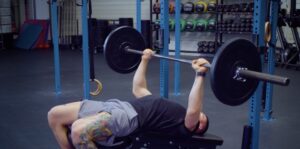


A fuller, more defined chest can change the look of your upper body quickly, but the term “inner pecs” is often misunderstood. You cannot isolate a separate inner chest muscle with one magic movement. The pectoralis major is one large muscle that runs from the breastbone, collarbone, ribs, and surrounding connective tissues to the upper arm. Its fibers work together to bring the arm across the body, press the arm forward, and assist with other shoulder movements.
That does not mean your exercise choices do not matter. A smart beginner chest routine can build the pectoralis major through a full range of motion, improve your pressing technique, and make the center of your chest look more muscular as your overall pec mass grows. The exercises below are simple enough to learn, easy to progress, and effective for developing a stronger, more balanced chest.


It is also important to be realistic about definition. Training can build chest muscle, but visible separation around the sternum depends partly on your overall body fat level and genetics. Resistance training for one area does not selectively remove fat from that location. Build the muscle, train consistently, eat appropriately for your goal, and let time do its job.
What “Inner Pecs” Really Means
The chest muscle that most people want to improve is the pectoralis major. It has a clavicular portion, which contributes to the upper chest near the collarbone, and a larger sternocostal portion, which makes up much of the visible chest. Although these portions have fibers with different orientations, there is no distinct inner pec muscle that can be separately carved out with a specific exercise.
The center line of the chest is where the left and right pectoralis major muscles meet at the sternum. You cannot change the width of that attachment point. What you can do is increase the size of the whole muscle, particularly by using exercises that challenge the chest as the arms move toward the midline of the body. More muscle on both sides of the sternum can make that area look denser and more defined.

Beginners should avoid chasing a burn in one tiny area at the expense of good training. Effective chest development comes from controlled repetition, enough challenging sets, gradual increases in load or repetitions, and movements that you can perform safely. Research on resistance training volume shows that performing multiple hard sets per muscle group each week is associated with greater muscle growth than performing very little work.
The Three Best Beginner Chest Exercises
Dumbbell Bench Press
The dumbbell bench press is one of the best starting exercises for building a muscular chest because it combines a large range of motion with a stable, easy to understand movement pattern. Unlike a barbell, dumbbells allow each arm to work independently. This can help beginners notice and correct major side to side differences while learning to press with control.
Lie on a flat bench with your feet planted firmly on the floor. Start with the dumbbells above your chest, with your palms facing forward or turned slightly inward. Lower the weights slowly until your upper arms are near parallel with the floor and your elbows are slightly below the bench if your shoulder mobility allows it comfortably. Press the dumbbells upward while keeping your shoulder blades gently pulled back and down.
At the top of each repetition, bring the dumbbells close together without forcefully crashing them into each other. Think about pressing your upper arms toward one another as you finish the repetition. This does not isolate an inner chest section, but it encourages the primary action of the pectoralis major, which is horizontal adduction of the shoulder.
A dumbbell press also gives you room to choose a comfortable arm path. Some lifters feel best with their elbows angled moderately away from their body rather than held directly out to the sides. This position can make the exercise more comfortable for the shoulders while still placing a strong training demand on the chest, triceps, and front deltoids.
Research comparing variations of pressing exercises shows that chest pressing reliably recruits the pectoralis major. The exact level of muscle activity can vary with technique, equipment, bench angle, load, and the lifter’s experience. For a beginner, the practical takeaway is simple. Use a controlled range of motion, choose a weight that you can manage, and make steady progress over time.
Start with two or three sets of eight to 12 repetitions. End each set with roughly one to three repetitions still possible with solid form. As you become more confident, add a small amount of weight when you can complete the top end of the repetition range on every set.
Push Ups
Push ups are one of the most accessible chest builders available. They train the pectoralis major, triceps, and front deltoids while also asking your trunk to resist excessive movement. They require no equipment, can be performed almost anywhere, and are easy to adjust as your strength improves.
Start in a high plank position with your hands slightly wider than shoulder width. Create a straight line from your head through your hips to your heels. Lower your chest toward the floor under control, keeping your elbows angled away from your torso but not flared directly sideways. Press the floor away and return to the top without letting your hips sag or rise far ahead of your shoulders.
If full push ups are too difficult, elevate your hands on a sturdy bench, countertop, or bar set in a rack. The higher the hands, the less body weight you need to press. This is a useful progression because it lets you practice the same fundamental movement with a load that matches your current strength. As you improve, lower the height of the support until you can perform floor push ups.
For a little extra emphasis on the finishing position, use a slightly narrower than usual hand position once you have mastered standard push ups. Keep your hands under or just outside shoulder width, rather than placing them extremely close together. This keeps the movement comfortable while allowing you to press through a strong range of motion. Very narrow hand positions can shift more work toward the triceps and may not suit every beginner’s wrists or shoulders.
Research has found that push ups and bench press training can produce similar gains in muscle thickness and strength when the exercises are performed with comparable relative effort. This makes push ups more than a basic warm up movement. They are a legitimate chest exercise that can remain useful for years.
Use two or three sets of six to 15 repetitions. When standard floor push ups become easy, slow the lowering phase, add repetitions, elevate your feet, wear a weighted vest, or use a resistance band. Choose only one progression at a time so you can see whether you are genuinely getting stronger.
Cable Chest Fly
The cable chest fly is an excellent accessory exercise for beginners who have access to a cable machine. It is particularly useful after pressing because it lets you train the chest through horizontal adduction with less assistance from the triceps. Cables also provide continuous resistance through much of the movement, which can make it easier to feel the chest working.
Set both pulleys around shoulder height and select a light weight. Stand in the middle of the machine, take one handle in each hand, and step forward into a stable staggered stance. Begin with your arms open to the sides and a slight bend in the elbows. Bring your hands together in front of your chest in a smooth arc, then return slowly until you feel a comfortable chest stretch.
Your torso should remain tall and still. Do not turn the exercise into a forward body swing. Keep your rib cage controlled, avoid aggressively shrugging your shoulders upward, and use a weight light enough that you can maintain the same elbow bend from start to finish. The goal is not to move the biggest stack in the gym. The goal is to use a repeatable path that creates tension in the chest.
At the point where your hands meet, pause briefly and squeeze your chest. This cue may help you stay focused on the movement, but do not mistake the sensation for proof that you have discovered an inner chest isolation exercise. A study on verbal focus instructions during the bench press found that attempting to concentrate on the chest did not meaningfully increase pectoralis major activity. Good technique and sufficient effort matter more than trying to mentally force an exercise into one area.
Cable flys work best with moderate to higher repetitions because the chest is already placed in a stretched position as the arms open. Start with two or three sets of 10 to 15 controlled repetitions. Stop the range of motion if you feel sharp pain at the front of the shoulder. A mild stretch across the chest is normal. Pain is a sign to reduce the range, lower the load, or ask a qualified coach to check your technique.
How to Build a Chest That Actually Looks More Defined
The best chest routine is not the routine with the most exercises. It is the one you can perform consistently and improve over months. Beginners can make excellent progress by training their chest two times each week, using a press as the main movement and a fly or push up variation as additional work.
A simple session could begin with dumbbell bench presses for three sets, followed by push ups for two sets and cable chest flys for two sets. Rest long enough between pressing sets that you can use good form on the next one. Around two minutes is often practical for challenging compound exercises, while a little less may be sufficient for cable flys.
Train hard, but do not make every set an all out battle. A large body of research suggests that muscle growth can improve when sets are performed closer to failure, although the exact ideal distance from failure is not fully settled. For beginners, leaving one to three quality repetitions in reserve is a sensible place to start. It gives you enough effort to stimulate progress without regularly sacrificing form.
Progressive overload is the key. This does not only mean adding weight. You can perform an extra repetition with the same weight, use a smoother and deeper range of motion, add a set when recovery is good, or move from an elevated push up to a lower surface. Keep a note of your sets, repetitions, and load so that you can make decisions from real training data instead of guessing.
Machines vs Free Weights – Which Is The Best Method for Beginners to Build a Jacked V Shaped Torso?
Nutrition and recovery matter too. Muscle is built during the recovery process after training. Aim for sufficient daily protein, a generally nutritious diet, and enough sleep to support your training. If you want a more visibly defined chest, overall energy balance also matters. You cannot perform chest exercises to remove fat only from the chest, but you can build the underlying muscle and reduce overall body fat through a sustainable approach.
Common Mistakes That Slow Chest Progress
The first mistake is loading the exercise before learning the movement. If your shoulders roll forward, your elbows move unpredictably, or your hips lift from the bench, the weight is probably too heavy for your current control. Reduce the load, slow down, and make each repetition look similar.
The second mistake is treating every chest session as a test of strength. Heavy training has value, but beginners usually benefit more from accumulating controlled repetitions with consistent technique. The chest responds to repeated exposure to sufficient tension, not just to occasional maximal efforts.
The third mistake is changing exercises every week. Your chest does not need constant confusion. Keep the same main exercises for several weeks, record your performance, and aim to improve gradually. Once you have built confidence and strength, you can add variations such as an incline dumbbell press to develop the upper chest more directly.
Finally, do not judge progress only by the pump after a workout. A pump can feel great, but lasting muscle development is measured by stronger performance, more controlled repetitions, changes in body measurements, progress photos taken under similar conditions, and patience.
Key Takeaways
| Focus | What beginners should do |
|---|---|
| Inner chest | Build the whole pectoralis major because there is no separate inner pec muscle to isolate |
| Main press | Use the dumbbell bench press for controlled, progressive chest loading |
| Bodyweight training | Use push ups and adjust the hand elevation to match your current strength |
| Chest isolation work | Use cable flys with a light to moderate load and a controlled arc |
| Growth strategy | Train chest about twice weekly and gradually increase repetitions, load, or difficulty |
| Definition | Build chest muscle and manage overall body fat because spot reduction is not possible |
References
- Barnett, C., Kippers, V. and Turner, P. (1995) ‘Effects of variations of the bench press exercise on the EMG activity of five shoulder muscles’, Journal of Strength and Conditioning Research, 9(4), pp. 222 to 227.
- Calatayud, J., Borreani, S., Colado, J.C., Martin, F., Flandez, J., Page, P. and Andersen, L.L. (2015) ‘Bench press and push up at comparable levels of muscle activity results in similar strength gains’, Journal of Strength and Conditioning Research, 29(1), pp. 246 to 253.
- Lauver, J.D., Cayot, T.E. and Rothe, A.D. (2015) ‘Influence of bench angle on upper extremity muscular activation during bench press exercise’, European Journal of Sport Science, 16(3), pp. 309 to 316.
- Paoli, A., Mancin, L., Saoncella, M., Grigoletto, D., Pacelli, F.Q., Zamparo, P., Schoenfeld, B.J. and Marcolin, G. (2019) ‘Mind muscle connection: Effects of verbal instructions on muscle activity during bench press exercise’, European Journal of Translational Myology, 29(2), article 8250.
- Ramírez Campillo, R., Andrade, D.C., Campos Jara, C., Henríquez Olguín, C., Alvarez, C. and Izquierdo, M. (2013) ‘Regional fat changes induced by localized muscle endurance resistance training’, Journal of Strength and Conditioning Research, 27(8), pp. 2219 to 2224.
- Robinson, Z.P., Pelland, J.C., Remmert, J.F., Refalo, M.C., Jukic, I., Steele, J. and Zourdos, M.C. (2024) ‘Exploring the dose response relationship between estimated resistance training proximity to failure, strength gain, and muscle hypertrophy: A series of meta regressions’, Sports Medicine, 54(9), pp. 2209 to 2231.
- Schoenfeld, B.J., Ogborn, D. and Krieger, J.W. (2017) ‘Dose response relationship between weekly resistance training volume and increases in muscle mass: A systematic review and meta analysis’, Journal of Sports Sciences, 35(11), pp. 1073 to 1082.
- Trebs, A.A., Brandenburg, J.P. and Pitney, W.A. (2010) ‘An electromyography analysis of three muscles surrounding the shoulder joint during the performance of a chest press exercise at several angles’, Journal of Strength and Conditioning Research, 24(7), pp. 1925 to 1930.