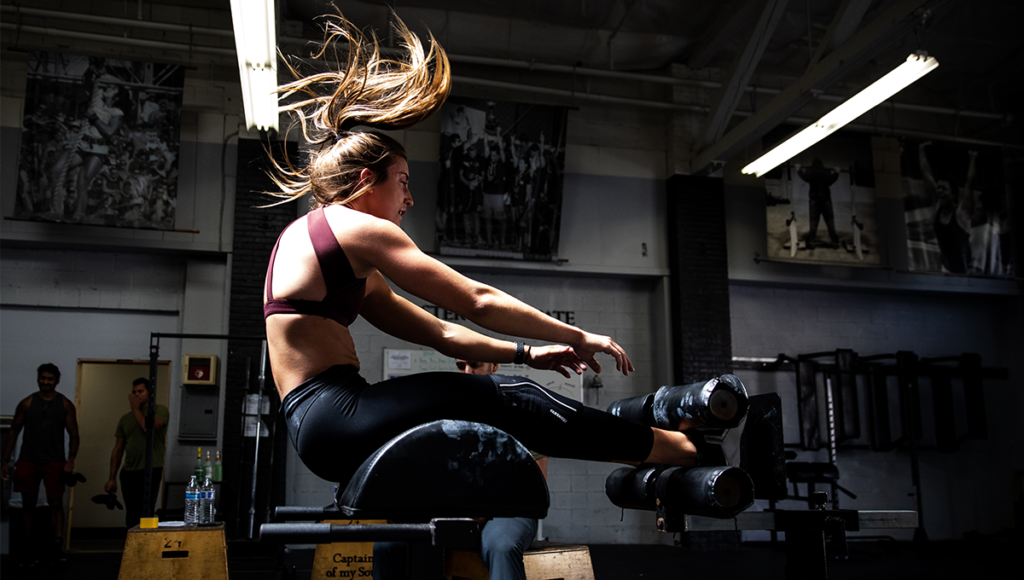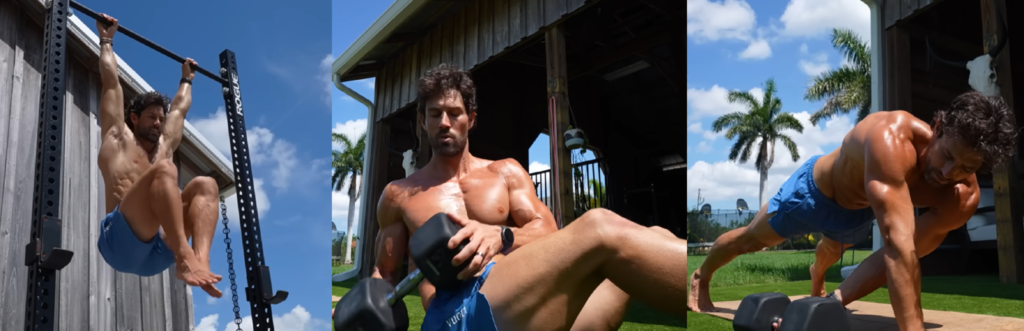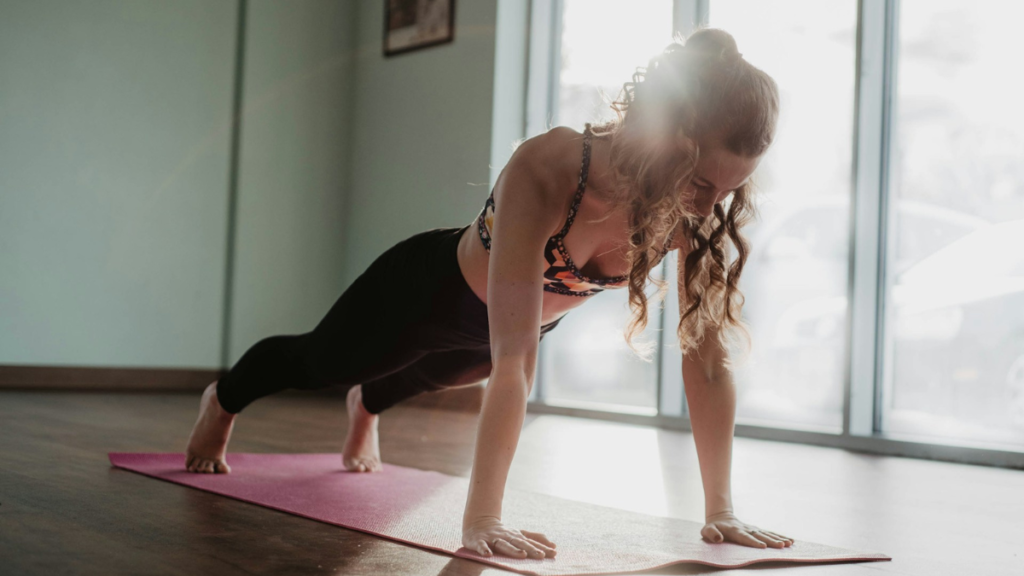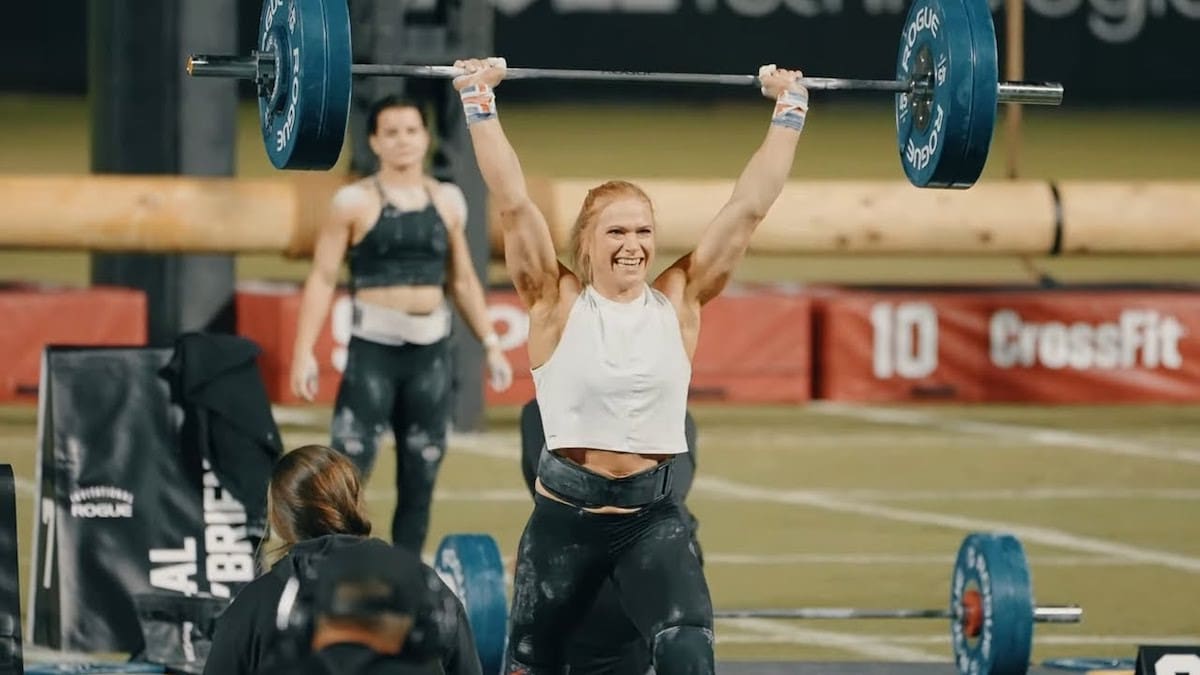


Defined abs are not created by endless high rep crunches or by trying to burn fat from one specific area. They come from two things working together: building the abdominal muscles so they have shape, and lowering overall body fat gradually enough for that shape to become visible.
This applies to women just as it does to men, although the most useful approach is not to chase an arbitrary level of leanness. Women need sufficient energy availability, recovery, and dietary fat to support health, training, and normal hormonal function. The goal should be a stronger, more capable midsection that looks more defined as your overall training and nutrition habits improve.


Your abs are not one single muscle. The rectus abdominis is the visible muscle at the front of the stomach that creates the familiar segmented appearance. The external and internal obliques sit at the sides of the torso and help rotate and stabilize the trunk. The transverse abdominis sits deeper and contributes to trunk stiffness and control. A good ab program should challenge these muscles through spinal flexion, resisting spinal extension, and resisting unwanted rotation.
The following three exercises cover those jobs extremely well. They are also easy to progress, which matters because muscles adapt when they are exposed to progressively greater training demands over time. You do not need hundreds of repetitions. You need controlled reps, enough effort, and the patience to improve your performance.
What Actually Makes Ab Muscles More Defined?
Abdominal training can make the muscles of the midsection stronger and potentially thicker, but it cannot selectively remove the fat that covers them. A controlled study found that six weeks of abdominal exercise improved muscular endurance but did not significantly reduce abdominal fat, body weight, or body fat percentage. This is why an ab routine must sit inside a wider plan that includes resistance training, regular physical activity, and nutrition that supports your goal.
Resistance training is valuable because it can improve muscular strength and size across healthy adults. Large evidence reviews also show that muscle growth responds well to sufficient weekly training volume, with approximately 10 hard sets per muscle group per week often used as a useful general target. Your abs do not necessarily need 10 direct sets if they are also working hard during squats, deadlifts, carries, pull ups, presses, and other compound exercises, but they still benefit from focused work.
For fat loss, a modest and sustainable energy deficit is usually more useful than aggressive restriction. Very low energy intake can compromise training quality, recovery, and health. A well designed plan gives you enough protein to support lean mass, plenty of minimally processed foods, and a routine you can maintain for months rather than days.
The exercises below provide the direct stimulus. Your broader lifestyle reveals the result.
Exercise 1: Weighted Cable Crunch
Why the Cable Crunch Works
The cable crunch is one of the best options for building the rectus abdominis because it allows you to train trunk flexion with a load that can be increased gradually. This is important if your aim is muscle definition rather than simply improving the ability to tolerate very high repetitions.
Many people perform crunches by pulling hard with their arms and moving their hips backward. That turns the exercise into something closer to a kneeling lat pulldown. Instead, think about curling your rib cage down toward your pelvis. Your arms should only hold the rope in position. The movement should come from the abdominals shortening and controlling the torso.
Research comparing core exercises shows that dynamic trunk flexion movements can produce substantial rectus abdominis activity. Muscle activation research does not prove that an exercise is automatically best for hypertrophy, but it does help show whether an exercise is asking the intended muscles to work. Combined with the ability to add resistance, the cable crunch is a highly practical choice.
How to Do It
Set a rope attachment at the top of a cable machine. Kneel facing away from the stack, then hold the rope beside your temples. Start tall with your hips fixed above your knees and your ribs stacked over your pelvis.
Brace gently, then curl your upper body forward by bringing your ribs toward your hips. Do not simply bend from the hips. Pause briefly in the shortened position, then return slowly until your torso is upright again. Avoid aggressively arching your lower back at the top.
Start with two or three sets of eight to 15 controlled repetitions. Choose a weight that makes the final few repetitions difficult without changing your technique. When you can comfortably exceed the upper end of the range, add a small amount of load.
Common Mistakes to Avoid
Do not load this exercise so heavily that you cannot move through a useful range of motion. Do not yank the rope downward with your arms. Most importantly, do not rush the return phase. A slow and controlled return helps you maintain tension and prevents the cable stack from doing the work for you.
Exercise 2: Reverse Crunch
Why the Reverse Crunch Works
The reverse crunch is a simple bodyweight exercise that trains the rectus abdominis while placing the pelvis in motion. It is especially useful for people who feel ordinary crunches mostly in their neck or hip flexors.
The key is not lifting your legs as high as possible. The meaningful part of the exercise is the small pelvic curl at the top, when your tailbone lifts from the floor and your pelvis rotates toward your rib cage. That is where the abs have to work hard to control the movement.
The reverse crunch is easy to scale. Beginners can bend their knees more and use a small range of motion. Stronger trainees can slow each repetition, extend the legs gradually, or hold a light dumbbell between the feet once they can perform the bodyweight version with full control.
How to Do It
Lie on your back with your arms by your sides or lightly holding a stable bench behind your head. Bring your hips and knees to roughly 90 degrees, with your shins parallel to the floor. Exhale as you curl your pelvis upward and bring your knees slightly toward your chest.
Think about rolling your tailbone off the floor rather than swinging your legs. The movement will be smaller than many people expect. Lower your hips slowly until your lower back and pelvis return to the floor, then begin the next repetition without using momentum.
Perform two or three sets of 10 to 20 repetitions. Stop each set when you can no longer lift the pelvis with control. If your lower back arches dramatically or your legs begin swinging, the set has gone too far.
How to Progress It
Once standard reverse crunches are strong and controlled, make the lowering phase last three seconds. This immediately increases the challenge without needing equipment. You can also gradually straighten your legs, but only if you can maintain a smooth pelvic curl and avoid turning the movement into a hip flexor exercise.
Exercise 3: Ab Wheel Rollout
Why the Ab Wheel Rollout Works
The ab wheel rollout is a powerful exercise for training the abdominals to resist spinal extension. In simple terms, your abs have to stop your lower back from arching as your arms move away from your body. This is a fundamental job of the core during lifting, running, carrying, and many sports.
Systematic reviews of core muscle activity consistently identify rollout style movements as demanding options for the rectus abdominis and obliques. The challenge rises sharply as the wheel moves farther from the knees, which makes this exercise very easy to progress without needing a heavier weight.
The ab wheel is not an exercise to rush. It can be demanding on the shoulders and lower back if your form is poor, but it is extremely effective when you build it up patiently. The version from the knees is plenty challenging for most people.
How to Do It
Kneel on a mat with the wheel beneath your shoulders. Hold the handles, tuck your pelvis slightly, and brace your abs as if you were preparing for someone to gently punch your stomach. Your ribs should stay down rather than flaring upward.
Roll the wheel forward slowly while keeping your hips, rib cage, and shoulders moving as one unit. Only roll as far as you can while keeping your lower back from sagging. Then pull the wheel back toward your knees by squeezing your abs and lats.
Start with two or three sets of five to 10 repetitions. Keep the range short at first. Extending the range of motion is a better progression than forcing high rep sets.
Common Mistakes to Avoid
The biggest error is allowing the lower back to arch as the wheel moves forward. If this happens, shorten the range immediately. Your shoulders should not collapse toward your ears either. Keep them active and stable throughout the repetition.
If you are not ready for the ab wheel, begin with a stability ball rollout. Place your forearms on a ball, roll it forward slowly, and then pull it back while maintaining the same braced torso position. This offers a more forgiving way to learn the pattern.
How to Program These Exercises
Train your abs two or three times per week, leaving at least a day between direct sessions if they are still sore or fatigued. You can perform the exercises after your main strength session, or place one core movement in a short circuit with other accessories.
A simple session could include three sets of cable crunches, three sets of reverse crunches, and two sets of ab wheel rollouts. The total number of hard sets is modest, but each should be performed with focus and good technique.
Progression matters more than variety. Track the load used on cable crunches, the reps and tempo used on reverse crunches, and the range of motion achieved on rollouts. If you improve one of these variables gradually over several weeks, your abs are receiving a reason to adapt.
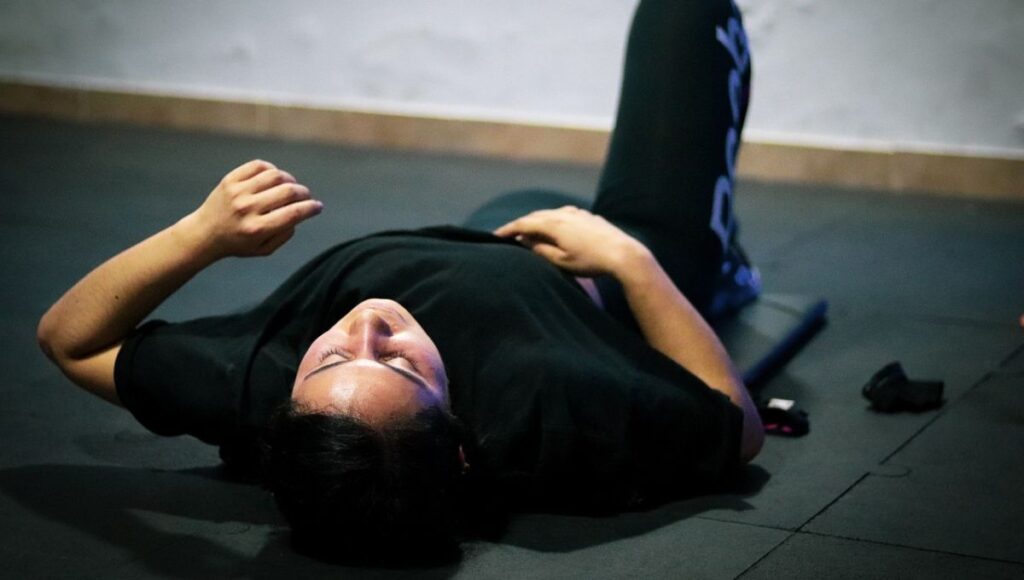
You should also continue training your whole body. Squats, Romanian deadlifts, rows, presses, loaded carries, and unilateral exercises all require the trunk to transfer force and resist unwanted movement. Direct ab work provides targeted training, while compound exercises make your core useful in the rest of your training.
The Bigger Picture for Visible Abs
Defined abs are not a measure of fitness, health, or discipline. Genetics influence fat distribution and the visible shape of the rectus abdominis. Some women will see definition at a higher body fat level than others, while some may need to get leaner before their abs become visible. Neither outcome is a judgment of your effort.
The best approach is to focus on building strength, eating enough protein and nutrient dense food, staying active, sleeping well, and training the abs like any other muscle group. If more definition is appropriate for your goals, use a gradual approach rather than extreme dieting.
Cable crunches, reverse crunches, and ab wheel rollouts give you a complete and practical starting point. Train them consistently, make them a little harder over time, and let the result come from strong habits rather than shortcuts.
References
- Currier, B.S., D’Souza, A.C., Fiatarone Singh, M.A., Lowisz, C.V., Rawson, E.S., Schoenfeld, B.J., Smith Ryan, A.E., Steen, J.P., Thomas, G.A., Triplett, N.T., Washington, T.A., Werner, T.J. and Phillips, S.M. (2026) ‘Resistance training prescription for muscle function, hypertrophy, and physical performance in healthy adults: An overview of reviews’, Medicine & Science in Sports & Exercise, 58(4), pp. 851–872.
- Escamilla, R.F., Babb, E., DeWitt, R., Jew, P., Kelleher, P., Burnham, T., Busch, J., D’Anna, K., Mowbray, R., Imamura, R.T. and Andrews, J.R. (2006) ‘Electromyographic analysis of traditional and nontraditional abdominal exercises: Implications for rehabilitation and training’, Physical Therapy, 86(5), pp. 656–671.
- Fernández Rodríguez, R., Paredes, V., Alarcón, F. and Sánchez, R. (2020) ‘Core muscle activity during physical fitness exercises: A systematic review’, International Journal of Environmental Research and Public Health, 17(12), 4306.
- Parvizi, H., Khalkhali Zavieh, M., Daryabor, A. and Tahan, N. (2024) ‘Ultrasonography and electromyography activity of abdominal muscles in different abdominal exercises: A systematic review’, Muscles, Ligaments and Tendons Journal, 14(1), pp. 125–140.
- Vispute, S.S., Smith, J.D., LeCheminant, J.D. and Hurley, K.S. (2011) ‘The effect of abdominal exercise on abdominal fat’, Journal of Strength and Conditioning Research, 25(9), pp. 2559–2564.
Key Takeaways
| Focus | What to do | Why it matters |
|---|---|---|
| Build the abs | Use cable crunches, reverse crunches, and ab wheel rollouts | They train the abs through flexion and resisting spinal extension |
| Use progression | Add load, repetitions, slower tempo, or range of motion over time | Muscles need progressively challenging training to adapt |
| Train consistently | Perform direct ab work two or three times weekly | Regular, focused training is more useful than occasional high volume sessions |
| Improve visibility realistically | Combine ab training with whole body resistance training, activity, and sustainable nutrition | Ab exercises alone do not selectively reduce stomach fat |
| Protect your form | Keep the movement controlled and stop before your lower back takes over | Better technique keeps tension on the intended muscles and reduces unnecessary strain |