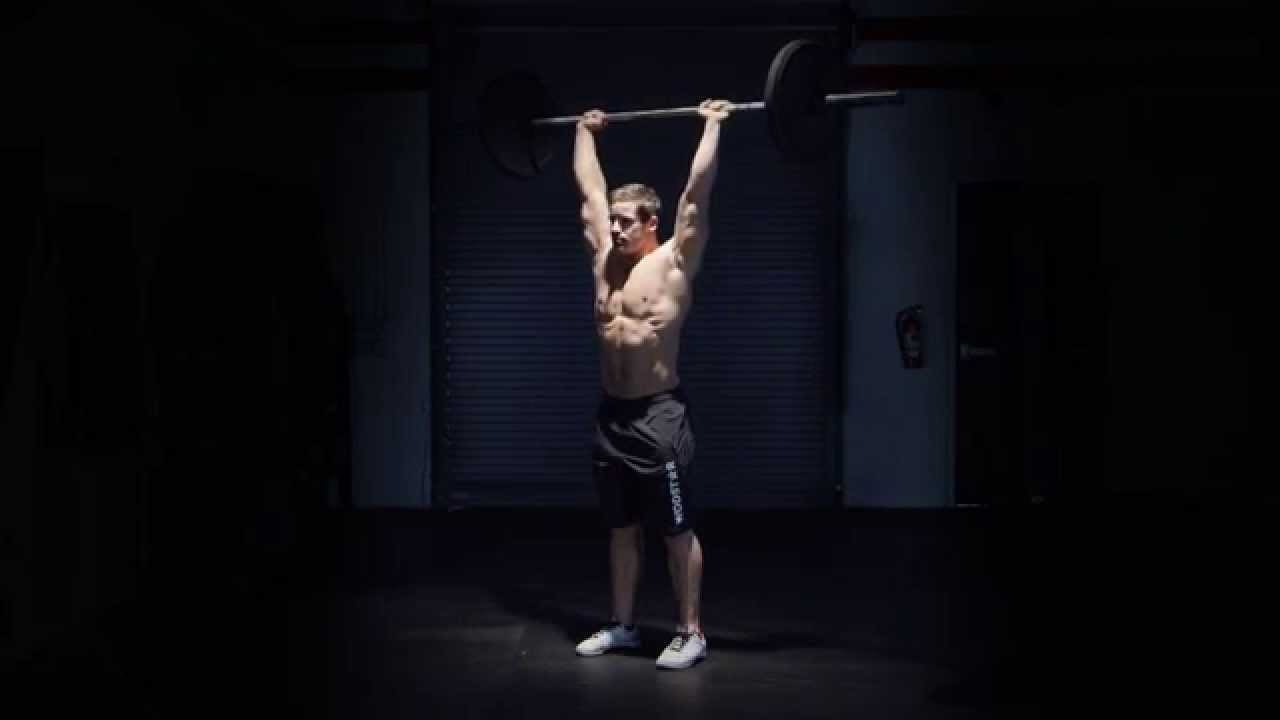


The strict press and push press are two excellent overhead barbell exercises, but they do not ask the body to solve the same problem. The strict press requires the shoulders, triceps, upper back, and trunk to move the bar from the shoulders to overhead without help from the legs. The push press uses a controlled dip and drive through the legs to give the bar upward momentum before the arms finish the lift.
That difference matters when stronger shoulders are the goal. The strict press places more of the challenge directly on the upper body because the lower body cannot contribute to the lift. The push press allows athletes to handle heavier loads and produce more total force through the body, but part of that force comes from the legs. Neither movement is automatically better. The most useful choice depends on whether you want to build pure overhead pressing strength, add shoulder training volume, improve total body power, or get better at a sport that demands fast overhead lifting.



The evidence supports using resistance training to improve muscular strength and size, while exercise selection should reflect the specific strength quality an athlete wants to improve. For stronger shoulders in a controlled overhead press, the strict press should be the foundation. For athletes who also need power, leg drive, and the ability to move heavier weights overhead quickly, the push press is an effective addition.
What Is the Strict Press?
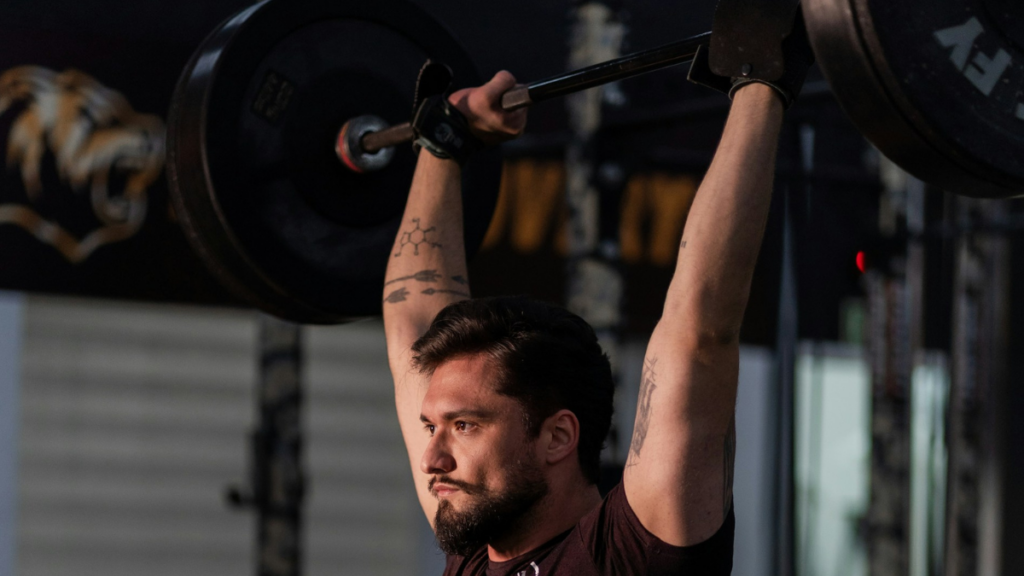
The strict press begins with a barbell held at the upper chest and shoulders. The athlete braces the trunk, keeps the legs still, and presses the bar overhead until the elbows are locked out. The bar should travel close to the face, with the head moving slightly back to clear the bar before returning forward once the bar is overhead.
This movement is sometimes called the overhead press or military press, although a traditional military press is often performed with the feet together. In normal gym use, strict press usually describes any standing barbell press performed without knee bend or leg drive.
The strict press is a multi joint exercise. The deltoids create much of the shoulder movement, the triceps extend the elbows, and muscles around the shoulder blade help create a stable position for pressing overhead. The trunk also has to resist excessive extension as the load moves away from the body. Research on overhead pressing confirms that the exercise involves substantial activity from the deltoid and upper trapezius, alongside contribution from other muscles that support the shoulder complex.
Why the Strict Press Builds Shoulder Strength
The strict press makes the shoulders and triceps responsible for producing nearly all of the upward movement. Because the legs do not help accelerate the bar, the upper body must generate enough force to overcome the load from a dead stop at the shoulders.
This makes the strict press highly specific for anyone who wants to improve their ability to press overhead with the upper body alone. Strength gains are partly specific to the exercises and movement patterns used in training. If your goal is a stronger strict press, regular strict pressing is therefore the most direct approach.
The exercise also gives a clear measure of upper body pressing strength. A heavier strict press reflects progress in the shoulders, triceps, trunk control, and technique needed to move a barbell overhead without momentum from the lower body.
The Main Limitation of the Strict Press
The strict press is limited by the weakest link in the movement. If shoulder or triceps strength is the bottleneck, the bar will stop moving even if the athlete has strong legs and hips. This is useful for focused shoulder training, but it also means most athletes can strict press far less weight than they can push press.
That lower loading potential does not make the strict press inferior for muscle building. Studies comparing different resistance training loads show that muscle growth can occur across a wide range of loads when sets are performed with sufficient effort. However, heavier loads tend to produce better improvements in maximal strength than very light loads. The practical lesson is to use a load you can control well, progress it over time, and perform enough challenging sets to create an effective training stimulus.
What Is the Push Press?
The push press starts in the same front rack position as the strict press, but the athlete begins each repetition with a short, controlled dip through the hips and knees. They then drive forcefully through the floor, extending the ankles, knees, and hips to transfer force into the barbell. The arms press as the bar rises, and the athlete finishes standing tall with the bar locked out overhead.
The dip should be shallow and vertical. It is not a squat. If the knees travel forward excessively, the torso collapses, or the bar drifts away from the body, power leaks out of the movement. A strong push press is a coordinated full body lift, not simply a strict press with a larger knee bend.
Why the Push Press Lets You Use More Weight
The push press recruits the lower body to initiate the upward phase. The hips, knees, and ankles extend rapidly, helping accelerate the body and barbell upward. The shoulders and triceps still have to finish the lift and stabilize the barbell overhead, but they do not have to create all of the initial upward force alone.
Biomechanical research on the push press shows that it involves a coordinated pressing action with concurrent extension at the hips, knees, and ankles. In trained men, increasing push press load increased force, work, power, and impulse during the propulsion phase. This shows why the push press is useful when the aim is to practice applying force quickly through the entire body.
The ability to use a heavier barbell can also increase an athlete’s confidence and familiarity with loading overhead. However, this should not be confused with a direct measure of shoulder strength. A heavier push press may reflect stronger legs, better timing, and greater total body power as much as stronger deltoids and triceps.
The Main Limitation of the Push Press
The push press reduces the relative demand placed on the shoulders during the first part of the lift because the legs help move the bar. This is its advantage for power training, but it makes the exercise less specific for developing pure upper body pressing strength.
An athlete can improve their push press while their strict press changes little if their leg drive, coordination, or lower body power improves more than their shoulder strength. For that reason, athletes who want noticeably stronger shoulders should not replace all strict pressing with push pressing.
Strict Press vs Push Press for Shoulder Strength
For pure shoulder strength, the strict press is the better choice. It places the shoulders and triceps under greater direct responsibility throughout the lift, provides a clear test of upper body overhead strength, and matches the exact skill you want to improve.
The push press remains valuable, but its primary benefit is different. It trains force transfer from the lower body through the trunk and into an overhead implement. It is more appropriate when the goal includes powerful overhead performance, athletic coordination, or the ability to move heavier weights quickly.
It is important to be precise about what research can and cannot tell us. Direct long term studies comparing strict press and push press training for shoulder strength and muscle growth are limited. The recommendation to prioritize the strict press for pure shoulder strength is based on the principle of training specificity, the different mechanics of the two exercises, and evidence that strength adaptations are greatest when training resembles the task being tested.
Which Exercise Is Better for Shoulder Muscle Growth?
Neither exercise has been proven clearly superior for shoulder hypertrophy in direct long term research. Muscle growth depends heavily on total hard training volume, progressive overload, proximity to muscular failure, recovery, and the quality of the repetitions.
The strict press is usually easier to standardize because each repetition begins without a leg drive. This can make it easier to keep tension focused on the shoulders and triceps, particularly when using moderate loads for multiple controlled repetitions.
The push press can still contribute to shoulder muscle growth because the shoulders and triceps must finish the press and stabilize the load overhead. Yet the legs reduce the amount of work the upper body needs to perform during the initial drive. For most lifters, the best muscle building approach is to use strict pressing as the main barbell overhead movement and add other shoulder exercises, such as lateral raises or dumbbell pressing, to accumulate more targeted volume.
Which Exercise Is Better for Athletic Performance?
The push press has the advantage for athletes who need to apply force quickly from the ground through the upper body. It combines lower body extension with an overhead press, making it relevant to sports and training settings where rapid force production matters.
For CrossFit athletes, the push press is particularly useful because it appears in workouts and helps build skill for related lifts, including the push jerk. For field sport athletes, it can be a useful part of a broader power program when the athlete already has sufficient strength and technical competence.
The strict press is also athletic, but in a different way. It develops controlled overhead strength and trunk stability without assistance from the lower body. That can improve an athlete’s capacity to stabilize and press objects overhead when speed is not the main demand.
Technique Matters More Than Ego Loading
Both exercises require a stable overhead position. Start with the bar in a secure front rack, brace the abdomen, squeeze the glutes, and avoid leaning excessively backward as the bar travels overhead. The goal is not to create a dramatic backbend. The goal is to keep the bar over the middle of the body while the shoulders and trunk control the load.
For the strict press, keep the legs locked and initiate the lift by pressing the bar upward. Move the head back just enough to allow a close bar path, then bring it through once the bar passes the forehead. Finish with the elbows locked and the bar balanced over the shoulders and hips.
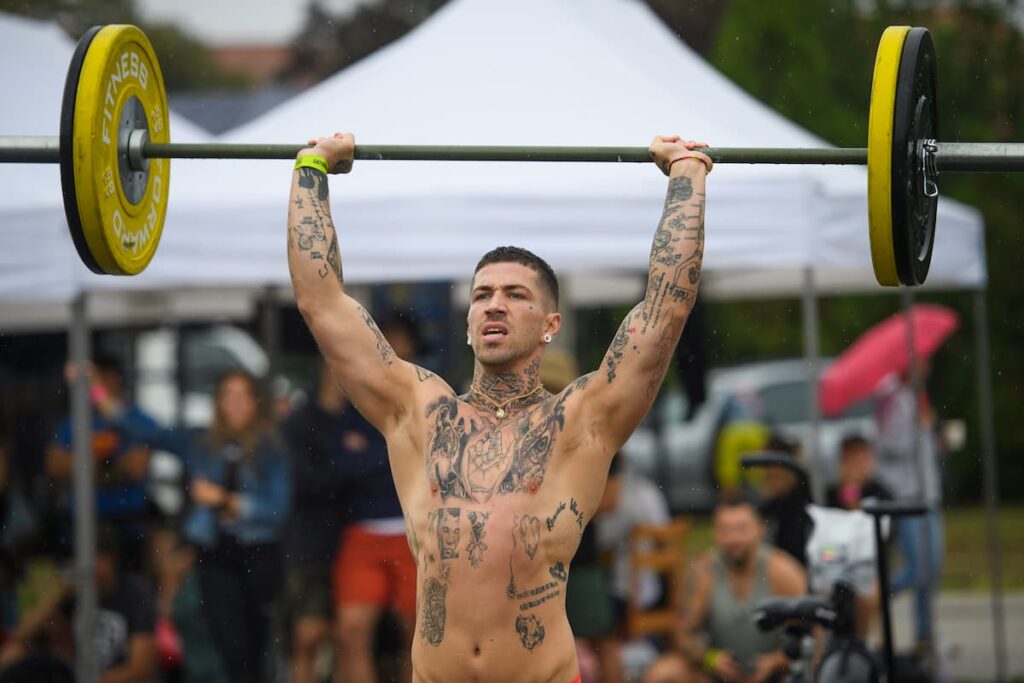
For the push press, use a short dip that stays balanced over the midfoot. Drive through the floor aggressively, then press the bar to full lockout. Avoid turning the movement into a push jerk by re bending the knees to receive the bar. If you catch the bar in a partial squat, you are performing a different exercise.
Poor technique can shift stress away from the intended muscles and make it harder to progress. Start with manageable loads, build repeatable positions, and increase weight only when the bar path and lockout remain consistent.
How to Program Both Exercises
A simple approach is to make the strict press the primary movement when shoulder strength is the main objective. Perform it early in the workout, when the shoulders and triceps are fresh enough to produce high quality repetitions. Moderate to heavy sets of three to eight repetitions can be useful for developing strength, while sets of six to 12 controlled repetitions can help build training volume.
The push press works well after strict pressing or on a separate training day focused on power. Use fewer repetitions per set so speed and technique remain high. Sets of two to five repetitions are usually more appropriate than long, fatiguing sets where leg drive and overhead positions become inconsistent.
Training frequency should fit the athlete’s experience, recovery, and total pressing volume. Resistance training recommendations consistently support training each major muscle group multiple times per week and progressing the program over time. The best plan is the one that allows you to train hard, recover well, and steadily improve.
A Practical Strength Focused Session
Begin with strict press for four sets of five repetitions, using a load that is challenging but does not force you to lean back or use leg drive. Rest long enough to preserve good technique between sets.
Follow this with push press for three sets of three repetitions, using a heavier load but moving it with intent and control. The goal is speed and coordination, not grinding. Finish with shoulder and upper back accessory work that supports balanced development, such as lateral raises, rows, and external rotation exercises.
This structure gives the strict press priority for shoulder strength while using the push press to train powerful overhead force production.
The Verdict
The strict press is better for building pure shoulder strength because it requires the shoulders and triceps to move the bar without help from the legs. It should be the main choice for lifters who want a stronger overhead press, more direct shoulder training, and a reliable way to measure upper body pressing progress.
3 Best Beginner Exercises for Massive Muscle Mass for Your Triceps
The push press is better for developing powerful, full body overhead performance. It lets you train heavier loads, develop coordination between the legs and upper body, and practice producing force quickly. It is an excellent complementary exercise, especially for CrossFit athletes and athletes who need explosive overhead strength.
Use the strict press as your foundation. Add the push press when your goals include power, sport specific performance, or more exposure to heavier overhead loading. Strong shoulders are not built by choosing one movement forever. They are built by selecting the right movement for the right purpose, applying progressive overload, and repeating high quality work consistently.
References
- American College of Sports Medicine (2009) ‘American College of Sports Medicine position stand. Progression models in resistance training for healthy adults’, Medicine & Science in Sports & Exercise, 41(3), pp. 687-708.
- Baz-Valle, E., Fontes-Villalba, M., Santos-Concejero, J. and Balsalobre-Fernández, C. (2022) ‘Total number of sets as a training volume quantification method for muscle hypertrophy: A systematic review’, Journal of Strength and Conditioning Research, 36(12), pp. 3523-3531.
- Lopez, P., Radaelli, R., Taaffe, D.R., Newton, R.U., Galvão, D.A., Trajano, G.S., Teodoro, J.L., Kraemer, W.J., Häkkinen, K. and Pinto, R.S. (2021) ‘Resistance training load effects on muscle hypertrophy and strength gain: Systematic review and network meta-analysis’, Medicine & Science in Sports & Exercise, 53(6), pp. 1206-1216.
- Schoenfeld, B.J., Grgic, J., Ogborn, D. and Krieger, J.W. (2017) ‘Strength and hypertrophy adaptations between low versus high load resistance training: A systematic review and meta-analysis’, Journal of Strength and Conditioning Research, 31(12), pp. 3508-3523.
- Soriano, M.A., Jiménez-Ormeño, E., Lake, J.P., McMahon, J.J., Gallo-Salazar, C., Mundy, P. and Comfort, P. (2024) ‘Kinetics and kinematics of the push press, push jerk, and split jerk’, Journal of Strength and Conditioning Research, 38(8), pp. 1359-1365.
- Vigotsky, A.D., Halperin, I., Lehman, G.J., Trajano, G.S. and Vieira, T.M. (2018) ‘Interpreting signal amplitudes in surface electromyography studies in sport and rehabilitation sciences’, Frontiers in Physiology, 8, article 985.
Key Takeaways
| Goal | Better Exercise | Why |
|---|---|---|
| Pure shoulder and triceps strength | Strict press | The upper body must move the entire load without assistance from the legs. |
| Stronger strict overhead press | Strict press | Strength gains are specific to the movement pattern you train. |
| Explosive overhead power | Push press | The leg drive allows rapid force production through the whole body. |
| Heavier overhead loading | Push press | The hips, knees, and ankles help accelerate the barbell upward. |
| CrossFit and athletic overhead performance | Push press plus strict press | The push press develops power, while strict pressing maintains direct shoulder strength. |
| Best overall approach | Use both | Prioritize the strict press for shoulder strength and use the push press as a power focused complement. |