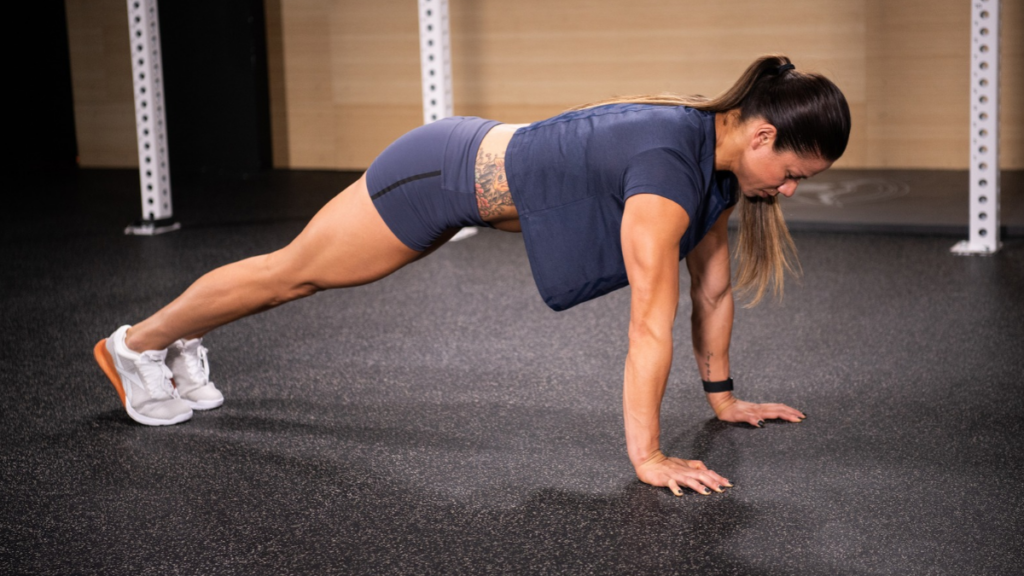
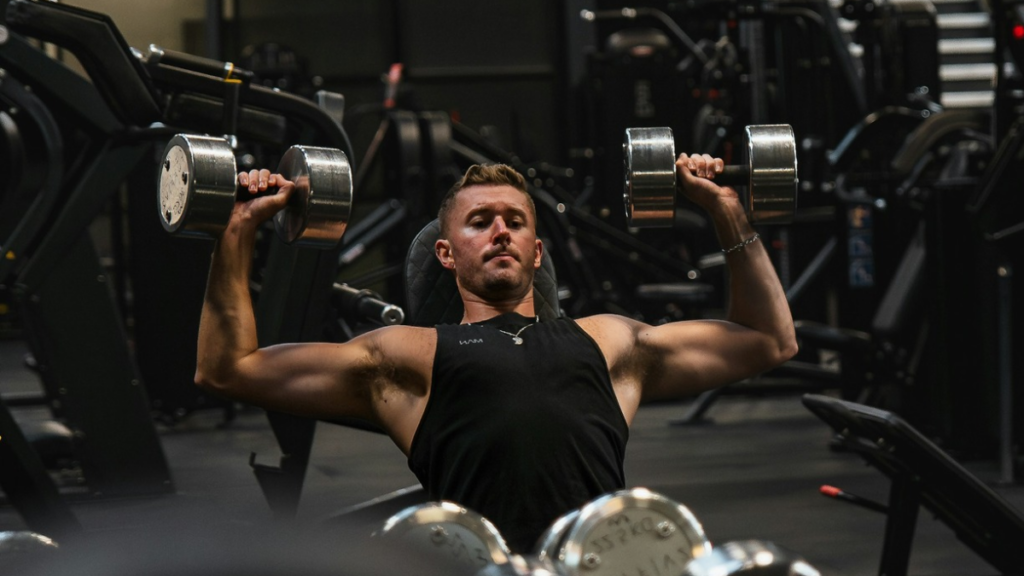
A muscular upper body is built by training the chest, back, and shoulders with enough hard sets, good technique, and consistent progression over time. Cable machines are excellent for this goal because they provide resistance throughout the movement, allow you to train from a wide range of angles, and make it easier to control the load than many free weight exercises.
The best exercises are not necessarily the ones that leave you exhausted or force you to use the heaviest stack in the gym. They are the ones you can perform safely, consistently, and with a full range of motion while gradually increasing the challenge. Research shows that resistance training can substantially increase muscle size and strength when the sets are performed with sufficient effort and volume, whether the load is relatively light or heavy.


The three cable exercises below build the areas that have the greatest visual impact on an upper body: a fuller chest, wider back, and broader shoulders. Together, they also train the muscles that help create a stronger V shape from the shoulders to the waist.
Why Cable Exercises Work So Well for Upper Body Muscle Growth
Cables differ from barbells and dumbbells because the resistance comes from a pulley system rather than gravity alone. This allows the line of resistance to match the direction of the movement more closely. You can adjust the pulley height, the angle of your body, and the attachment to make an exercise suit your structure and training goal.
Muscle growth is driven largely by mechanical tension, meaning that muscles must repeatedly produce force against a challenging resistance. Performing controlled repetitions through a large comfortable range of motion is a practical way to expose the target muscles to this tension. Research comparing different resistance training approaches suggests that training near muscular failure can stimulate hypertrophy across a range of loads, provided the total training effort is high enough.
3 Best Beginner Exercises for Jacked and Strong Rear Delts
Cables can also make it easier to train close to failure without the same concern about getting trapped under a barbell or losing control of a dumbbell. That does not mean every cable set should be reckless or sloppy. It means you can push a hard set while keeping the movement smooth and repeatable.
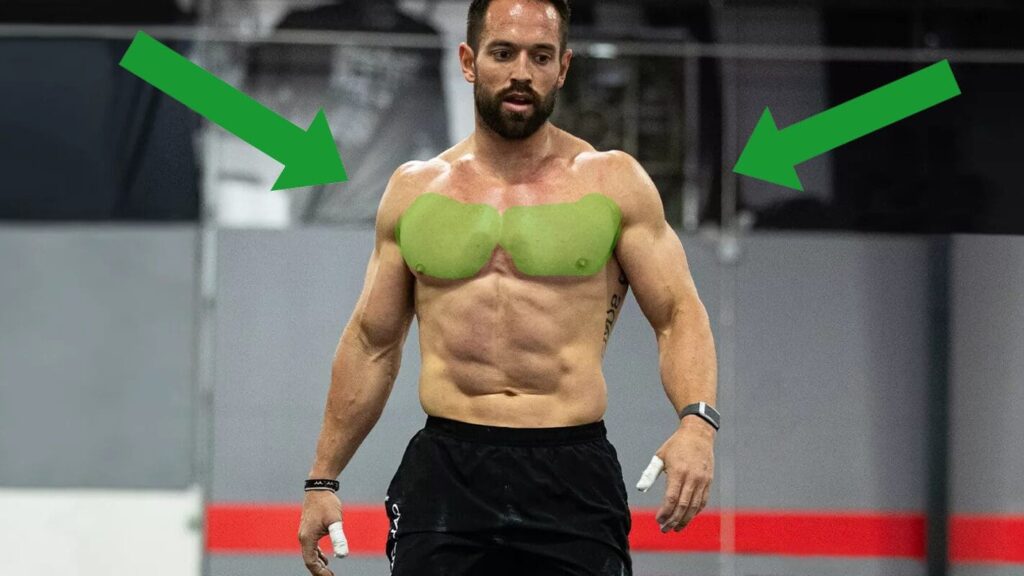
For upper body development, the chest, lats, and side deltoids deserve particular attention. A developed chest adds thickness to the torso, broad lats can make the waist appear narrower, and larger side deltoids create more shoulder width. The following exercises give you a highly effective way to train each area.
1. Cable Chest Fly
The cable chest fly is one of the best cable exercises for directly training the pectoralis major, the large chest muscle responsible for bringing the upper arm toward the center of the body. It is a useful complement to pressing exercises because it allows you to train the chest with less contribution from the triceps.
Why the Cable Chest Fly Builds a Better Chest
The pectoralis major is heavily involved in horizontal adduction, which is the action of bringing the arms inward across the body. That is exactly what happens during a well performed chest fly. Unlike a dumbbell fly, where the resistance becomes very low near the top because gravity is no longer pulling the weight away from your hands, a cable fly can keep the chest working hard as your hands come together.
This matters because the final portion of the movement is where you can consciously squeeze the chest and control the contraction. The goal is not simply to move the handles from one point to another. The goal is to use your chest to bring the upper arms inward while keeping your shoulders in a stable position.
Chest training research shows that multiple exercise variations can effectively stimulate the pectoral muscles. Presses are excellent for building strength and total upper body mass, while fly movements can add valuable chest focused volume. Using both types of movement is a sensible strategy for lifters who want a more complete chest.
How to Perform the Cable Chest Fly
Set both pulleys slightly above shoulder height for a standard high to low fly. Stand in the middle of the machine and take one handle in each hand. Take a small step forward so the stack is lifted and the cables are under tension. Keep a staggered stance, brace your torso, and maintain a slight bend in your elbows.
Start with your arms open wide enough to feel a stretch across the chest without forcing your shoulders into an uncomfortable position. Bring your hands down and inward in a controlled arc until they meet just in front of your lower chest. Pause briefly, squeeze the chest, and then return slowly to the starting position.
Avoid turning the movement into a standing cable press. Your elbows should remain softly bent in roughly the same position throughout the repetition. If your elbows bend and straighten significantly, the triceps will take over and the exercise becomes less chest focused.
How to Program It
Perform two to four sets of eight to 15 repetitions after your main pressing exercise. Use a load that allows you to control the stretch and keep the chest doing the work. The final few repetitions should be challenging, but your shoulders should not roll forward or rise toward your ears.
You can also use a low to high cable fly by setting the pulleys near the floor and bringing the handles upward. This variation may be useful for people who want to include more work for the upper chest area. There is no need to chase every possible angle in one workout, though. Pick one variation, improve it over several weeks, and rotate only when progress stalls or you want a change.
2. Cable Lat Pulldown
The cable lat pulldown is one of the most effective exercises for building the latissimus dorsi, commonly known as the lats. These are the large muscles on the sides of the back that contribute strongly to upper body width. Bigger lats can improve the visual V shape of the torso while also supporting pulling strength in rows, pull ups, climbing, and many athletic movements.
Why the Cable Lat Pulldown Builds a Wider Back
The lats help pull the upper arm down toward the body and back toward the torso. A pulldown trains this pattern directly. It is especially useful for people who cannot yet perform strict pull ups, as well as experienced lifters who want to add controlled back volume without the limitations of body weight.
Research examining pulling exercises shows that grip choices can affect muscle activity, but the basic pattern matters more than obsessing over a single grip. A comfortable grip that allows you to pull through a controlled range of motion is usually the best choice. For most people, a medium width overhand grip is an excellent starting point.
The lat pulldown also trains muscles of the upper back, including the lower trapezius, rhomboids, and rear deltoids. However, the lats should be the main focus. You should feel your upper arms moving down toward your sides rather than simply pulling the handle down with your hands.
How to Perform the Cable Lat Pulldown
Sit at the pulldown station and secure your thighs under the pad. Grip the bar with your hands just outside shoulder width. Begin with your arms fully extended overhead, but keep your ribs stacked over your pelvis rather than leaning far backward.
Initiate the movement by drawing your shoulder blades slightly down. Then drive your elbows down toward your sides as you bring the bar toward the top of your chest. Keep your chest tall, but avoid turning the repetition into an exaggerated back extension.
Pause when the bar reaches a comfortable position near your upper chest. Then let it rise slowly until your arms are long again. The return phase is important because the lats are working while they lengthen under load. Controlled eccentric training is associated with meaningful gains in muscle size and strength.
Do not pull the bar behind your neck. This position can place unnecessary stress on the shoulder joint and does not offer a special muscle building advantage. Pulling to the front of the body is more comfortable and more practical for most lifters.
How to Program It
Perform three to five sets of six to 12 repetitions. Use a load that lets you keep your torso mostly still while your elbows travel downward. If you have to swing backward sharply, shorten the range, or pull with momentum, the load is too heavy.
If your grip gives out before your back, lifting straps can be useful on some sets. This is particularly relevant for people whose grip strength limits their back training. However, it is still valuable to include some pulling sets without straps so the hands and forearms continue to develop.
3. Single Arm Cable Lateral Raise
The single arm cable lateral raise is one of the best exercises for training the side deltoid. This portion of the shoulder is important for creating broader looking shoulders and giving the upper body a more powerful silhouette.
Many people spend plenty of time bench pressing and performing overhead presses, but these movements often place more emphasis on the front deltoids and triceps. The side deltoids generally need direct work if your goal is visible shoulder width.
Why the Cable Lateral Raise Builds Broader Shoulders
The side deltoid lifts the upper arm away from the body. A lateral raise trains this action directly. Dumbbell lateral raises are effective, but they provide very little resistance when the arms are by the sides. A cable can create tension from the bottom of the repetition onward.
That is a useful feature because the cable encourages controlled movement across the entire range. It also allows you to use modest loads, which is important because the side deltoids do not need massive weight to receive an effective training stimulus.
Research on shoulder exercise muscle activity consistently shows that lateral raise variations are highly effective for recruiting the middle deltoid. While muscle activity alone cannot guarantee hypertrophy, it can help support exercise selection when combined with sound resistance training principles, progressive overload, and sufficient weekly training volume.
How to Perform the Single Arm Cable Lateral Raise
Set a cable pulley at its lowest position. Stand sideways to the stack and use the hand farthest from the machine to hold the handle. Let the cable travel across the front of your body. Start with your working arm resting close to your side and your elbow slightly bent.
Raise your arm out to the side until it reaches roughly shoulder height. Lead with the elbow rather than trying to lift the handle with your hand. Keep your torso upright and resist the urge to lean away from the stack or swing the weight upward.
Lower the handle slowly until your arm returns to your side. You should feel the side of your shoulder working throughout the set. If you feel sharp pain at the top, reduce the range slightly and check that you are not lifting your shoulder toward your ear.
A small forward angle of the arm can be more comfortable than raising directly out to the side. Think about raising your arm slightly in front of your body rather than directly beside it. This position often feels smoother for the shoulder joint.
How to Program It
Perform three to five sets of 10 to 20 repetitions per side. Lateral raises usually respond well to moderate and higher repetition work because the loads are relatively light and strict form is essential.
Do not judge progress only by the weight stack. Better technique, more repetitions with the same load, a slower lowering phase, and improved control are all forms of progress. Once you can complete the top end of your target repetition range with clean form, increase the load by the smallest available increment.
How to Combine These Exercises for Better Results
These three exercises can form the core of a highly effective upper body cable workout. The cable lat pulldown should generally come first because it allows you to use the heaviest load and requires more coordination. The cable chest fly can follow after pressing work or serve as the main chest movement in a simple cable session. Finish with lateral raises, which are less demanding systemically and benefit from focused, controlled effort.
For muscle growth, train each muscle group consistently across the week. Research suggests that higher weekly resistance training volume generally produces greater hypertrophy, although the ideal amount varies between individuals. A practical target for many lifters is to begin with around 10 challenging weekly sets per muscle group, then adjust based on recovery and progress.
Your nutrition also matters. Resistance training provides the stimulus, but adequate energy intake and protein help support muscle repair and growth. Protein intakes around 1.6 grams per kilogram of body weight per day appear sufficient for maximizing muscle and strength gains for many people doing resistance training, although individual needs can vary.
A jacked upper body is not built through novelty. It is built by using effective movements, training hard enough, recovering properly, and repeating that process for months and years. Cable exercises make this process easier because they are stable, adjustable, and suitable for lifters at almost every experience level.
Key Takeaways
| Exercise | Main muscles trained | Why it is effective | Practical rep range |
|---|---|---|---|
| Cable chest fly | Pectoralis major, front deltoids | Keeps consistent resistance while directly training the chest to bring the arms inward | 8 to 15 reps |
| Cable lat pulldown | Lats, upper back, biceps | Builds back width and trains a key vertical pulling pattern with adjustable resistance | 6 to 12 reps |
| Single arm cable lateral raise | Side deltoids | Provides direct shoulder width work with tension from the start of the movement | 10 to 20 reps |
| Progressive overload | All target muscles | Gradually adding repetitions, load, control, or sets helps maintain a muscle building stimulus | Track performance weekly |
| Weekly training volume | All target muscles | Consistent hard sets across the week are important for long term hypertrophy | Start around 10 sets per muscle group |
References
- Afonso, J., Ramirez Campillo, R., Moscão, J., Rocha, T., Zacca, R., Martins, A., Milheiro, A.A., Ferreira, J., Sarmento, H. and Clemente, F.M., 2021. Strength training versus stretching for improving range of motion: A systematic review and meta analysis. Healthcare, 9(4), 427.
- Grgic, J., Schoenfeld, B.J., Davies, T.B., Lazinica, B., Krieger, J.W. and Pedisic, Z., 2018. Effect of resistance training frequency on gains in muscular strength: A systematic review and meta analysis. Sports Medicine, 48(5), pp.1207–1220.
- Krieger, J.W., 2010. Single versus multiple sets of resistance exercise for muscle hypertrophy: A meta analysis. Journal of Strength and Conditioning Research, 24(4), pp.1150–1159.
- Lasevicius, T., Ugrinowitsch, C., Schoenfeld, B.J., Roschel, H., Tavares, L.D., De Souza, E.O., Tricoli, V. and Teixeira, E.L., 2018. Effects of different intensities of resistance training with equated volume load on muscle strength and hypertrophy. European Journal of Sport Science, 18(6), pp.772–780.
- Orquín Castrillón, F.J., Hernández Belmonte, A., Pallarés, J.G. and Muyor, J.M., 2023. Electromyographic activity of the pectoralis major muscle during traditional bench press and other variants of pectoral exercises: A systematic review and meta analysis. International Journal of Environmental Research and Public Health, 20(8), 5485.
- Schoenfeld, B.J., Ogborn, D. and Krieger, J.W., 2017. Dose response relationship between weekly resistance training volume and increases in muscle mass: A systematic review and meta analysis. Journal of Sports Sciences, 35(11), pp.1073–1082.
- Schoenfeld, B.J., Peterson, M.D., Ogborn, D., Contreras, B. and Sonmez, G.T., 2015. Effects of low versus high load resistance training on muscle strength and hypertrophy in well trained men. Journal of Strength and Conditioning Research, 29(10), pp.2954–2963.
- Schoenfeld, B.J., Grgic, J., Ogborn, D. and Krieger, J.W., 2017. Strength and hypertrophy adaptations between low versus high load resistance training: A systematic review and meta analysis. Journal of Strength and Conditioning Research, 31(12), pp.3508–3523.
- Schoenfeld, B.J., Contreras, B., Vigotsky, A.D. and Peterson, M., 2016. Differential effects of heavy versus moderate loads on measures of strength and hypertrophy in resistance trained men. Journal of Sports Science and Medicine, 15(4), pp.715–722.
- Schoenfeld, B.J., Wilson, J.M., Lowery, R.P. and Krieger, J.W., 2016. Muscular adaptations in low versus high load resistance training: A meta analysis. European Journal of Sport Science, 16(1), pp.1–10.
- Simao, R., De Salles, B.F., Figueiredo, T., Dias, I., Willardson, J.M., 2013. Exercise order in resistance training. Sports Medicine, 42(3), pp.251–265.
- Wernbom, M., Augustsson, J. and Thomeé, R., 2007. The influence of frequency, intensity, volume and mode of strength training on whole muscle cross sectional area in humans. Sports Medicine, 37(3), pp.225–264.
- Morton, R.W., Murphy, K.T., McKellar, S.R., Schoenfeld, B.J., Henselmans, M., Helms, E., Aragon, A.A., Devries, M.C., Banfield, L., Krieger, J.W. and Phillips, S.M., 2018. A systematic review, meta analysis and meta regression of the effect of protein supplementation on resistance training induced gains in muscle mass and strength in healthy adults. British Journal of Sports Medicine, 52(6), pp.376–384.