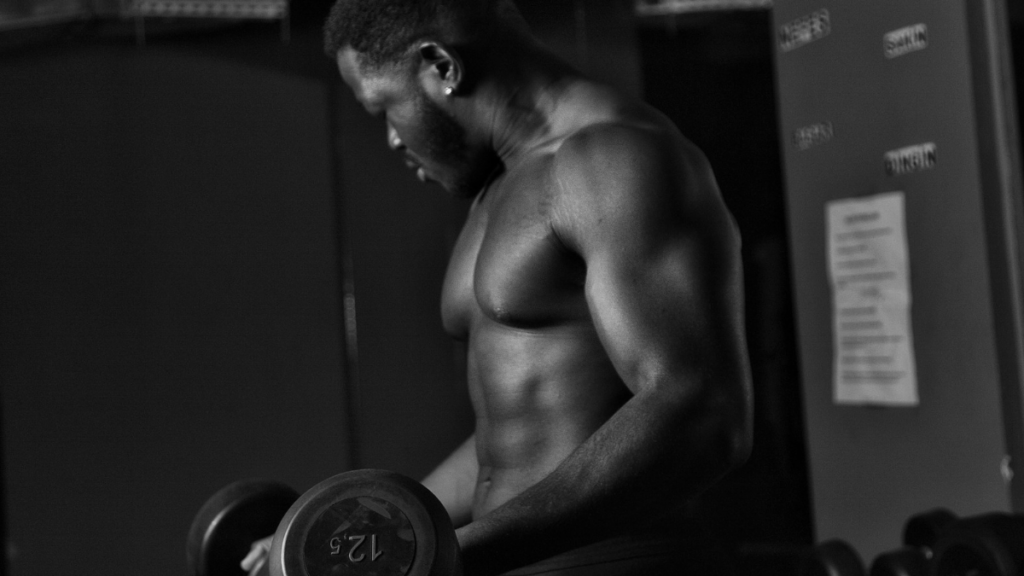


Broad, well developed shoulders can change the look of your entire upper body. They make the waist appear narrower, improve the shape of the arms and upper back, and build useful strength for pressing, lifting, throwing, and everyday tasks.
The shoulder is not one simple muscle. The deltoid has three main regions: the front deltoid, side deltoid, and rear deltoid. Each contributes to different arm movements. Pressing exercises strongly involve the front deltoids, while the side deltoids are particularly important for shoulder width. The rear deltoids help move the upper arm behind the body and contribute to a more complete, balanced appearance from the side and back.


Many gym programs give the front deltoids plenty of work through bench presses, push ups, incline presses, and overhead pressing. However, they often undertrain the side and rear deltoids. This can leave you with shoulders that are strong at pressing but lack the rounded, capped look that most people want.
You do not need a complicated routine or a huge selection of machines to fix that. A pair of dumbbells gives you everything you need to train all three parts of the deltoid effectively. The three exercises below cover the main movements needed for muscular shoulders: pressing overhead, lifting the arms out to the sides, and moving the arms back against resistance.
Use controlled repetitions, choose weights you can manage with good form, and progress gradually over time. Consistency matters far more than chasing a perfect workout once.
Why Dumbbells Work So Well for Shoulder Growth
Dumbbells allow each arm to move independently. This makes them useful for finding a comfortable movement path and preventing the stronger side of the body from doing more than its fair share. Unlike a barbell, dumbbells do not lock both hands into one fixed position.
This freedom can be especially valuable when training the shoulders. Shoulder joints vary slightly between people, and the grip or elbow position that feels best for one lifter may not feel best for another. Dumbbells allow you to use a neutral grip, where the palms face each other, or a more traditional palms forward position when pressing.
Muscle growth requires regular resistance training that challenges the muscles enough to stimulate adaptation. Training volume, effort, exercise technique, range of motion, and gradual progression all influence the result. Research also suggests that muscle growth tends to improve when sets are performed relatively close to muscular failure, although every set does not need to end with a failed repetition.
3 Best Cable Machine Exercises for a Jacked and More Attractive Upper Body
For shoulder training, that means using loads that make the target repetition range challenging while still allowing you to control the dumbbells. If your body starts swinging, your lower back arches excessively, or your traps take over every repetition, the weight is probably too heavy for the exercise.
Exercise One: Dumbbell Shoulder Press
The dumbbell shoulder press is the foundation movement in this routine. It trains the front deltoids while also involving the side deltoids, triceps, upper chest, and muscles around the shoulder blade. It allows you to use more load than isolation exercises, making it a strong choice for building pressing strength and adding overall shoulder mass.
How to Perform the Dumbbell Shoulder Press
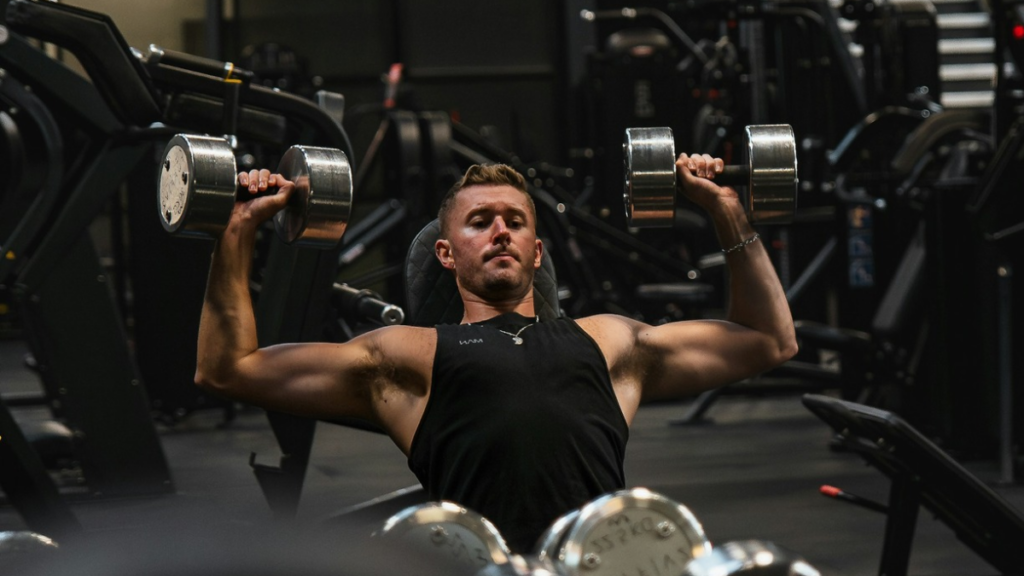
Sit on an upright bench with your feet planted firmly on the floor. Hold a dumbbell in each hand at shoulder level. Your palms can face forward or slightly toward each other, depending on which position feels more comfortable and stable.
Brace your abdominal muscles and keep your ribs stacked over your pelvis. Press both dumbbells upward until your arms are close to straight above your head. The weights should finish over the shoulders rather than drifting far forward. Lower them slowly back to shoulder level, keeping control throughout the descent.
Avoid turning the movement into a standing backbend. A small natural curve in the lower back is normal, but excessive arching shifts the movement away from the shoulders and can make the position less comfortable. If you struggle to stay stable, reduce the weight, use a bench with back support, or perform the press one arm at a time.
Why It Builds Bigger Shoulders
The shoulder press loads the deltoids through a large range of motion while allowing meaningful progressive overload. The front deltoids work hard during the pressing action, and the side deltoids contribute as the arms move upward. The triceps assist by extending the elbows.
This exercise is particularly valuable if your current training contains little or no overhead pressing. It gives the shoulders a heavy compound movement that can be progressed over months. Adding a repetition, improving control, or using slightly heavier dumbbells can all represent progress.
Do not assume that heavier is always better. The target is a controlled shoulder press, not simply getting the dumbbells overhead by any means possible. A steady lowering phase and a consistent bottom position make it easier to track progress and keep tension where you want it.
Sets and Repetitions
Perform three or four sets of six to twelve repetitions. Start with two or three repetitions left in reserve on most sets. As you become more experienced and confident with the movement, you can take the final set closer to technical failure, meaning you stop when another clean repetition is no longer possible.
Rest for around two minutes between hard sets. This gives the pressing muscles enough time to recover so that the next set remains productive.
Exercise Two: Dumbbell Lateral Raise
If you want shoulders that look wider, the dumbbell lateral raise deserves a permanent place in your program. It trains the side deltoids, the region most associated with shoulder width and the rounded cap at the top of the upper arm.
The lateral raise is not an exercise for showing off how much weight you can lift. It is an exercise for putting direct tension on a relatively small muscle. Light to moderate dumbbells, a deliberate tempo, and consistent technique will usually produce better results than swinging heavy weights upward.
How to Perform the Dumbbell Lateral Raise
Stand upright with a dumbbell in each hand by your sides. Keep a soft bend in your knees and brace your midsection. Begin with your palms facing your thighs or slightly forward.
Raise the dumbbells out to the sides and slightly forward, keeping a gentle bend in the elbows. Lift until your upper arms are around shoulder height or just below. Lower the weights slowly until your arms return to your sides, then repeat.
Think about moving your elbows away from your body rather than trying to lift the dumbbells with your hands. This cue often helps lifters feel the side deltoids more clearly. Keep your neck relaxed and avoid shrugging the shoulders toward the ears.
A slight forward position is usually more comfortable than raising the weights directly out to the sides. The goal is not to force your arms into one exact line. Find a path that feels smooth and pain free while keeping the movement controlled.
Common Lateral Raise Mistakes
The most common mistake is using momentum. If you have to lean back, bounce the weights, or swing your torso on every repetition, the load is too heavy. Momentum can help the dumbbells move, but it reduces the quality of the work done by the side deltoids.
Another mistake is lifting the weights too high. Raising the dumbbells far above shoulder height does not automatically make the exercise more effective. It often shifts more work toward the upper traps and makes it harder to maintain a stable position. Shoulder height is a useful target for most people.
Do not lock your elbows completely straight. A small elbow bend usually feels better and reduces unnecessary strain on the elbow joint. Keep that bend consistent as you lift and lower.
Sets and Repetitions
Perform three or four sets of ten to twenty repetitions. A higher repetition range works well because lateral raises are difficult to load heavily without compromising technique. The final few repetitions should feel demanding, but you should still be able to lift and lower the dumbbells without swinging.
If you do not have very light dumbbells, train one arm at a time. This can make it easier to focus, stabilize your body, and use the equipment you have available.
Exercise Three: Bent Over Dumbbell Rear Delt Fly
The rear deltoids are often the missing piece in shoulder training. They sit on the back of the shoulder and contribute to a fuller upper body from behind. They also help balance a program that includes a lot of pressing and chest work.
The bent over dumbbell rear delt fly directly trains this area. It requires much less load than a row or press, so use humility when choosing the dumbbells. A controlled set with lighter weights is far more useful than a heavy set dominated by the traps and lower back.
How to Perform the Bent Over Dumbbell Rear Delt Fly
Hold a dumbbell in each hand and stand with your feet about hip width apart. Push your hips back and lean forward until your torso is close to parallel with the floor, or as far forward as you can comfortably maintain with a neutral spine. Let the dumbbells hang beneath your shoulders with your palms facing each other.
Keep a small bend in your elbows. Raise your upper arms out to the sides until they are roughly in line with your body. Focus on moving the upper arms rather than aggressively pinching the shoulder blades together. Lower the dumbbells slowly and repeat.
Keep your head in a neutral position and avoid looking forward excessively, which can strain the neck. Your torso should remain still. If your body rocks up and down during the set, use less weight or support your chest on an incline bench.
Why Rear Delts Need Direct Work
Rows can train the rear deltoids, but they also place substantial demand on the lats, middle back, biceps, and other muscles. A rear delt fly gives the back of the shoulder a more direct role by emphasizing movement of the upper arm away from the body.
Training the rear deltoids can improve the visual balance of your shoulders. It also helps ensure that a shoulder program is not built entirely around front deltoid work from presses. For many people, the rear delts respond well to moderate or high repetitions performed with very strict control.
Do not rush the lowering phase. The eccentric portion of resistance training contributes to the total muscular stimulus, and slowing it down slightly makes it harder to use momentum. Take around two seconds to lower the dumbbells and maintain tension throughout the set.
Sets and Repetitions
Perform three sets of twelve to twenty repetitions. Stop the set when your traps begin taking over or when you cannot keep the torso stable. You should feel the back of the shoulders working rather than simply feeling fatigue in the neck.
How to Put the Three Exercises Into a Shoulder Workout
Perform this workout one or two times each week, depending on the rest of your program and your ability to recover. If you already perform a lot of pressing for chest and triceps, one direct shoulder session may be enough at first. If your shoulders are a priority and you recover well, two weekly sessions can provide more opportunities to practice and progress.
Start with the dumbbell shoulder press, because it is the most demanding movement and requires the most coordination. Follow it with lateral raises, then finish with rear delt flyes. This order lets you give your best energy to the exercise that benefits most from heavier loading.
A practical starting workout would be three sets of dumbbell shoulder presses, three sets of lateral raises, and three sets of rear delt flyes. That gives you nine direct shoulder sets in one session. Perform the routine consistently for several weeks before changing exercises. You need enough time to learn the movements, improve your control, and see whether you are actually progressing.
Keep a simple training record. Write down the weight used, repetitions completed, and how difficult each set felt. When you can perform the top end of your target repetition range with clean form, increase the dumbbell weight by the smallest available amount. Your repetitions may fall temporarily after the increase, which is normal. Build them back up gradually.
The Habits That Turn Exercises Into Results
The best shoulder exercises only work when they are repeated consistently and supported by recovery. Train hard enough to make the working sets challenging, but do not confuse poor form and joint pain with productive effort.
Use a full, comfortable range of motion. For the shoulder press, lower the dumbbells to a stable position around shoulder height. For lateral raises and rear delt flyes, control the lowering phase instead of allowing the weights to drop. Current evidence indicates that training through longer muscle lengths can be beneficial for hypertrophy in several muscles, although the ideal range can vary by exercise and individual.

Nutrition also matters. Building muscle requires adequate energy intake and sufficient dietary protein. If body weight has been falling rapidly, recovery is poor, and training performance is declining, it becomes harder to add muscle. Aim for regular meals with protein rich foods and make gradual changes rather than expecting a short burst of training to transform your shoulders.
Finally, judge progress over months, not single workouts. A better shoulder press, more controlled lateral raises, and stronger rear delt flyes are meaningful signs that your program is moving in the right direction. Muscular shoulders are built through repeated quality work, sensible progression, and patience.
Bibliography
- Kassiano, W., Costa, B., Nunes, J.P., Ribeiro, A.S., Schoenfeld, B.J. and Cyrino, E.S. (2023) ‘Which ROMs Lead to Rome? A systematic review of the effects of range of motion on muscle hypertrophy’, Journal of Strength and Conditioning Research, 37(5), pp. 1135–1144.
- Long, J.T., Schilling, B.K., LeDoux, M.S., Boswell, T.D., Dalsky, G.P. and DaSilva, S.G. (2010) ‘A comparison of electromyographic activity during the bench press and barbell pullover exercises’, Journal of Strength and Conditioning Research, 24(4), pp. 947–952.
- Robinson, Z.P., Pelland, J.C., Remmert, J.F., Refalo, M.C., Jukic, I., Steele, J. and Zourdos, M.C. (2024) ‘Exploring the dose response relationship between estimated resistance training proximity to failure, strength gain, and muscle hypertrophy: A series of meta regressions’, Sports Medicine, 54(9), pp. 2209–2231.
- Schoenfeld, B.J., Fisher, J.P., Grgic, J., Haun, C.T., Helms, E.R., Phillips, S.M., Steele, J. and Vigotsky, A.D. (2021) ‘Resistance training recommendations to maximize muscle hypertrophy in an athletic population: Position stand of the IUSCA’, International Journal of Strength and Conditioning, 1(1), pp. 1–36.
- Welsch, E.A., Bird, M. and Mayhew, J.L. (2005) ‘Electromyographic activity of the pectoralis major and anterior deltoid muscles during three upper body lifts’, Journal of Strength and Conditioning Research, 19(2), pp. 449–452.
Key Takeaways
| Focus | What to do | Why it matters |
|---|---|---|
| Overall shoulder size | Perform the dumbbell shoulder press first | It allows progressive overload for the front and side deltoids |
| Shoulder width | Use controlled lateral raises | They directly target the side deltoids that create a wider appearance |
| Balanced development | Include rear delt flyes | They train the back of the shoulders and complement pressing work |
| Productive effort | Finish most sets close to technical failure | Challenging sets provide a stronger muscle building stimulus |
| Long term progress | Track weights and repetitions | Gradual progression is essential for continued muscle growth |